Posts Tagged ‘paddock maintenance’
Sour Dock
Also called Curly Dock, we learned of sour dock from a local farmer who was supplying us with small squares of hay back when we had the Arabian horses. He pointed out that it was the only weed in his hay and that horses didn’t like it. It’s toxic for livestock, so I don’t blame horses for not liking it.
Yesterday, Cyndie and I took a crack at digging up the larger sprouts around the paddock, since they are too much for the string trimmer to chew through.
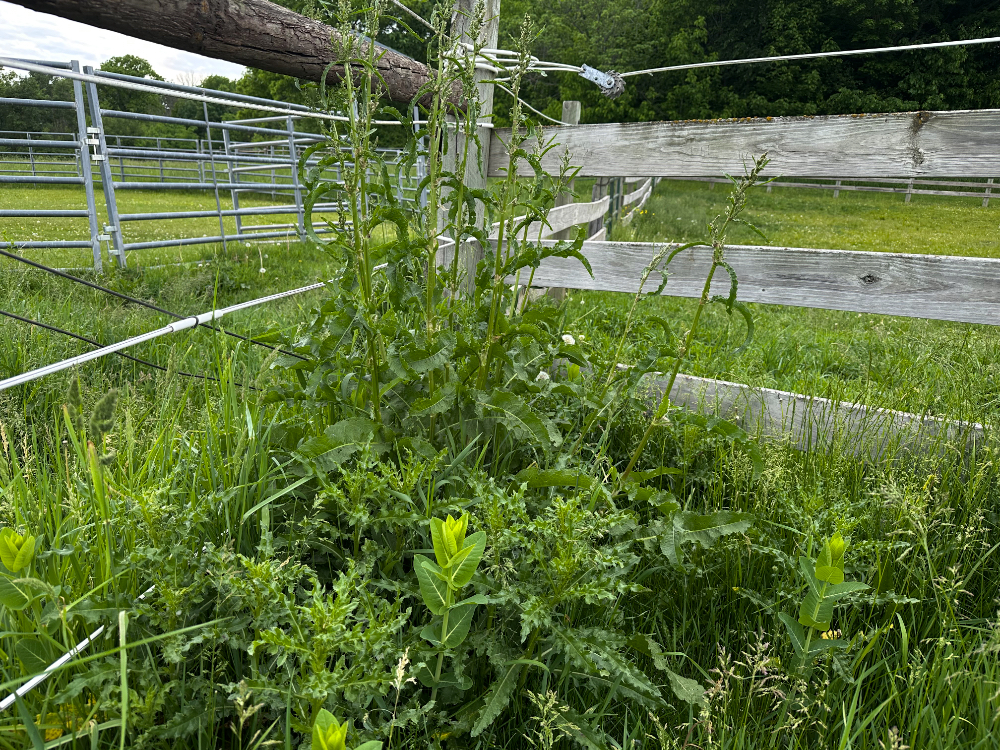
Some of the stalks are beginning to swallow our fence wires. While we were working, the horses wandered over to inspect our progress.
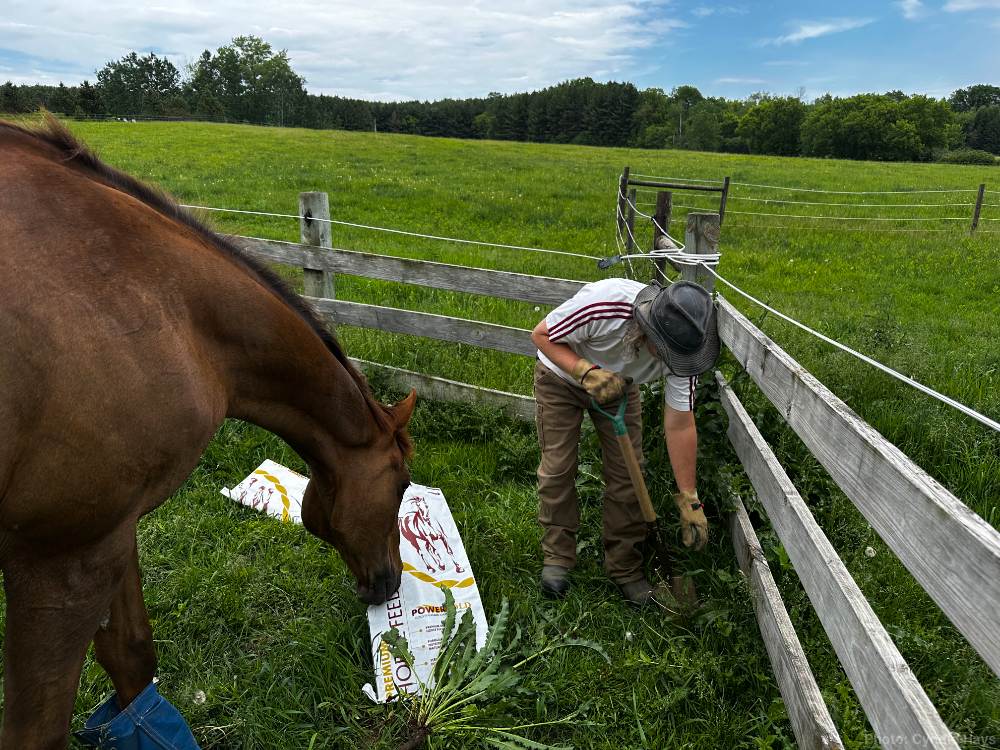
Cyndie had been putting the stalks into old feed bags, but they filled up so fast that she went back and got a wheelbarrow. Mia came over, grabbed a mouthful, and pulled a bunch of them back out of the bag. I thought she was going to eat some, but no, she just dropped them on the ground. She knows sour dock is toxic. I think she was just messing with us.
Then the mares turned around and formed a line to graze the short grass in the paddock.
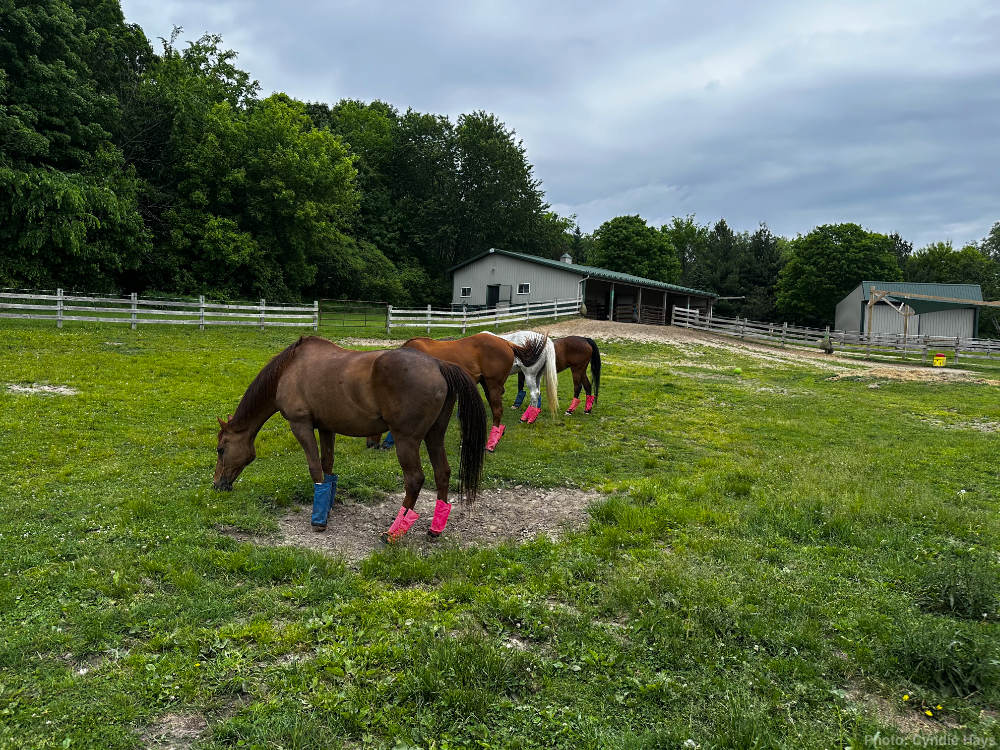
Each time I finished digging up one plant, I would find another one nearby. Soon, I realized that this would become an endless task. Our two big fields may not look like there is a lot of sour dock at first glance, but wherever there is one, you can find another close at hand.
The weed is difficult to pull up because the main root is carrot-shaped and can reach ridiculous depths. I wish our attempts at growing carrots looked as good as some of these.
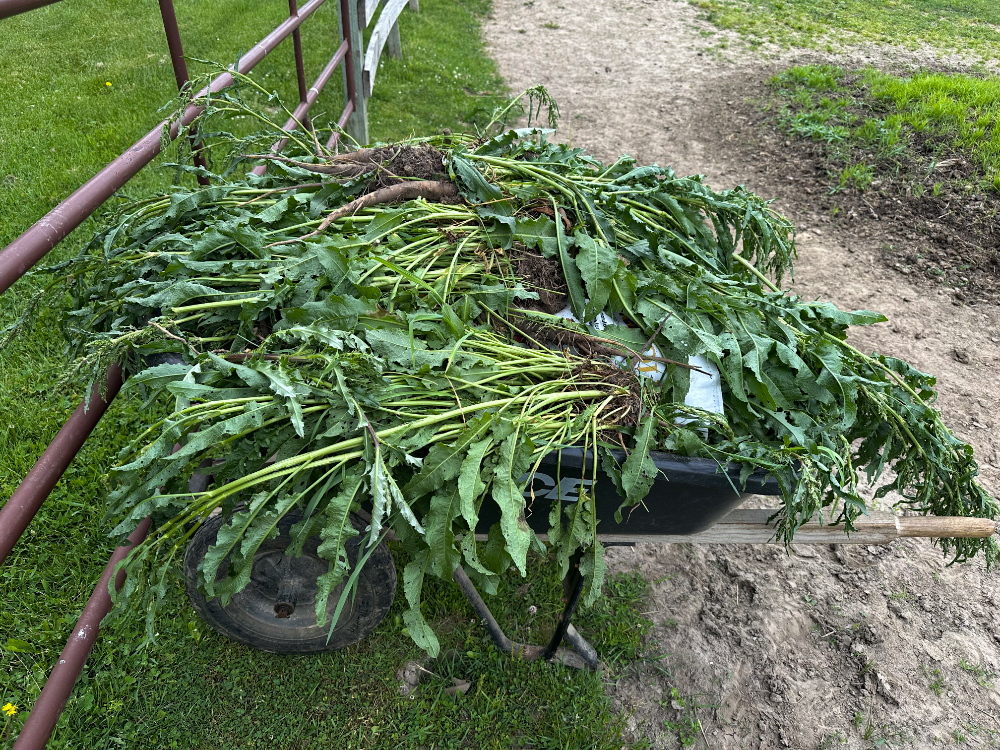
We filled two wheelbarrows full and are now left with figuring out where to dump them so as to avoid any possibility of spontaneous regeneration. It does enough of that on its own.
Away from the fence lines, we resort to mowing the fields to disturb the cycle of growth. The back pasture is more than ready for me to bring out the big tractor and brush hog to knock down the weeds and shorten the grasses to a more enticing blade height for the mares.
The front field we let go until the guy who grazes cattle on the neighboring field has someone cut and bale for feeding his cattle in the winter.
It was so fun having the horses come mingle with us as we worked that we’ve decided to find other activities to do in their spaces that might add a little excitement to their day. Their life of retirement is pretty much filled with napping, grazing, and waiting around for feed bucket servings.
They could benefit from occasional disruptions to their routine, triggering an urge to satisfy their curiosity.
.
.
Watchful Eyes
Saturday was a cold day that froze water in one of our electric water buckets that failed. Then, in the afternoon, what I can only describe as an angry wind showed up and made it feel like we were under attack. Debris was peppering the walls of the barn, and I struggled to push the door open against the pressure. The wetted grain in the horses’ feed buckets froze to the bottom. It was miserable.
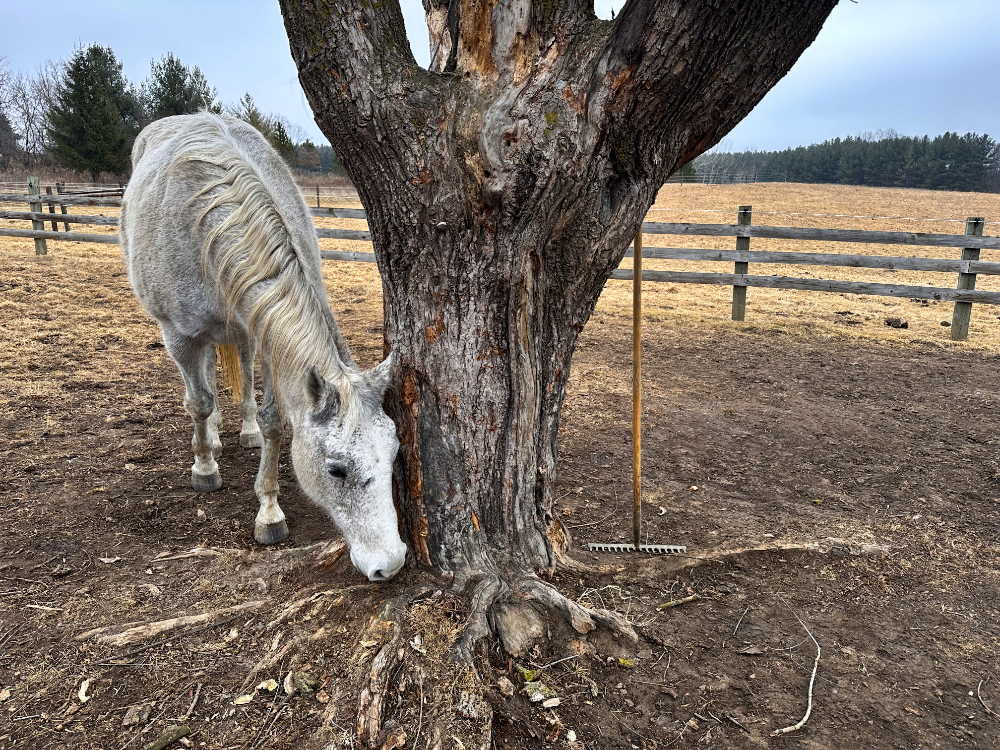 Sunday, I was shocked to find the temperature had warmed considerably, and it was calm enough that fog was forming. It was very pleasant compared to the night before. The relative warmth of the day inspired me to nibble away at the dying willow tree now that I was feeling more inspired about the possibilities for a shade canopy in its place, thanks to feedback from a couple of people who read my post yesterday morning.
I was reminded that I don’t have to do everything at once, so I grabbed a rake and started pulling down dead branches that were hung up in a tangle with all the others. Mix came over to see if I needed any help.
I tried picking up branches as they fell and started tossing them just outside the nearest gate. It didn’t take long for Light to wander over and conduct an inspection of whatever the heck I was trying to accomplish.
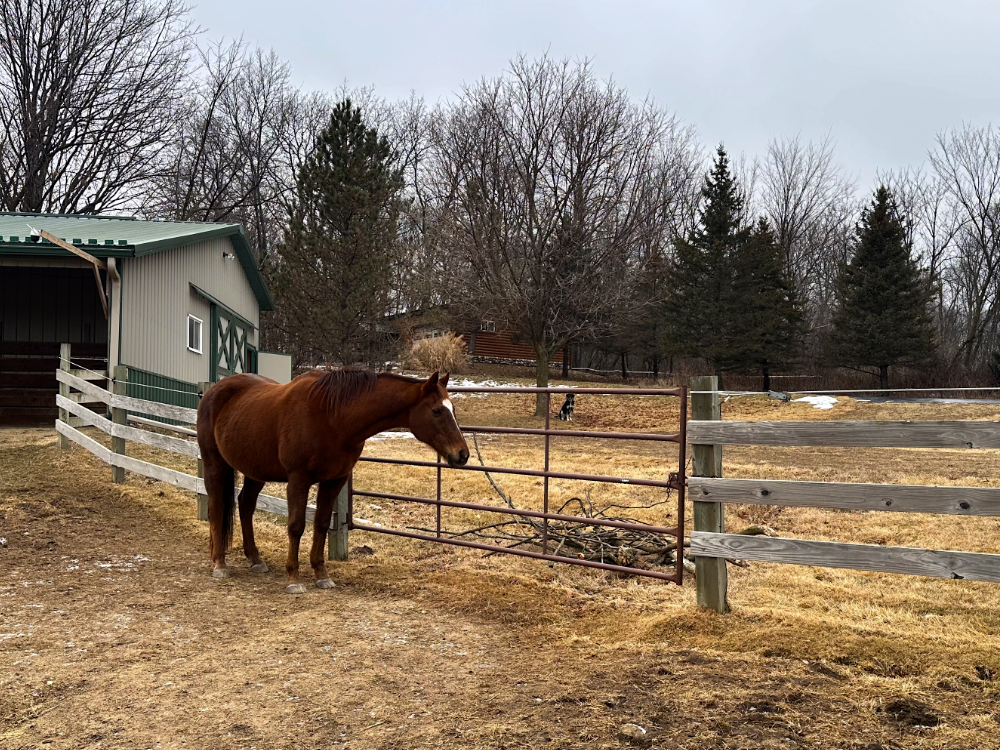
That initial progress was so easy that I decided to return after lunch with a pole saw. Heck, the temperature had climbed above freezing, and the sun was making intermittent appearances. Since I was hoping to bring down some larger limbs, I closed a couple of gates to keep the horses out of the small paddock. The only thing that Swings could do at that point was stand and stare from the other side of the fence.
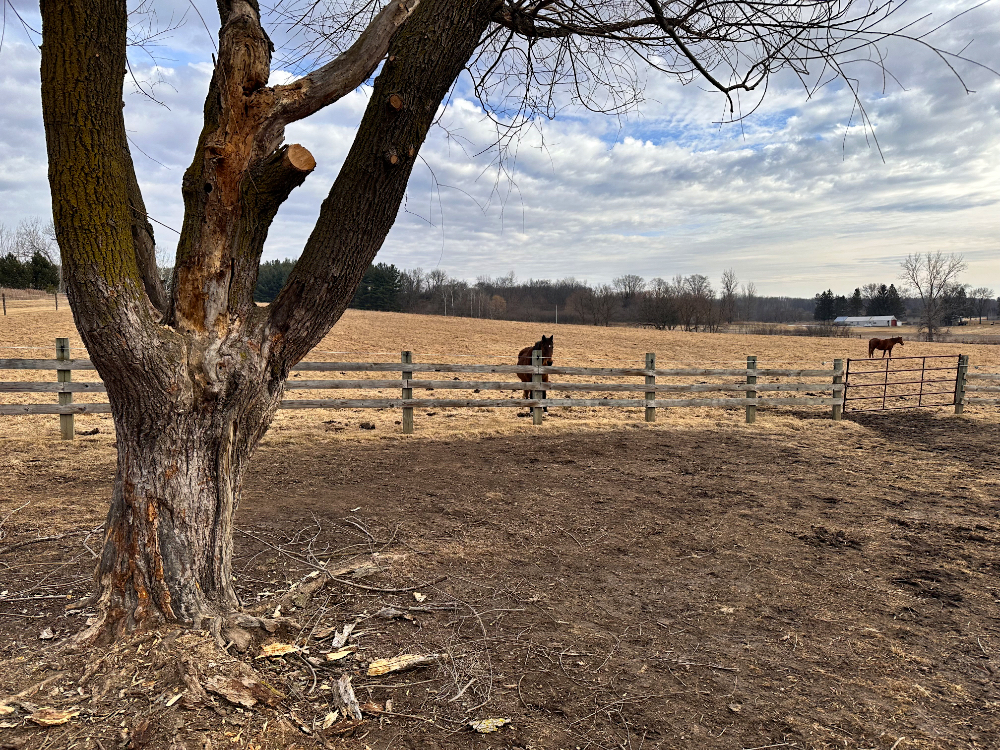
I got the impression she was not entirely pleased to see me dismantling their favorite old shade tree. Mia can be seen in the background of that picture, showing no interest whatsoever in my antics.
I went as far as I could with a handsaw. My pole chainsaw will be part of the next phase, but I need to wait until Cyndie is home since we have a rule against using chainsaws when no one else is around.
How about a side-by-side comparison of my progress?
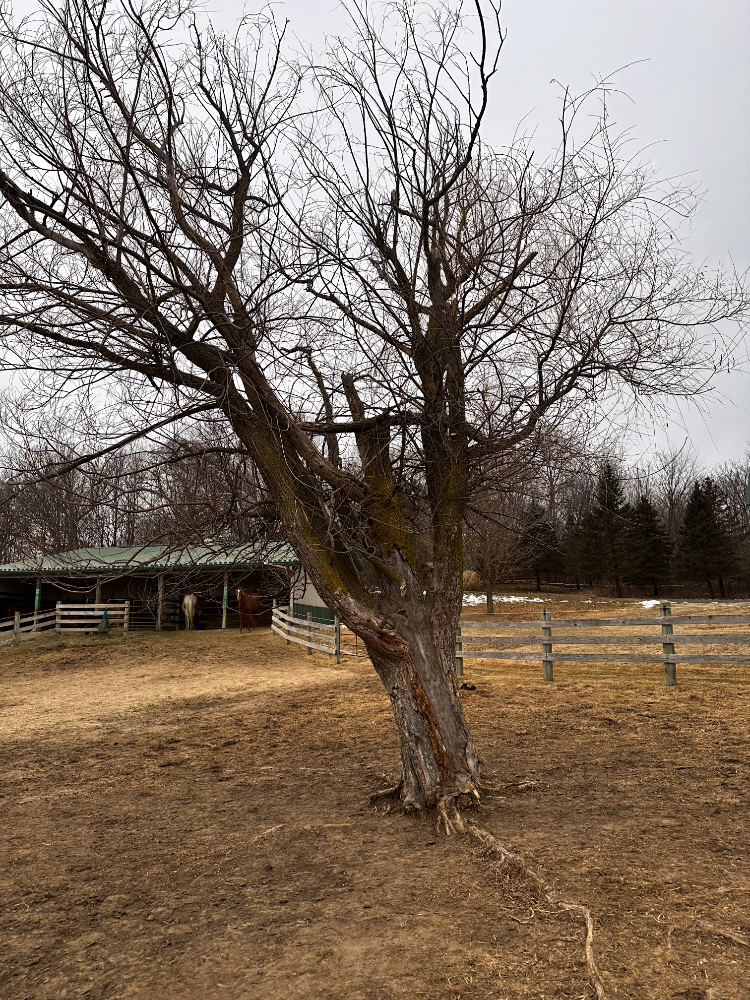
Saturday before pruning
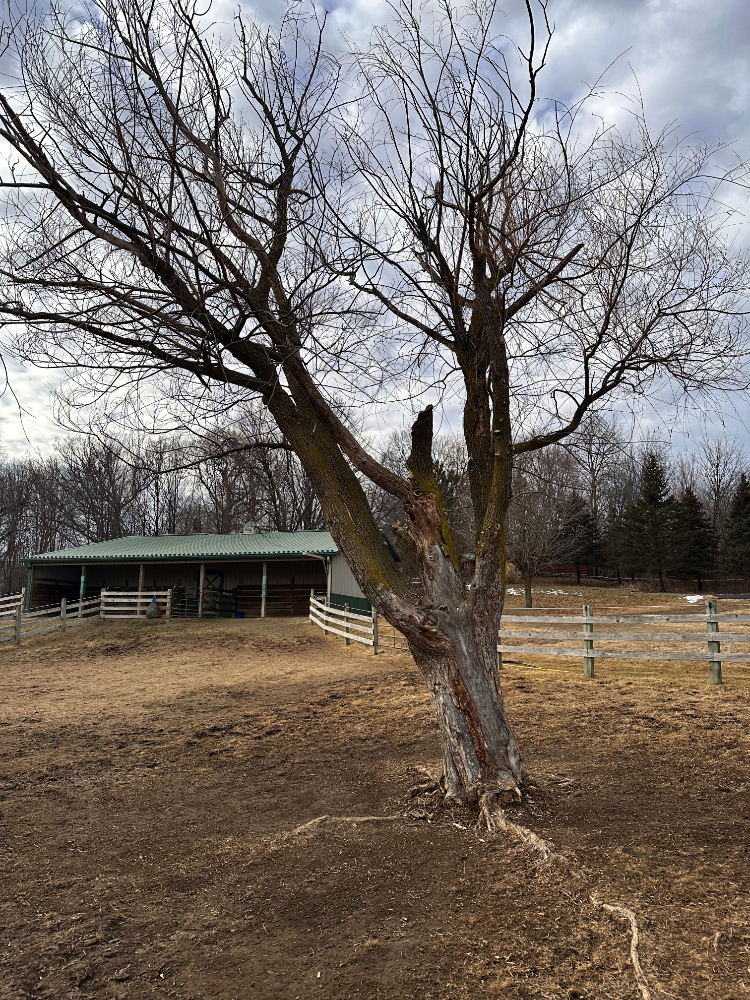
Sunday after pruning
.
.
.
.
.
.
.
.
.
.
.
.
Before I can do more pruning, I have a pile of branches that needs to be cleared away.
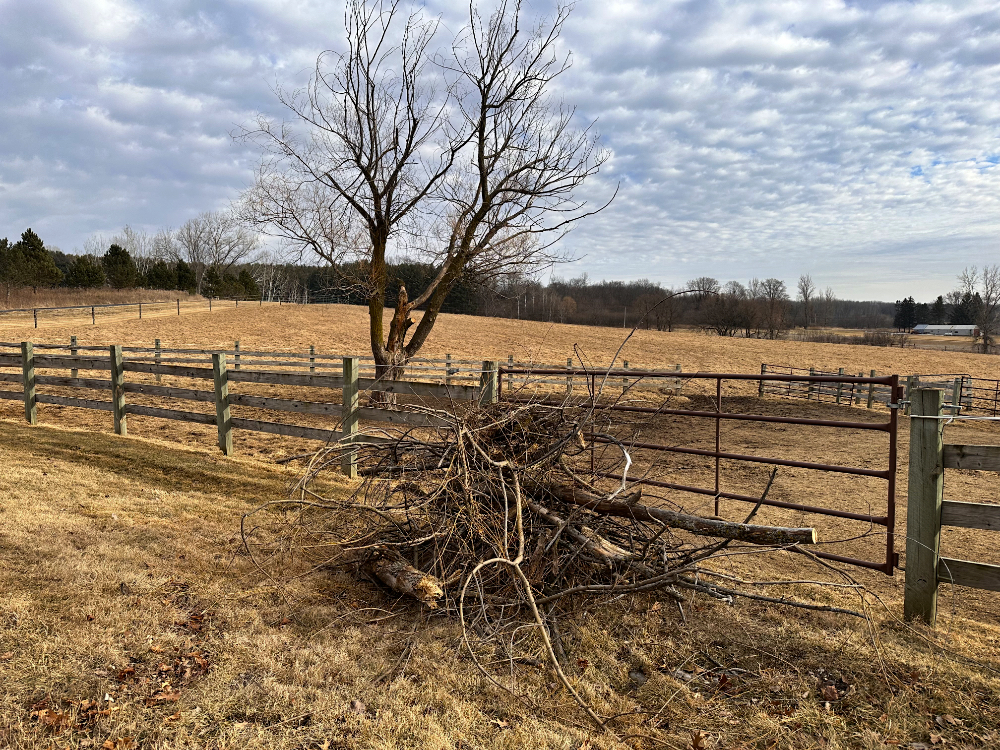
That’s always the least glamorous part of cutting down branches and tends to tarnish the good vibes achieved in the first part of the job. Since I’ve given myself permission to not try to do the whole job of removing the tree all at once, today, I plan to just focus on hauling branches to make that pile disappear.
Cyndie is expected home tomorrow, so if I can clean it all up today, I can see if she notices the difference in the tree. That is, if the horses don’t point it out to her first.
.
.
Bad Chemistry
I am no chemist, but I know what transpired and the results were annoying and stinky, to say the least. This story starts in the dry days of the past summer. Days that became weeks of dry earth and high heat.
Wait, the story needs to start long before that. Skip all the way back to when we first got horses on this property in 2013. The first years we were here were rather wet ones. Put horses on wet ground and what do you get? Mud. Lots and lots of mud.
In the early years, there were several times when we were forced to put up a temporary fence around part of the gravel between the barn and hay shed so the horses could spend a little time off the mud.
The remedy to that mess came in the form of limestone screenings. Our local excavator suggested the crushed and screened limestone as a solution to the slippery mud. It worked brilliantly, although our slopes lend to a fair amount of erosion of the screenings during heavy rains.
The excavator had a solution for that, too. Keep an extra pile of lime screenings on hand to fill in the ravines. It actually worked for us. The weight of horses packs the surface and the hot sun bakes it to a solid surface that keeps the horses out of the mud.
The only downside I’ve seen is the dustiness of the screenings as a ground cover. Horses repeatedly stomp their feet to shake off flies and flies are relentless, so there is a non-stop kicking up of dust.
Anyone who lives down a gravel road knows about dust kicked up when the road is dry. One trick used to control dusty gravel roads is magnesium chloride. It will absorb moisture and leave the road looking a little damp.
What the heck. We gave it a try. Lo and behold, it reduced the dust the horses were kicking up and breathing under the barn overhang.
Jump forward to this past summer when it was hot and dry for weeks and Cyndie found herself spreading more and more magnesium chloride crystals in the area around the overhang. Maybe we used too much.
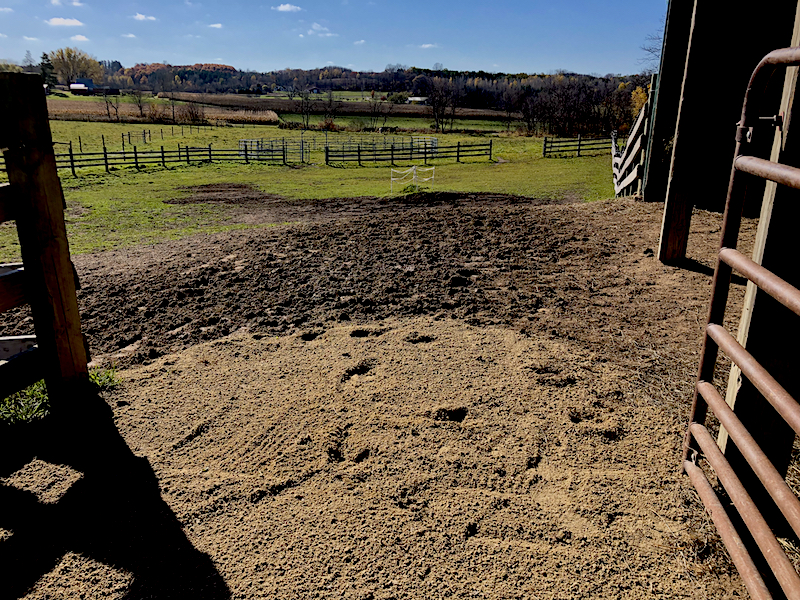 Last week we received some solid rain at an even rate for many hours at a time that was more than we’ve seen for months. The limestone screenings just beyond the overhang turned into a mare-urine enhanced stinky slurry of muddy, slippery limestone mush.
I wish we could magically extract the magnesium chloride, but lacking the chemistry knowledge of what substance might absorb those molecules, I opted for covering it with more limestone. It’ll either provide more material for the mush or it will bury the stinky stuff and get packed by the horses as the ground dries and hopefully will last until the next big wet spell.
That leads to the next complication as the temperature drops. When it becomes dangerously icy in the winter, magnesium chloride crystals work well to melt the ice around that sloping area.
Maybe I need to create a concoction of two parts limestone screening and one part magnesium chloride for ice melt to avoid ending up with more magnesium than lime.
The bad chemistry is actually a mixture of horses, big slopes, and slippery surfaces. There are only two of those three that we would seek to eliminate in this case.
.
.


