Posts Tagged ‘sour dock’
Sour Dock
Also called Curly Dock, we learned of sour dock from a local farmer who was supplying us with small squares of hay back when we had the Arabian horses. He pointed out that it was the only weed in his hay and that horses didn’t like it. It’s toxic for livestock, so I don’t blame horses for not liking it.
Yesterday, Cyndie and I took a crack at digging up the larger sprouts around the paddock, since they are too much for the string trimmer to chew through.
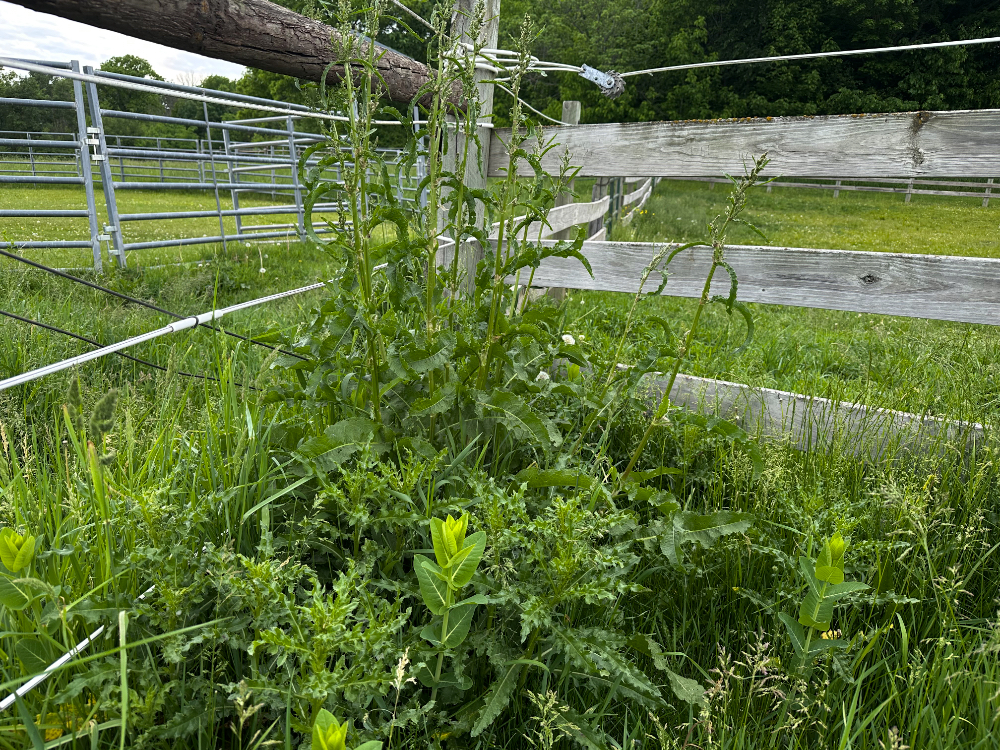
Some of the stalks are beginning to swallow our fence wires. While we were working, the horses wandered over to inspect our progress.
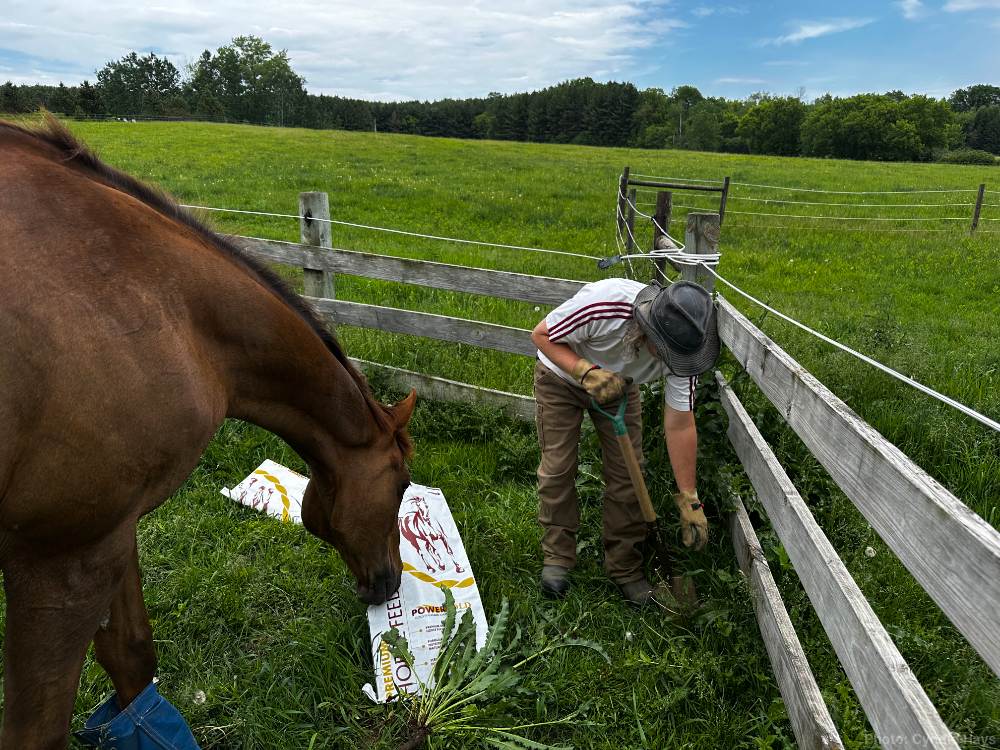
Cyndie had been putting the stalks into old feed bags, but they filled up so fast that she went back and got a wheelbarrow. Mia came over, grabbed a mouthful, and pulled a bunch of them back out of the bag. I thought she was going to eat some, but no, she just dropped them on the ground. She knows sour dock is toxic. I think she was just messing with us.
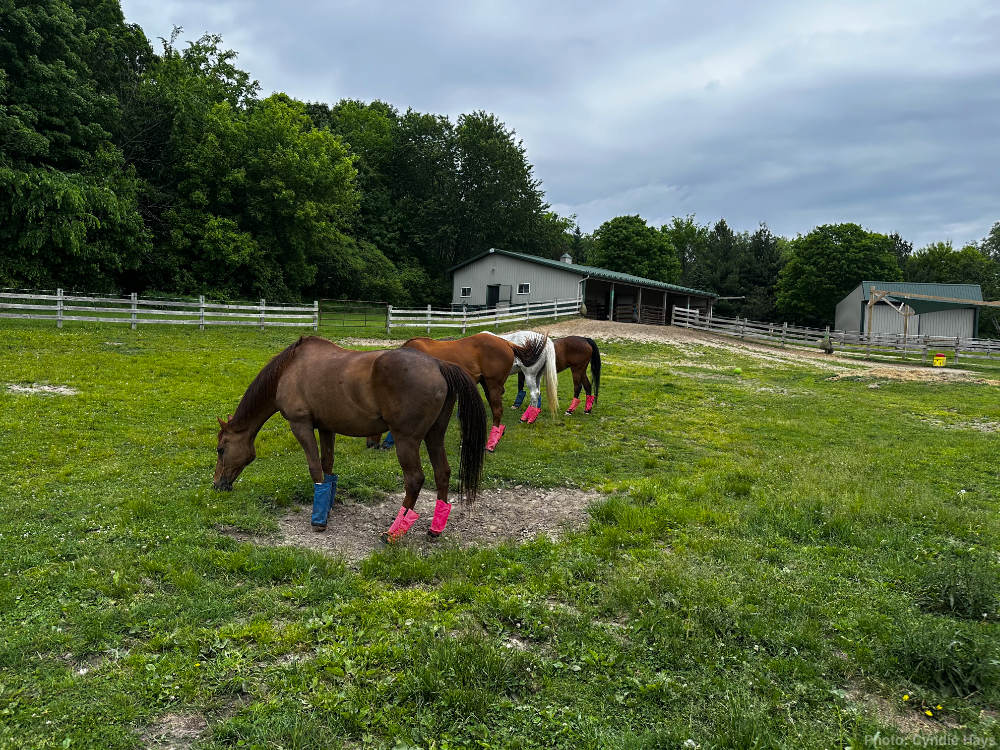
Then the mares turned around and formed a line to graze the short grass in the paddock.
Each time I finished digging up one plant, I would find another one nearby. Soon, I realized that this would become an endless task. Our two big fields may not look like there is a lot of sour dock at first glance, but wherever there is one, you can find another close at hand.
The weed is difficult to pull up because the main root is carrot-shaped and can reach ridiculous depths. I wish our attempts at growing carrots looked as good as some of these.
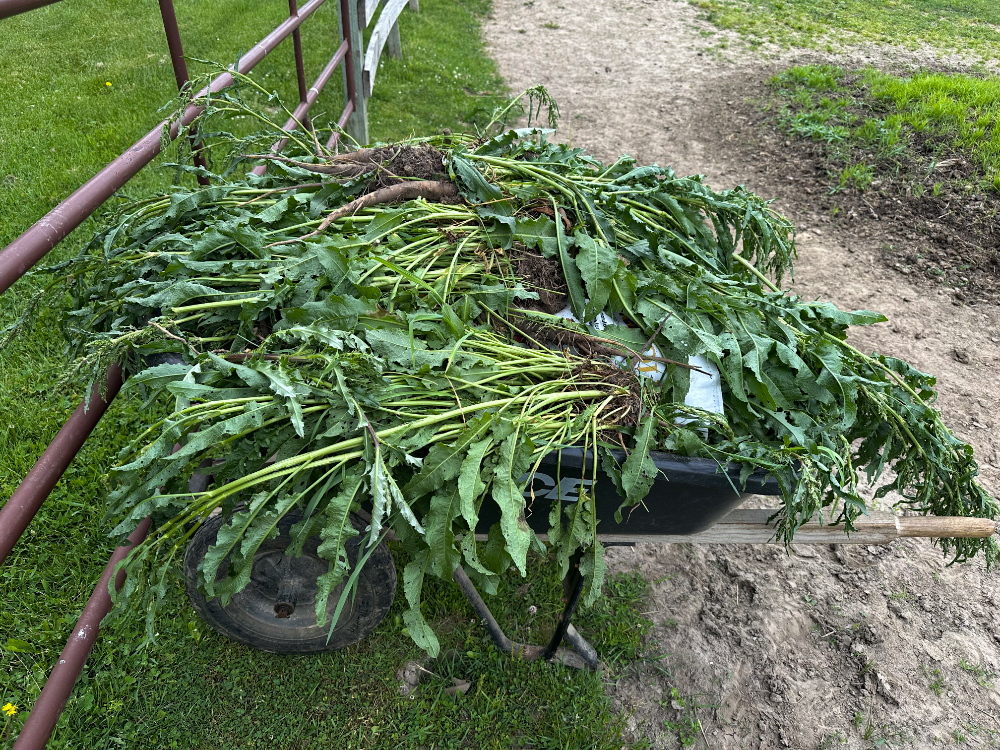
We filled two wheelbarrows full and are now left with figuring out where to dump them so as to avoid any possibility of spontaneous regeneration. It does enough of that on its own.
Away from the fence lines, we resort to mowing the fields to disturb the cycle of growth. The back pasture is more than ready for me to bring out the big tractor and brush hog to knock down the weeds and shorten the grasses to a more enticing blade height for the mares.
The front field we let go until the guy who grazes cattle on the neighboring field has someone cut and bale for feeding his cattle in the winter.
It was so fun having the horses come mingle with us as we worked that we’ve decided to find other activities to do in their spaces that might add a little excitement to their day. Their life of retirement is pretty much filled with napping, grazing, and waiting around for feed bucket servings.
They could benefit from occasional disruptions to their routine, triggering an urge to satisfy their curiosity.
.
.
Paddocks Reclaimed
Mission accomplished on Sunday in my effort to reclaim the paddocks from the unchecked growth of grasses and weeds, some of which had risen to over a meter tall since the beginning of this year’s growing season.

 .
.
.
.
.
.
.
.
.
I got in there with the big diesel tractor pulling the brush cutter and successfully avoided destroying any fences while maneuvering in the confined spaces.
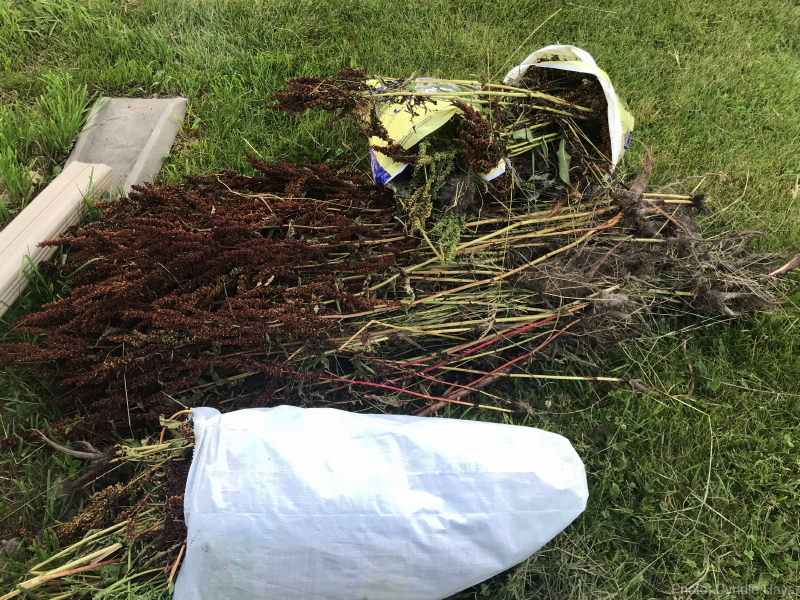 Before the cutting started in earnest, Cyndie and I made a pass through, digging up “sour dock” weeds (that’s the local name for Rumex Crispus or some variation thereof) in hope of reducing their propagation.
We used to get sour dock mixed in bales of hay we bought for our horses and they were not fond of it. Ever since, we’ve framed it as an undesirable weed, despite evidence there are some medicinal and edible features to it.
Then it was off to the mowing races.
It’s always a little unnerving to be mowing blindly over such thick and tall growth, not knowing if I might run over a misplaced tool or any variety of wild critters that may have made themselves a home there. As it was, while walking through the higher-than-my-waist jungle of growth I figured I was wandering in a snake pit, much to my discomfort.
Luckily, no snakes were encountered over the entire duration of this project. A lot of toads and a couple of field mice were about the extent of sightings.
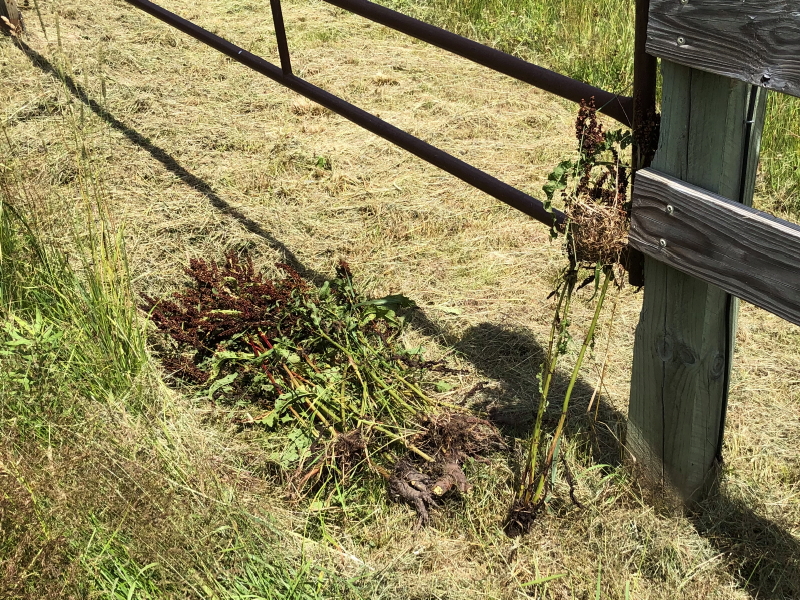
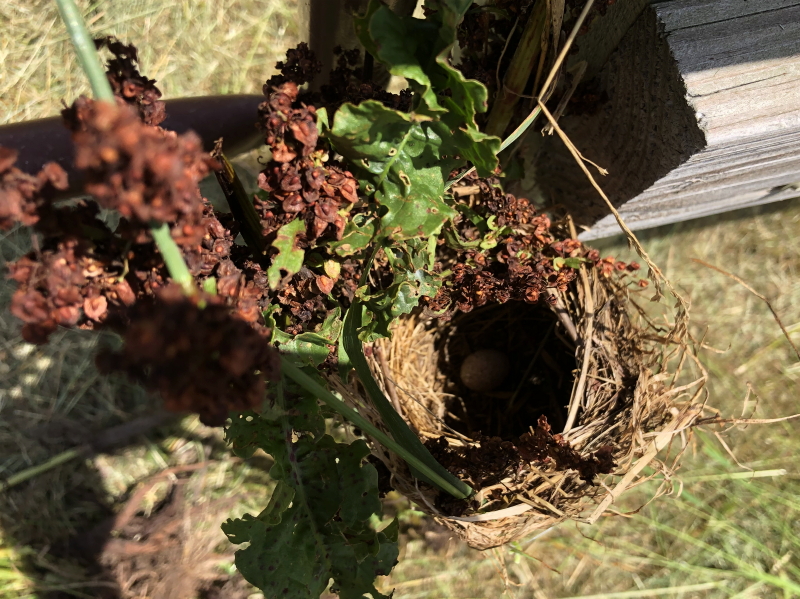
At one point in my hunt for stalks of sour dock hiding among the tall grasses, I came upon a bird’s nest with a lone egg in it. With a total absence of any upset flyers winging their way overhead, I concluded this poor egg had been abandoned.
 .
.
.
.
.
.
.
.
.
Now there is a blanket of cuttings covering the ground in the paddocks. That’s enough for hundreds of nests.
I noticed the three hens wandering around in there right after I finished mowing, picking at the wealth of opportunity, but I don’t think they will make a dent in cleaning up all the deadfall.
We’ll simply leave it to dry up and break down where it lays.
Maybe that covering will slow new growth so I won’t have to mow it more than one more time by the end of the summer. I don’t enjoy operating the diesel tractor so close to fences, especially inside the corners.
The paddocks almost look like we have horses again!
That’s so much better an impression than the neglect all that wild growth has been emanating.
.
.


