Posts Tagged ‘problem solving’
Manure Rake
Tractor Supply calls it a rake, but I tend to refer to it as a scoop, although fork could also work if you stretch your thinking. It is the tool I use every day to clean up after the horses under the overhang and within the two paddocks. It quickly earned its place as my favorite tool for the job. Unfortunately, it has a flaw in its design that results in a 100% failure rate over time, where the plastic breaks at three key stress points.
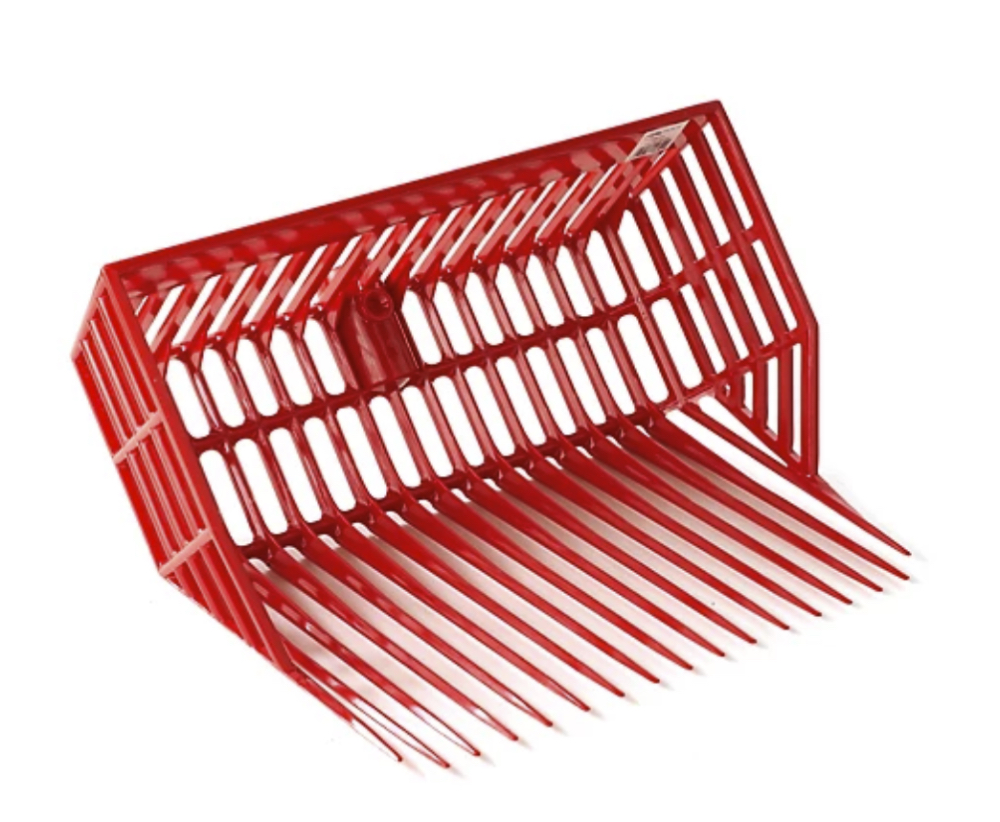 Once that happens, the tool’s days are numbered.
Before it even reaches this level of failure, I will have needed to bear down at least one time on the screw holding the handle to the fork basket to stop it from wobbling, but that’s an easy fix.
They aren’t cheap, but I am so attached to using this tool over all others I’ve tried that we keep buying replacements. Since I am not very good at throwing things away, I have a backlog of broken baskets and saved handles stashed around the property for other potential uses and occasional “aha moments” where I figure out a new idea for repairing them for use again.
A previous attempt to epoxy the plastic in the three places where it breaks gave out after the first use. That triggered an experiment I tried yesterday using a torch to melt the plastic. Wary of the possibility that the areas of the breaks might simply open wider from the heat, I took a trick from welding and used a single plastic tine from a different broken basket to melt into the cracks.
The plastic appeared to singe and burn as much as it melted, which wasn’t ideal, but there was enough melting that I think the idea has merit. This first attempt seemed solid, but when I used it, there was a noise that sounded like it might have cracked again, so the method may need to be improved. A wood-burning tool might be a better heat source than the open flame of a torch, but I’m not sure how I would keep the plastic from sticking to the tip.
I never learned how to weld metals, but I may end up teaching myself how to do the equivalent with melting plastic. It will be an art worth perfecting because these plastic scoops really are my favorite tool for the job, and I’ve got plenty of them lying around that are deserving of repair and to be put back into service for which they were designed. (They work pretty well for scooping up grass clippings that pile up when one has waited too long between mowings.)
.
.
Leaving Early
I am departing at dawn this morning to dash home early from the “Golf Weekend” in order to then drive more than an hour west for Cyndie’s 50th high school reunion. They are starting with a boat cruise on Lake Minnetonka, then coming back to Eden Prairie for an “after party.”
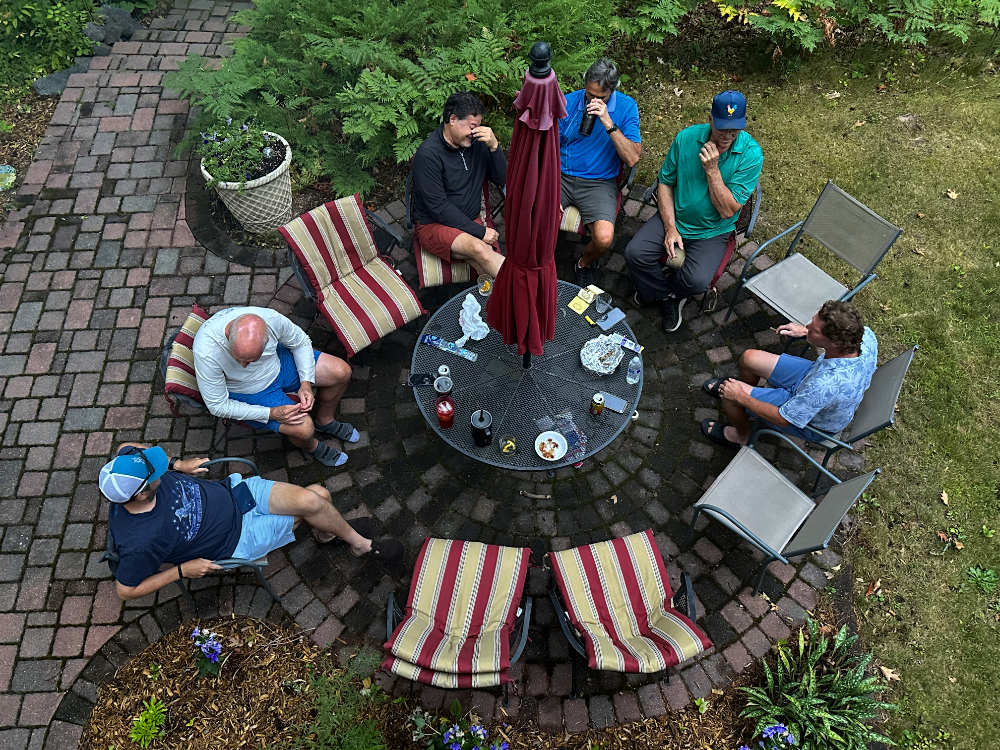 The plan seems a little dizzying to me after my last two whirlwind days of activity and conversation with the regular crew of the annual weekend that Cyndie’s brothers host at the lake place.
Yesterday started a little rainy, but that didn’t stop the golfers.
I waited until late afternoon to head out on the bike with two other riders. We got dripped on a little bit, but returned to the house before it rained hard enough to get things wet. Nobody crashed, so that was a win.
Dinner was grilled meats, corn on the cob, and a few sides. Since they realized I would be leaving and would miss the big fish dinner tonight, they thawed a little fresh-caught Alaskan Salmon for me that Ben’s son, Beck, brought from his recent fishing trip.

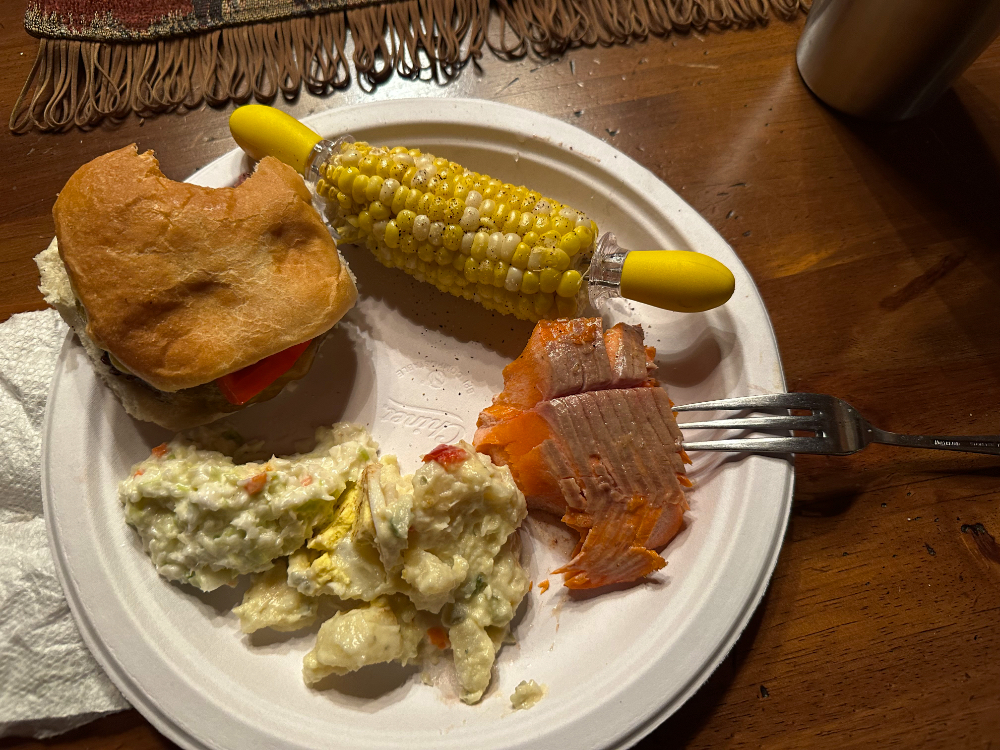
More delicious food, keeping up a trend of good eats I’ve been feasting on lately. I’m not confident that I’ve done enough pedaling to justify my higher-than-normal calorie consumption of late.
I made a few more adjustments to my gear in a search to quiet my noisy bike. Putting the battery back on appears to have ended the annoying click I was experiencing in the vicinity of the bottom bracket, but that just made what seem like new squeaks extra irritating. I rode yesterday without my seat bag of road repair gear to see if that was adding to the squeakiness. It may have been better, but it wasn’t silent yet. My right shoe was doing some squeaking, so I’ve got a little tweaking to do there.
I think the problems might be a moving target that I’ll just have to learn to live with.

We ended the evening with a card game that involved dealing only one card to each individual. You just have to beat one other person, with the lowest card being the loser. Each guy started with three chips. The first person to lose three times and run out of chips gets to return to the game with one chip when play drops down to just three people left.
Last night, the person who earned that dubious honor came back to win the whole thing. It was highly entertaining.
The camaraderie is something I will miss, but I’m heading to a big night of visiting at Cyndie’s 50th reunion this afternoon and evening that I expect will fill the void nicely.
.
.
Braving Futility
What is with the gall of these poison ivy sprouts brazenly making a move into the mowed path along the western fence line of the back pasture?
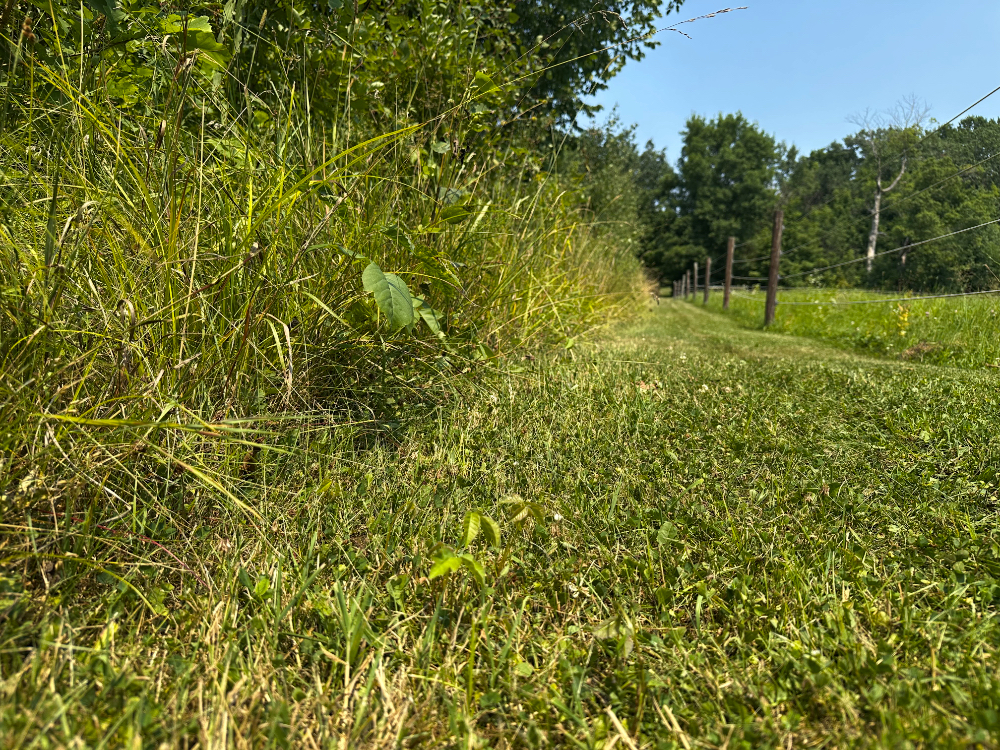
Is nothing sacred?
Don’t bother answering that; it was a rhetorical question. I know the way nature works. My attempts to wrangle the persistent growth on 20 acres into submission are basically Sisyphean futility.
Speaking of futile… I failed to reach success in an attempt to retrieve data from a remote hard drive with a broken USB connector. A local guy had been advertising his tech services heavily on the neighborhood app, “Nextdoor.” Cyndie suggested I contact him to see if he could help. We like to support the local businesses.
I was so happy to connect with him that I neglected to clarify that all my devices are Apple. Turns out his first strength is PCs. Still, a hard drive is a hard drive, and he took a shot at communicating with the Western Digital drive using a docking station and two of his software tools. No go. We decided to try plugging his docking station directly into my iMac, but the drive was not recognized.
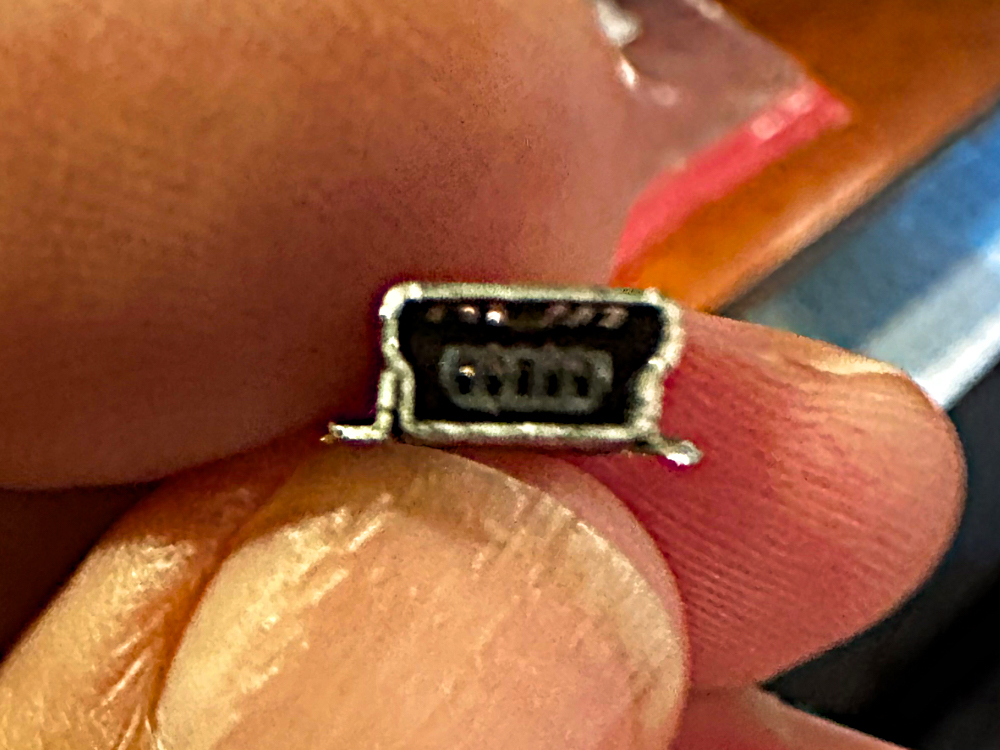 It became obvious that the intermediate circuit board from which the USB connector broke, which we had been hoping to work around, performs some necessary role in communicating with the drive. That realization led me to search for a replacement assembly and/or forum discussions related to my dilemma. It turns out that the little surface-mount mini USB connector has broken off its circuit board for plenty of other folks, as well.
Buying a replacement connector won’t be easy, but it’s not impossible. Finding a way to have a skilled person solder the 5 teeny tiny pins onto the itsy bitsy pads on the board will require a fair amount of research and likely a strong dose of sweet-talking. The number of retail options for this kind of work is pretty small in this neck of the woods.
I’ve got my work cut out for me on this one. It would sure be handy if I still worked for a business that did this kind of thing every day.
What was I thinking, moving so far away?
Don’t bother answering that.
.
.
Error Code
Before the sun came up yesterday, I heard rain falling on the roof. By the time we got out of bed, the precipitation had passed, but it looked like it had knocked the stuffing out of one of the trees over the driveway.
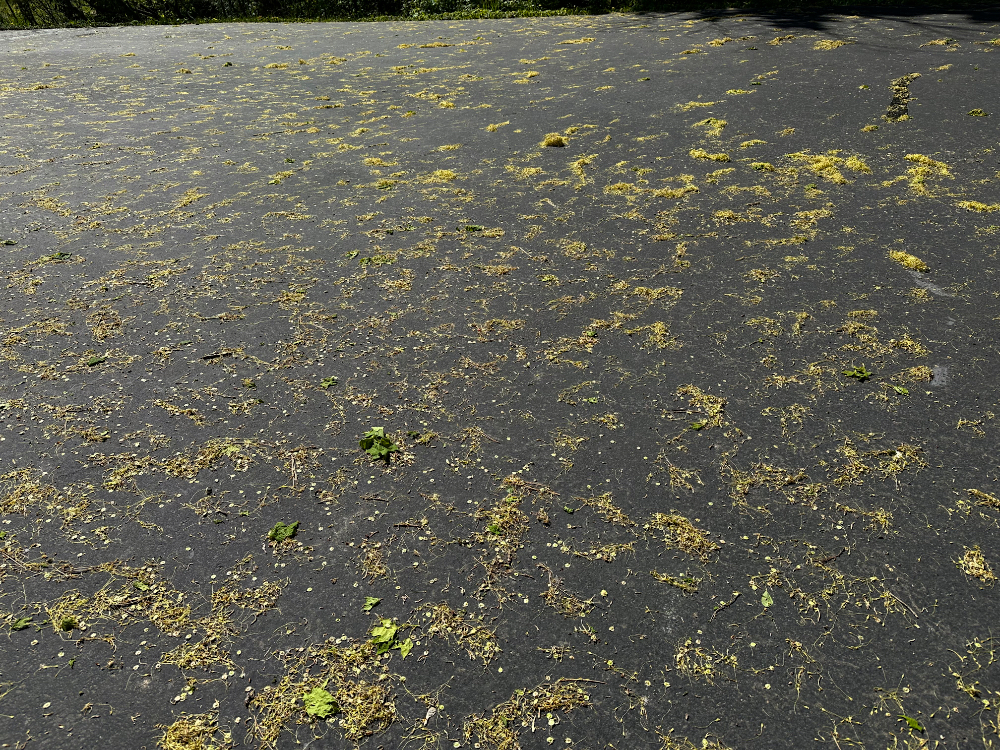
As the day progressed, the wind picked up significantly. In the afternoon, all of that debris was rolling together into large fuzz balls. Nature making a big mess.
Lacking tangible support from the manufacturer of my battery-powered riding mower, I ended up making a mess of my own to troubleshoot the recurring error code.
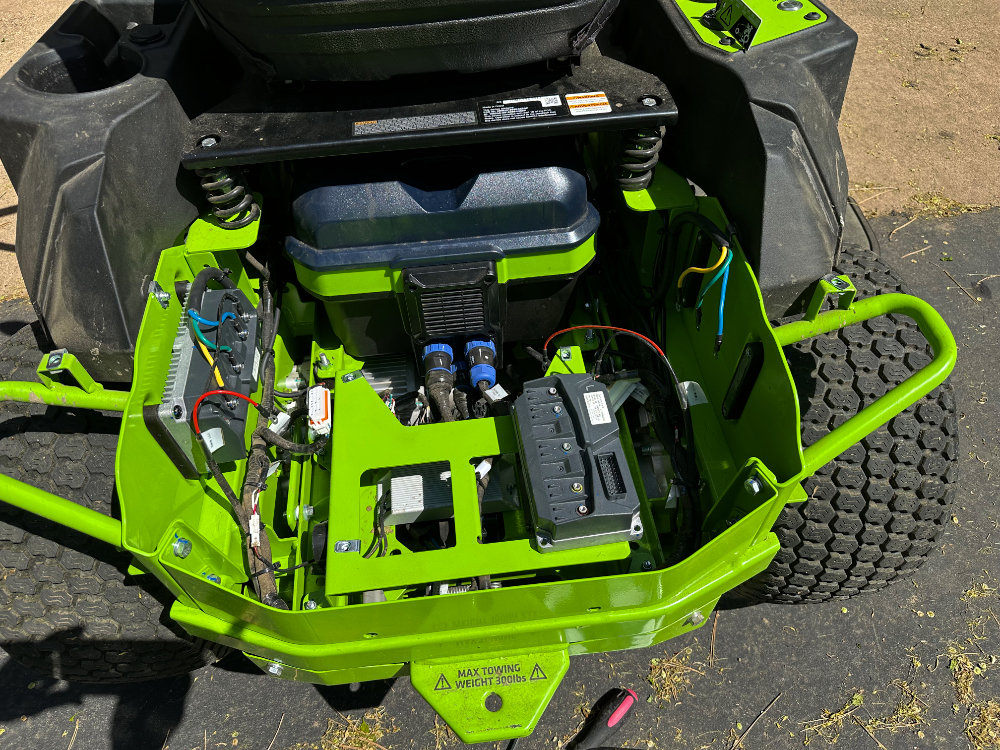
After determining that the left and right blade controllers were identical, I swapped them. The problem didn’t change. That pointed me to the blade motors, which also happen to be identical. I swapped them next. While I had everything apart, I decided to install some new blades I had on hand when putting it all back together.
With everything back together, I set off to do some test mowing to see if the error reappeared. In a classic situation, which technicians are well familiar with, no error code occurred for the rest of the time I mowed. The only reason I quit was that the batteries needed charging.
It appeared as though I fixed it by taking it apart and then putting it back together again. That is not as rewarding as it seems it should be.
When the batteries were fully recharged, I set out to finish mowing the area where I had left off. From there, I figured I would take as much advantage as possible and mow any area overdue for a trim. A short time later, the PTO shut down with the return of the error code.
I had not fixed the problem. Only bought a little time between failures. However, the error code had changed, following the motor that had been moved from the right side to the left. The problem has been narrowed down to the (formerly, right) blade motor.
I’m expecting a call back from a designated service provider in St. Paul this morning with information on ordering a replacement motor (since the manufacturer shows little interest in offering support after the run-time hours have exceeded their warranty period).
The best part of working on the battery-powered riding tractor is that my hands hardly got dirty. No gas smell, engine oil, or grease. Just turning screws, pulling connectors, and attaching wires to clean, dry electronic components.
It was a real treat to be working in my preferred element.
.
.
Mower Issues
Just when I thought I had figured out how to resolve an error code on my Greenworks riding mower, the problem has now been recurring after about five minutes of use. The code hints at overheating, but I am very suspicious about whether or not that is what is happening.
Service support alerted me to the fact that a single blade of grass can get caught in the space around the motor spindle and trip the sensor. They recommend frequent use of compressed air to blow from beneath the deck. That solved my problem the last time I was having issues.
When it wasn’t helping with the current rash of problems, I resorted to pulling the blade, thinking I was working toward removing four more bolts to get at the motor. What I found stopped me from going any further.
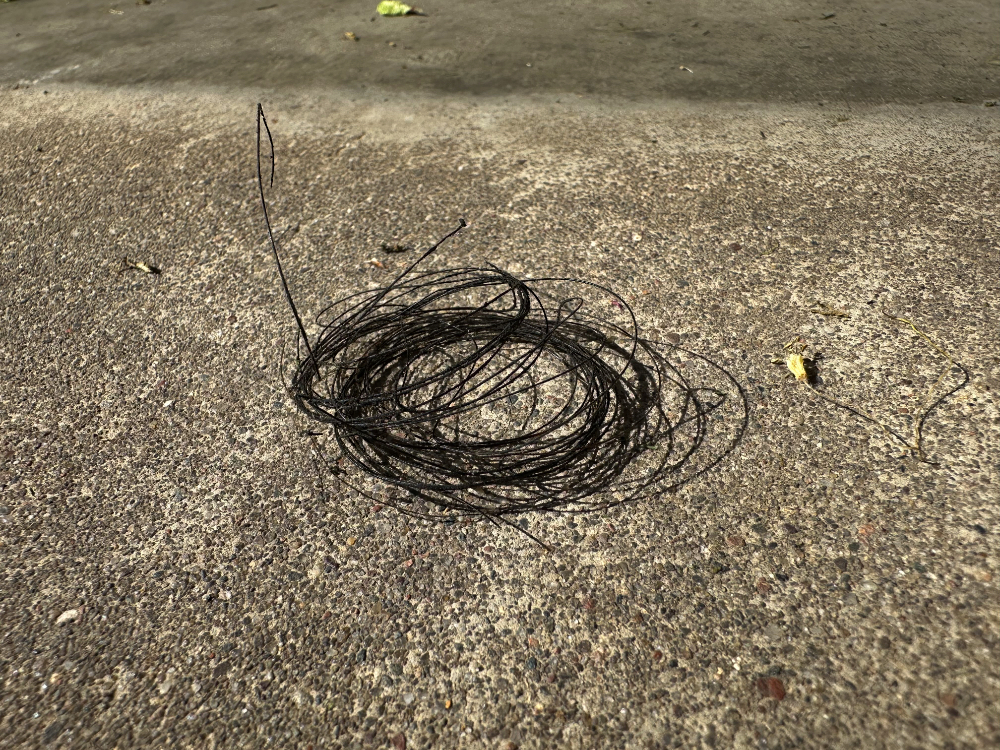
There was a thin plastic line wrapped around and around on the spindle. If a blade of grass can be a problem, that surely must be what was triggering that motor sensor. I bolted the blade back onto the spindle and turned the key. The error message was gone.
I triumphantly set off to resume mowing. A few minutes into it, the PTO snapped off, and the error code was showing on the display.
It was late, I was tired, and lacking the spirit to continue doing battle, I parked the mower and hit the shower.
I’m happy to have the distraction of Mother’s Day this morning, which I can use as an excuse to ignore the mower problem for a while longer. We are headed for a brunch to honor several mothers for a few hours.
That’ll give the mower more time to think about what it’s doing wrong.
.
.
Project Successes
Lately, I’ve found myself tending to a variety of small projects, with varying degrees of luck in achieving the desired outcomes. One that felt the luckiest and, as a result, the most rewarding involved replacing the mechanism for the kitchen under-sink garbage pail slideout.
When the mechanism we’ve had for years quit working –it had been losing bearings for a while– we ordered a similar one I found online. When I removed the old one, I discovered the particle board was busted up around the back screws from when the trash pail was pulled out with too much weight in it, and it had popped the screws out.
I visualized a solution of mounting the replacement rails to a piece of sheet metal and then screwing that sheet metal into the wood in new, undamaged areas. I only needed two flat-head machine screws to attach the rail frame to the sheet metal, but I couldn’t find anything except wood screws lying around. I imagined I’d have to buy what I wanted from the hardware store, figuring that would be a frustrating search.
On a day when I would be driving past a store, I decided to make one last survey of the shop to look for screws before trying to buy them. That led me to two small cabinets of drawers on a bench in the back that I have no recollection of ever having seen before.
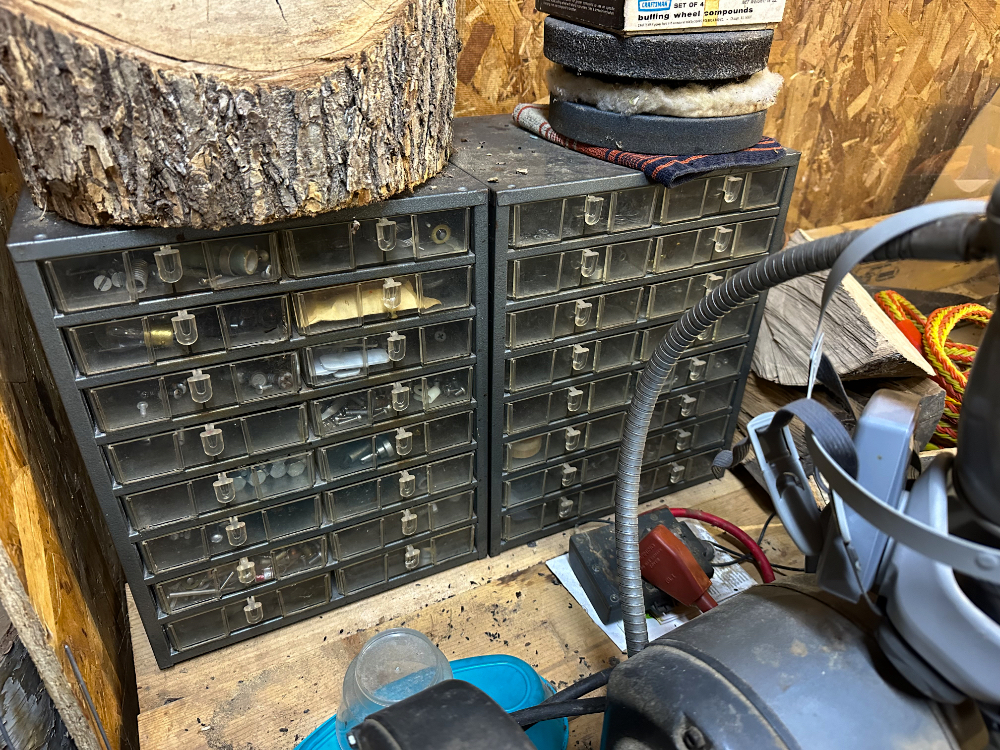
I methodically began cycling through the drawers and was rewarded with exactly what I wanted to find.
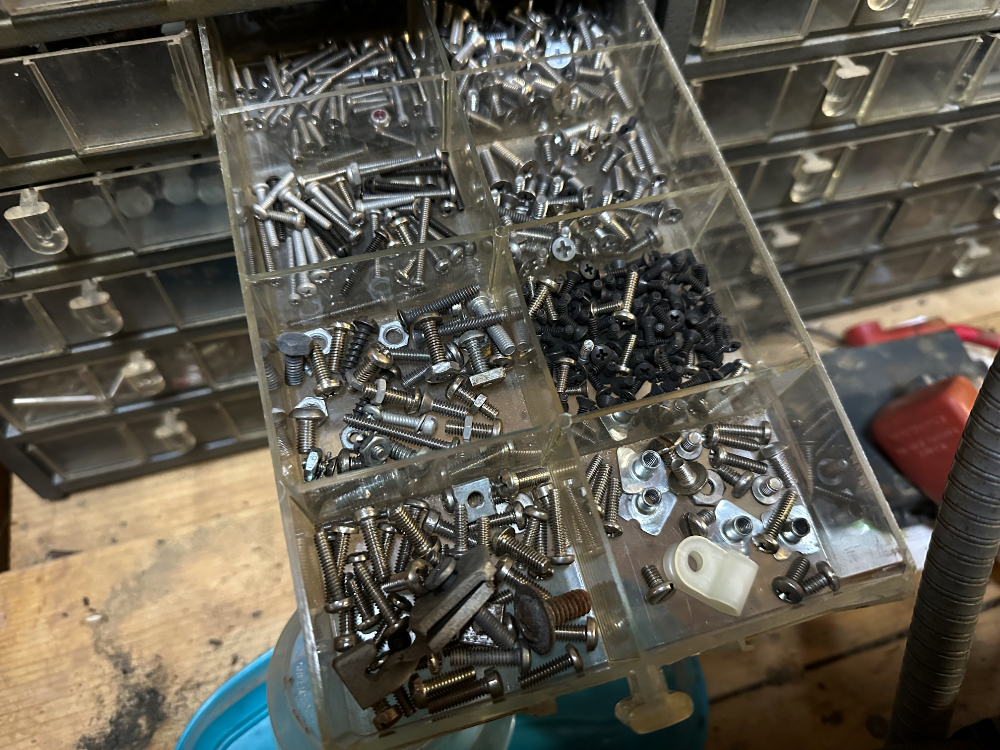
I have no memory of where they came from, but I’m happy to have them, and this allowed me to finish the installation of the sliding rig for the under-sink trash bin. Boom.
My less successful endeavor involved replacing a bathroom fan at Elysa’s house. Without being able to find an exact replacement, we were left trying to make something reasonably close work. I couldn’t get the old box out because it had been installed before the ceiling sheet rock was finished. There is no access to the tiny space above the ceiling, so it is going to be a bigger remodel project than I want to tackle.
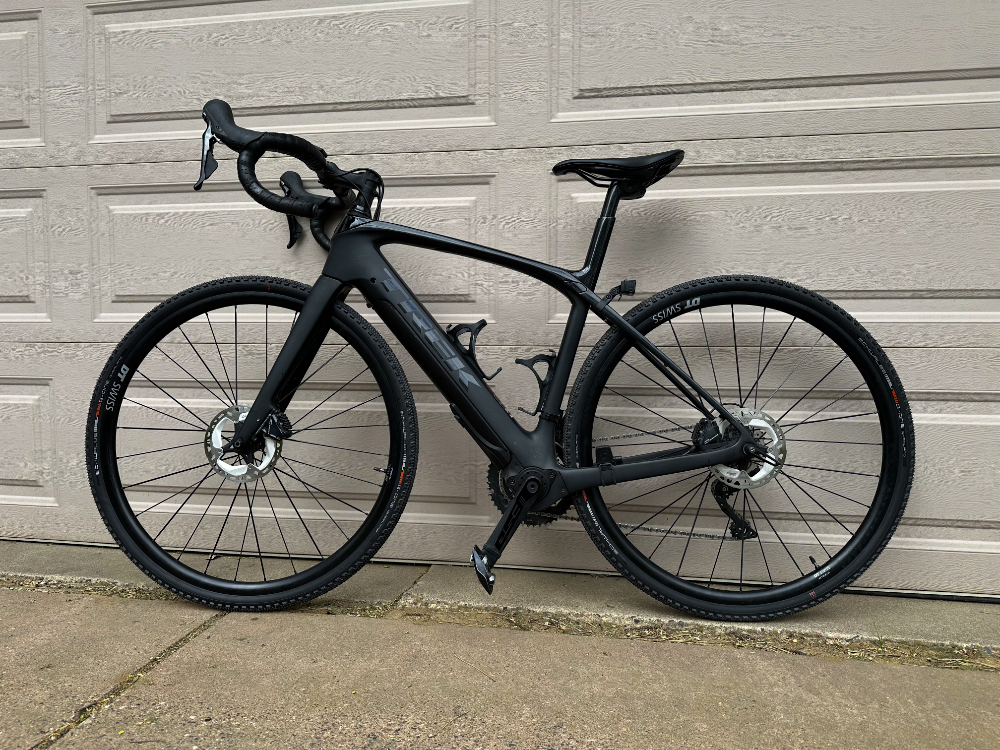 My project yesterday had me dabbling in my first-ever tubeless tire change on a bike. I had purchased new tires that are more gravel-compatible to replace my road slicks. It has been a long time since I dealt with the challenge of stretching a tire bead over the wheel rim. It got easier with each attempt, thankfully, but my hands and thumbs suffered a beating from the exercise.
Based on the success that I ultimately enjoyed, I’m feeling like I’ve now got the hang of dealing with tubeless tires and the liquid sealant they require. That’s a dramatic difference in experience from a year ago.
Knowing what hardware is stashed in the shop and getting some practice with tubeless tires can surely improve the odds of small project successes.
.
.
Awkward Delivery
In the middle of the day yesterday, I received a text warning of a delivery of feed for the horses expected to happen in 40 minutes. I headed down the driveway with Asher, hoping to meet the driver on the road, in case he hadn’t been here before. Previous deliveries have gone the smoothest when they park their huge box truck on the road and use a three-wheeled forklift to travel up the driveway to the barn.
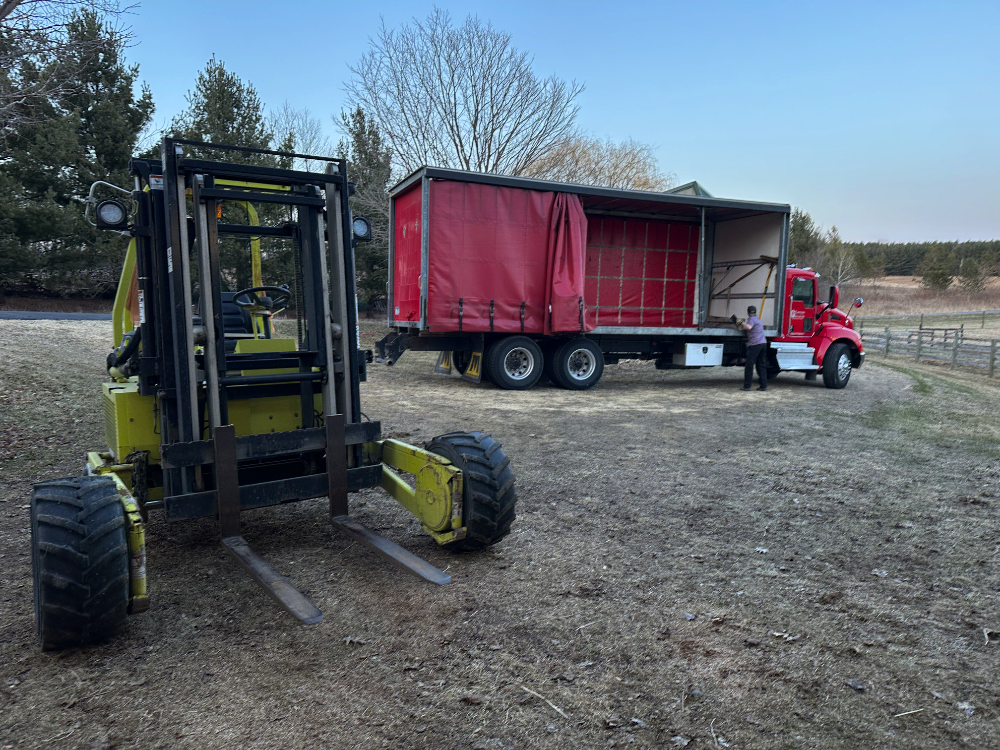
I’m glad I was there when the truck arrived, but it didn’t make much difference in the end. I don’t know how many drivers they have, but it was another first-timer. He appreciated my advice; however, the truck he was given didn’t have a forklift. It had a folded liftgate on the back and two versions of pallet jacks inside, neither of which would work on a gravel surface.
This was a first since This Old Horse started using this supplier for feed. I invited the driver to walk up and take a look at the situation himself to see if we could conjure up a method that could work. He decided it would be possible to back the truck up to the barn, and we could transfer the 40 bags by hand. I wasn’t worried about that solution, since I had moved one entire pallet-full by myself just two months earlier when the barn doors were frozen shut. Two of us could make quick work of moving 40 bags.
As the driver maneuvered the truck into position, I saw his tires sinking deep into the turf beyond the area of gravel. Those ruts will complement the many holes made there by horse hooves when they got loose on Cyndie a couple of weeks ago.
I don’t know what the load capacity of his lift gate on the back of the truck is, but it looked like he was severely taxing it when the loaded pallet settled onto the wobbling gate. He struggled mightily to get the tongues of his electric-powered pallet jack out from under the pallet because the significant bend of the straining gate made the angle almost impossible.
Once he was able to lower the gate down to stable ground, it was a reasonably easy effort for the two of us to move the bags a couple of steps to an empty pallet inside the barn. It was an overall awkward process, but a reasonable solution that avoided him driving the load back and waiting for a different truck to be able to re-deliver to us some other day.
I’m all for creative problem-solving. As a bonus, I kept the pallet the bags were on, instead of having him take it back, like I usually do. It looked like a good candidate for containing compost piles.
.
.
Horses Walkabout
Just because something has never gone completely wrong before doesn’t guarantee it won’t happen eventually. Horses have an amazing ability for stealth when they so choose. If one were to leave barn doors unlatched and the alleyway gates unchained while focused on adding a few shovels of lime screenings under the overhang, like Cyndie did last night, who knows what could happen?
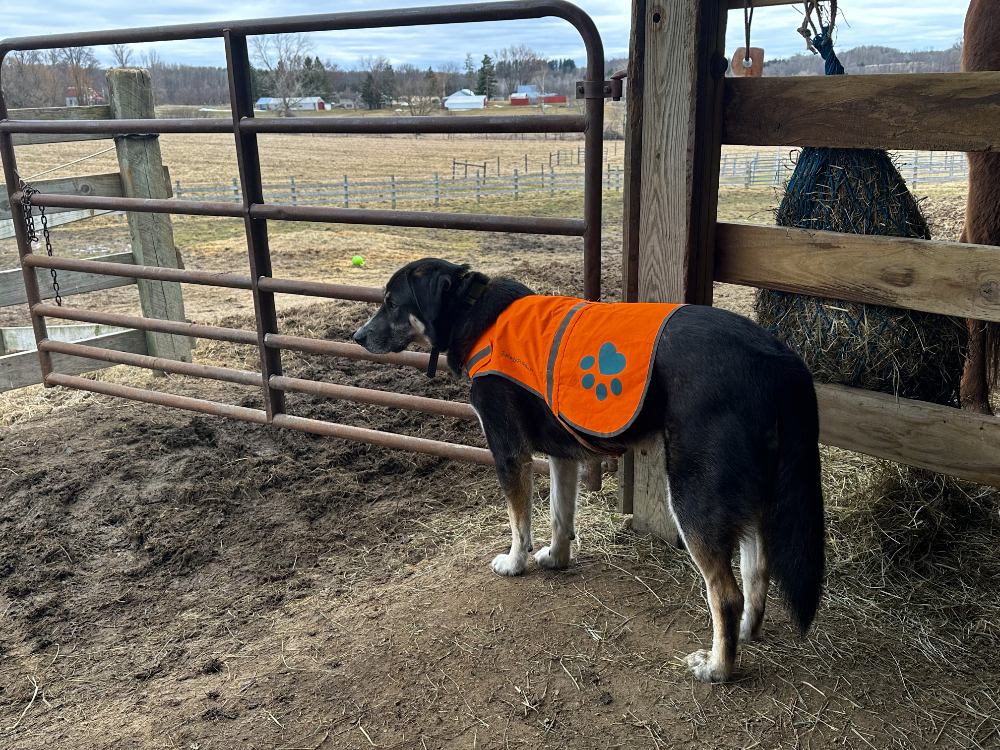 Cyndie had taken Asher along in the fading daylight after dinner on a trip to the barn to collect empty feed buckets. I was comfortable on the couch in the loft in my after-shower night clothes when I got a call from her, informing me that the horses had gotten out.
There is no hesitation to be had when receiving a message like this. I slipped my bare feet into boots and stepped out the front door to greet all four horses in the yard, looking rather unsettled. My presence was enough to turn them back toward the direction of the barn, where I could hear Cyndie shouting for Asher, who was darting about as if he couldn’t decide whether to herd them or prance around along with them.
Thankfully, when the horses showed a hint of interest in getting back to their safe space, Cyndie was able to open a gate to the small paddock and usher them through it with gentle encouragement.
It had only taken a few seconds of Cyndie being distracted with her task for the horses to move themselves silently up to the unchained alleyway gates and nose their way through. She spotted them as the last of the four disappeared into the barn. Asher had been out by the hay shed, but came running into the barn through the small front door to see what was up.
They must have passed each other because he popped out under the overhang to let Cyndie know something was totally out of order. The horses apparently went straight out the small front door Asher had just come in, because by the time Cyndie got in there after them, they were gone.
She told me they had headed down the driveway in the opposite direction from the house when she called me. From the high point on the driveway, near our rocking chairs on the lookout spot, Cyndie said the horses turned and sprinted on the asphalt at full speed toward the house.
I’m sorry I missed that. It must have been a raucous clamor of hooves and a spectacular sight.
The rule violation that occurred is having left both small barn doors unlatched at the same time that the alleyway gates were unchained. The inside ones can be optional, but only if the outside doors are all latched.
The odds of one, let alone all four of the horses, choosing to test and immediately pass silently through the unchained gates at a time when both barn doors were also unlatched are very unlikely.
But it could happen. They proved that emphatically last night.
Like Dad
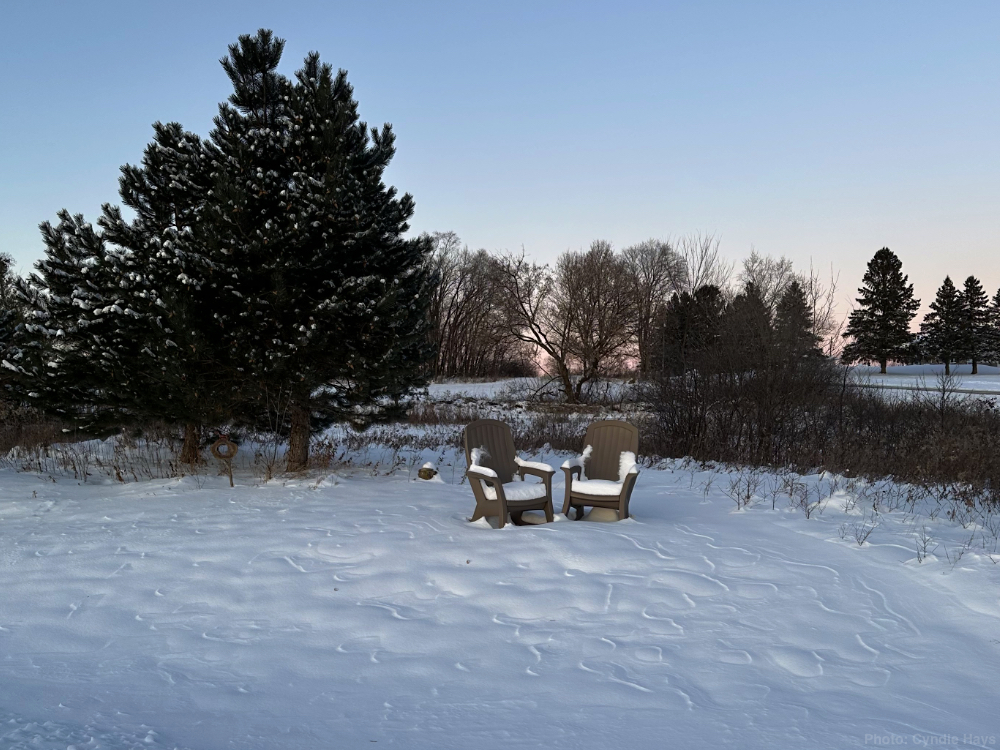
Baby, it’s cold outside. The horses had frosty whiskers this morning, to rival all the other deep-freeze overnight lows they’ve endured in their time with us.
While the air was exceedingly crisp outside, the house was toastier than Santa’s workshop with Cyndie’s Christmas Cookie-palooza, Day 1, in full swing. The double oven was working overtime to keep up with all the delectible treats Cyndie and her team of guests were moving through it. The post-bake decorating station was a spectacle this year, with frostings and sprinkles applied to the wafting sounds of a unique mix of Christmas music, courtesy of some algorithm at Apple Music.
Since I was in charge of keeping the fire fed in the fireplace and the dog’s nose pointed anywhere other than at foodstuffs, I let the whole operation pass without taking a single photo. I apologize. That was a total lapse of thinking on my part. I did get a shot of some behind-the-scenes aftermath, though.
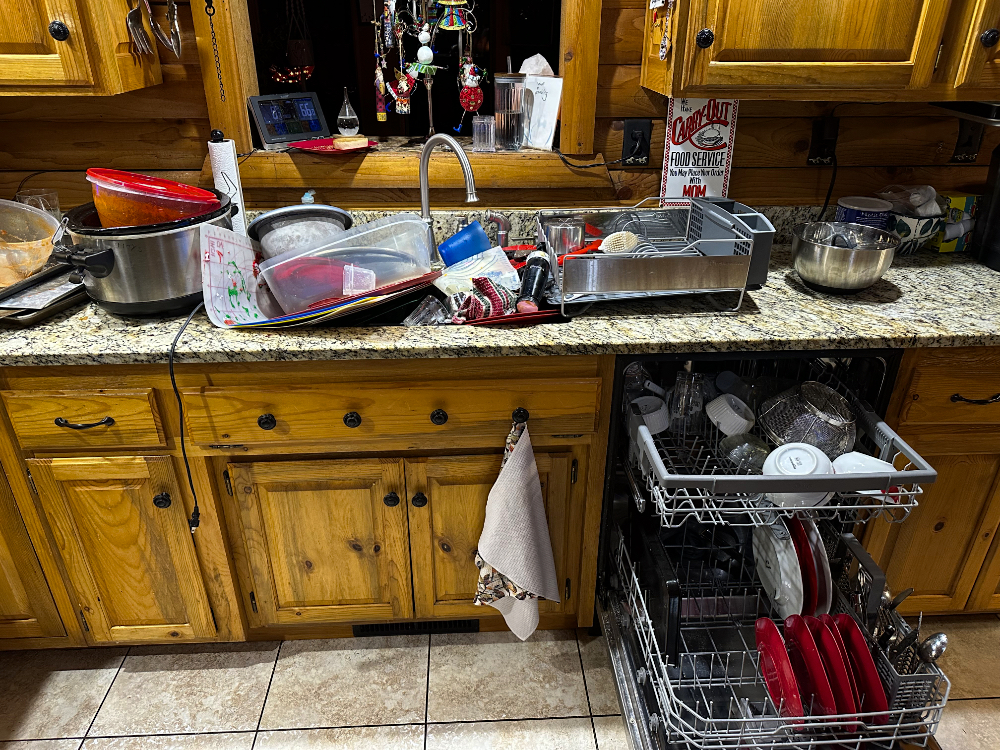
I stopped by the kitchen to take a photo of a recent success on my part that had me thinking of my dad. A little of his mechanical ingenuity and DIY solutions were passed to me, along with his exceptional ability to tolerate unfinished projects.
For some 10 or 12 years, Cyndie has begrudgingly lived with a problematic corner cabinet that has a pair of lazy susan shelves where we store pots and pans. When it would get stuck, I assumed it was because pan handles weren’t being oriented logically, or it was being overstuffed. When it became stiff, a confident nudge from my foot would close it just fine.
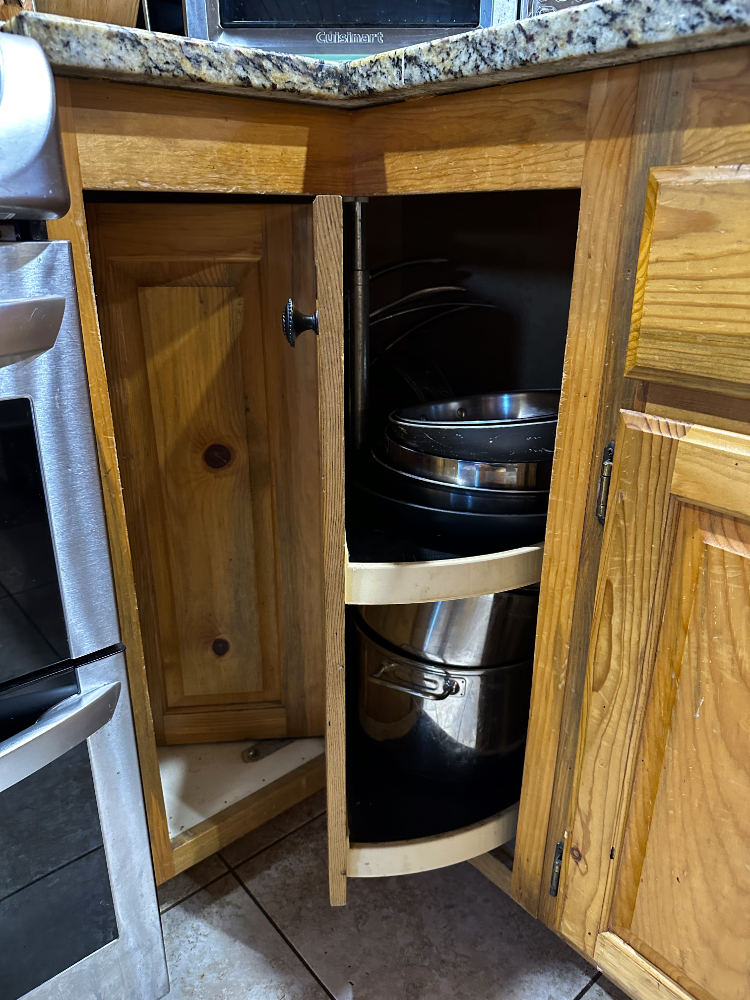
When the shelves finally collapsed from the top and bottom brackets two days ago, I was forced to figure out how it was supposed to work. How the heck did they install it in the first place? Oh, there are adjustment screws. Hmm.
I discovered there was a detent in the plastic top piece that was supposed to match the springy metal brace. Imagine that.
A Philips screwdriver, ten minutes of puttering with adjustments, and we had a perfectly functioning lazy susan corner cabinet. I could have done that years ago. I suppose Cyndie wouldn’t be quite as thrilled with the results if it hadn’t been an ongoing nuisance for a decade.
The quick fix had me feeling chuffed. Figuring out how it was supposed to work reminded me of my dad’s keen skills in that realm. Realizing I had let something go for years without properly solving it dampened my pride and reminded me that I inherited both good and bad traits from that wonderful, complex, ingenious, troubled man that I both looked up to and feared in the years we were both alive.
I think Dad would have approved of the way I fixed that corner lazy susan by figuring out the way it was intended to work.
I’m going to focus on that and not on how long it took for me to get around to it.
.
.
Busted Brackets
Upon closer inspection of the mounting system on the ATV plow blade, I discovered significant mechanical failures. I completely missed it when I became overly focused on not being able to slide the pin back to change the blade angle. The two brackets that hold a pulley had fractured and then bent.

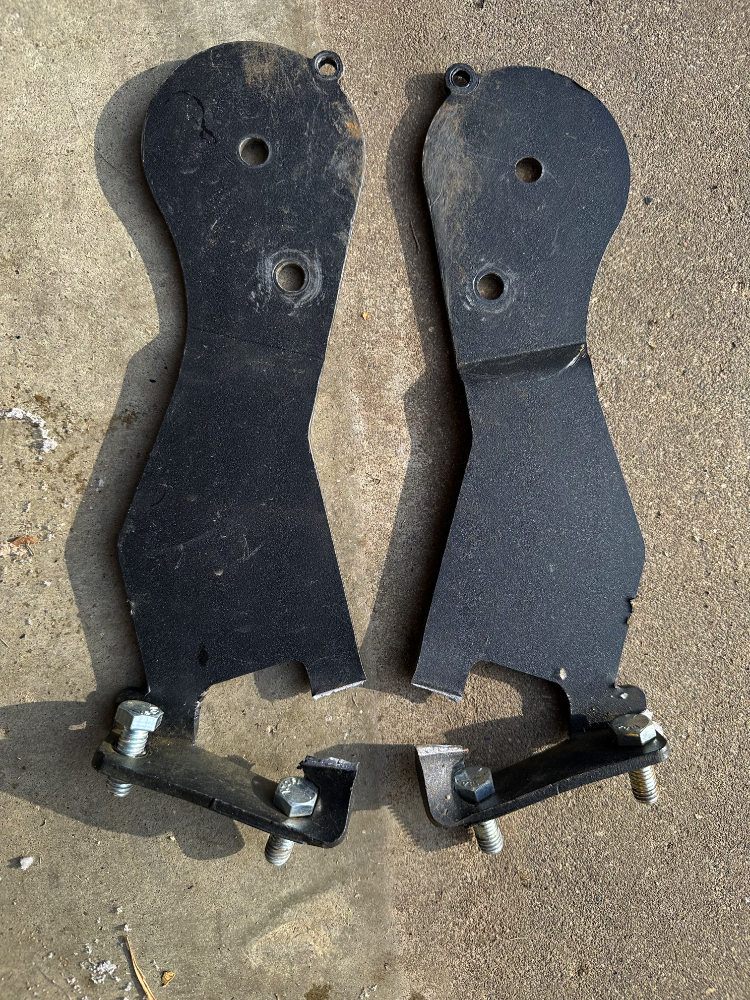
Oops. No wonder things weren’t working as well as they used to.
I took everything apart, lubricated the pin to make sure it moved freely, and then retrieved the U-bolt that had previously served as the winch cable attachment point. Replacement brackets were going to cost more money than I wanted to spend, so I’m reverting to the old way, with one added trick I’ve learned.
Those brackets that broke held a pulley that increases the mechanical advantage for lifting the blade. I found that I already have a pulley I can use that won’t require a bracket to get the lift I’m seeking. That problem is solved; however, the pin is still getting hung up somehow, so I can’t change the angle of the blade yet.
A little more tinkering needs to happen today. I ran out of daylight by the time I got around to testing the reassembled hardware yesterday. If I can figure out what’s keeping that pin from sliding easily and resolve the issue, I’ll be back in business for plowing snow.
Just in case we get another dose of snowflakes piling up more than a trace amount.
.
.


