Good Results
It’s that time of year again when the invasive Common Buckthorn becomes easier to spot because its leaves stay deep green while most other growth in the woods fades. I brought Asher with me on an exploration through the middle of our woods in search of rogue sprouts that have established themselves since last year.
As we descend the slope toward the edge of our property, it is easy to see the difference between our woods and the neighbors’ woods. They don’t make any noticeable effort to eradicate the buckthorn.
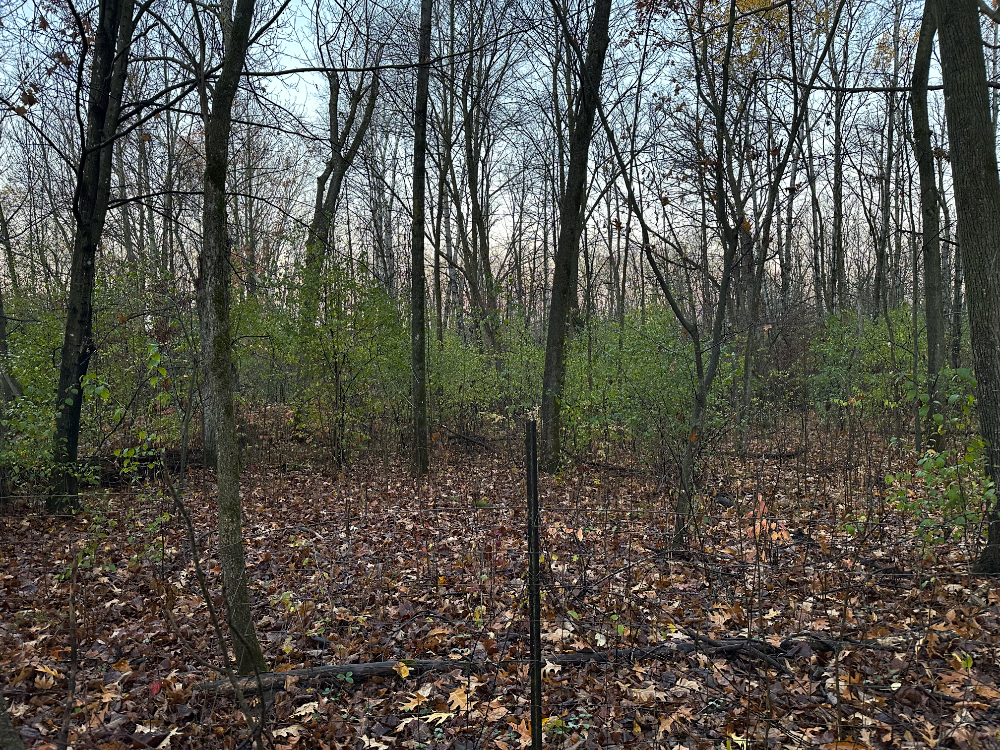
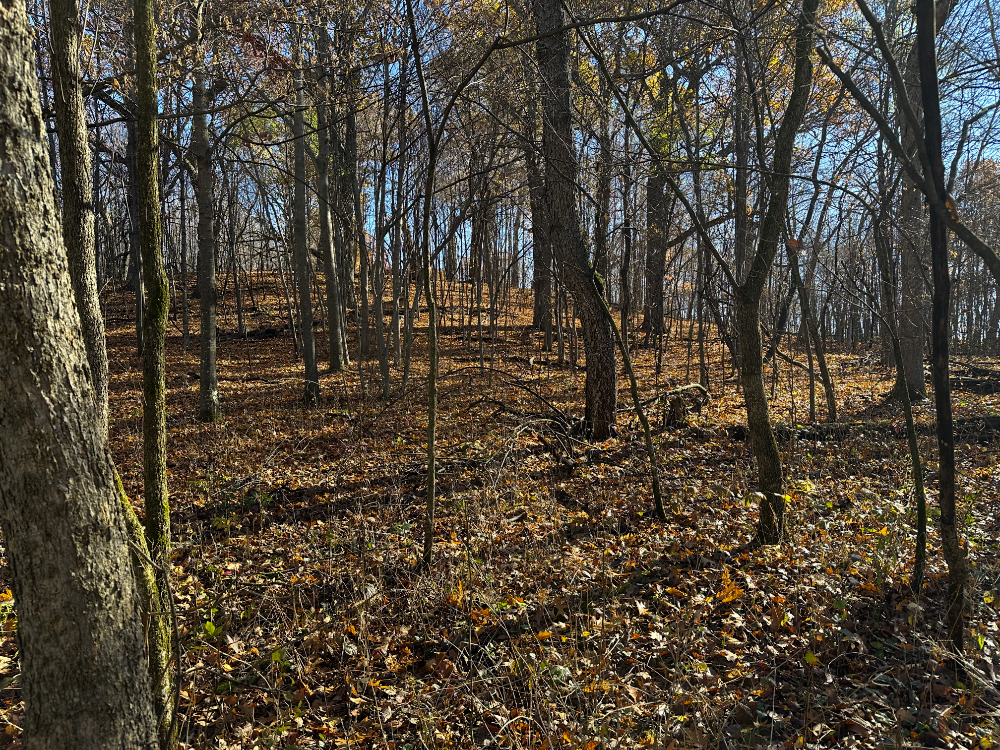
Uncontrolled, the invasive will continue to dominate the understory, excluding native growth over time. Unfortunately, any of those trees with berries create potential for birds to spread the seeds throughout our woods.
Since I try to stay on top of new sprouts on an annual basis, most of what I find can be pulled out of the ground by the roots.
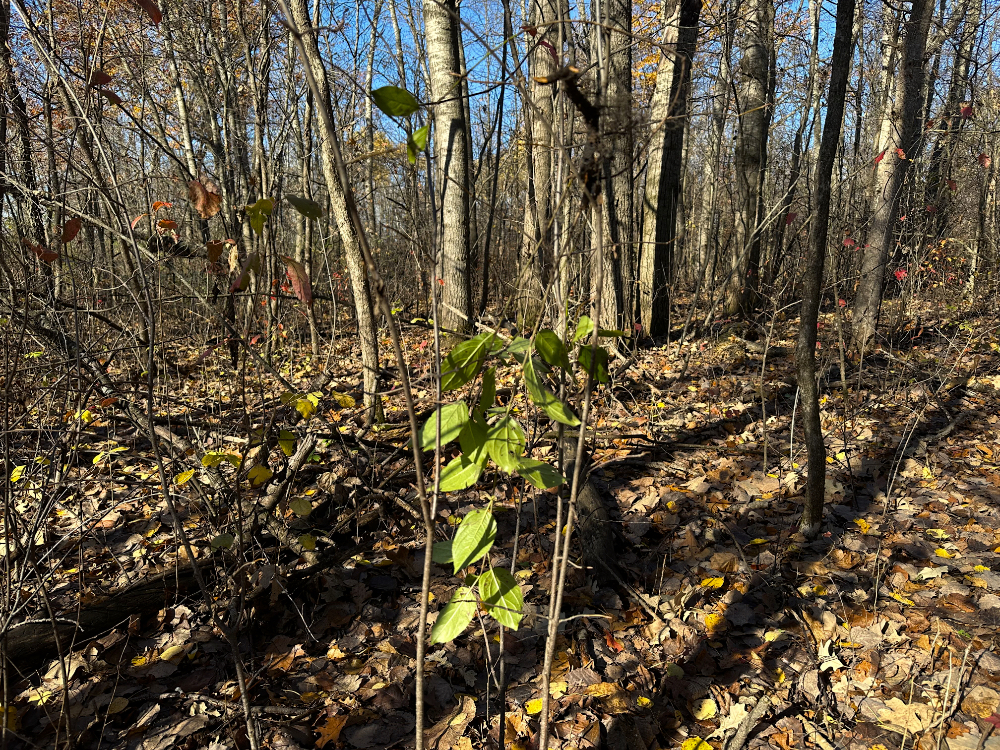
When I pull them up, I turn the sprouts upside down and hang them up in nearby branches. I tease that I do so to serve as a warning to other buckthorn what their fate will be if they try to grow here, but in truth, it is so the roots dry out and to help me identify that those green leaves have already been dealt with.
If I let them lie on the ground, the green will keep catching my eye unnecessarily, and there’s an outside chance the roots could find their way to the soil again. The plant is tenacious enough as it is; I don’t want to give it an opportunity to live on after I’ve already pulled it up once.
My efforts are producing good results, as can be seen in the photos above, but the best compliment came from a visitor who noticed on his own and commented on the impressive lack of buckthorn we’ve achieved.
It’s good to get that kind of confirmation from an outside source.

John, we have lots of buckthorn in our woods, too, but so many are way past the point of easily removing them. Have you tackled any bigger ones, and if so, how did you get them out? I like your scheme for drying them out.
Anonymous
October 30, 2026 at 9:13 pm
I have tried two techniques on large trees, both avoiding chemical herbicides. I have girdled them by removing a ring of the bark and cambium, or I simply cut them off at about 4 feet high. I do it at that height because it is easy to see when it sprouts new growth. Then I keep snipping those new sprouts off each season until the roots give up. By that time (2-3 years), that 4-foot-high stump becomes a nice lever to snap the dying root bundle
johnwhays
October 30, 2026 at 9:48 pm
You should share your photos with your neighbor and offer to help them eradicate this pest in their woods.
wtbell
October 30, 2026 at 11:15 am
Yes, Ward, that would be a laudable gesture. He is not easy to communicate with and is an overloaded (my opinion) farmer with many crop fields and animals to manage. I have never seen him put any energy toward managing his forested acres.
johnwhays
October 30, 2026 at 9:55 pm