Posts Tagged ‘Common Buckthorn’
Farrier’s Find
Before the farrier showed up yesterday afternoon, I spent some time in the 60°(F) sunshine doing battle against invasive buckthorn along our southern border in some of the thicker tangles of growth in our woods.
I discovered something about my chemical-free attempts to control the buckthorn. I came upon one of the trees that I had girdled a couple of years ago. What I’ve usually come across is a batch of new shoots emerging off the main trunk. They are easy to trim off to starve the roots of any additional energy.
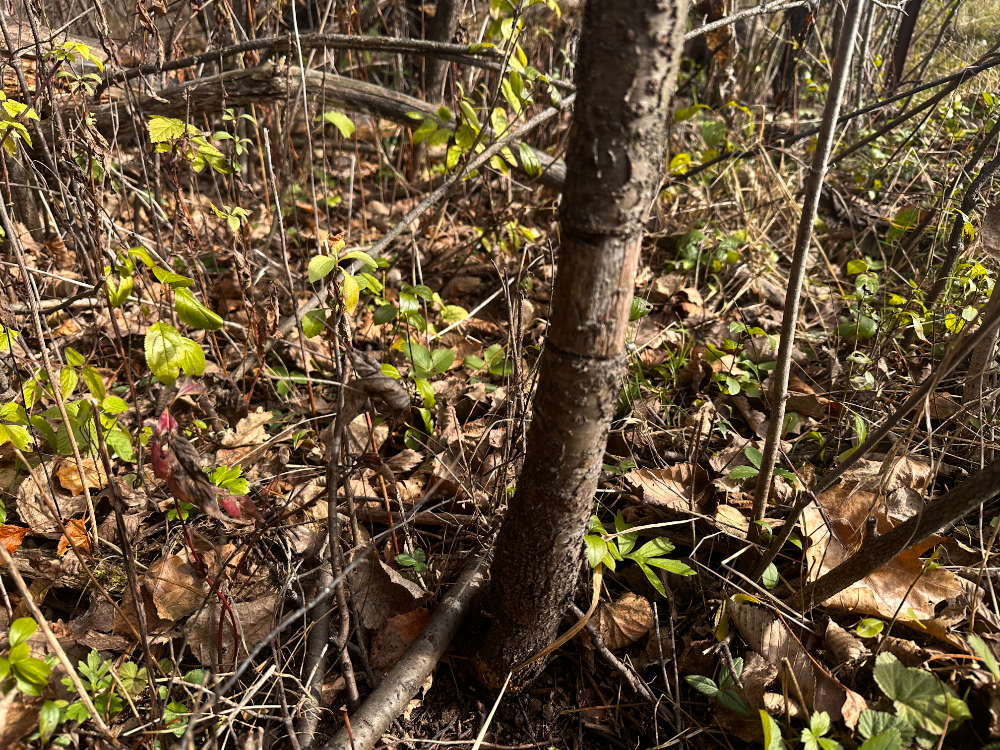
In this case, there were no new shoots. However, there was a rash of sprouts coming from the ground, spread over a wide area around the old, girdled trunk.
If that is going to be happening, I could be persuaded to apply an herbicide to freshly cut stumps to kill the roots, as most buckthorn eradication instructions advise.
What did the farrier find?
Our current farrier, Jamie, was aware of Mix’s situation before she even arrived. First, she took care of trimming and filing Swings and Light before turning her attention to Mix.
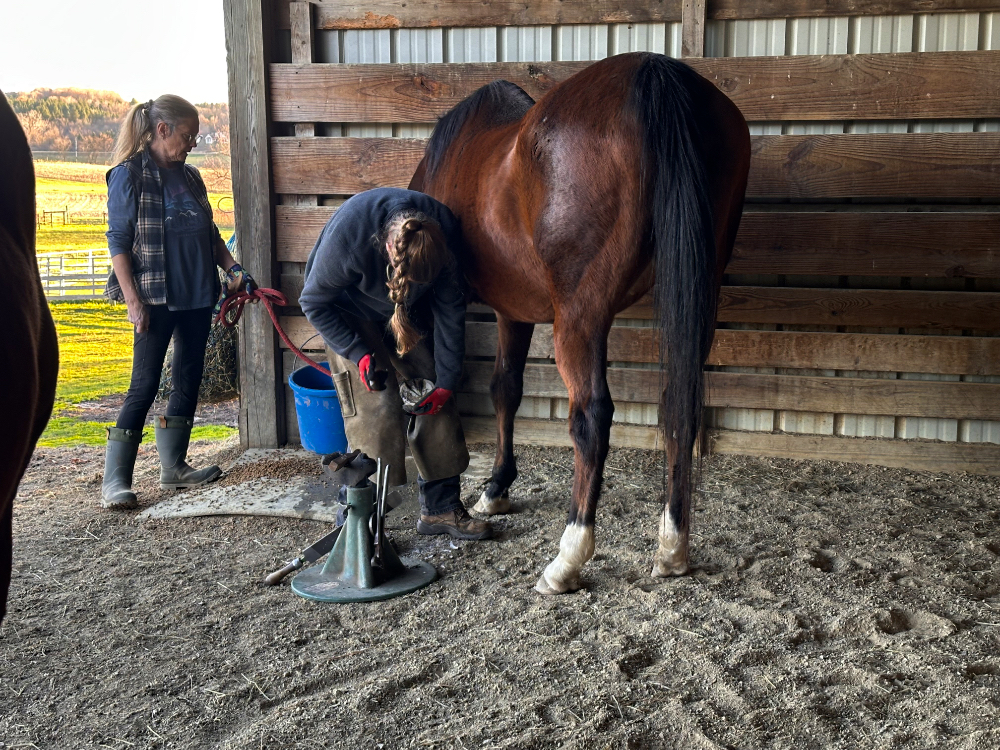
We were thrilled to see Jamie handle a reaction from Light in the middle of the process. When Light got upset about something, Jamie gave her some space, and Maddy walked Light in a loop to vent some energy. Order was restored, and Light was fine with letting Jamie finish.
Then it was time for Mix. With confidence, Jamie quickly verified the two places where the abscess had emerged, but she also deduced there was still likely more infection that wasn’t draining. Our treatment thus far has helped, but there is more that needs to be done.
We are starting with another poultice wrap in hopes of drawing more of the infection out. Cyndie and I just learned about a sugar/iodine combination that may be the next course of treatment.
Sounds like we will be keeping that hoof wrapped for a while. Jamie will be coming back in two weeks to check on the progress.
Mix is being a real trooper throughout it all, and we are very appreciative of the care she has received. We are rallying our mindset now to keep giving her extra attention until this is all behind her, no matter how long it takes.
Proper healing is one of those things you can’t rush. Time may end up being the best medicine.
Good Results
It’s that time of year again when the invasive Common Buckthorn becomes easier to spot because its leaves stay deep green while most other growth in the woods fades. I brought Asher with me on an exploration through the middle of our woods in search of rogue sprouts that have established themselves since last year.
As we descend the slope toward the edge of our property, it is easy to see the difference between our woods and the neighbors’ woods. They don’t make any noticeable effort to eradicate the buckthorn.
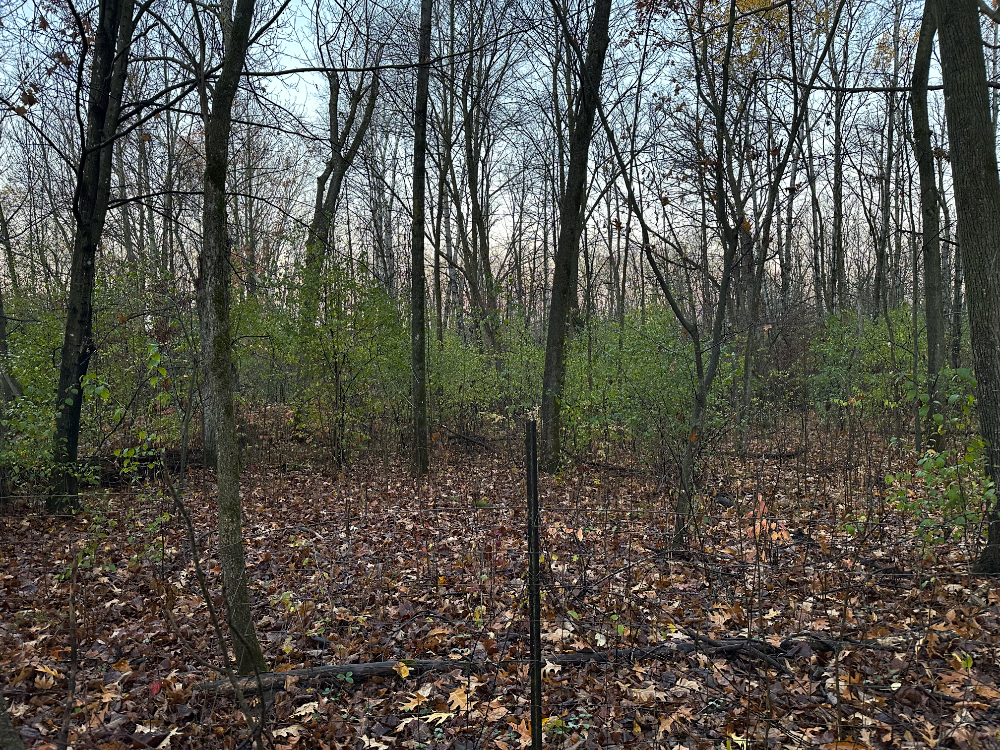
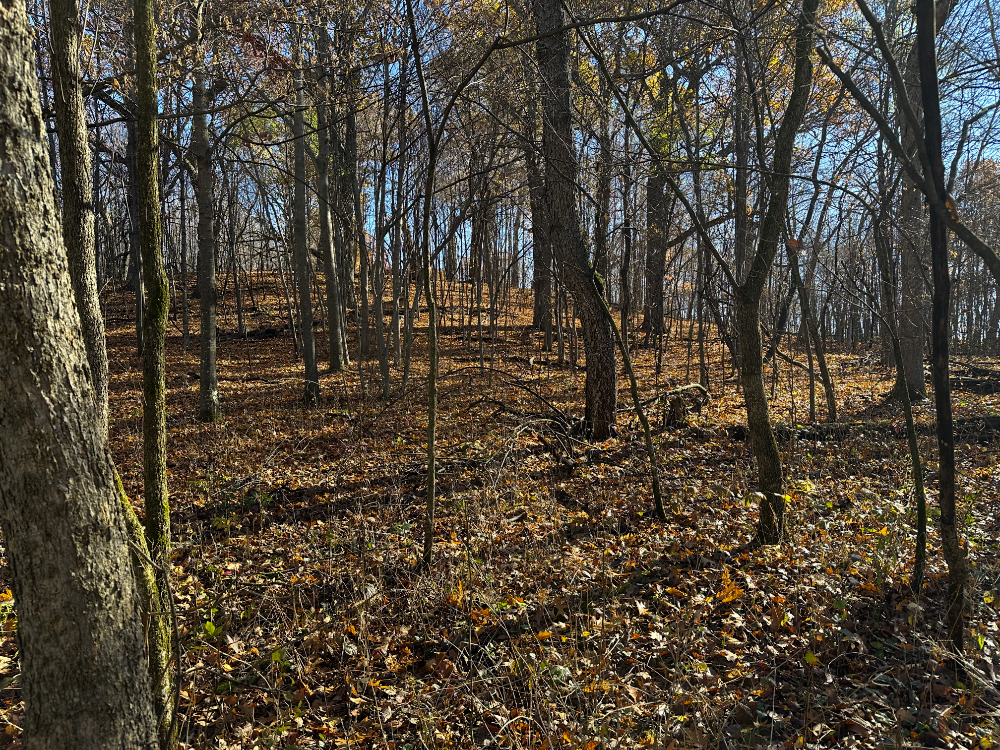
Uncontrolled, the invasive will continue to dominate the understory, excluding native growth over time. Unfortunately, any of those trees with berries create potential for birds to spread the seeds throughout our woods.
Since I try to stay on top of new sprouts on an annual basis, most of what I find can be pulled out of the ground by the roots.
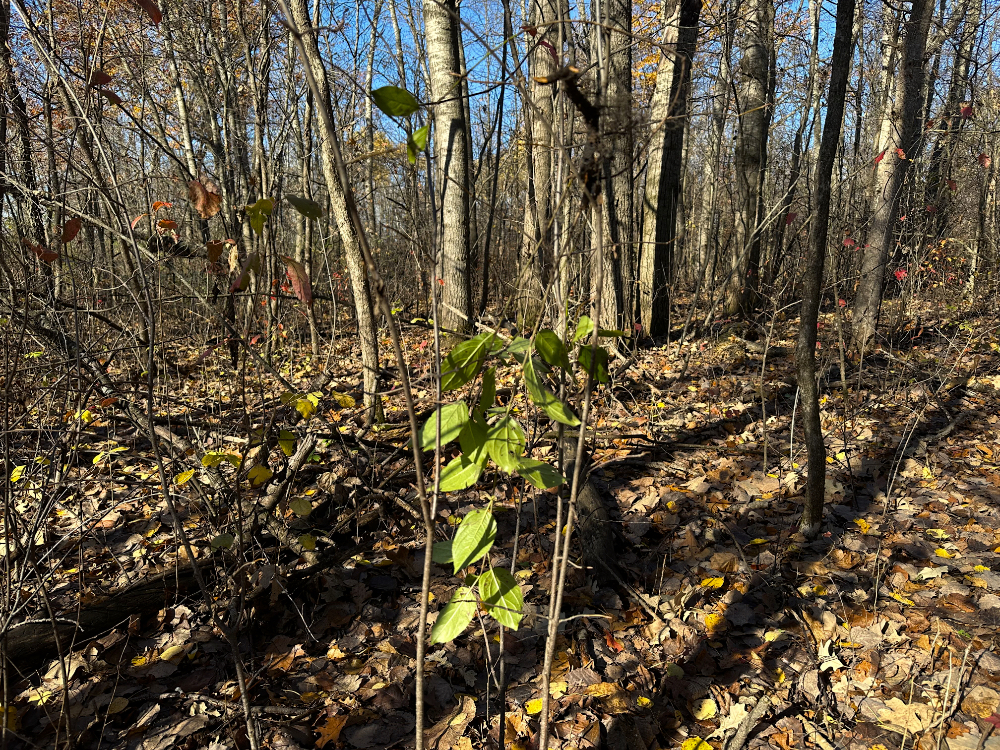
When I pull them up, I turn the sprouts upside down and hang them up in nearby branches. I tease that I do so to serve as a warning to other buckthorn what their fate will be if they try to grow here, but in truth, it is so the roots dry out and to help me identify that those green leaves have already been dealt with.
If I let them lie on the ground, the green will keep catching my eye unnecessarily, and there’s an outside chance the roots could find their way to the soil again. The plant is tenacious enough as it is; I don’t want to give it an opportunity to live on after I’ve already pulled it up once.
My efforts are producing good results, as can be seen in the photos above, but the best compliment came from a visitor who noticed on his own and commented on the impressive lack of buckthorn we’ve achieved.
It’s good to get that kind of confirmation from an outside source.
Following Through
After writing my thoughts yesterday about protecting the small volunteer Cedar tree from the risk of having its main leader chewed off by deer, I figured it would be prudent to follow through without procrastinating. It’s funny how simple it can be to take action, yet my natural inclination aligns more with not doing things until action cannot be avoided.
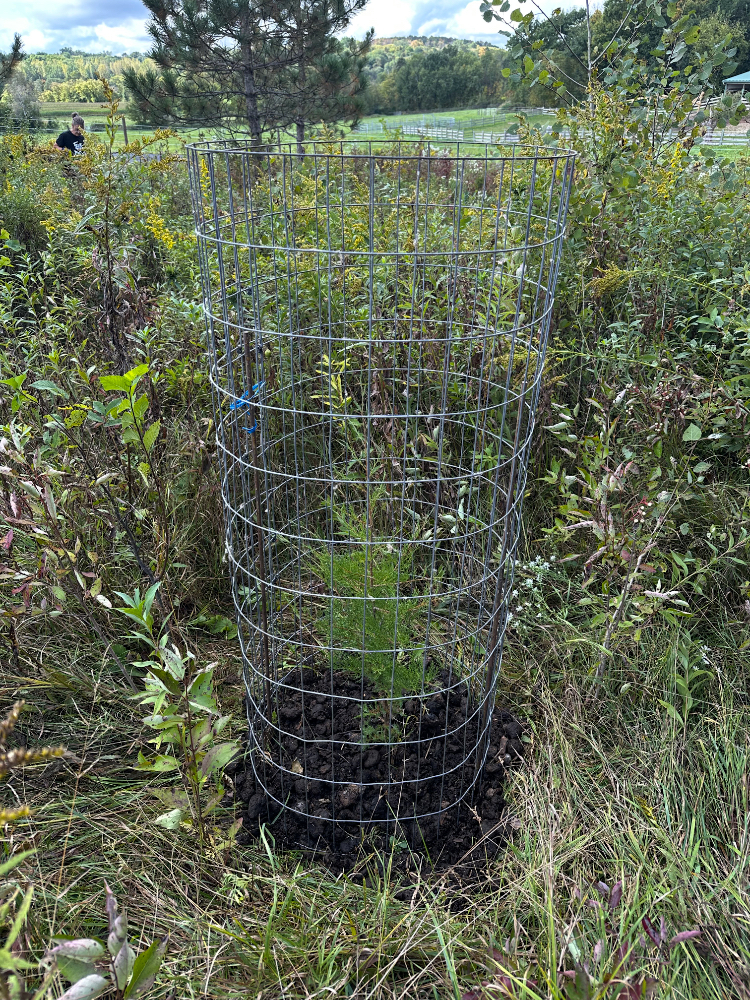
The first thing I did after breakfast was to gather the materials and install a protective fence around the little tree. Now I will have a good reference for measuring how much height it gains in the next growing season. The other volunteer Cedar tree located on the far end of that field is about twice the size of this one. It’s big enough that it doesn’t need protection.
While in that field, taking care of desirable trees, I spotted three invasive common buckthorn trees that quickly became the focus of my next efforts. Two of them had obviously been cut before and were now more like a bush. I should have done this in the first place, but this time I went to get tools to dig the roots up and eradicate the nuisances once and for all.
The third troublemaker turned out to be a female with berries. I don’t know how it went unnoticed until now, except maybe because it was in the middle of a significant poison ivy area. I forged in there regardless and dug up the plant roots and any poison ivy shoots tangled within.
I’ll find out tomorrow whether I washed away any oils thoroughly enough to prevent a rash.
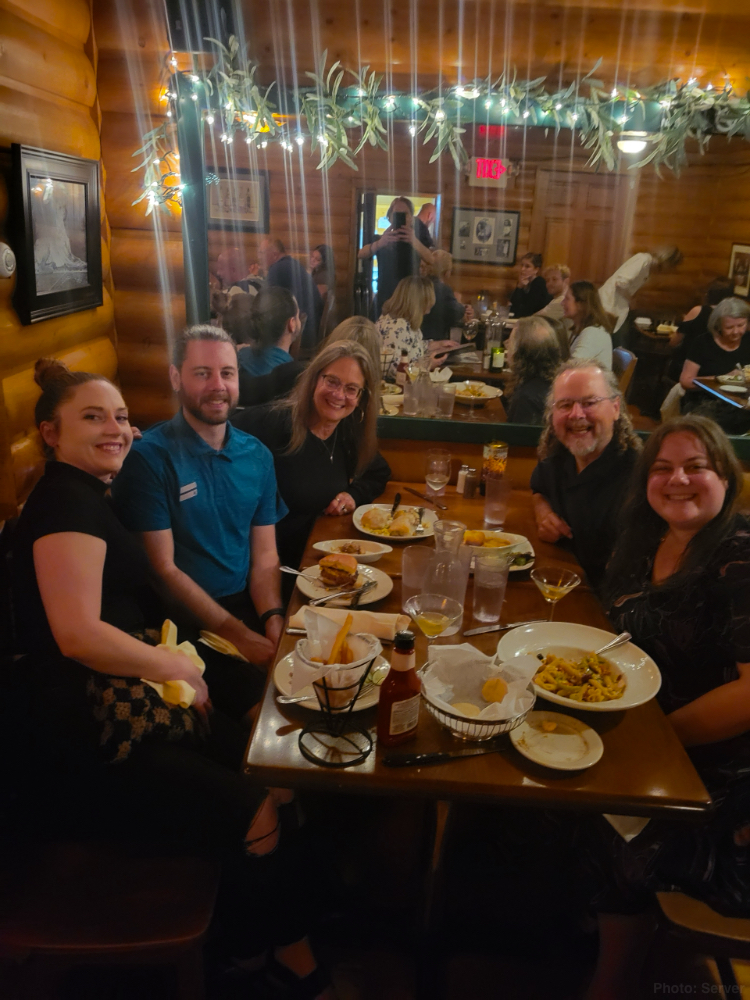 Two more highlights of the day involved an interview with a potential new animal sitter and then a dinner out with family to celebrate Julian’s birthday.
We got a nibble from a post Cyndie put on a job board at the University of Wisconsin, River Falls. There are students studying to become Veterinary Technicians who are perfect candidates for taking care of horses.
The woman we met yesterday is also a skilled softball player, so we will need to work around practices and the schedule for that sport if she chooses to help us out this year.
For dinner, Cyndie found a gem of a restaurant in Stillwater with a lean toward a Greek menu that none of us had known about before. Phil’s Tara Hideawy is a little off the main drag and looks like a rather unassuming log lodge from the road.
Once inside, it was bustling with energy and very busy. We were wise to have made reservations. The food was delicious and plentiful. After sharing three appetizers, we all had leftovers of our entrees to bring home afterwards.
It was a wonderful place for celebrating another family milestone and sharing memories of our years gone by.
.
.
Lethal Precision
My goal of policing our land for signs of the invasive scourge, common buckthorn, is in full swing this time of year. Yesterday, I headed back to an area by the road where I had already made a first pass through a few days ago. I was aware of several spots well into the thicket where sprouts of buckthorn remained.
Soon, I found myself on my hands and knees, doing battle against a tangle of branches to reach the swaths of still-green leaves. Some are very short and get gobbled up into fistfuls as I pull them from the dirt.
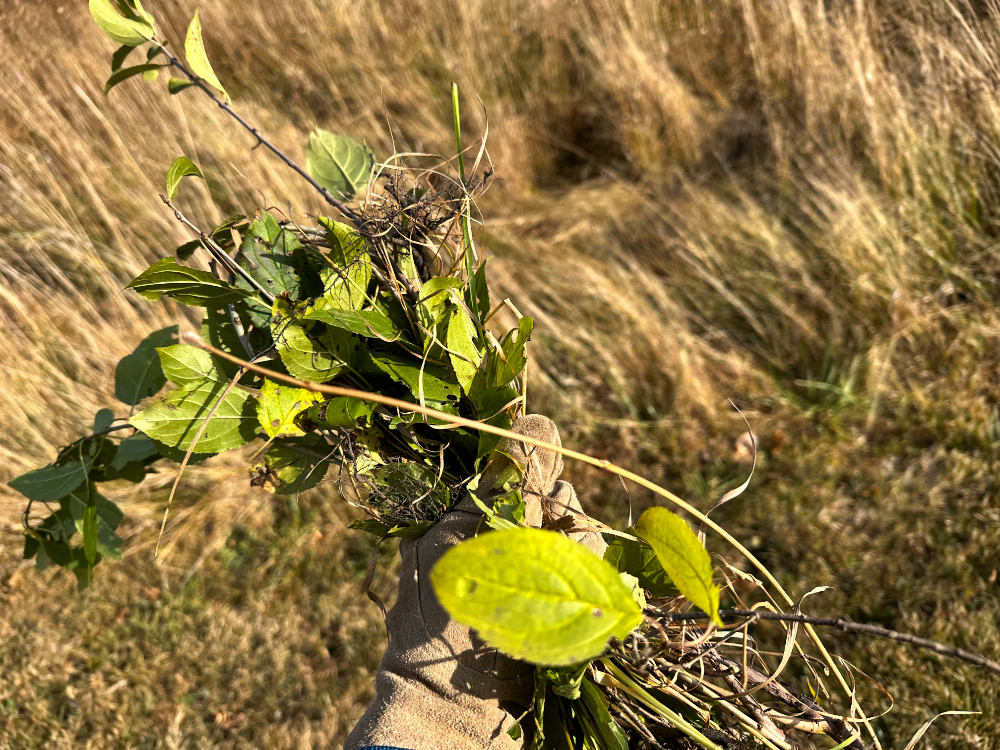
Taller shoots that I’m able to yank up by the roots get treated like trophies and as such, I hang them upside down in the branches of other trees to display the awesome dominance we have over the invader.
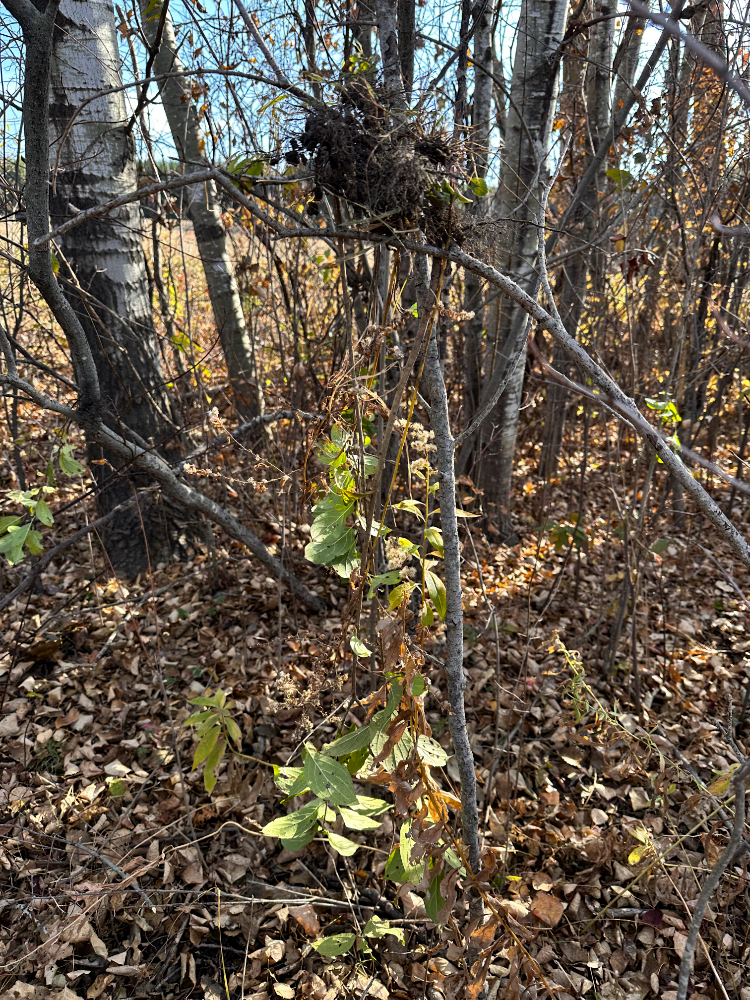
Actually, hanging them like that started as a way to ensure that the roots dried out and make it easy to see the unwelcome leaves had already been dealt with. If I just drop them on the ground, the green of the leaves continues to catch my eyes for a few days, making me think more attention is needed when it’s not.
I thought this effort would become easier every year, but I’m finding that hasn’t been the case. I don’t have to deal with large trees anymore, but the new little sprouts show up in new and different places every year, many of them deep in brambles and hard-to-reach places.
Basically, anywhere that birds like to perch since they are spreading seeds after eating the berries. They definitely like sitting in the protective confines of thick tangles of branches.
Keeping our land from being overtaken by this invasive nuisance is worth the effort based on the way our property looks compared to properties around us where we’ve never seen any effort made to address it. The buckthorn on surrounding land only gets thicker each year, while our property will become progressively more impressive in comparison.
I say more impressive because, in addition to removing buckthorn, we are also nursing along every volunteer oak, maple, poplar, cedar, elm, butternut, hickory, and several versions of pines that we find with equal precision.
.
.
Felt Hot
Yesterday was day two in the 80s and combined with the drought we are experiencing, it felt rather unsatisfying around here. Admittedly, being unsatisfied with warmth in October isn’t something we usually express, but it’s because the warmth was actually annoyingly hot.
At least we enjoyed the benefit of having our windows open overnight, so the hoots of our forest owls were easy to hear.
If I was still tied to a day-job, I would have called in yesterday and claimed a mental health day. Instead, I just showed up for chores a few minutes late. Maybe it’s because it was a Monday, even though Mondays are no longer the dreaded burden like they were for 40-some years of my gainful employment.
Of course, for Sunday sports fans, football game losses and Championship WNBA game 5 losses can easily cast a pall of gloom that carries over into Mondays. That is something that doesn’t affect dogs, horses, or spouses who can take or leave team athletic competitions with zero residual impact.
“Honey, our unbeaten streak is over!”
“Oh? Can you unload the dishwasher for me?”
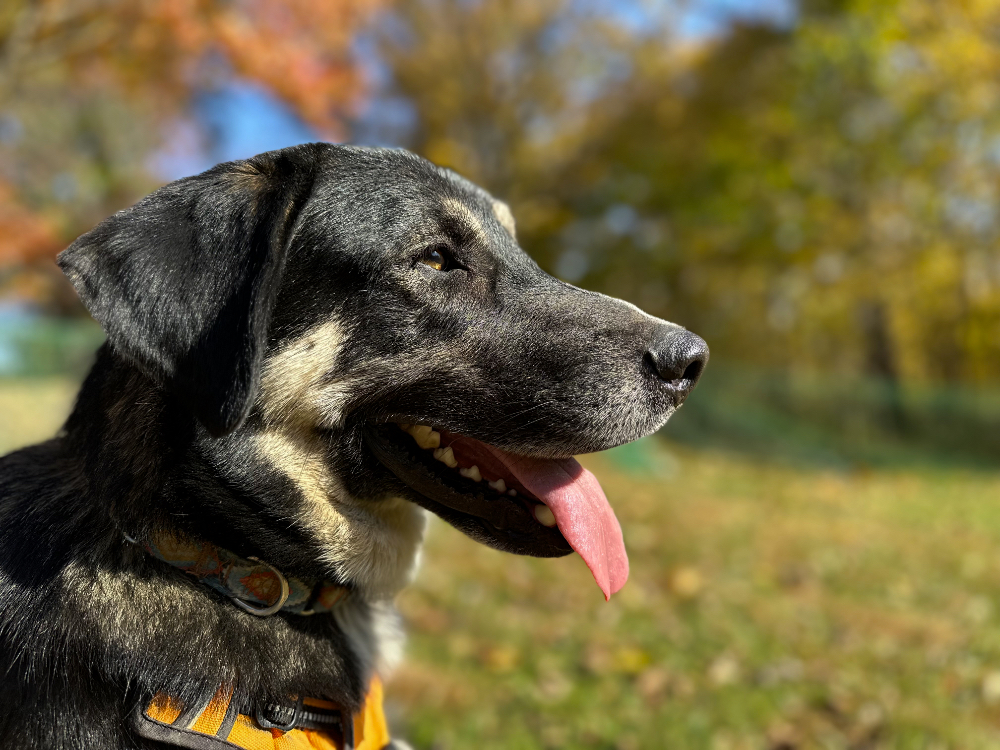 Asher just wanted to go outside and run after his favorite yard ball with a rope through the middle of it. That is a game in which he requires a person to act like they want possession of the ball more than he does.
Yesterday, I would have preferred to unload a dishwasher.
Eventually, despite the heat, I managed to drag myself down by the road to do battle in some of our thickest undergrowth to eradicate more buckthorn shoots that had sprouted from stumps I had cut the year before. I coerced Cyndie into coming along to help point out locations because when I get in the middle of things, I tend to overlook opportunities that are often right behind me or practically underfoot.
After lunch, I made my way down along the fence line on the far side of the hay field with the pole chainsaw trimmer to clear out low-hanging box elder tree branches that were beginning to droop too close to the top wire. My desire to have those branches cut down has increased every day that I’ve walked Asher along that pathway for the last few months.
It feels so great to have them finally dispatched that I find I no longer care about what happened in Sunday’s sports competitions.
Although, carrying the heavy pole saw all the way back from the far side of the field in the high heat kept me from feeling too much in the way of jubilance.
The first thought I had when I eventually returned to the house was that it was too hot to be wearing socks. I’m hoping the local meteorologist’s claim that yesterday would be the last time we reach 80 this year proves accurate.
I am very ready for some weather that deserves warm socks.
.
.
Clever Disguise
It took Cyndie’s curiosity to draw proper attention to a volunteer tree growing by the driveway a couple of days ago. I had noticed it recently and wondered what it might be but didn’t give it any more thought than that. Cyndie handed me Asher’s leash and pulled out her phone with an app for identifying plants.
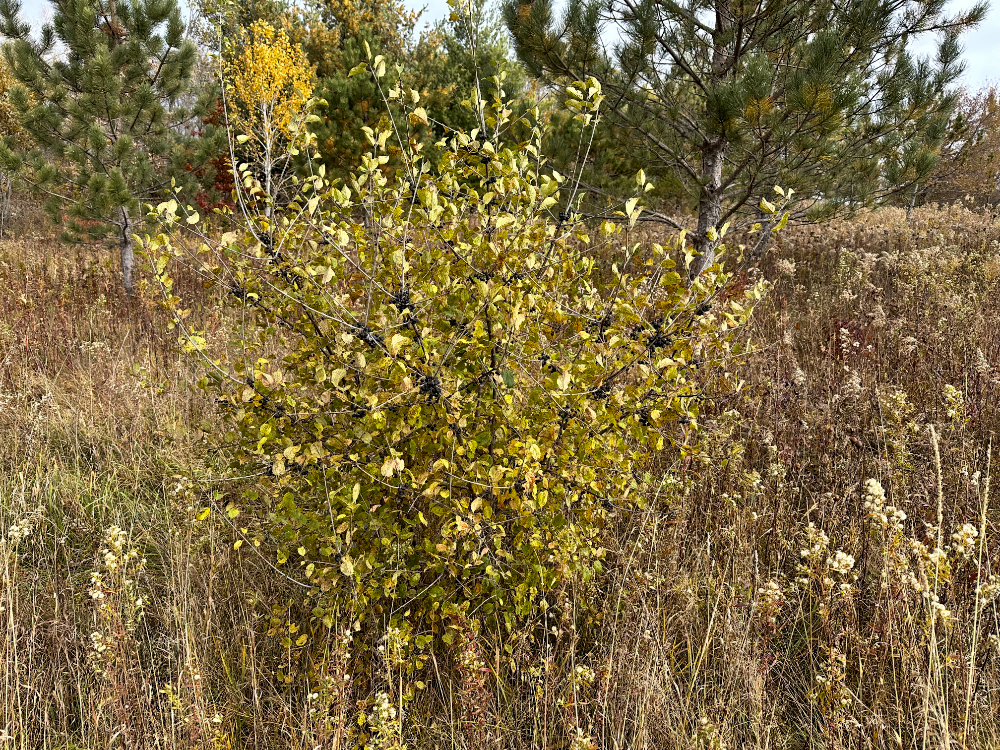
To my surprise, it showed Common Buckthorn as a result.
I went back for a closer look. Sure enough. It even had berries on it, the curse that attracts birds to help spread its seeds. How did I let this grow all summer long?
One reason is the absence of the classic dark green coloring of the leaves. This time of year, it gets much easier to spot the new appearance of buckthorn by the deep green that lasts much longer into the fall season when surrounding growth is fading.
Just a short distance away, I came upon these shoots that had sprouted from a spot where I had cut out growth a year before.
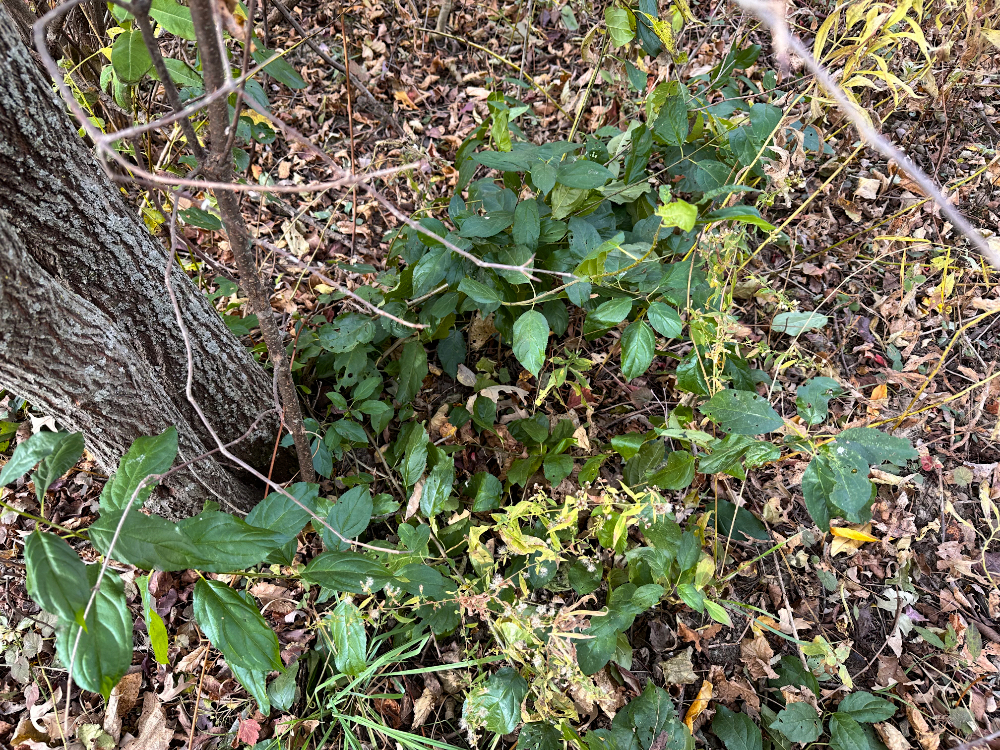
Much easier to notice and positively identify.
That tree by the driveway was cleverly disguised by leaf coloring that had it looking like any other innocuous growth present in the surrounding area. If Cyndie hadn’t taken notice, I probably would have ignored that bunch of sprouts for a least another season.
Speaking of seasons, as in years, we are now into our thirteenth year living on this property in western Wisconsin. Last week, Cyndie and I looked back at the posts I wrote in October 2012 when the moving truck came to our old home in Eden Prairie, MN, and relived some of the drama around the failed attempts to easily close on each property.
A LOT of things happened in the ensuing years. Our first spring here, we received 18” of snow in the first days of May. There was a lot of activity to change the fencing and build the paddocks in preparation for getting horses. We put a few years into starting a little business with the horses.
When that dream faded, it was replaced by a focus on providing a retirement home to four rescued thoroughbred broodmares. We’ve annually hosted a peace walk on World Labyrinth Day every May and improved or maintained various trails through our woods.
Every fall, I put my focus on eradicating every hint of Common Buckthorn that I can find within the borders of our twenty acres. This year, it is warmer and dryer than most Octobers here, which seems to be aiding some of the buckthorn in hiding from my view.
That doesn’t worry me. I’ll find it next year if that’s what it takes.
Our clever disguise is that we are starting to look like we’ve always lived here. We are happily forging ahead into our thirteenth winter at Wintervale. Despite 80°F temperatures yesterday, logic tells us winter will show up eventually.
.
.
Rewarding Work
Taking advantage of Asher being occupied at a doggie daycare appointment yesterday, I jumped into outdoor chores that the warm November has graciously continued to make possible. First on my agenda was the most visible out the front door.
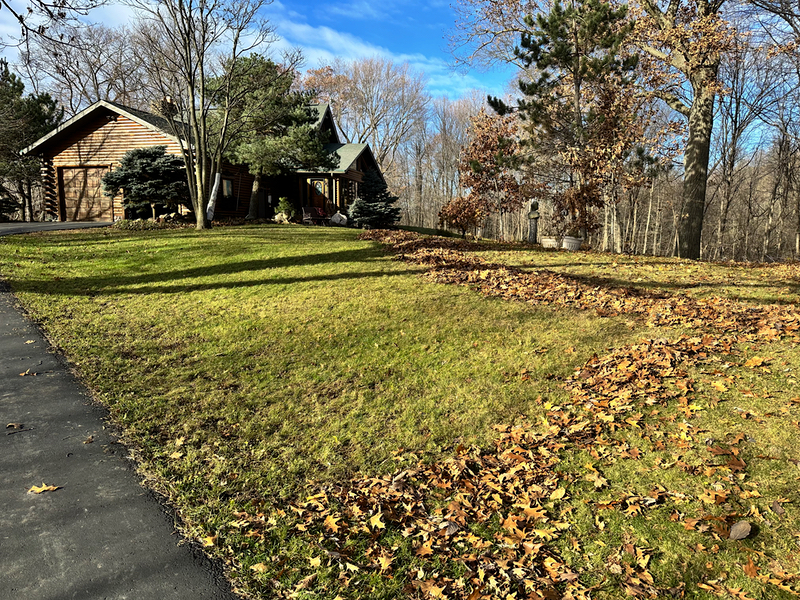
Leaves have been blown into every nook and cranny around the house after several days of crazy gusting winds. It clearly reveals air patterns as they move around objects. Massive piles of leaves accumulate in certain areas beside spots that are blown bare even though we wish a mulch of ground cover would remain.
Clearing the mat of leaves off the lawn grass offers a wonderful visual reward. Bring on the snow.
After raking, I headed into the trees to finish my annual survey for Common Buckthorn sprouts. After all the leaves of desired trees have disappeared, the Buckthorn leaves that hold their green later in the season become easy to spot.
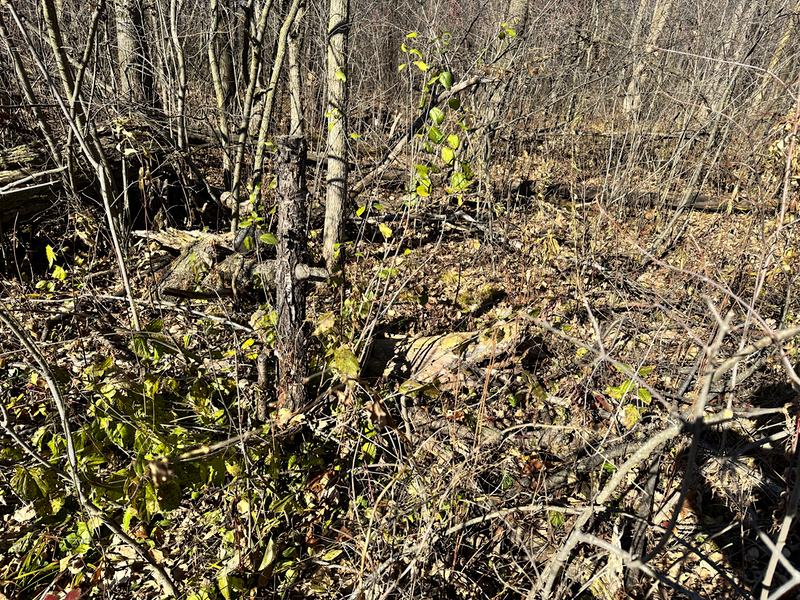
My slow and steady method involves cutting existing trees that were too large to pull out by the roots. I saw them off at an easily visible height, returning every year to trim off the sucker sprouts that try to salvage some future life.
It only takes a year or two before the root structure gives up trying. I admit to experiencing a mean sense of enjoyment over the invasive wasting its energy on a lost cause. Instead of the root structure sending out new sprouts across the ground, it tries growing up the severed trunk.
This keeps the new growth localized and easy for me to control. Any new sprouts that I see in different locations are easy to pull by the roots at this point. I’ve been patrolling these woods for 11 years now. Buckthorn growth is doomed on our acreage, despite it having a strong presence in the neighbor’s woods surrounding us.
The success I have achieved in eliminating the invasive shrubs/trees in our woods is one of the more rewarding of my forest management accomplishments.
Today, we stay out of the woods for a week and a day while orange-clad shooters try to reduce the size of the deer herds that roam. This morning, we were greeted with three gunshots down the hill near our bedroom window before we had even gotten out of bed.
I don’t venture out to learn if the shooter was successful or not. Staying away, and keeping Asher leashed, are my responses to the presence of hunting rifles.
.
.
Madness Method
It is the season for easy sighting of the invasive Common Buckthorn which we regularly seek out for elimination from our woods. The leaves of Buckthorn hold a deep green color longer than most other undergrowth in the fall. Now is the time when I can spot what was previously obscured by other summer growth in the woods and venture off-trail to cut back any progress made by the pernicious invader since last year.
The small sprouts that pop up from seeds dropped by birds are easy to pull by hand. New sprouts that emerge out of a root structure that was already in existence don’t pull as well. If I bring a shovel with me on these missions, a lot of those can be dug up. Anything that has made it to “tree” size presents a bigger challenge.
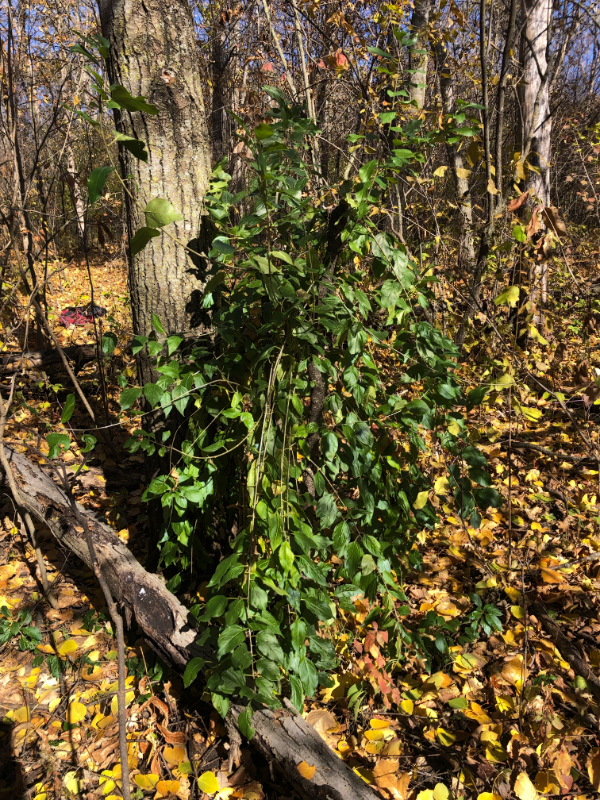
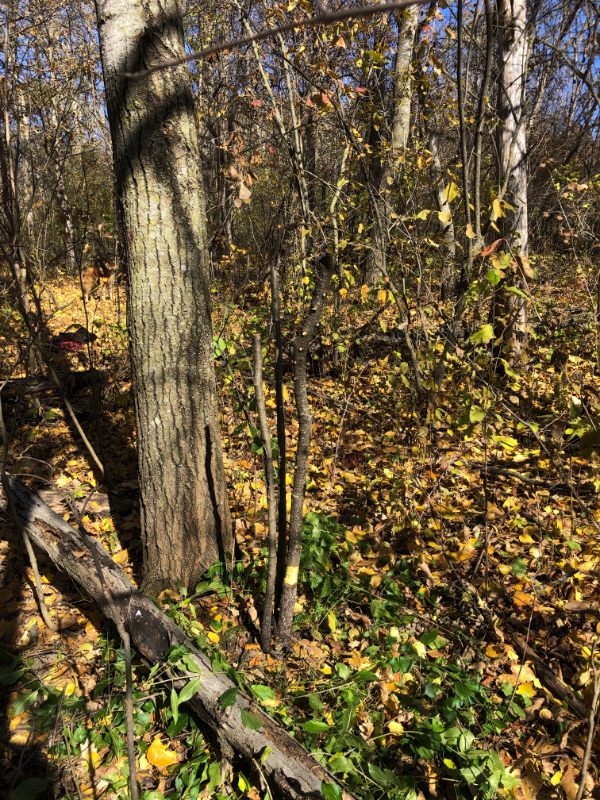
I have decided on a process that I call my method of madness, partly as a result of a handsaw being all I was carrying way back when I first started cutting Buckthorn on our property. I cut off the trees at a height of 3 or 4 feet so the stump will be noticeable the next time I pass by, knowing there will be subsequent growth since I don’t apply an herbicide to the cut.
This process wouldn’t be practical if I wasn’t constantly walking through these woods and following up each year on the re-sprouting stumps. After a while, new sprouts will stop showing up. Here are before and after images of one example of my madness:
 .
.
.
.
.
.
.
.
.
.
This year I have also removed a section of bark on some of the stumps to see if that will prevent new sprouts above the break.
I found an interesting video from the University of Minnesota Extension that reveals how Buckthorn has become a winter haven for soybean aphids. An added incentive for farmers to pay attention to the invasive growing beside their crop fields.
.
Boggles my mind that people figure out stuff like this. Who noticed the aphids were going to the Buckthorn and laying eggs that survive the winter?
Seems like madness to me.
.
.
Compare Contrasts
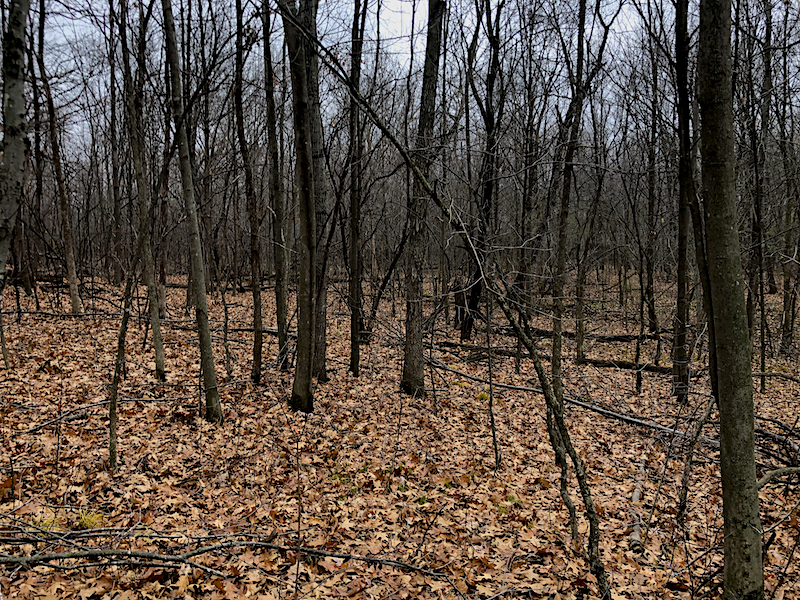
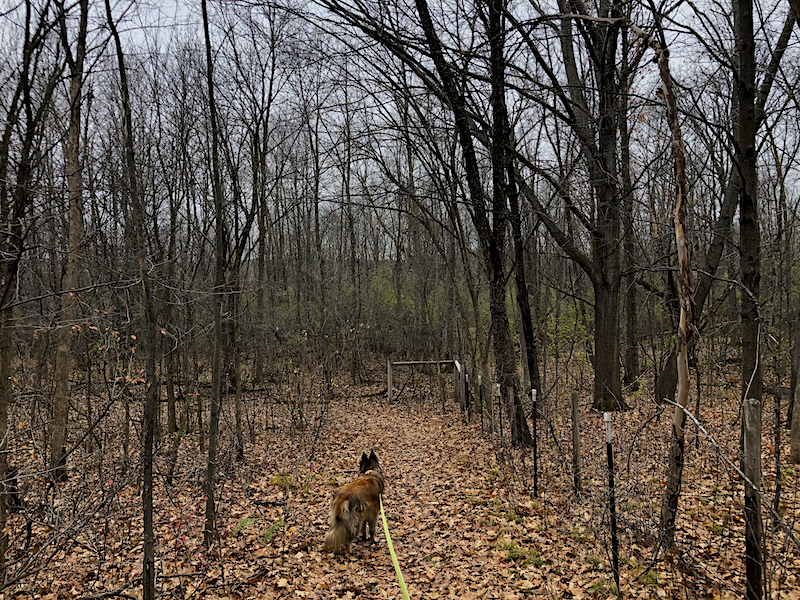
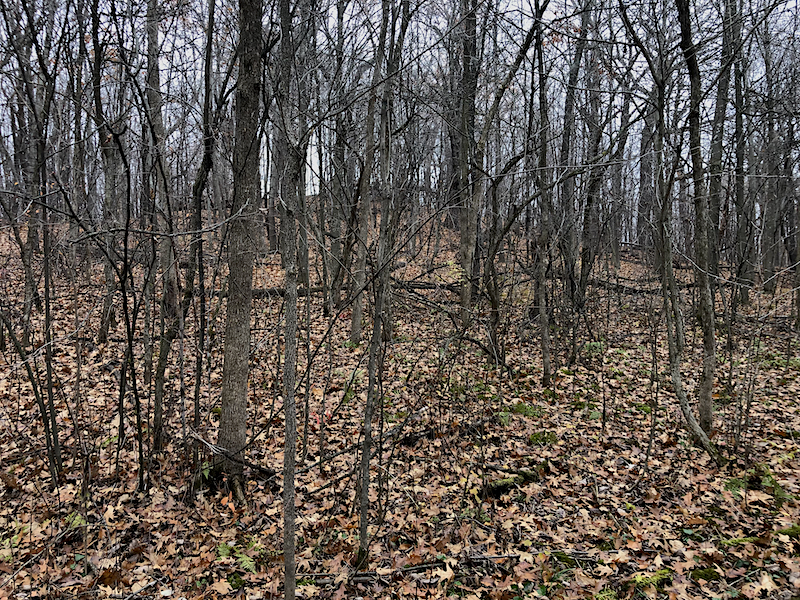
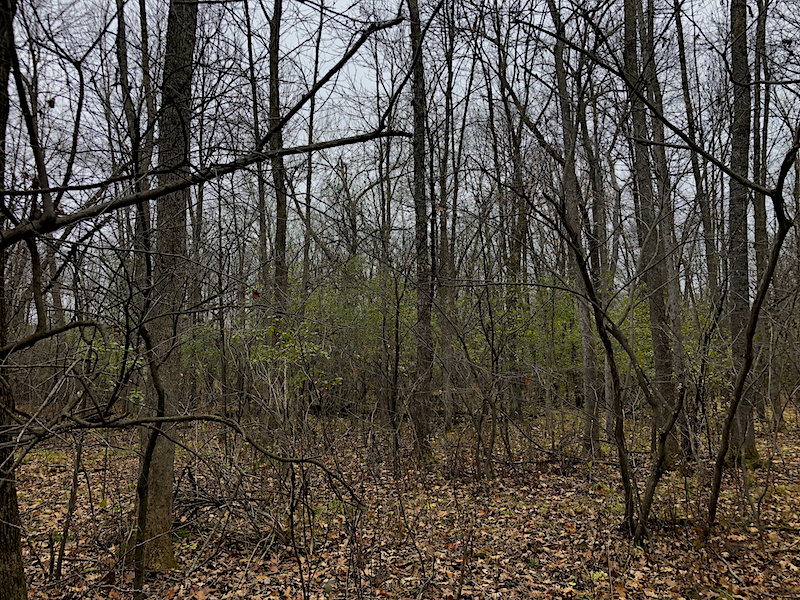
I have mixed feelings about the comparison of our woods to our neighbor’s when it comes to the obviousness of difference in controlling the invasive Common Buckthorn. Do you notice the contrast in the images below?
 .
.
.
.
.
.
.
.
 .
.
.
.
.
.
.
.
That line of green leaves on the low trees visible in the images on the right is increasingly dominating the understory beyond our fencelines.
It is pleasing to be able to clearly see the progress I have achieved in my vigilance to remove the buckthorn every year. At the same time, it is unsettling to watch the progress of the invasion playing out on the land surrounding ours.
Meanwhile, remember how happy I was to boast of stocking up on woodchips?
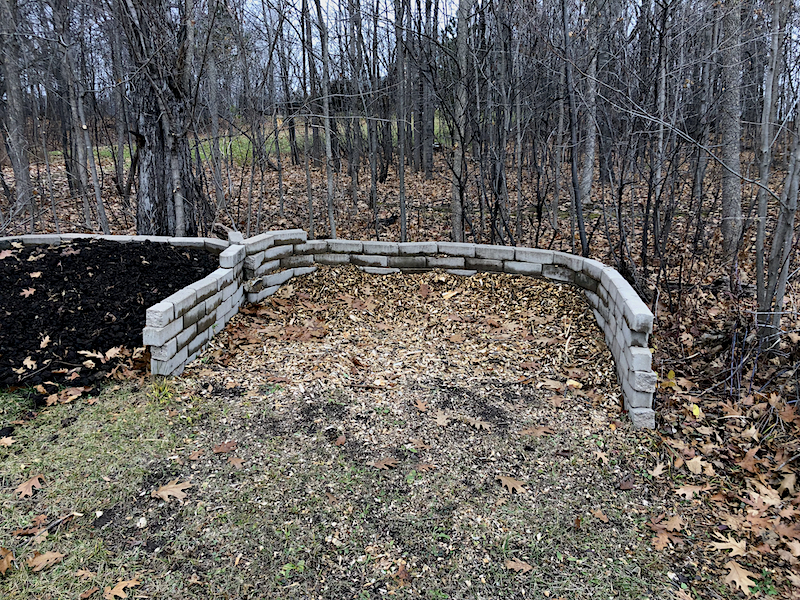
Cyndie has already succeeded in decimating the store of chips, distributing them far and wide for mulch around small trees and plants in the labyrinth and beyond.
We are on the brink of no longer being able to see most of the downed branches available for chipping with the arrival of snow season.
Yesterday, the driveway was still too warm to be covered by the first measurable amount to fall, but the leaves weren’t.
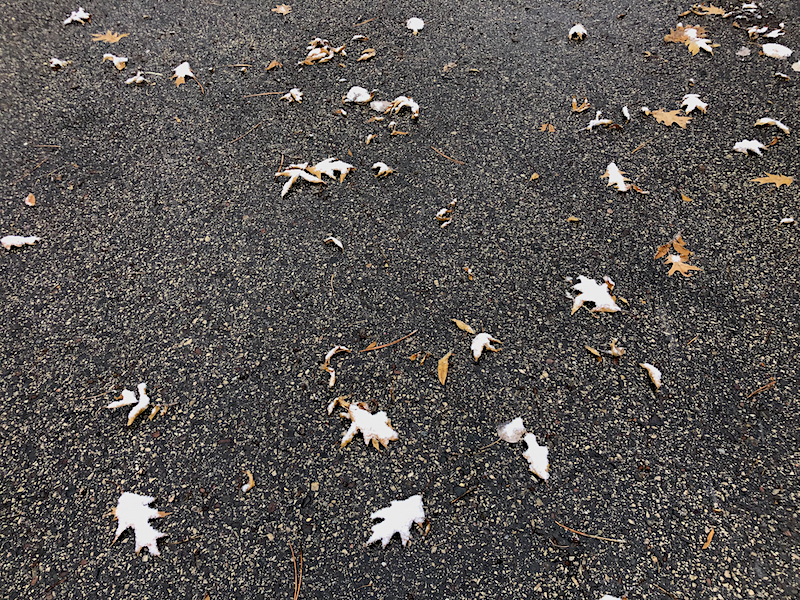
Our landscape turned white overnight last night. Animal tracks are clearly revealed this morning. I didn’t go out yet, but Cyndie said there were no bear footprints on the trails she and Delilah walked. Plenty of deer and an occasional bunny rabbit, though.
I’m going to be comparing our new surroundings today to the contrasting snowless world I walked less than 24 hours ago in my wanderings around the grounds.
.
.
Pernicious Invasive
It never stops. The unending intrusion of Common Buckthorn spreading anywhere that birds perch requires equally persistent vigilance to thwart. While I have given our largest segment of woods the most consistent annual attention, the small grove near the road dominated by poplar trees seems to have slipped my notice last year.
There were a couple of inch-plus diameter trunks that I had cut in the past but forgot to watch the next year. They had sprouted twice the new growth since I’d made that cut. Oops.
When I come upon tree-sized specimens, I often cut the trunk off a few feet above ground to leave the stump visible. The next season, many new sprouts will erupt from around the cut and my plan is to simply break those off enough times the root system finally stops trying and dies. Sometimes I forget to follow up.
In addition to the big ones, there were a frustrating number of little sprouts scattered all throughout the small segment of trees.
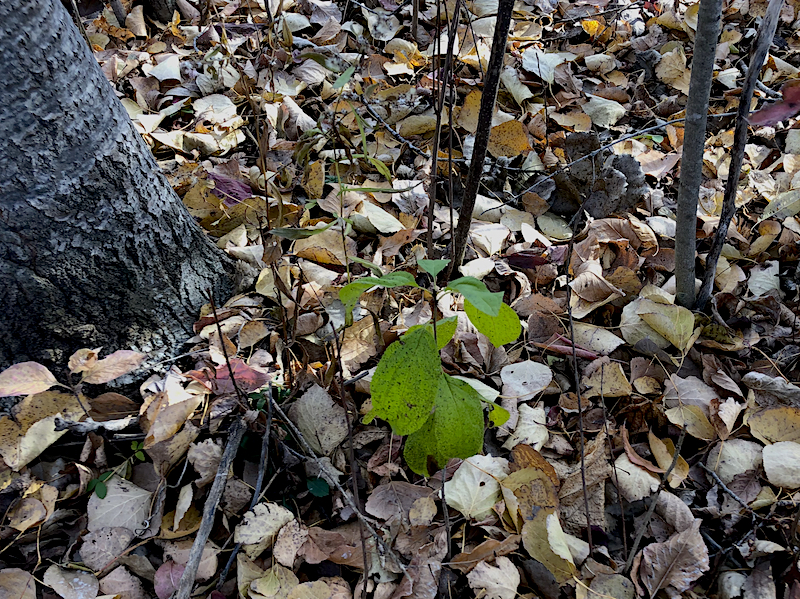
Luckily, those little ones are easy to pull out, roots and all, by hand. I just need to spot them and navigate the tangle of undergrowth to reach each one. And even when you think you’ve pulled the last, there’s always one more that I somehow missed.
At least I’ve given this challenge enough attention that it’s manageable at this point and the progress is noticeable. The surrounding woods of my neighbor’s property are filled with many tree-sized sections that haven’t been tended to in all the years we’ve lived here.
The difference is obvious and significant.
Speaking of that property to our north that was supposedly auctioned off on the courthouse steps in July, another neighbor recently mentioned a possibility that the sale never went through for some undetermined reason. Saturday afternoon the guy was mowing the weeds on the field that had been left fallow all summer, supporting the likely assumption of continued ownership.
The more things change, the more they seem to stay the same.
.
.