Posts Tagged ‘land management’
Hemp Dogbane
We did not know the name of the hemp dogbane weed three days ago, but I was well aware of a strong-stemmed tree-like weed along one of our fence lines. It grows taller than the surrounding grass and is a nuisance when trying to weed whip under the fence.
It caught my attention recently because it stands out dramatically when the leaves turn yellow, and it appeared to be spreading farther than ever before.
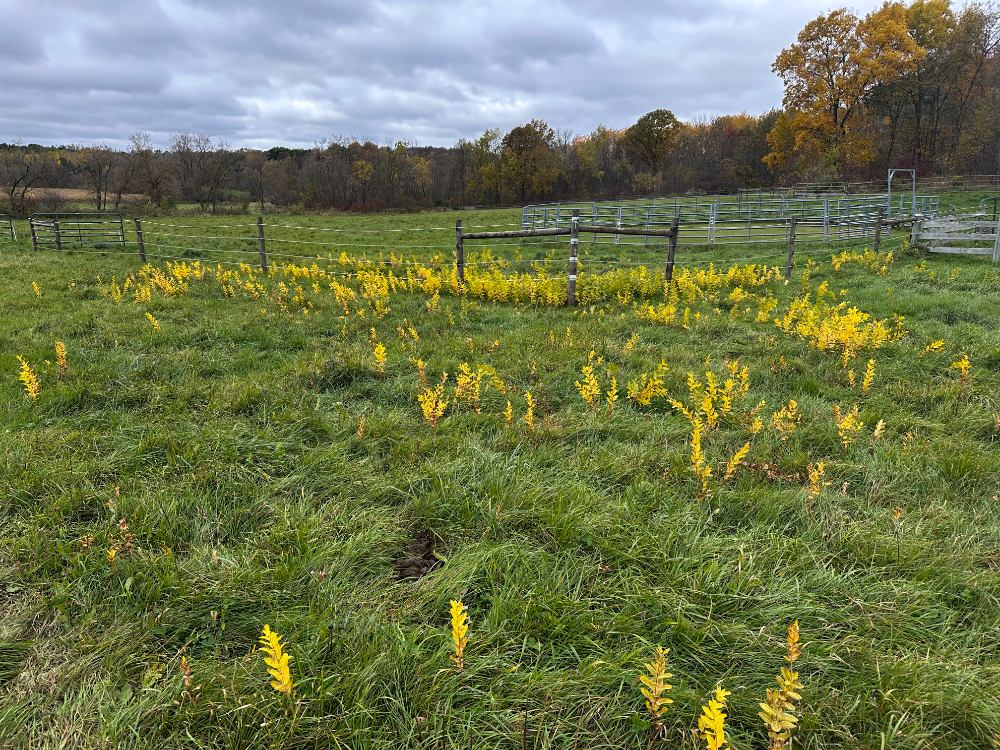
I asked Cyndie to look it up on her plant identification app. When she read me the results for hemp dogbane, I realized we needed to take action before it spreads any further. It is an aggressive perennial that is tough to control, and it is toxic to animals in both fresh and dry forms. We absolutely do not want this in our hay field.
Nasty herbicides are one possible means of beating the weed back, but that method doesn’t sound as effective as it would need to be to justify using chemicals that are harmful to humans and animals. Thankfully, frequent mowing is another way to constrain its growth. That is something I know how to do.
Since it is so easy to spot right now, I set out to remove what I could see by pulling it up by hand.
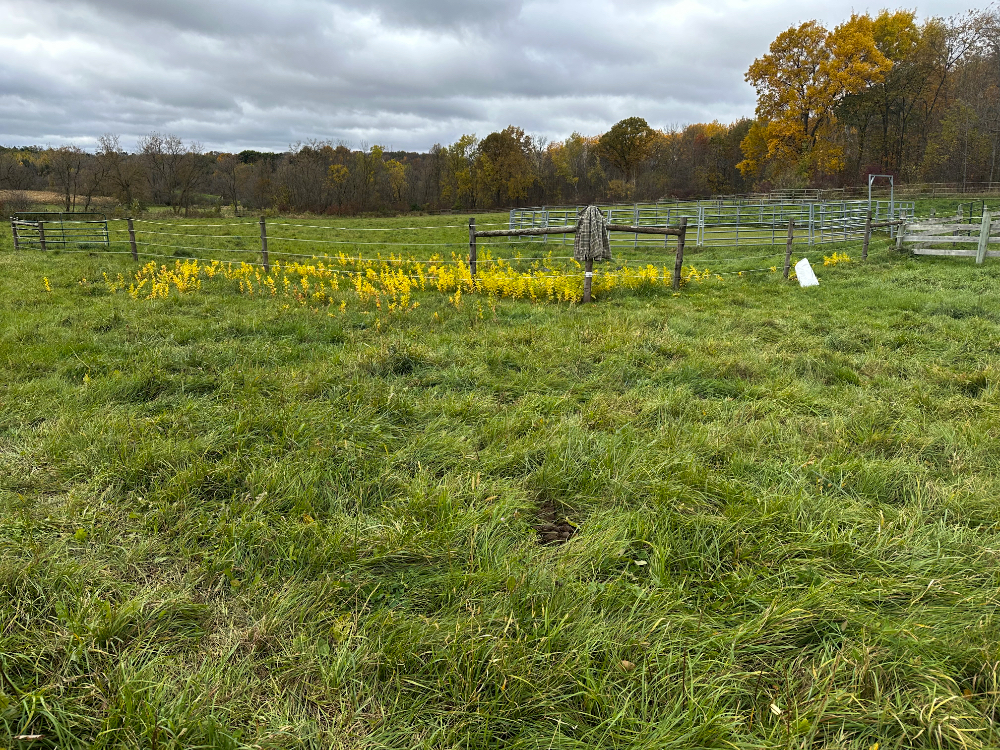
Just a little back-breaking, sweat-making labor for a few hours in the middle of the day. Most of the stalks broke off at the ground, leaving the rhizome behind, but there were a few where the root came up satisfyingly, too. It was obvious that previous field mowing had chopped the stalks and triggered multiple new shoots to emerge from the existing root. Those instances were actually easier to pull the whole root than the other individual new shoots.
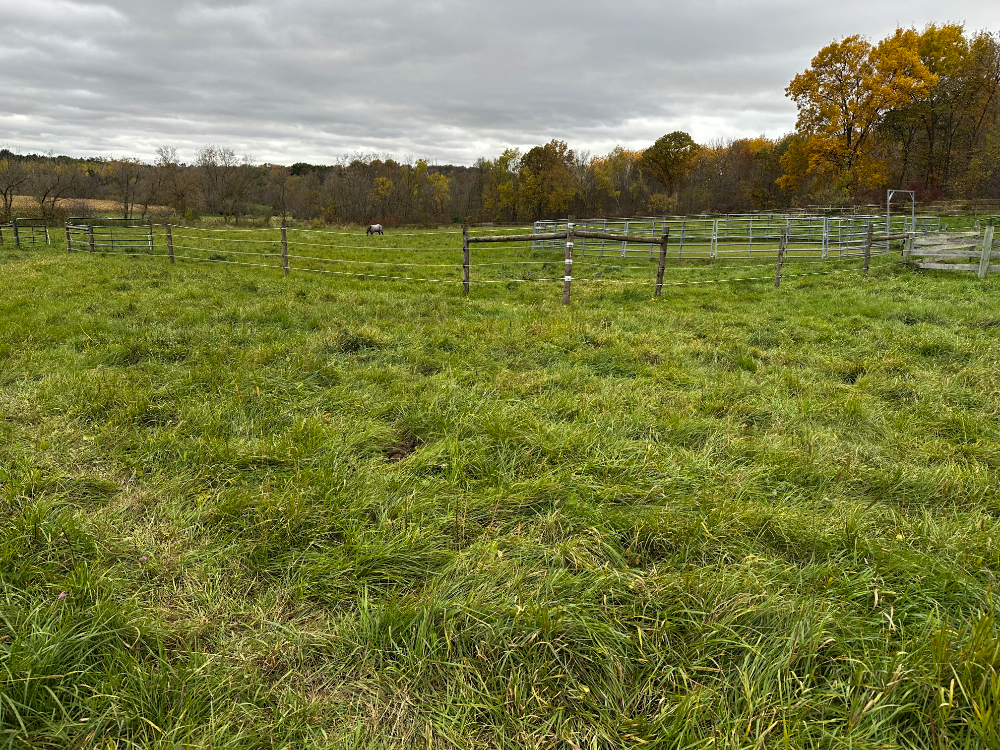
We will now be much more focused about frequently mowing new growth in that area in the spring and throughout the summer.
Just the other day, I wondered aloud to Cyndie around the anniversary of our arrival here, as to what this property would be like if we hadn’t done anything to manage it for the last thirteen years. There would be a lot of big trees on the ground, that’s for sure. There’d be no labyrinth garden. And hemp dogbane weeds would have a lot stronger presence in the fields.
I feel like I earned my keep yesterday after that tenacious effort to single-handedly clear out every last dogbane sprout I could find on both sides of the fence. I’m cautiously optimistic that I will be able to stand up straight and walk normally today.
I’m not so optimistic that my muscles won’t demonstrate their objection in the form of stiffness, however.
.
.
Plastic Goats
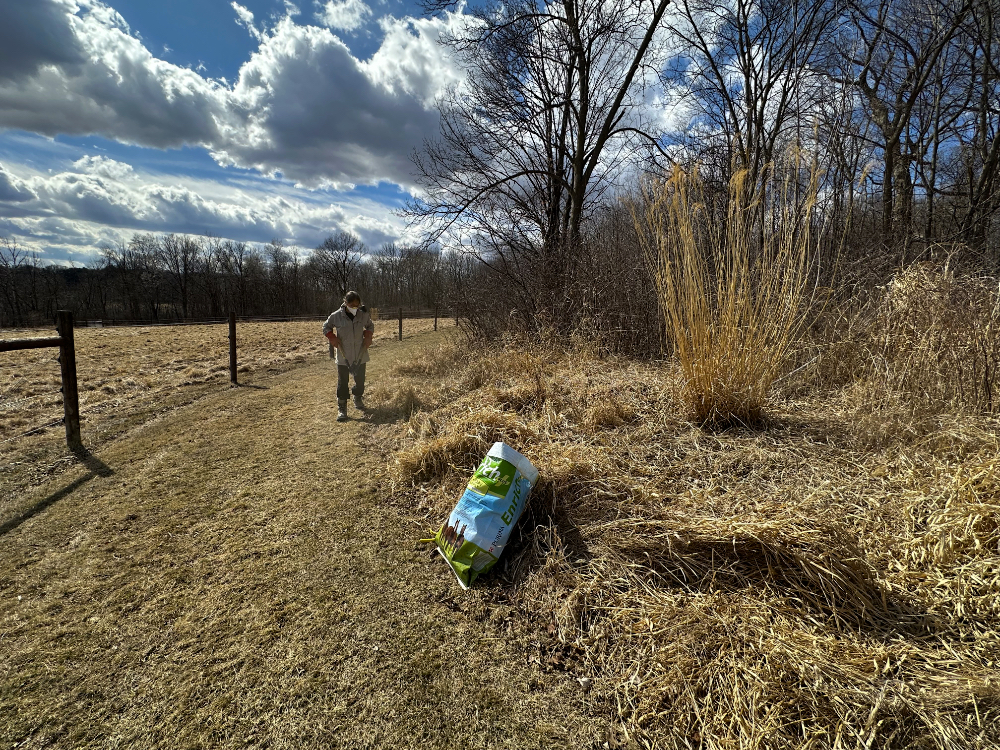
Sure, we could get goats to control the patches of poison ivy on our land, but we don’t need large swaths eaten down to a moonscape. We want a more targeted approach and one that will cost us less than goats. We are taking a shot at using plastic and/or cardboard to cover specific patches where the problem plant is most entrenched.
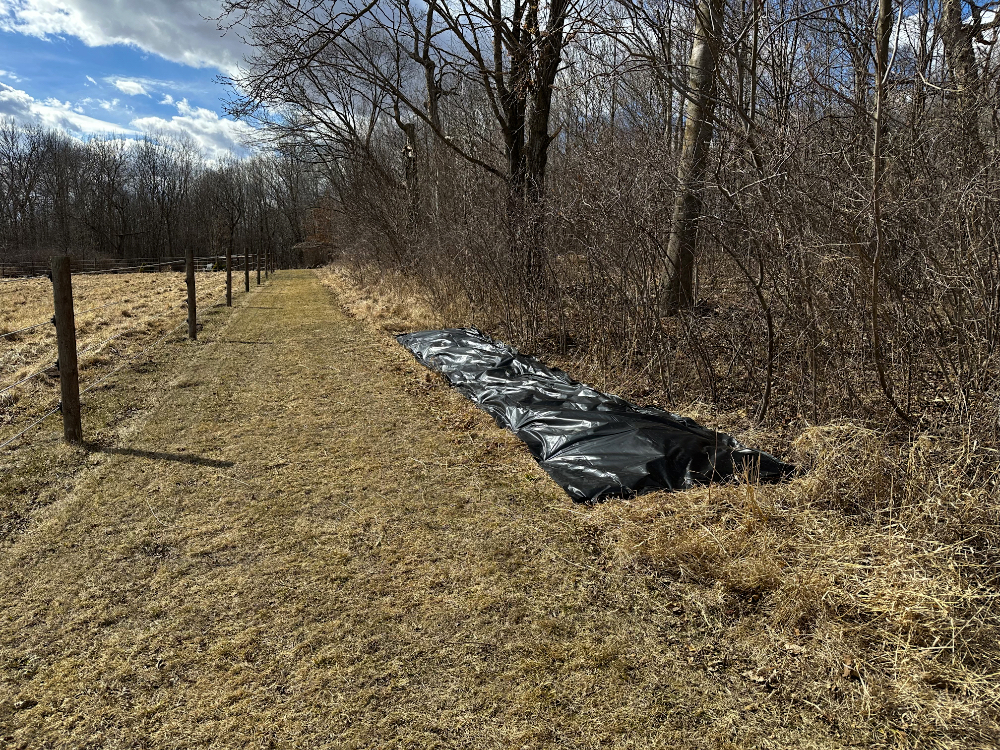
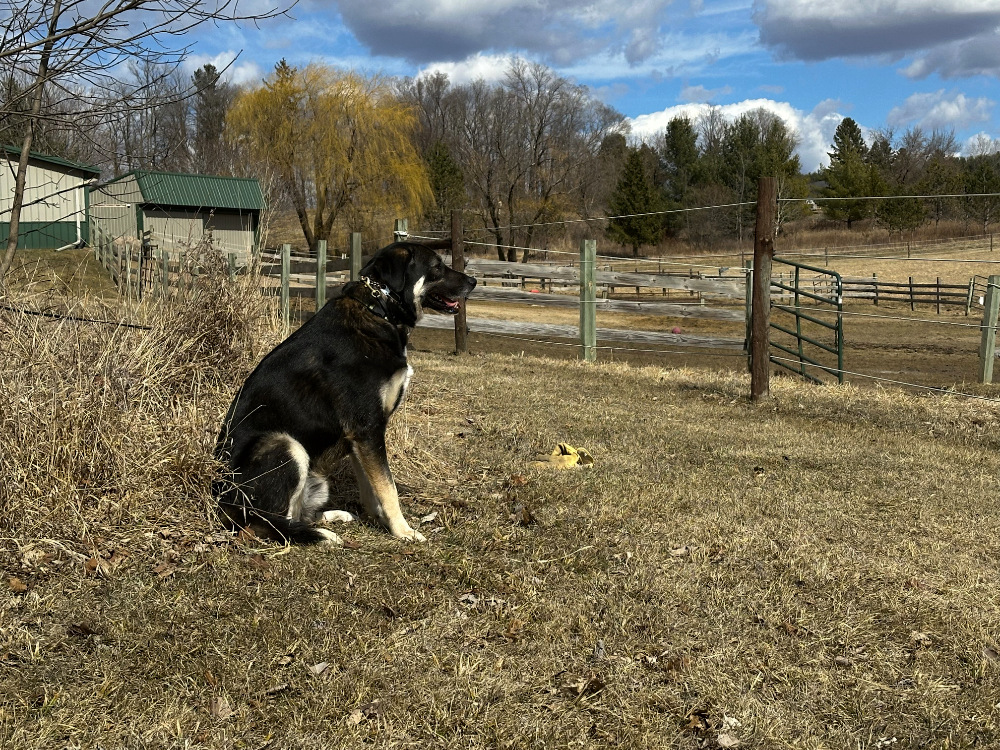
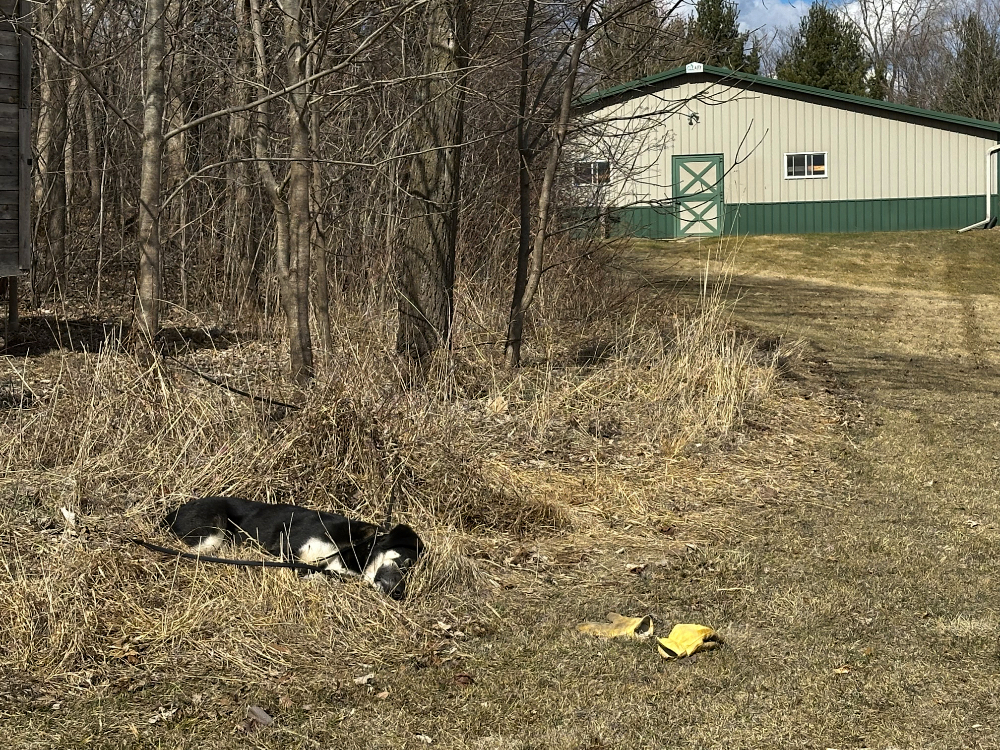
The hope is to turn just a select strip into a miniature moonscape. Since this method kills everything beneath the plastic, it’s not different from spraying entire swaths with a solution of vinegar/salt/dish soap concoctions, so we may experiment with that in a different location. Cyndie donned protective gear and worked to cut out the woody stems of poison ivy with berries that are very easily seen right now. She left her good gloves behind with Asher to stand guard.
 .
.
.
.
.
.
.
.
.
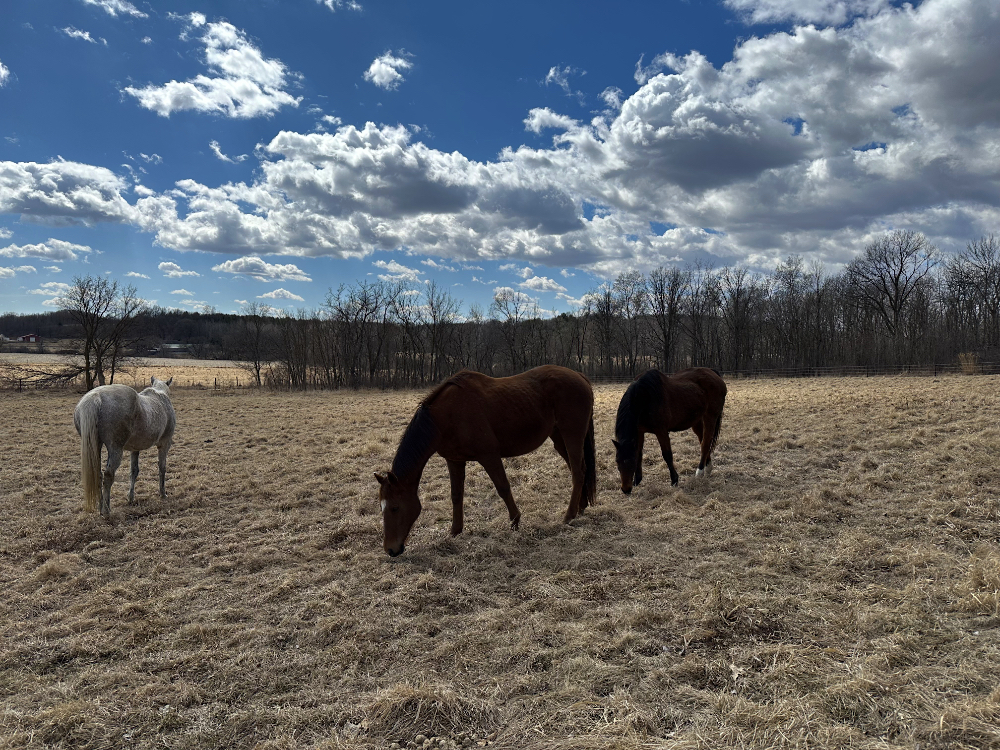
The horses came over to see what was up and lingered in the vicinity for a short while, grazing the dead grass and any new sprouts beneath that might be showing up.
I decided to make myself useful and worked to cut out the grapevine stems from the other side of the brush where Cyndie was working.
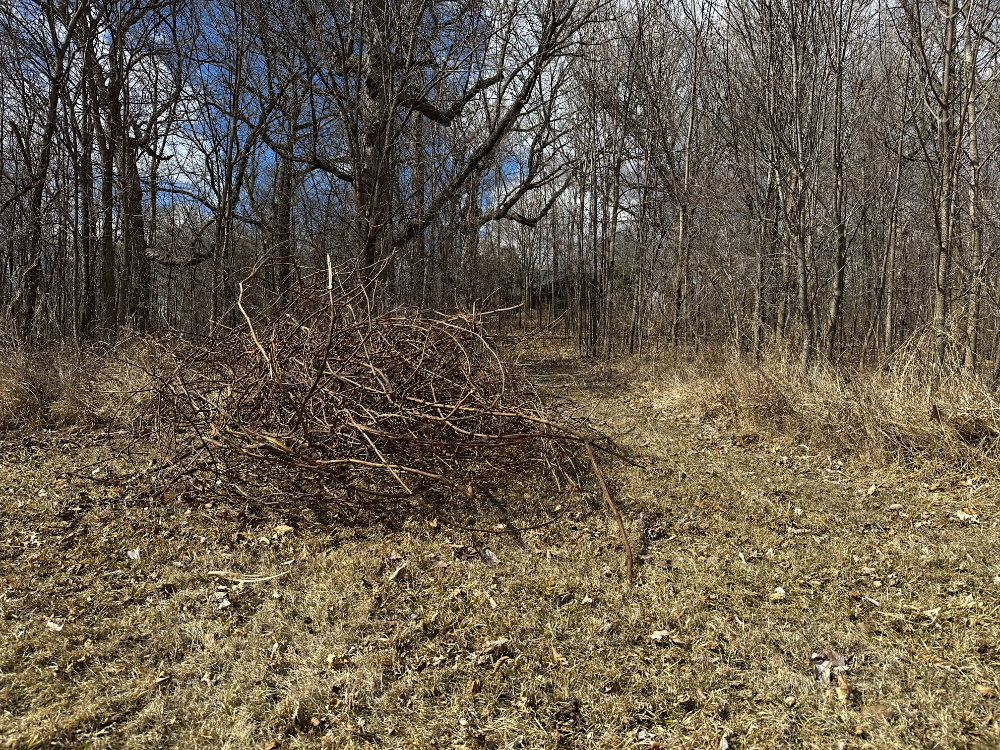
Anywhere on our property that we don’t regularly walk through is pretty much guaranteed to have grape vines seeking to become the dominant species, bending branches and entire trees down into submission. Trying to keep them at bay could be a full-time job. I yanked as many strands as possible from the branches of the bushes that were being swallowed and made a pile of vines.
I guess we worked for longer than Asher could stay awake.
We’ll wait a growing season and then see if we can encourage a desirable ground cover to fill in areas that have been under our plastic version of leaf-munching goats. The weather patterns of the last two years produced the largest expansion of poison ivy since we’ve lived here. It would be nice if we could make some headway in the other direction this year.
.
.
Today Arrived
It’s here! We have arrived to the day Saturday, August 17, 2024. If you haven’t been waiting for this day to happen, it might feel like just another Saturday. Maybe it is simply the first day of the weekend. I suppose a few birthdays fall on this date or maybe a few weddings were scheduled.
While I was walking this morning with Cyndie and Asher and we marveled anew over the grandeur of our surroundings. I asked Cyndie if she thought she would still be able to visualize the views along our Middle Trail in some future situation when we are no longer physically fit enough to walk these woods.
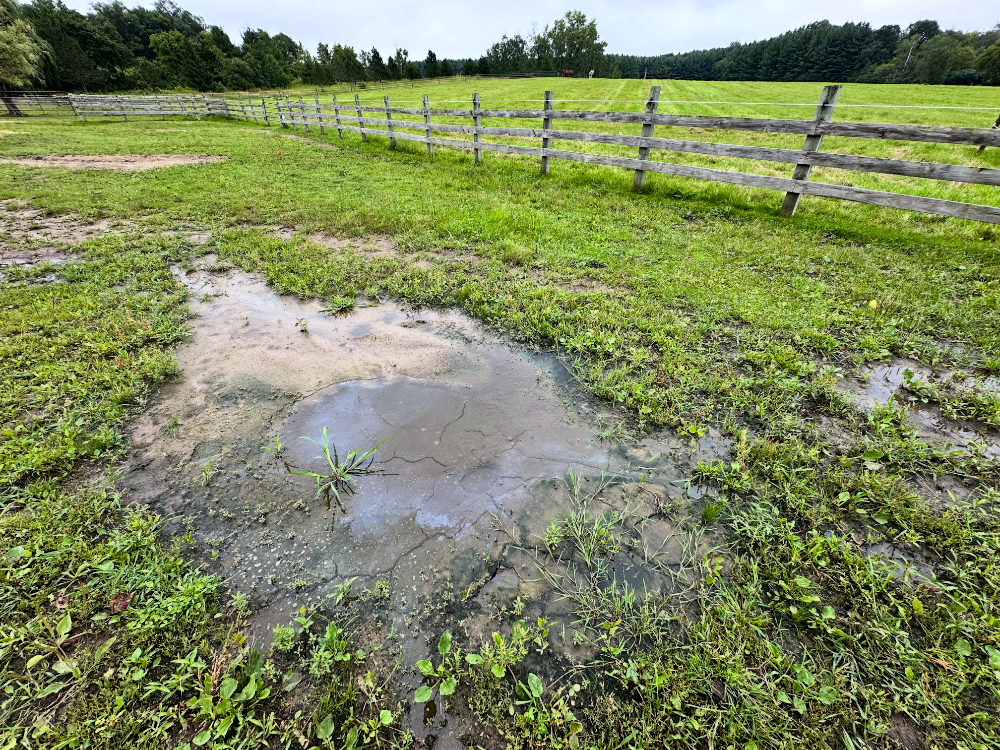 We are in our twelfth year of living on this land and I still feel awe over the fact we own a portion of a forest. This summer has been different than most since we moved here from the suburbs. It has been wetter and for longer than normal. The land reflects that in a variety of ways.
There are new levels of erosion and significant accumulation of the runoff soil downstream that disrupt our preferred flow through ditches. Meanwhile, plants and trees are growing strong. It requires a constant effort to control undesired invasives and keep vines from swallowing trees.
In that regard, today would be just another day for me.
I feel lucky to have the opportunity and the time to tend our fields and woods but I won’t be doing much of that this day. We have a lunch date in the Cities that will fill much of our time. Another luxury we enjoy of visiting with friends, some with whom we rarely spend time.
Our land will wait another day for attention from me.
I have a strong suspicion that Sunday, August 18, 2024, will be arriving soon, and with that, new opportunities galore as time keeps ticking away.
.
.
Field Finds
I’m still feeling excited about the number and variety of new trees sprouting in our north loop field we discovered the other day. Just the fact they are appearing without any help from us is so rewarding.
Two types of long-needle pine and three oak varieties look to be two or maybe three years old.

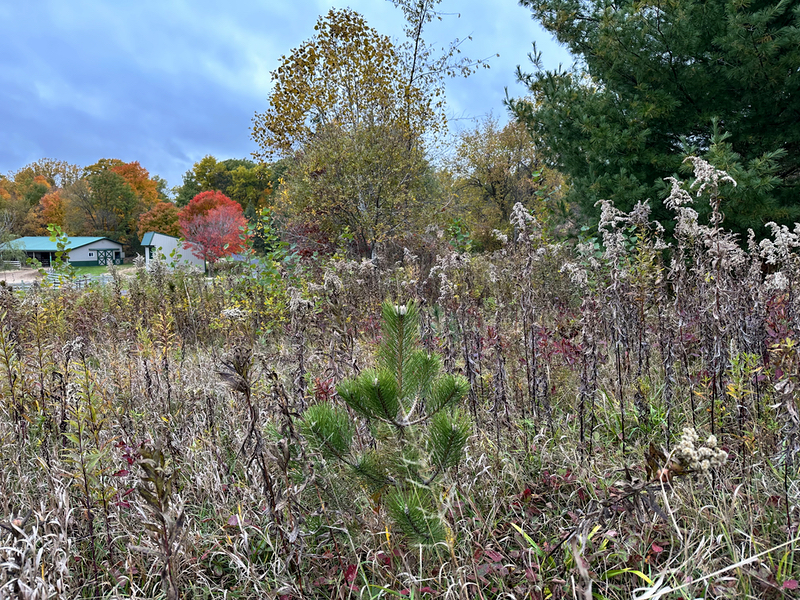
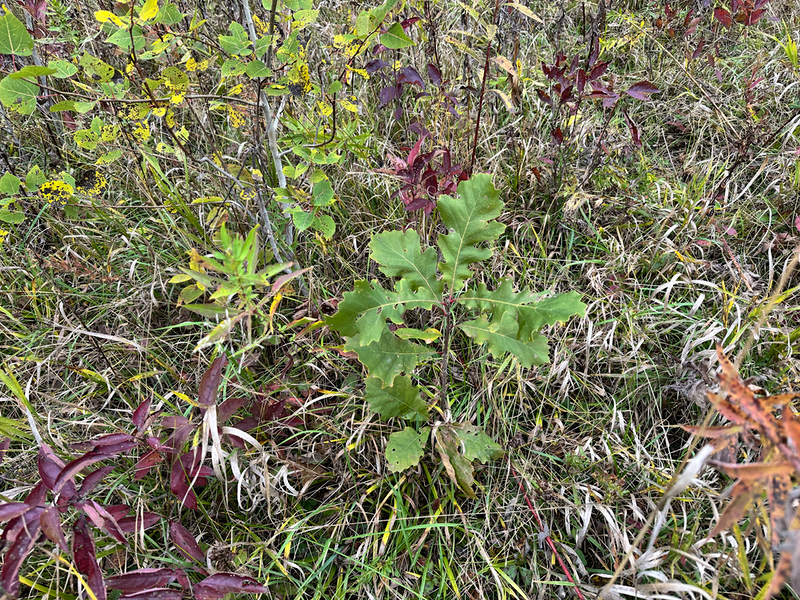
I am really glad I stopped mowing that field and that this is what has resulted. Granted, we also have a large spread of thistle in one area and poison Ivy in another which were the reason to mow those acres in the past. We may still need to find ways to deal with the problem weeds beyond ignoring them in hopes they’ll go away.
Maybe selective mowing for the thistle, like using the power trimmer. I don’t dare use that on the poison ivy.
Now that we’ve found these young trees, we should probably put energy into protecting them from foraging deer. We know about “bud capping” the leader of pines with a stapled piece of paper. I would prefer that option over trying to fence around the young trees.
We already have been watching three young pines for the last year that sprouted closer to the driveway and debated stapling caps to those. I don’t understand what our hesitation is to doing so beyond a willingness to take a risk. I expect part of it is that, thus far we’ve gotten away with doing nothing. If one of them gets munched, I expect it will spur us into action to protect others.
Not necessarily sound logic, I admit.
There are plenty of tasks awaiting attention that linger unfinished. I was looking at several piles of tree limbs we have stacked in the woods for chipping. Days have turned to months, and now years in which we have gone no further than creating the piles.
Asher really wanted to get into one of those piles yesterday, I assume after a cute chipmunk or rabbit’s nest he could smell. I let the easier task of mowing the labyrinth and part of the front yard get my attention in the afternoon.
I suppose that’s the reason I’m so thrilled with the young trees showing up in the field. We didn’t need to put any effort into making that happen beyond giving nature the time and space to do its thing.
.
.
Chippin’ Away
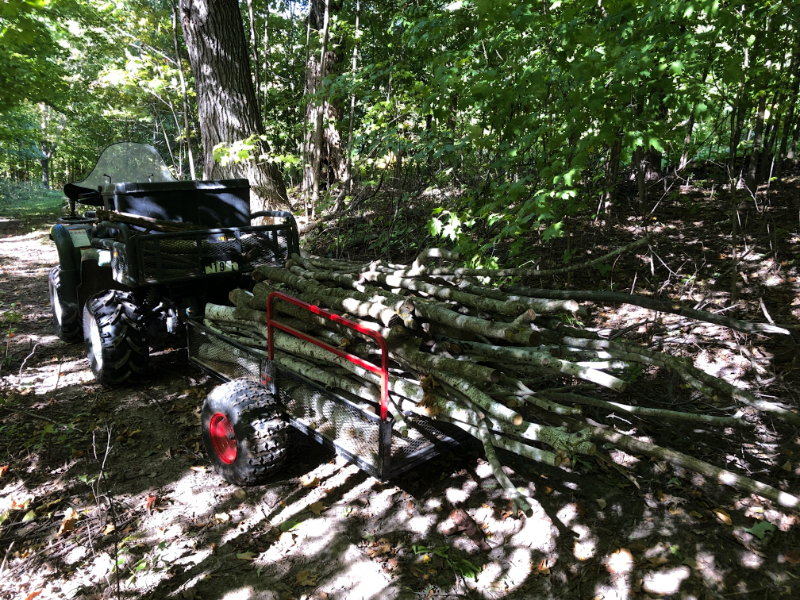
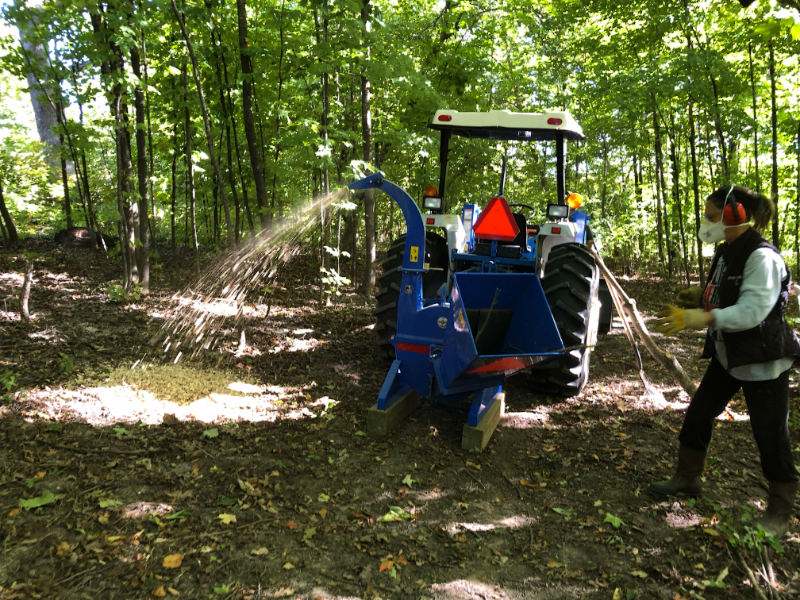
Little by little, day by day… We made another modicum of progress in dealing with the wealth of downed trees awaiting processing on our property on Thursday. I didn’t have a wasp get into my sleeve and painfully sting me four times when I grabbed a branch to put it in the ATV trailer. Cyndie can’t say the same thing.
Her wrist and forearm looked a bit like a hot baseball bat but that didn’t keep her from carrying on and loading branches into the chipper.
 .
.
.
.
.
.
.
.
.
Under the canopy of leaves that created dappled light over our chosen workspace, we made quick work of the collection of prime-sized, appropriately trimmed limbs we’ve been stockpiling for just this purpose. Once the trailer was emptied, we sought out worthy specimens scattered throughout the immediate vicinity.
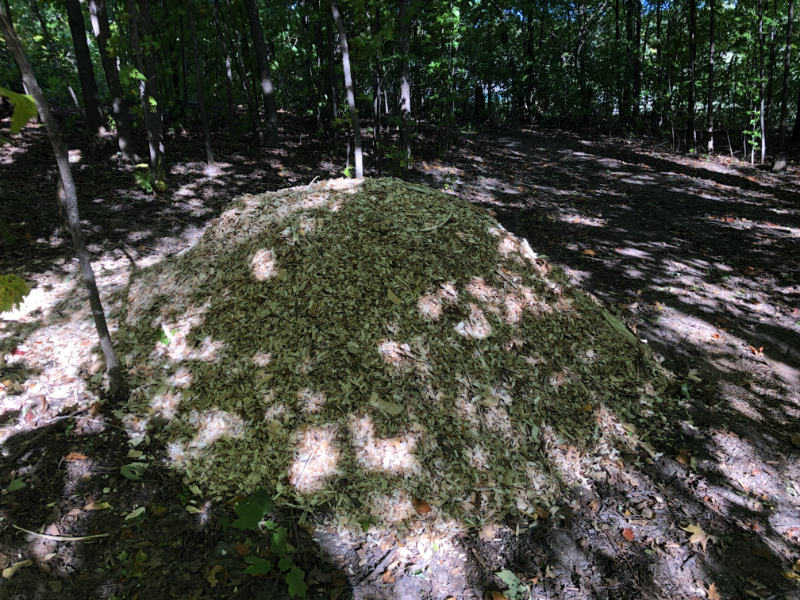 That effort reaffirmed my interest in putting more time toward pre-staging the optimum branches for chipping. The brilliant chipper attachment we have can handle up to 5-inch diameter branches but too large a “Y” breakout on a limb will seize progress as it gets wedged in the narrowest point of the chute. Sticks and twigs that are small can also bog things down.
Lately, I find myself inclined toward optimizing production of the best chips for landscaping by choosing ideally sized limbs. There is a time and place for chewing up entire piles of branches, but lately, our purposes call for less shrapnel and more good chip chunks.
Our next task along these lines will be to process the remaining downed trees, trimming and sorting limbs for a future day of chipping. It will be a rewarding exercise on its own, but it is also a form of delayed gratification… if you know what I mean.
There is something really satisfying about grinding a trailer-load of arm-sized branches into a huge pile of wood chips.
.
.
Cutting Pasture
It feels like I have been cutting grass non-stop for days. I used to think that growth slowed to a crawl after August but I saw a chart at the State Fair this year that indicated grass growth in September can be compared to what happens in June. There is a slump in July and August when grass might even go dormant before reenergizing in September.
It used to confuse me that September was a recommended time to seed new grass but now I can understand why that is.
Our land is still overly dry but we have had just enough rainfall between dry spells that the greenery looks pretty lush and the grass seems as happy as can be. The reason it feels like I’ve been doing a lot of mowing is that I have been playing with our new electric push mower, and I cut grass in the labyrinth, then used the brush cutter pulled by the diesel tractor to mow the hay field, and yesterday, the back pasture.
In addition, I have been cutting beneath the fence lines with the power trimmer. On top of that, I knocked off the second phase of a twice-a-year mowing of the drainage ditch along our southern property line.
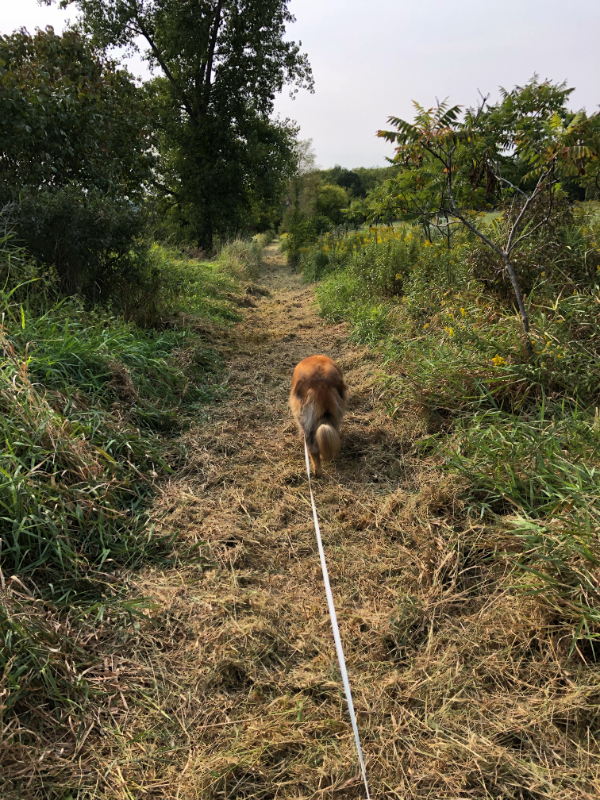
When it’s dry, the mowed ditch becomes an alternate trail for Delilah to explore. In that image, she has her nose to the ground exploring any animal trails hidden beneath the mass of cuttings. The months of growth in the ditch were four to five feet tall and it is a blind cut on the first pass. My foot is poised to hit the clutch to interrupt the power to the mower if anything that wasn’t supposed to be mowed is encountered.
I back up the full length with the brush cutter tipped up a bit and then lower it for the return trip in the forward direction toward where I started. It isn’t a straightforward simple cut because there are washouts where fast-moving water has eroded the soil and they meander back and forth so the tractor wheels occasionally drop down or the mower bottoms out as travel progresses.
So, it is a blind cut on a completely unpredictable terrain. It is a great relief when that task has been fully accomplished.
It is also extremely satisfying to have both big fields mowed. If you’ll recall, it isn’t so much the grass that we need to cut as much as the weeds we want to prevent from going to seed. Cyndie and I don’t want to use toxic chemicals so mowing is our chosen method of control. We also pull a lot of weeds but that is similar to trying to empty a lake of its water by removing a spoonful at a time. Although, it is very satisfying, psychologically, to yank a weed out by its roots.
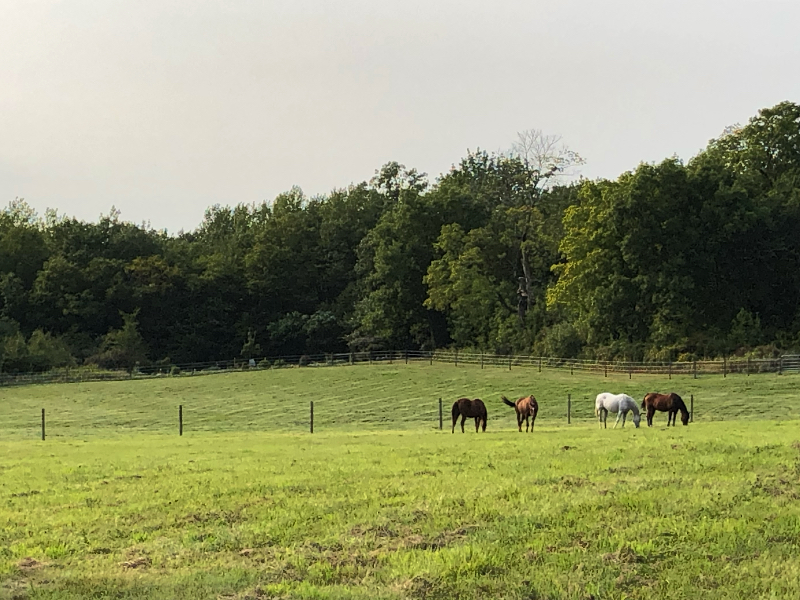
The horses took great interest in my activity in the back pasture and gave me the impression they wished I would hurry up and finish so they could get back on it.
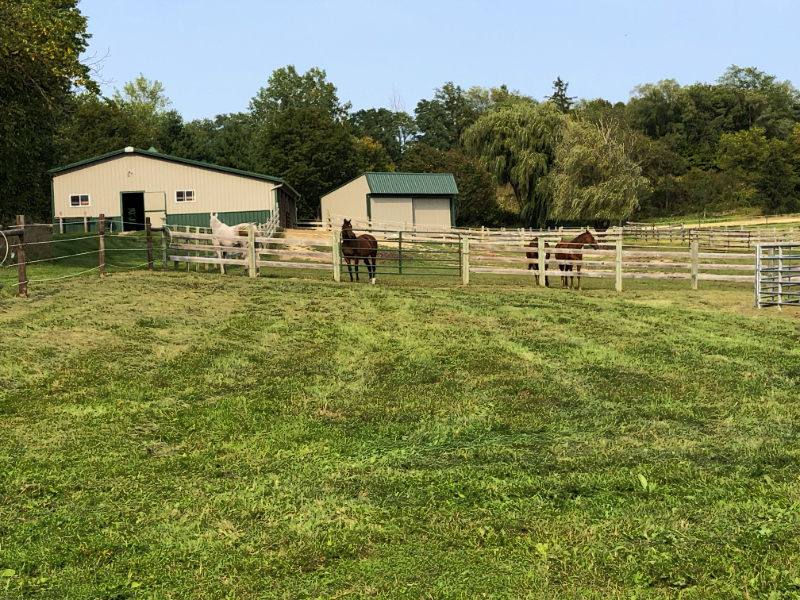
I’ll keep the gates closed for a couple of days to dry out the cuttings and give the grass a little time to sprout new growth before giving them access again. Meanwhile, they have the entire already-mowed hay field at their disposal.
.
.
Maiden Grass
Our ornamental tall grass by the shop garage is in its glory this time of year and deserves a shout-out.

These batches were here before we arrived and have never been thinned. They have become so massive we are talking about some possible locations where we’d like to see them enhance the scenery were we to transplant a portion. It will be an education as we’ve never tried transplanting something of this magnitude.

We have plenty of hosta plants successfully split and transplanted, but admittedly those are a piece of cake. This will just be a little upsized version of the process.
Initial research points out the roots are very strong and it will be difficult to dig through them. We have until spring to build up our strength because early spring is the time to transplant these tall grasses.
We’d love to have more locations of big grasses because they would be a great compliment to all our big sky views.

.
.
Next Project
It’s going to be another solo weekend for me as Cyndie will be at her mom’s house in Edina and that will give me a chance to make all sorts of racket with my newest wood splitting tool. It is one I ordered online last winter and had to wait to receive it until long after I had any interest in wrestling with it in the heat of summer.
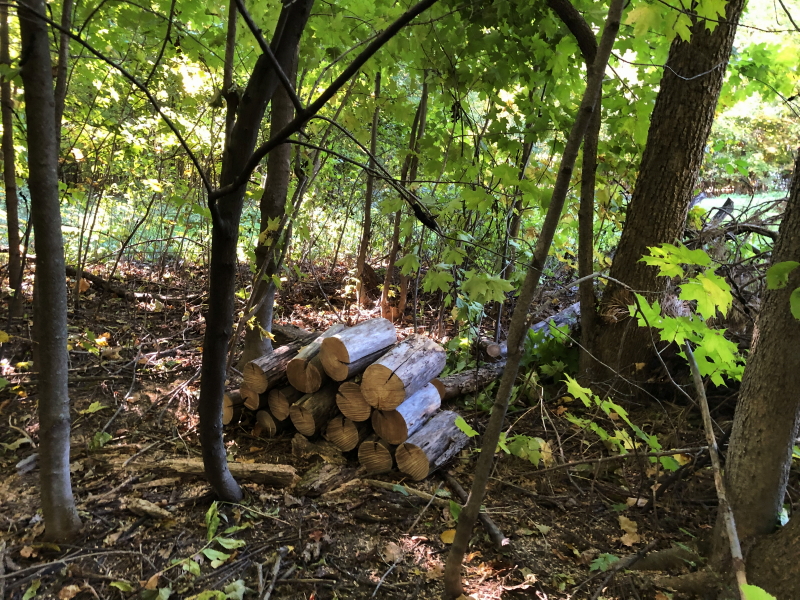
I tested it on a few logs last April and quickly learned the metal-on-metal banging demands serious hearing protection. The gist of the mechanism is basically the same as my old splitter except it doesn’t glide on a stationary post, so it’s completely mobile!
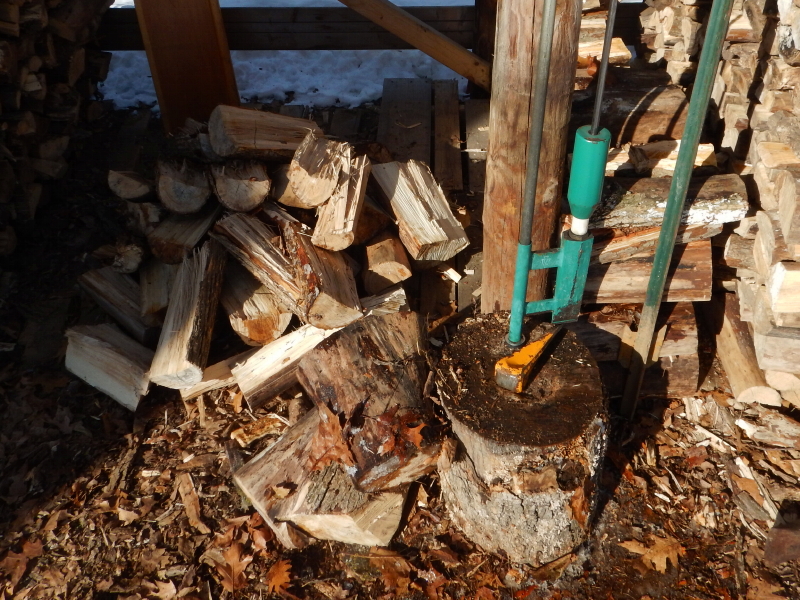

It’s got two handgrips and I can take it to wherever the cut logs are piled to split them right there.
It just so happens we have several such piles after last weekend. When I cut up the trunk laying in the paddock, we also took care of a tree that was laying across one of our trails, one that was leaning against others in the woods between the house and chicken coop, and an old dead tree in the middle of the woods where I had just cleared a new trail.
 .
.
.
.
.
.
.
.
.
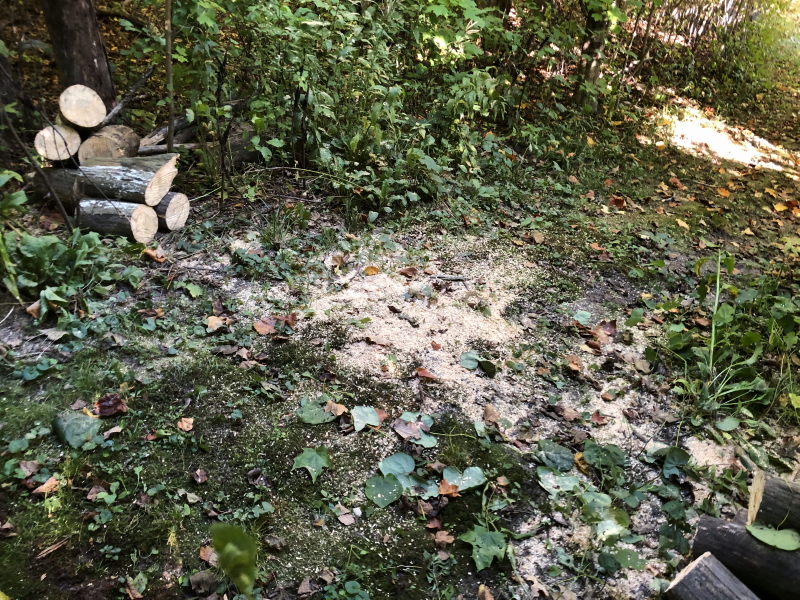
I will bundle those little logs with the chain shown in the image above –which is supposed to hold everything in place while splitting– and chop away with reckless abandon.
Then I’ll have piles of split firewood to collect with the famous ATV trailer that Cyndie bought as a replacement for the one she sold in her big barn sale, thinking we no longer needed it.
I’ll also have an upper body workout taken care of without needing to go to a gym. It’ll be a project with multiple benefits.
We’ll see if reality is able to live up to my ambitious visions.
.
.
Buckthorn Season
In addition to looking for antlered bucks in the woods this time of year, I am also hunting for buckthorn. Common buckthorn is an invasive tree that I strive to control on our property. In the fall, buckthorn holds its deep green leaves longer than most other growth in our forests, making it easier to spot.
It’s not foolproof though, because I always seem to find a large enough tree that reveals I must have missed it the year before. I think the main reason for this is buckthorn is not the only growth that still has leaves after the majority of the forest turns brown and barren. There is at least one other bush that confuses my hunt.
 The main difference I have found is the relative color of green, as can be seen in the picture I took yesterday while Delilah and I were forging our way off-trail to dispatch every invasive we could find. The batch of leaves on the left are a buckthorn I just cut down that must have been missed the year before. The noticeably lighter green leaves on the right are the primary bush that complicates my identifying the unwelcome buckthorn.
When I look into the trees on my neighbor’s unmanaged land, there is an obvious spread of green growth, but ours holds just a fraction of that, only a few of which are the deep green buckthorn.
With this year’s quick jump to Arctic cold and several doses of early snow, the buckthorn hunting season has been shortened. Luckily, I had already done a first-pass through to address the sprouts of growth that are small enough to easily pull by hand before the ground started to freeze.
At that time, I didn’t have my hand saw with me, so I took a mental note of the larger trees I wanted to come back to cut down. When I set out to do that yesterday, I almost failed to find that tree shown in this picture. I needed to get to a place where just the right angle of view made it stand out.
Delilah loves that we need to roam into the middle of the areas we rarely visit, as she is able to find all sorts of disgusting things left behind by the wild forest animals that romp around on our land.
I’m satisfied with the progress this year and ready to consider the hunt complete. There was less growth than previous years, so our efforts are definitely paying off. The view into the adjacent property confirms it.
Our woods look distinctly more managed and that makes trekking through them for year-round forest bathing that much more rewarding.
Huzzah!
.
.
Better Sink
I am always learning, and thanks to George’s comment on yesterday’s post, where he reminded me about something he shared on a recent visit, I have a renewed appreciation for the value of our grassy fields. Improving our planet is not all about planting more trees.
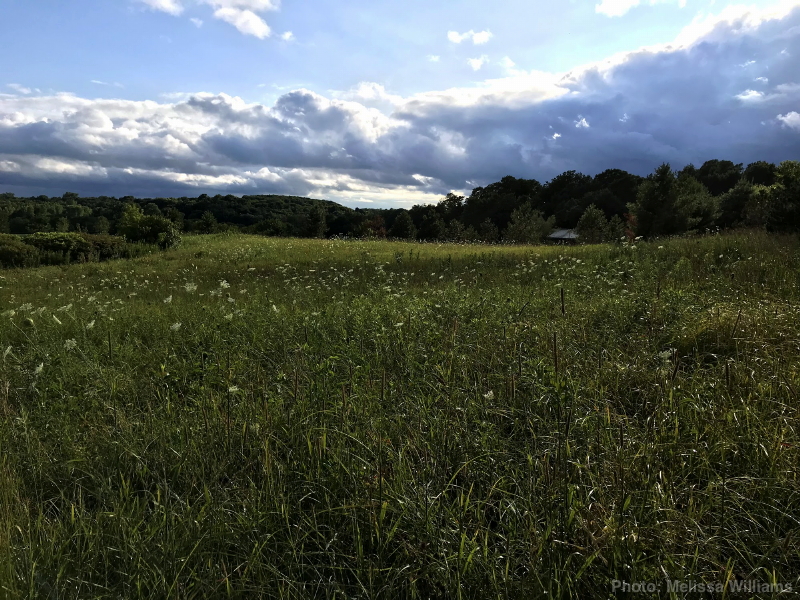 Grasslands are actually a more reliable carbon sink than tree forests, because they store much of the carbon underground in the root systems.
George pointed me to a podcast where I was able to learn about the Santa Maria Cattle Company in the Chihuahuan desert ecosystem where they are successfully reversing the desertification and building grassland using cattle as the primary tool.
Seems like inverse logic, doesn’t it?
Mismanaged, cows can overgraze and destroy the grassland. Luckily, better thinking is leading to a more enlightened perspective. It is possible to learn from our mistakes and choose a better way. Fernando Falomir and his family are showing what is possible and sharing what they have learned so others can do the same.
Inspiring!
George also turned us on to Gabe Brown and the work he is doing to champion regenerative agriculture. Turning dirt into soil! Seems so simple.
Instead of the convention of tilling the earth to plant one crop and ply herbicides, pesticides, fungicides, while also needing to add irrigation to achieve results, Gabe reveals how farmers can succeed by mimicking the diversity of nature instead.
The compacted and deadened dirt can be exchanged for a thick aerated biomass soil that seems so obviously logical as to not require harsh and harmful chemicals to be viable. It can be done, because that is the natural way things worked before we started slamming our short-sighted mass production methods across the land.
In fact, we have a wonderful example right in the heart of Minnesota, where George has returned to his family land to put these precious principles into practice with Walker Farms.
It’s not all about trees.
I’ve definitely learned that.
Thanks, George Walker!
.
.


 Relative Something