Posts Tagged ‘butternut canker’
Pinnate Leaves
Back when our regional DNR Forester paid us a visit, he pointed out how many ash trees we have. I had been mistaking many of them for butternut trees, but closer inspection, and a noticeable lack of nuts, changed my perspective.
As a result, now my first impression of our trees with pinnate leaves is that they are likely ash.
While we were sitting with the chickens on the edge of our driveway the other day, I gazed skyward and became aware of a large umbrella of the pinnate leaves looming over us. Mentioning it out loud to Cyndie, I assessed it as a big ash that we didn’t even know was in that spot.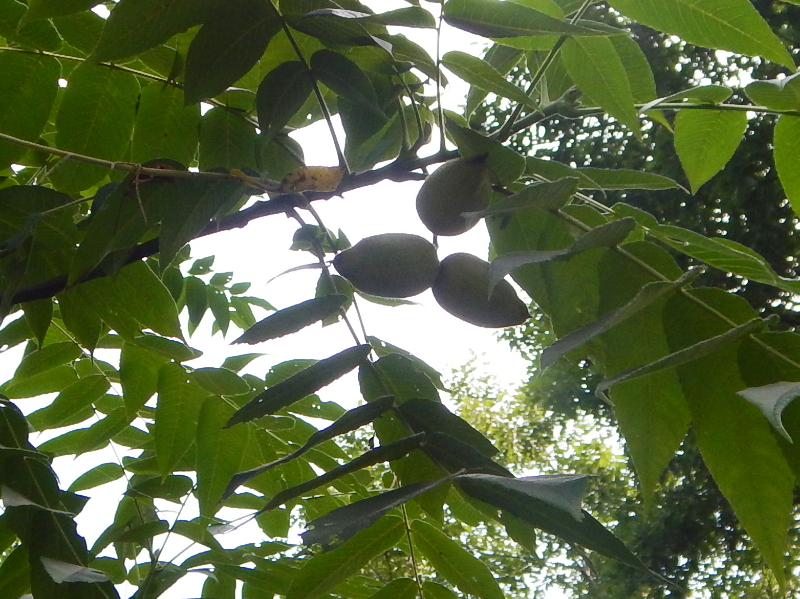
Until I saw the nuts.
Oh! So, it’s back to a butternut again.
From the class we look last winter, I was quickly able to detect one of the simplest identifying differences: the petioles or leaflets of the compound leaf.
The ash tree has about 7 leaflets arranged in opposing orientation along the stem.
On this butternut, I counted repeated occasions of 13 leaflets, and they are arranged in alternate orientation along the stem. Combined with the obvious groupings of nuts, there was little question about what kind of tree this was.
I’m a bit surprised by the significance of the canopy of leaves on this tree because the butternut canker disease is stunting the progress, or outright killing most of the butternut trees in the area. It is possible this tree has an inherent resistance to the fungus.
That would be great luck. Offspring from this tree could lead to additional trees with resistance. Invert the pyramid, I say!
On another note, I received a reply from our Forester about my findings on root girdling on the red pines. He found the report interesting and surmised the trees weren’t planted properly. He still concluded with, “Your trees may have still actually been killed by Diplodia.”
Another fungus. What’s up around here?
I blame climate change.
.
.
Downed Trees
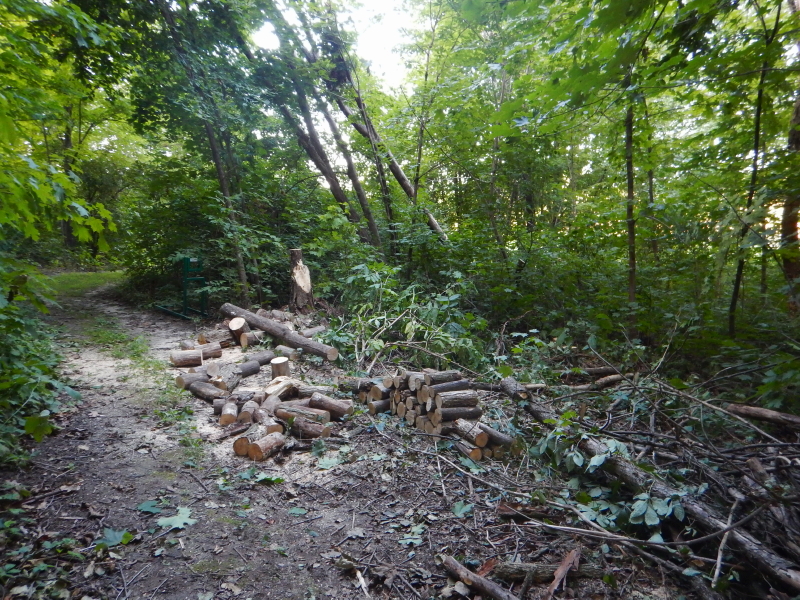 On Monday after work, I ripped into the task of cutting up the dead trees a storm had pushed over, and which I had recently shoved the rest of the way to the ground with the tractor.
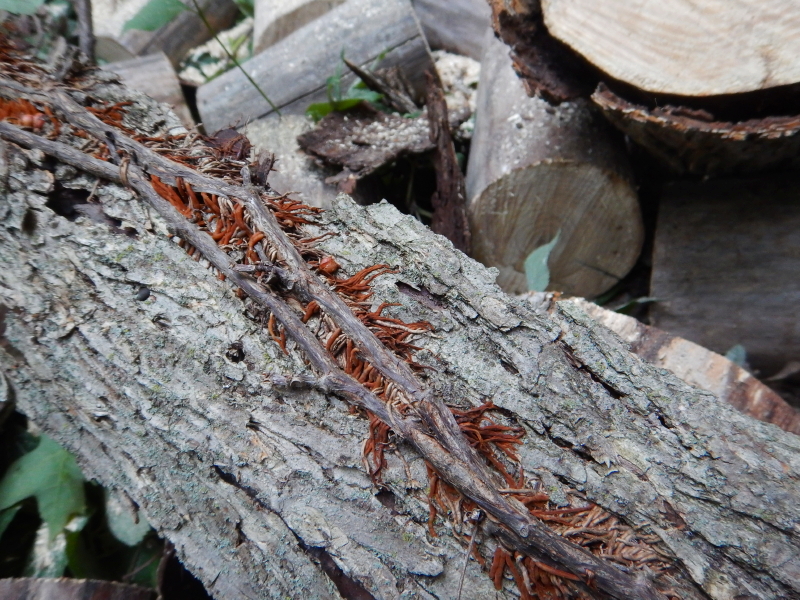
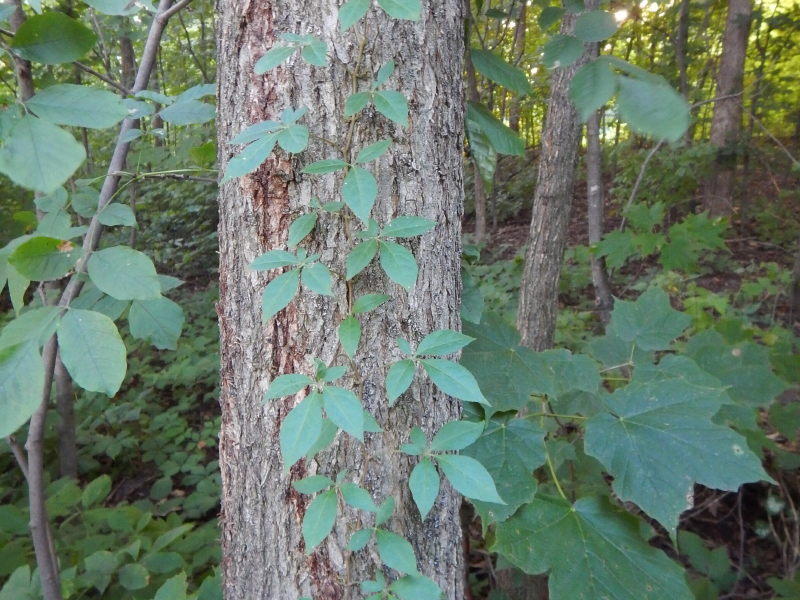
I quickly figured out what was holding up all the wind-blown trees. Regular readers may recall that I mentioned a while back that vines seemed to be thriving this year. Well, there are vines everywhere in the area of these dead trees.
It’s unclear to me whether the vines are responsible for the demise of the trees, or not. I think most of this bunch are butternut trees, which are commonly killed by a fungal butternut canker disease, Sirococcus clavigignenti-juglandacearum. Go ahead, read that out loud.
The vines might look like they took over the trees, but they may simply have climbed up trees that were already giving up the ghost.
 .
.
.
.
.
.
.
.
.
My uneducated guess is that the vine is Virginia Creeper, based on image comparisons found online. One interesting data point supporting my suspicion is this tidbit:
People should be careful when they see Virginia Creeper, because there may be Poison Ivy around also. The two plants almost always grow together.
I’ve well documented there is no shortage of poison ivy growing on our acres.
The tendrils of the stalks grab and hold the bark of the trees with incredible tenacity. It is comical how the dead trees will gladly slough off the bark, but the vines maintain a grip that results in long dangling empty tree skins hanging down from the canopy.
While cutting up the assortment of trees that made it to the ground, I came upon two vine-covered dead snags still standing just behind the spot vacated by the others. They were about half the diameter of those in the ground, so I made quick work of felling them and expanding the evening’s cutting task.
So much was accomplished, yet so much remains. The 3 trees still hung up, visible in the background of the picture above, are going to be a lot more difficult to get on the ground. I’m thinking ropes and a come-along may be involved in my next attempt. These trees are not in reach of the tractor.
Better yet, maybe the next storm that hits will be blowing in the other direction, and will push them down for me.
A guy can dream.
.
.
.
.
.
.
.
.
.
.
.


 Relative Something