Like New
One thing about having a nice paved driveway, you need to maintain it. With a long driveway, you need to maintain a lot of it. I often check out the state of rural driveways in comparison and wrestle with the decision of having asphalt on ours, but since it was paved when we bought the property, we decided not to go back to gravel.
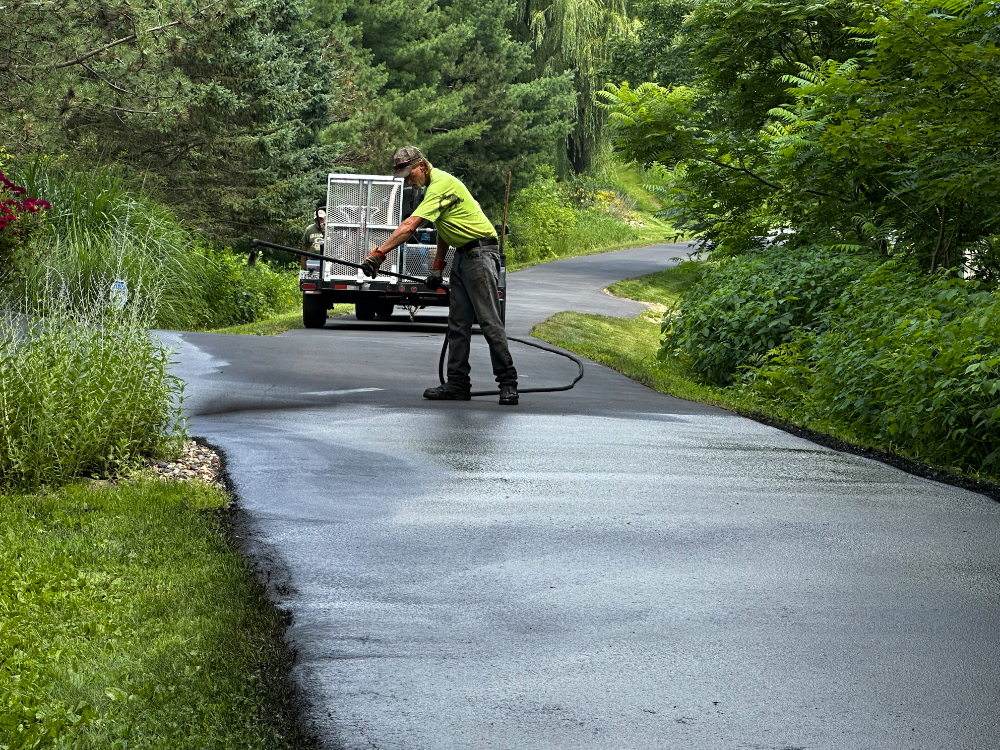 Last winter, cracks opened up across the full width in two places, one of them just below the area where water drains from the shop garage. Neglecting that would lead to much bigger problems. I applied a superficial patch using a sealant from a caulking gun, based on the advice from my driveway guy, to buy time until they could do a professional fix.
When they first laid down the new pavement, I asked how often it would need to be re-sealed and was told every 3-5 years, but that it would help to start at the 1-year mark. Seemed excessive to me, but with such a big dollar investment, I wanted to give it the best shot at a long, healthy life as we could afford. We’d been dealing with the hassles of a failing asphalt driveway ever since we moved in.
I expressed my frustration over the first-year sealing not looking sufficient and not likely to hold up for the 3 to 5-year span. This led to a promise to return and fix the cracks, applying a heavier coat of sealant over the entire length that should last. Should, because it’s all weather-dependent, and no guarantees can be made.
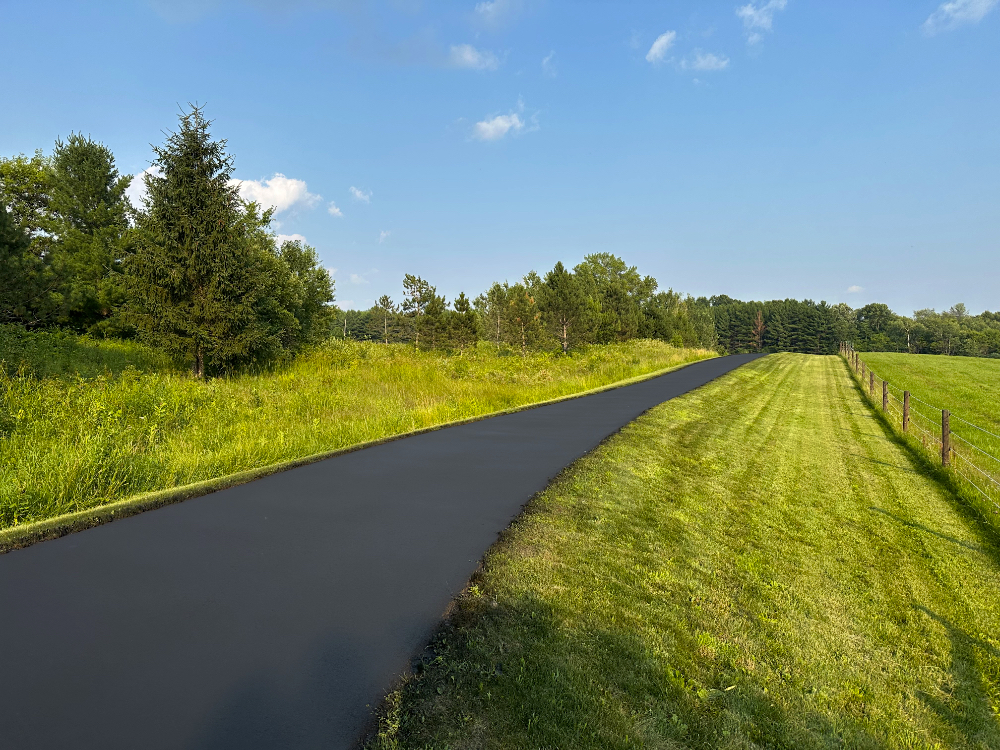 Given the abuse of frequent winter thaw cycles we now face as a result of the ongoing climate calamity, maintaining a long asphalt driveway may never reach a span of five-year intervals.
At this point in my life, I’m satisfied with giving this 900-foot run of asphalt the best start possible before letting it turn into a patchwork of repairs like so many of the roads around us in this county.
On the advice of the guy applying the sealant, I was offered two regular coats instead of one thick one. Makes sense to me. He said it is difficult and messy to attempt a thick coat. When they do large parking lots, it is common to seal them in two coats, he told me.
Have at it. They plan to return tomorrow afternoon to apply a second coat. It already looks like new after just the first pass. It’s strange to see it without the usual mats of grass clippings lining the edges.
I guess you get what you pay for. It makes the place look like a million bucks, which is what it feels like we will have spent on it every five years or so.
.
.


 Relative Something
Good luck. There are sealants and then there are sealants. Some folks essentially just spray used oil over it. It looks black and shiny and nice for a few days. A good sealant contains something flexible (probably a polymer these days – it was rubber decades ago when I had experience with this) and an aggregate (like sand) to add strength. This will seal cracks and resist future cracking.
halffastcyclingclub
August 21, 2025 at 2:41 pm
Thanks! Our sealed cracks look good so far. The real test is when freeze/thaw cycles start happening again.
johnwhays
August 21, 2025 at 2:43 pm