Archive for May 2025
Weather Wallop
We got smacked to a degree I didn’t anticipate yesterday with a combination of multiple inches of rain in uncomfortably cold temperatures while strong wind gusts blasted us mercilessly. We still had the small paddock closed off, which constrained the horses to having access to only one side of the overhang for shelter.
Just to keep things from being simple to deal with, on Monday, Cyndie got a COVID vaccination booster that had her feeling poorly by yesterday morning. That left it to me to tend to the horses in conditions that were teetering on completely out of control.
The poor girls were shivering desperately and very anxious to get their servings of grain to take their minds off the misery. Serving them became a crazy ad-lib as I tried to maintain some order and control while moving their serving stations on the fly to try giving access out of the rain for each horse.
Thankfully, they were moderately cooperative as they were well aware of the predicament we were all in. After doing my best to give them the bare minimum comforts available in the moment, I took Asher back up to the house for his breakfast.
A short time later, our new person from This Old Horse, Maddy, showed up with doses of dewormer for the horses. She picked up where I left off in trying to find a way to give the horses some advantage against the weather. I joined her and we decided to try moving them inside to the individual stalls.
We got them in, but we couldn’t get Mix to settle down. The other three seemed to figure out they were out of the wind and rain, they had food and water, and no other horse was trying to invade their space. Sadly, I got the impression that Mix was triggered and having a major PTSD reaction to the confinement.
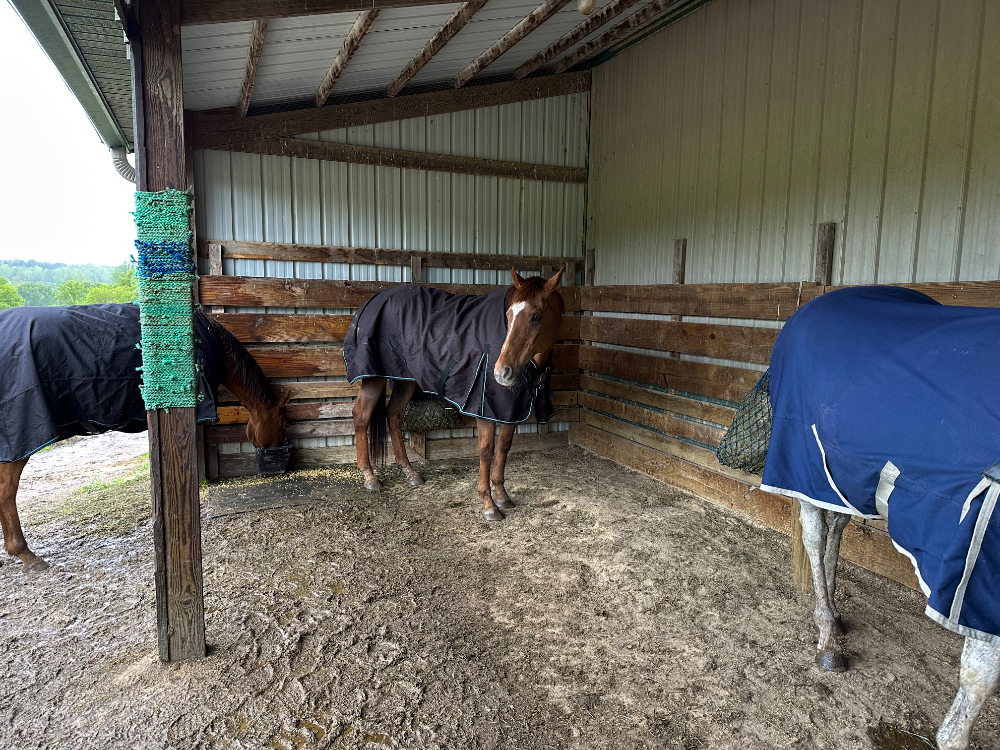 Subsequently, Mix’s prolonged stress, demonstrated in kicking the walls, biting boards, and general flailing about, began to UNsettle the others. We tried changing the horse next to Mix by swapping the positions of Swings and Mia, but it didn’t make enough difference in Mix’s tantruming.
Instead of drying out, Mix was lathering up in her own sweat. We ended up putting blankets on them and letting them back outside after I strung another temporary barrier that at least allowed them access to both sides of the overhang.
A little over a week after setting up fans to cool them in high heat, we now have the horses wearing blankets in the latter half of May.
A windy, rainy, 40°F weather wallop, indeed.
.
.
Much Sawing
Put gas in the chainsaw three times. Hauled six trailer-loads of branches away. I wouldn’t call the project done, but we made a respectable dent in the big maple tree clean-up, and we have it to a point where everything can just sit for a while, allowing us to direct our attention to more pressing needs for a few days.
A lot of grass deserves to be mowed, but that won’t happen today. Rain will be the dominant theme for a while, so I may get back on my braiding of polypropylene bale twine for use as a wrapping on the new posts in the middle of the paddock.
Here are some more photos from yesterday’s effort:
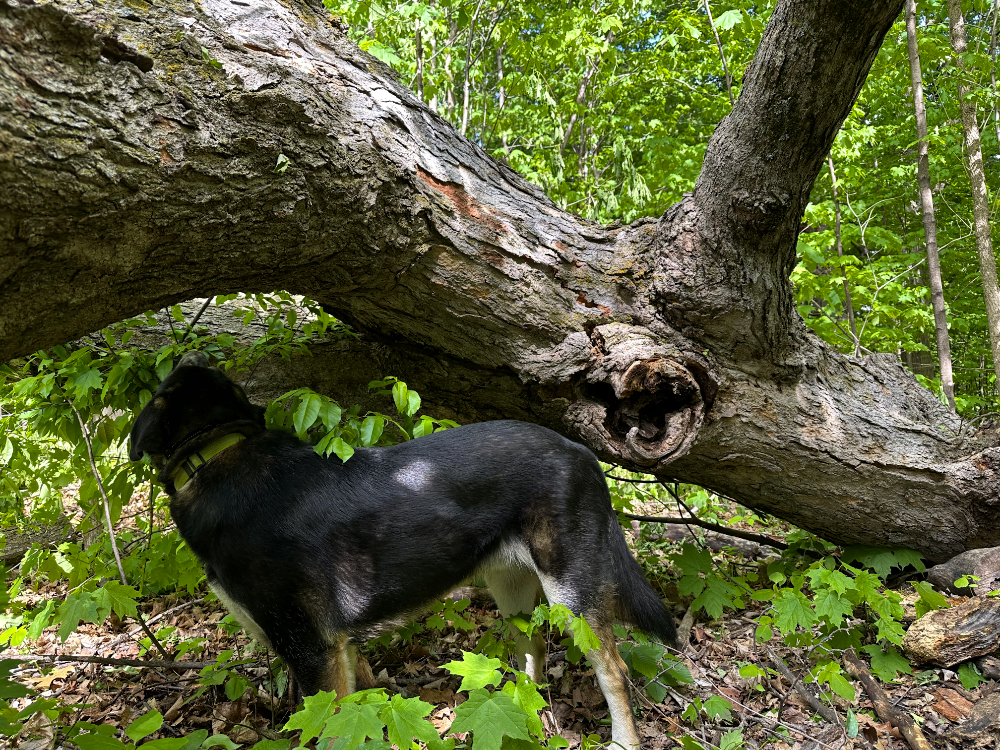
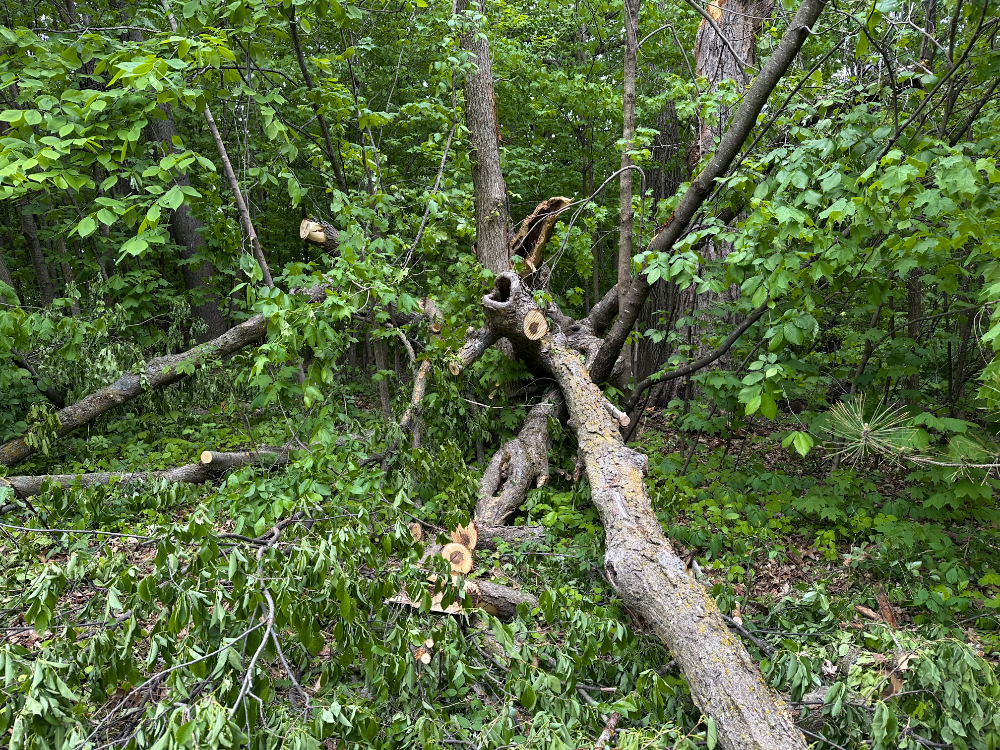
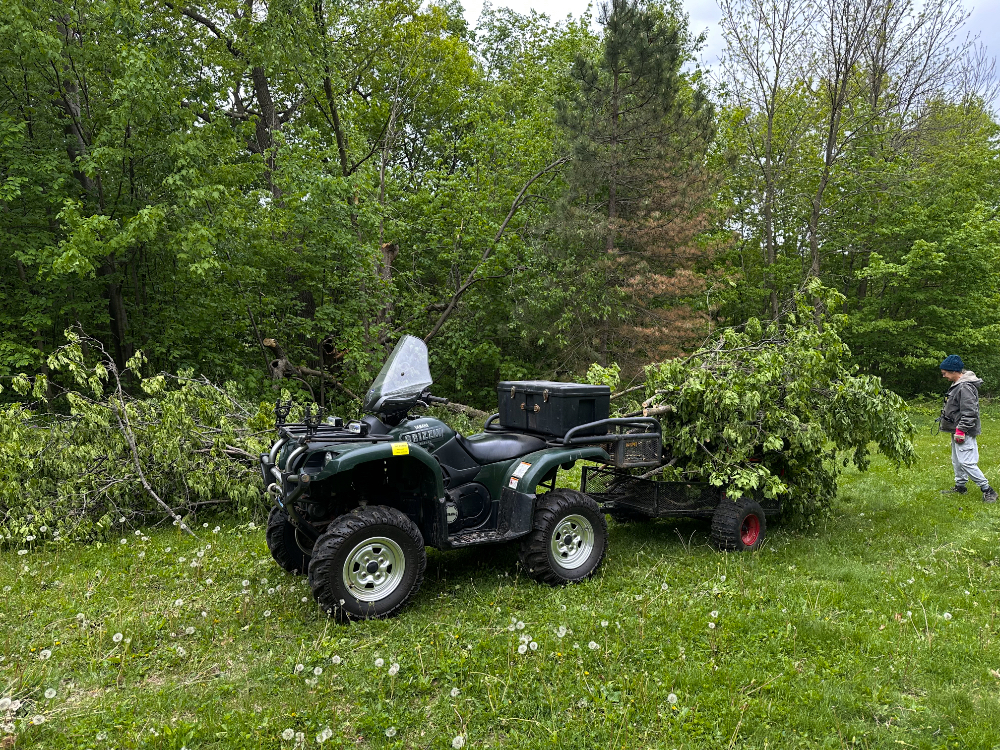
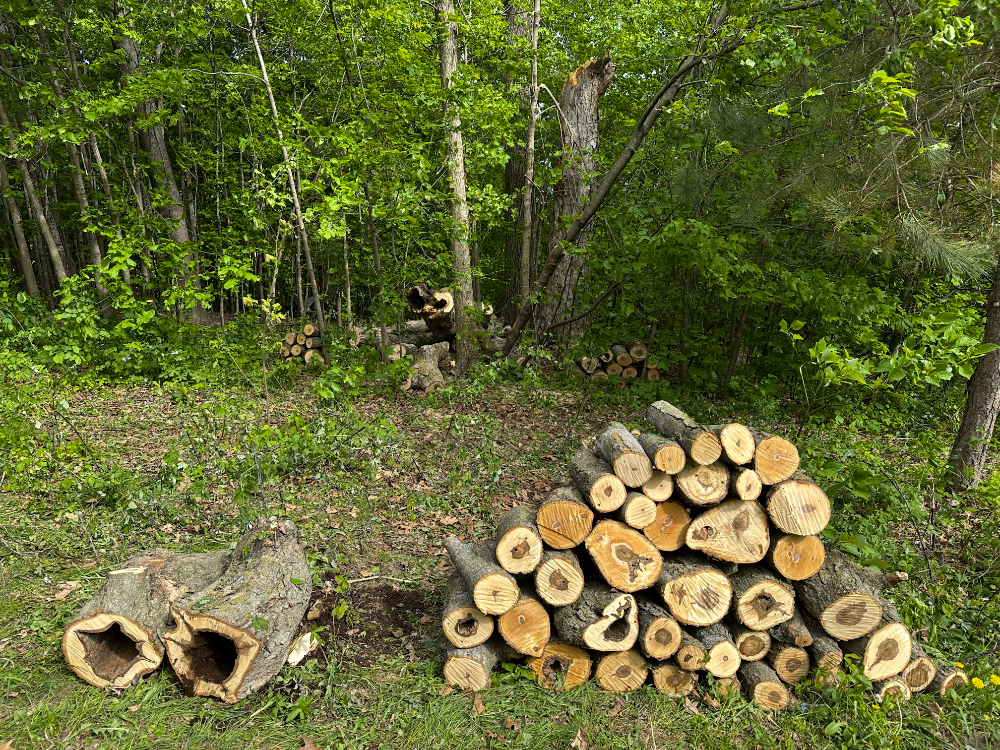
Thankfully, another large effort with the scariest tool I use has ended safely. Somehow, I didn’t even get the chainsaw blade pinched the whole day. That may be a first. Got startled by unexpected shifting of heavy wood a couple of times, but I came through without bumps or bruises.
I am very happy putting the saw back on its shelf for a while.
.
.
Play
.

sing
sink
syncopate
obliviate
anticipate
expectorate
fall to the ground
flailing arms
innocuous charms
shrugging shoulders
cringe
create
crest
ingest
wrest
dressed
score
more
and more
.
.
Aftermath Dealing
I didn’t plan on coping with the work that now lies before me. When a big tree comes down unexpectedly, it suddenly claims a large chunk of one’s time.
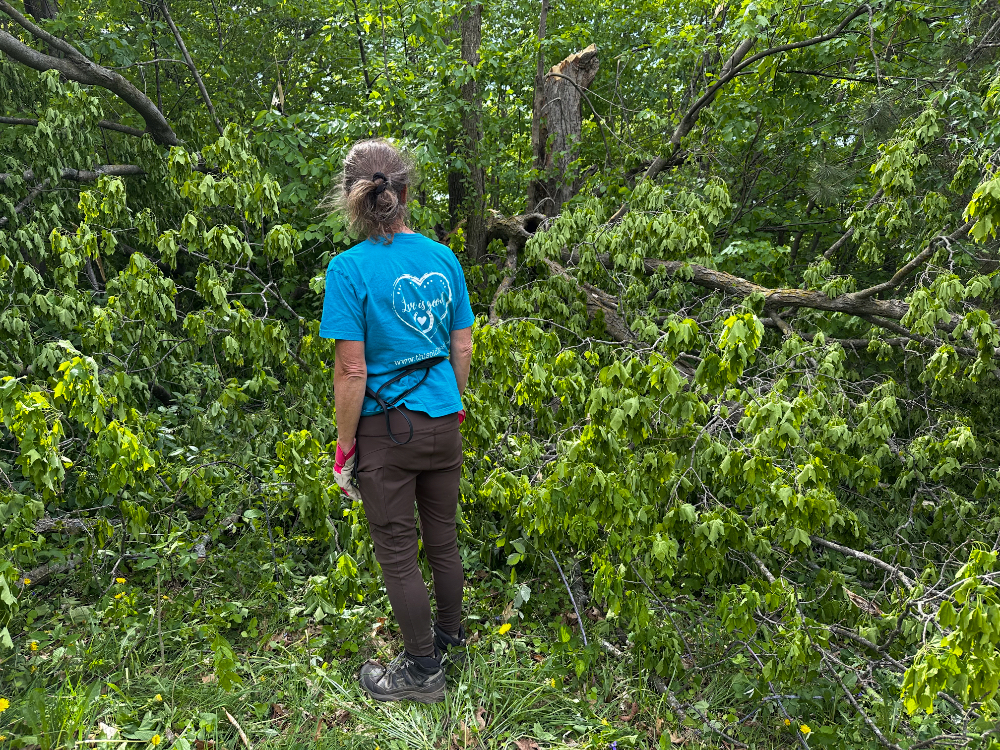
We started in on the effort to cut up the limbs of the big maple tree in a short block of available time on Friday.
 .
.
.
.
.
.
.
.
.
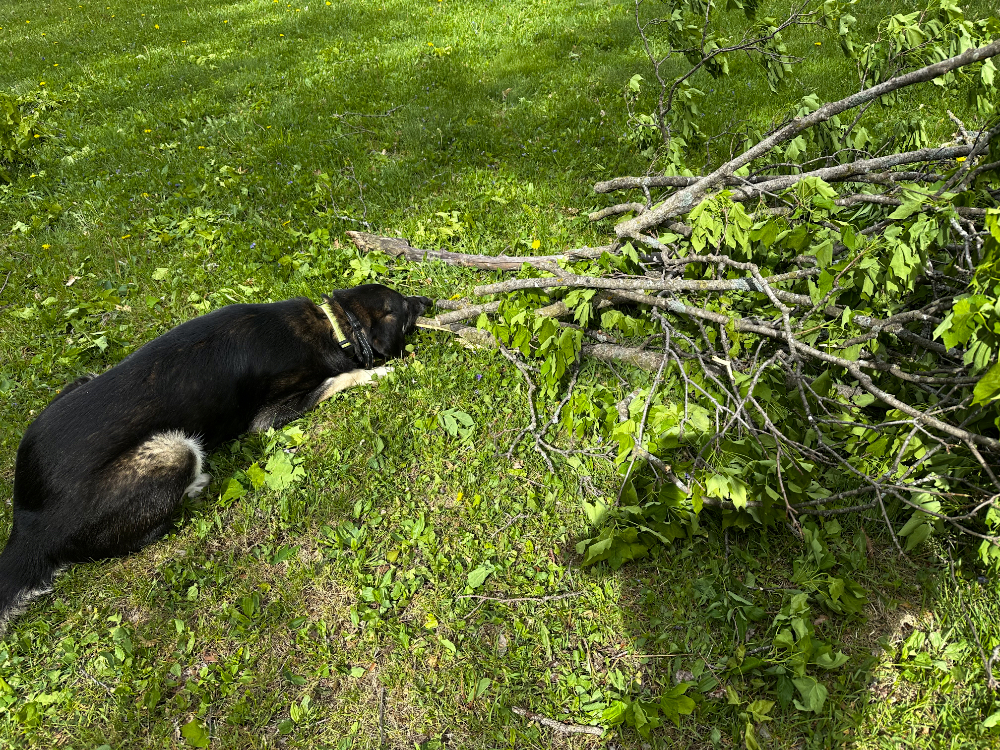
Cyndie stood and contemplated the prospect of somehow clearing away all the branches and lumber that lay before us. Asher pitched in to do his part by gnawing the ends of branches to show them who is boss around here.
 .
.
.
.
.
.
.
.
.
.
.
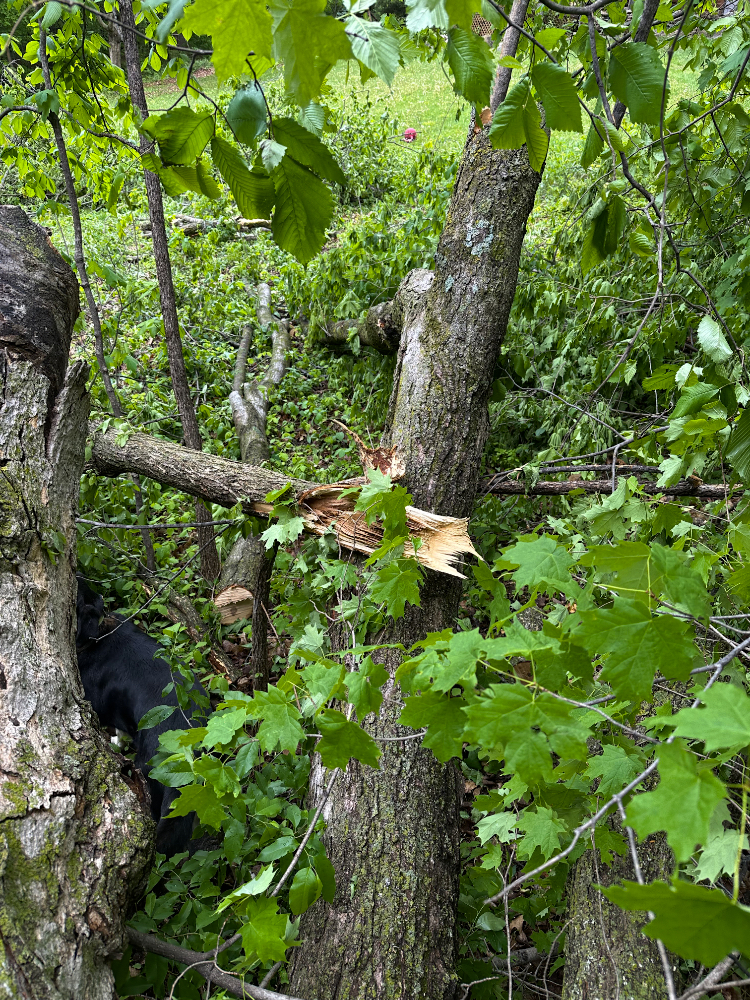
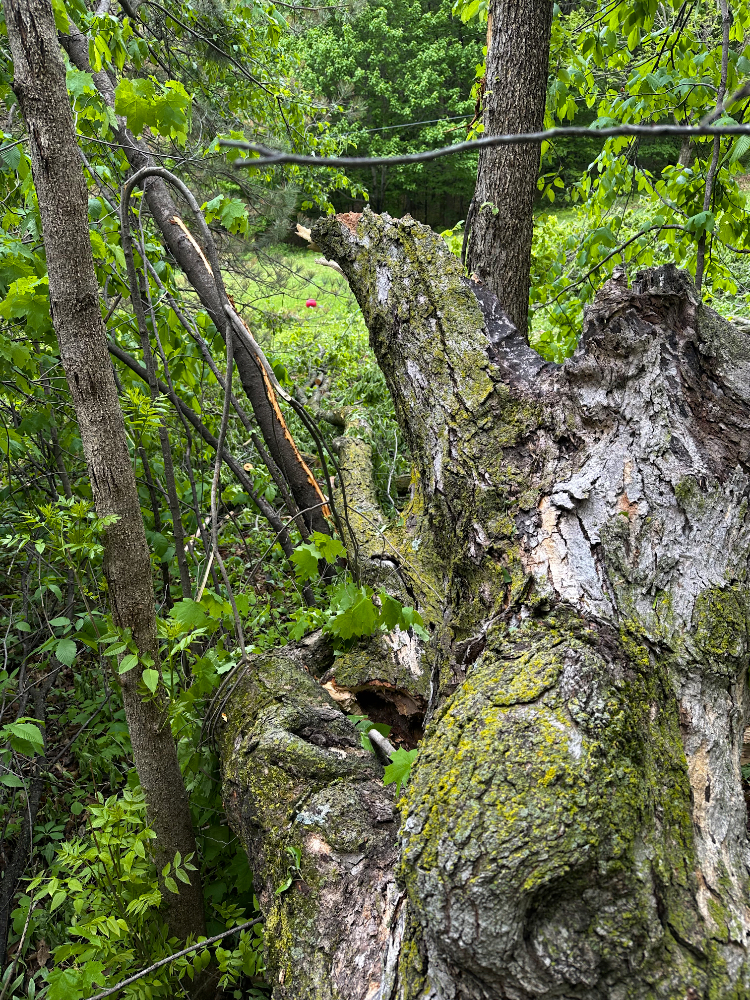
The broken limb visible in the picture on the left above is not the maple tree. That is an example of collateral damage to nearby reasonably-sized trees, unfortunate to have been directly in the path of destruction. The photo on the right includes a thin maple tree that has been folded over with a 180° bend.
The tangle of surrounding trees adds a significant level of drama to attempts to cut the mess into workable sizes with my chainsaw. It is difficult to detect where the stored energy of torqued limbs and trees is holding things in place or tangled in a way that will suddenly spring free with great force when cut.
I experienced both in the short initial session we worked. There’s a lot more work left to be done when we can get around to it.
 Yesterday afternoon, we enjoyed the great pleasure of a visit from my niece, Tricia, and her kids, Brooke and Drew. They were in the area for Drew’s orientation at the University of Wisconsin-River Falls. It will be super to have family so close next year, especially since there is a great deal of fondness between Drew and Asher.
I think they will be good for each other.
We’ve been experimenting with using an e-collar on Asher to practice recall and allow him to move around without a leash, but stay on our property. In the last few days, Cyndie has only needed to drive up to retrieve Asher from the neighbor’s place one time.
We know that learning involves making mistakes in order to figure out the corrections, but who is fond of that part of the process? I am guilty of finding it easier to just grab a leash at this point, even though I really want him to learn to stay around without one.
It’s more work for me to stay constantly poised with a finger on the button, needing to quickly decide if he is fine to chase around in our woods or quickly needing redirection to maintain contact with me. When he bolts, it happens so quickly that I can’t tell if my commands are heard and the collar tone or vibration is even being activated.
Yesterday, he came back on his own after chasing a rabbit, so I didn’t fret.
I’m definitely not a fan of dealing with the aftermath when he fails to respond to my calls. It’s so much easier to lavish him with praise when he comes as called.
.
.
Risking It
Why did we take the risk of leaving the canopy up in the high winds of the last two days? Multiple things contributed to that decision. Admittedly, the shade sail manufacturers all caution that their sails should be taken down in high wind or heavy snow conditions, so that seems like a logical and prudent thing to do.
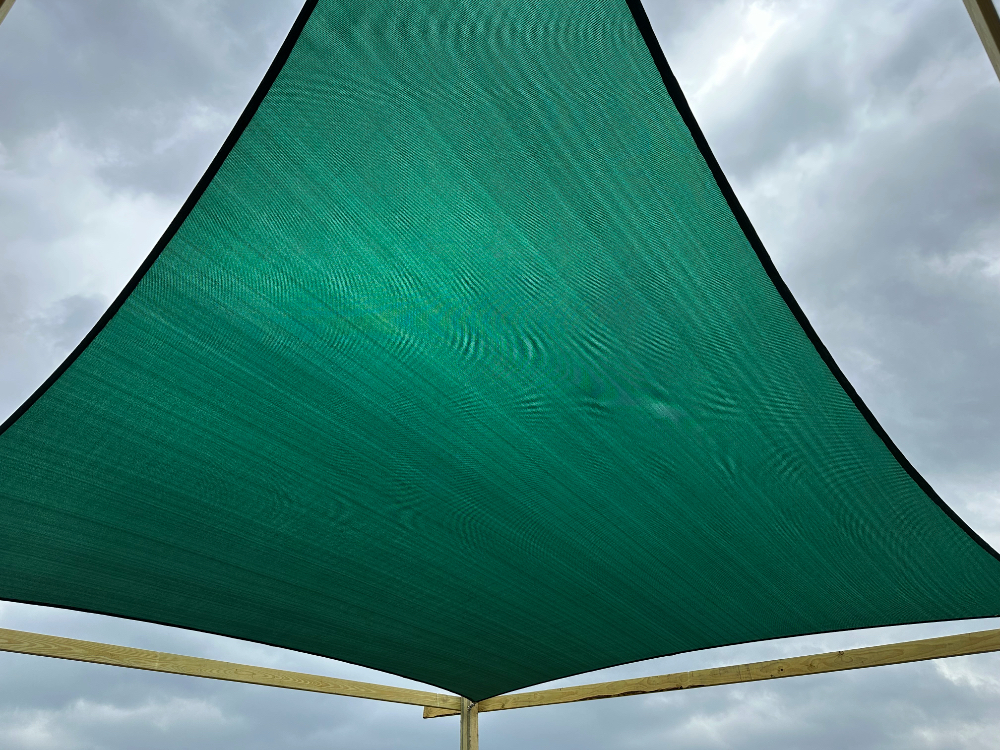 One problem I have with that philosophy is determining what the measure of wind is that would trigger bringing down the sail. If I wanted to get precise about it, I could mount a wind speed gauge on one of the posts and have it trigger an alert at some safe level that would give me time to get down to the paddocks. One obvious shortfall is that I would need to be home to do something about it at the time.
I have been swayed away from being that obsessive about it by hearing from other people who have shade sails and paying attention to sails that exist in commercial settings. Our farrier told us she NEVER takes her shade sail down. In winter, she just knocks the accumulated snow off it to keep it from getting stretched out. Of course, if I choose to go that route, I would need to be home during snow events.
Yesterday’s high wind gusts seemed like a chance to watch for possible weaknesses in our post installation. I stood beneath the canopy as it was being buffeted up and down, and could hear where the braces creaked against the pressure. I’m very pleased to find that there was no indication of movement at the ground level of each post where the soil had been packed against the wood.
Having survived the gusts yesterday, I’m less worried about winds on an average day. One factor that’s harder to pin down is how much of a difference the stresses might be depending on which direction the wind is coming from. That spot is somewhat tucked away from direct exposure in every direction, so high wind at the house doesn’t necessarily translate to high wind below the barn.
After a few days of walking around the property and getting a variety of views of the structure we erected, I will be talking with Justin about making some minor adjustments to the geometry. He did all the calculating to determine our heights and take into account the slight slope that puts things at different levels. I want to discuss deviating from the calculated level a little bit to compensate for the visual appearance to the naked eye, with the ground as reference.
We are particularly thrilled with the lack of any negative reaction from the horses to this flapping new distraction in their midst.
It’s a risk, but we will never know what the limits truly are until we pass them. If a tornado strikes, we will lose a lot more than this canopy. Short of facing that level of calamity, I’m comfortable waiting to see how the whole setup withstands the usual variety of weather conditions we experience.
.
.
Early Test
The shade sail had barely been up for 24 hours when a line of thunderstorms closed in and weather watches and warning alarms started pinging our phones. As the wild-looking radar scans reached our area, I stepped outside to see if the sky looked as spooky as the Doppler readings and warning boxes on our screens. Rain had started to fall, but I was outside during an early pause in the precipitation.
When I came back inside, it was announced that our county was under a tornado warning for the next half hour. Did we run to the basement? No. We were hardly getting any rain, and there was very little wind. The sky seemed to be getting lighter instead of the expected threatening darkness.
When the line of storms had moved beyond us and all the warnings had expired, we went out for a walk. The asphalt of our driveway beneath the trees wasn’t even wet. Not only did we dodge a severe storm, but we didn’t even get enough rain to water our plants. We thought it was going to be a big test for the new canopy in the paddock. A thunderstorm wasn’t the test.
Behind this line of storms, we got slammed with heavy, gusting winds. Serious gusts. Suddenly, I heard the distinctive sounds of wood cracking and raced to look out our back doors to witness the top of one of our big maple trees crash to the ground in a cloud of shredding branches and leaves. Wind gusts were reported around 40mph.
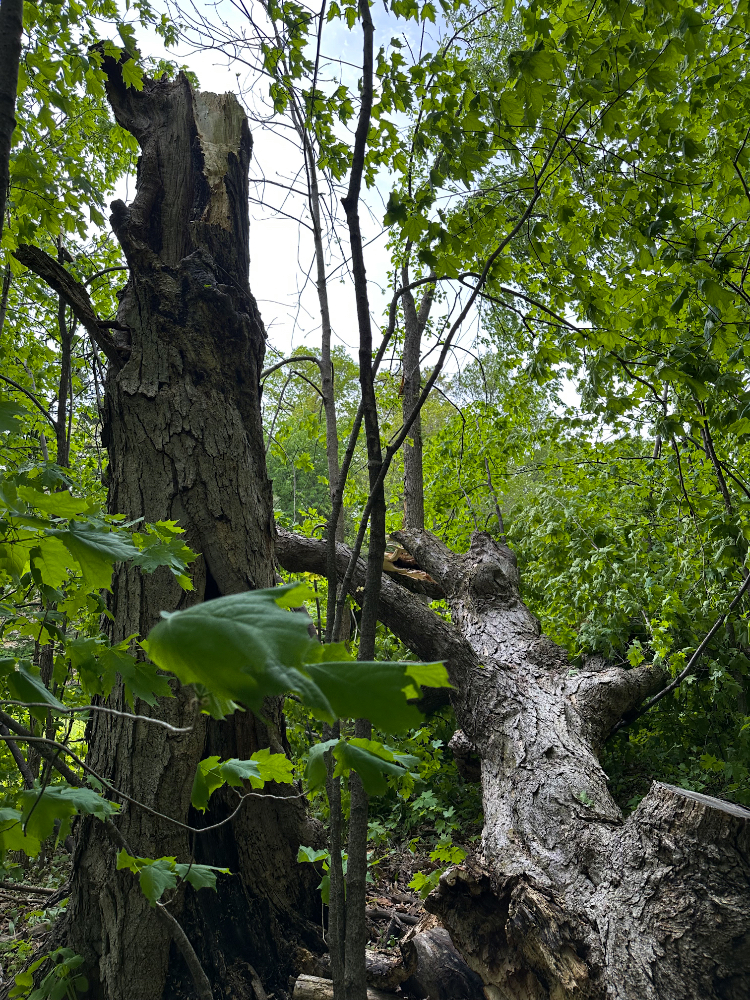
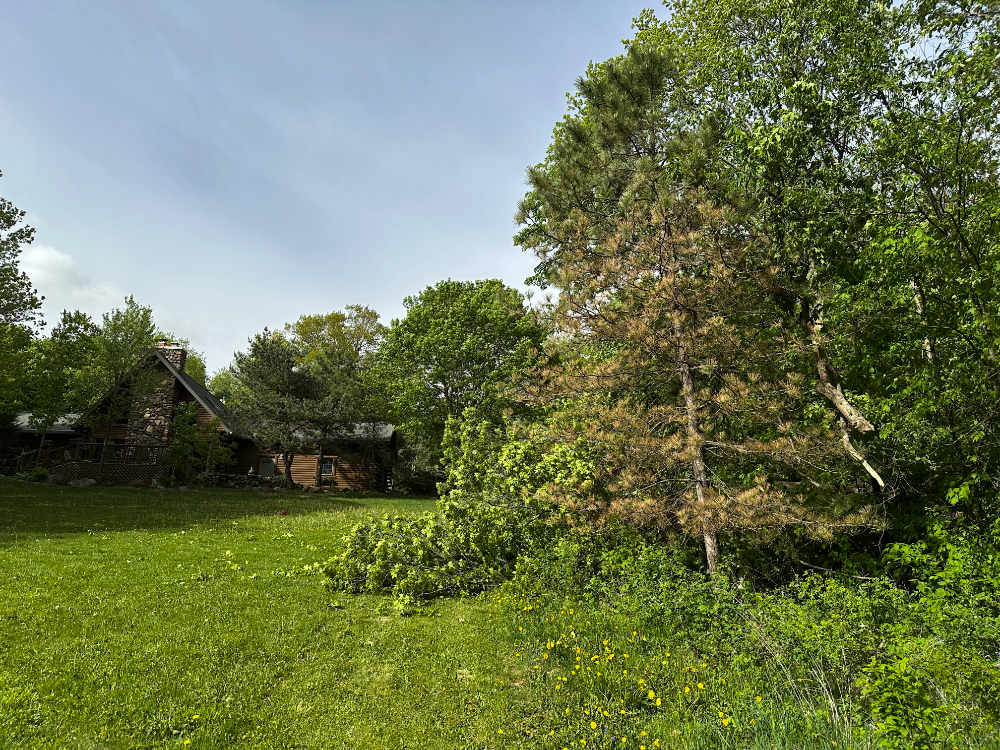
The tornado didn’t materialize, but we still suffered the loss of a big tree. So many maple leaves that just popped open in the last week, snuffed out in an instant.
We went for a walk to check on the shade sail. It was holding its own amid the gusts.
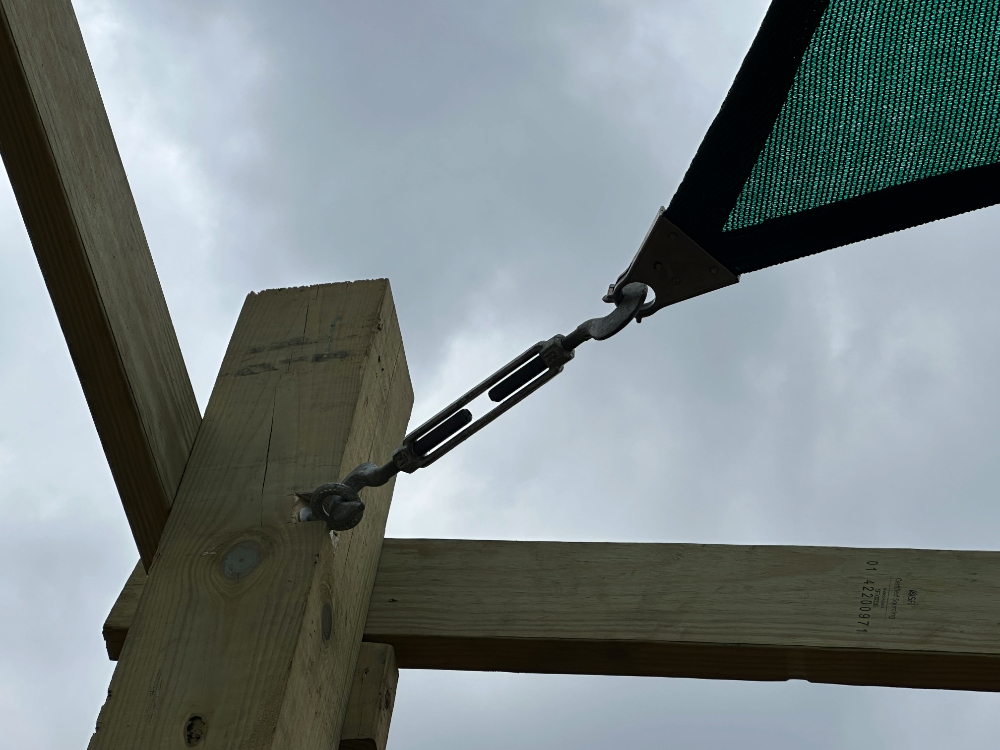
I took some pictures showing more details of the turnbuckles we are using to anchor the canopy and how we ran the eyebolts diagonally through the corners of the posts.
Here is a shot from Wednesday showing the level of shade the canopy provides in the hot part of the afternoon. The old willow tree never offered that amount of solid UV protection in its heyday.

Speaking of the old willow, I noticed the other day that it is refusing to give up entirely.
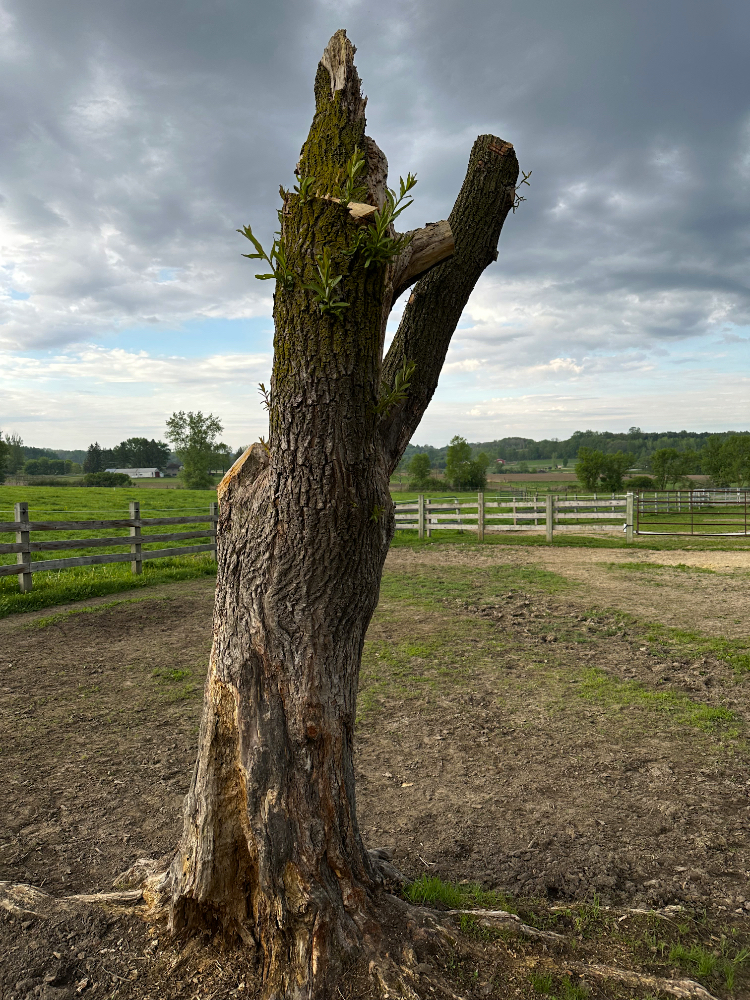
I don’t think it will be offering much in the way of shade this summer, but it is probably making a statement about what it thinks of the new shade-maker taking its place.
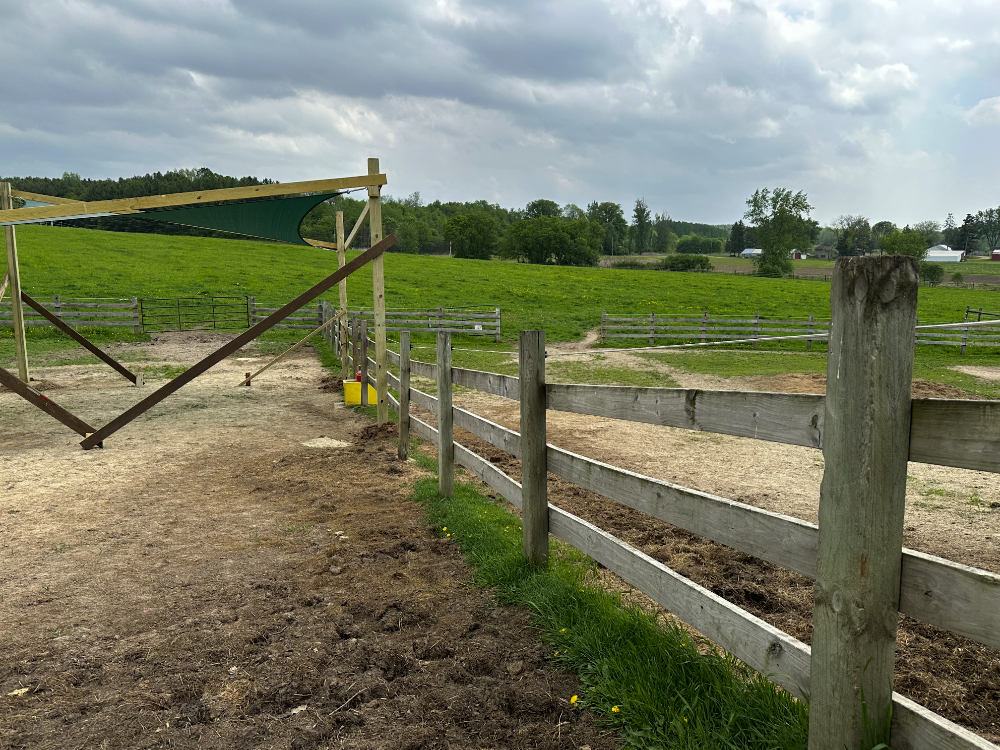 First thing yesterday morning, we finished reconnecting the electric fence and took down the temporary barrier between the two paddocks, which gave the horses access to the automatic waterer again.
I’ve been waiting a long time to get that stretch of wood fence standing straight up again. It’s very rewarding to see.
Throughout the evening, I frequently checked on the canopy through our surveillance camera down at the barn as the wind continued to blow. It was definitely being pushed down or puffed up at different times, but not in a way that looked worrisome.
Since I’ve heard from several people with shade sails that they leave them up in the wind, I’m feeling less skittish about taking our chances with it.
Yesterday was a pretty dramatic first test. So far, so good.
.
.
Sail Up
The next milestone on the shade sail project has been achieved; the sail is up in the small paddock, hanging from 4 new posts. We aren’t finished with the project yet, as there are currently extra braces in place, and we plan to add some 45° angled supports to the header boards and then cut off the extra length of each header. At that time, we may also trim away the extra post height at the top of the two posts where the sail attaches at a lower point.
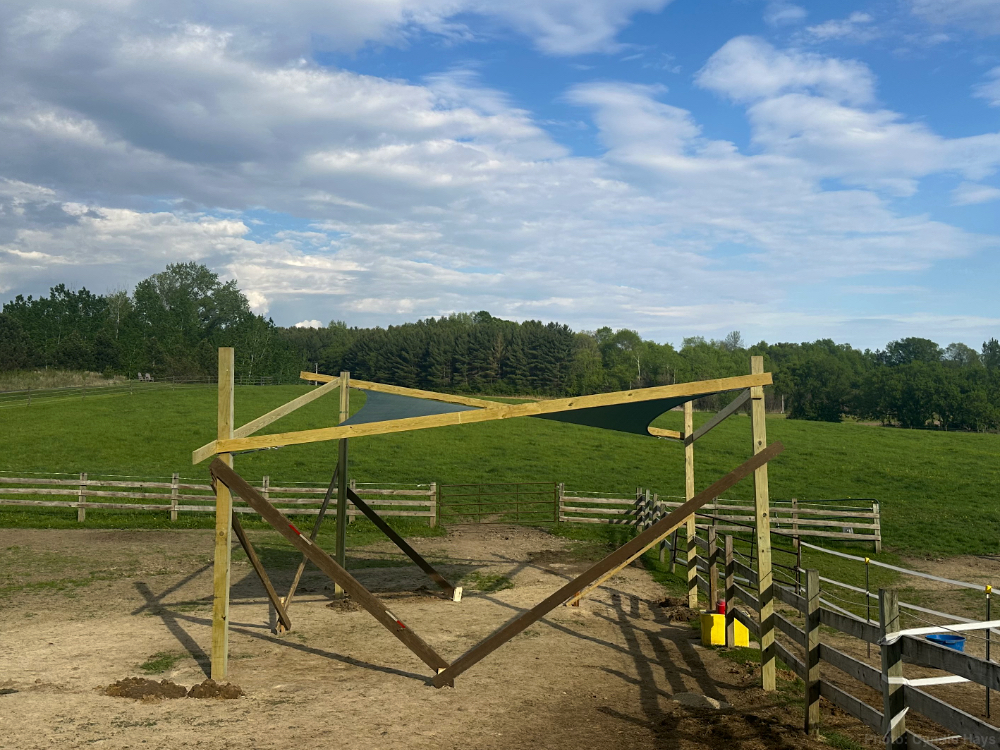
Leaving all the extra lengths is just a precautionary decision in case we decide we want to make adjustments to the geometry for any reason. We are leaving the temporary supports in place to allow time for all the earth we dug up to settle around each post.
At first, the holes appeared to be dry at the bottom, but we soon saw water flowing into them. More evidence to Cyndie and me that either the water table is pretty high here or we have a natural spring in the vicinity, about 3 or 4 feet below the surface.
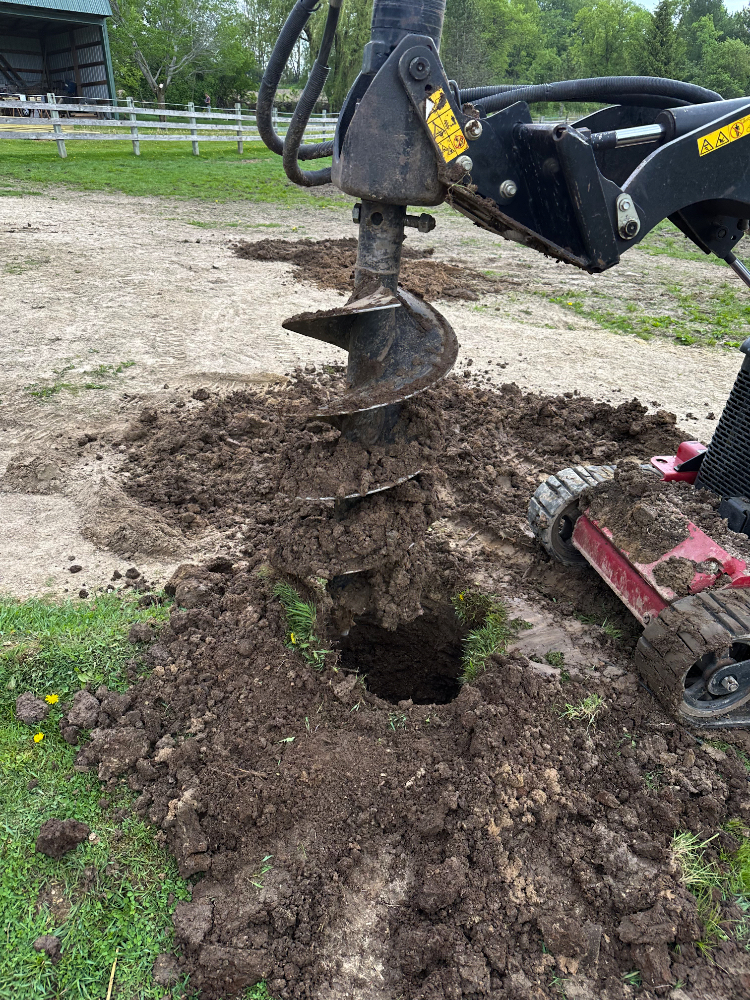

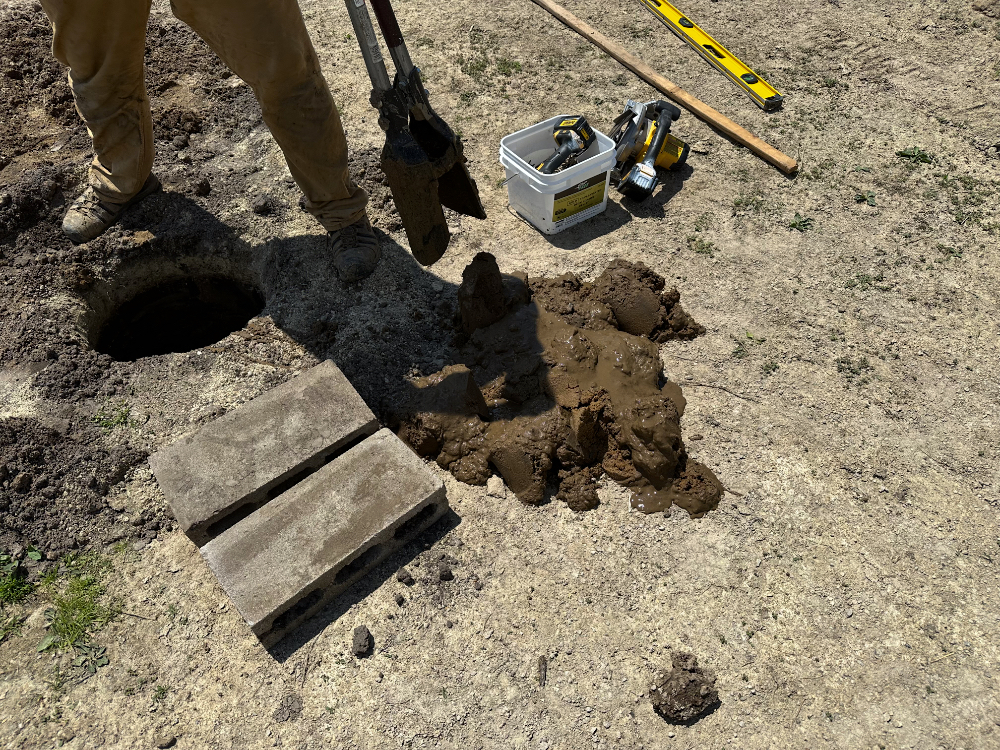
The goop coming out of the holes was like the vintage 1960s playset, “Silly Sand.” That made it a challenge to get the holes as deep as we wanted.

We even tried a sump pump to remove standing water, just long enough to establish a base of concrete blocks and gravel fill. Pumping was only moderately successful.
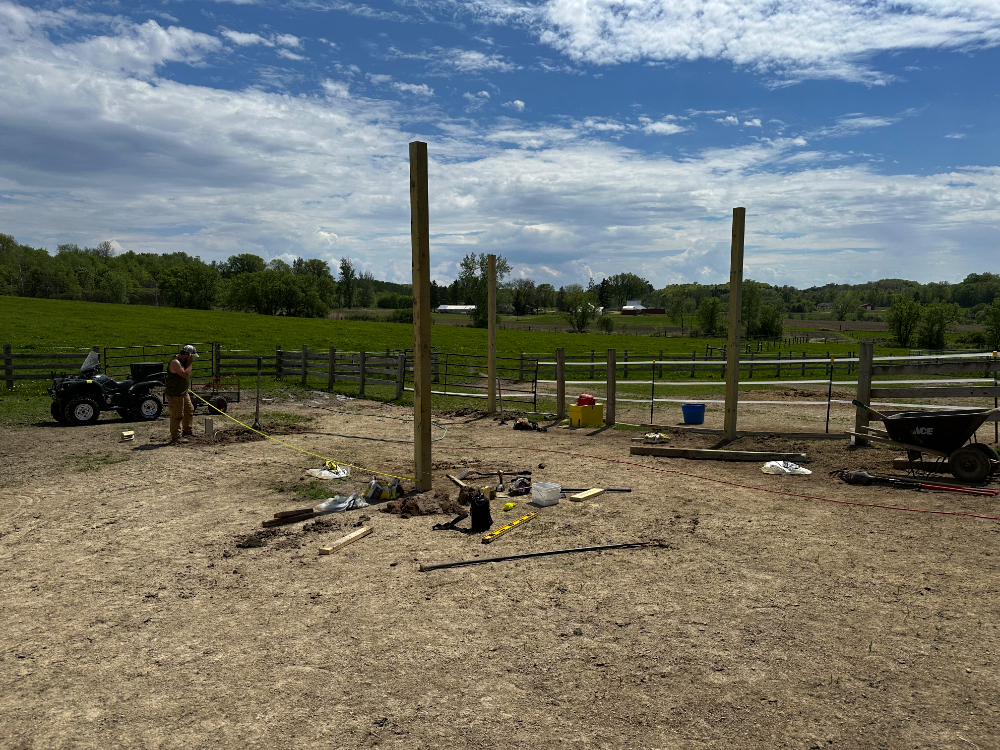
When all four posts were vertical and Justin got the eyebolts in place, it was time to retrieve the sail from the barn.
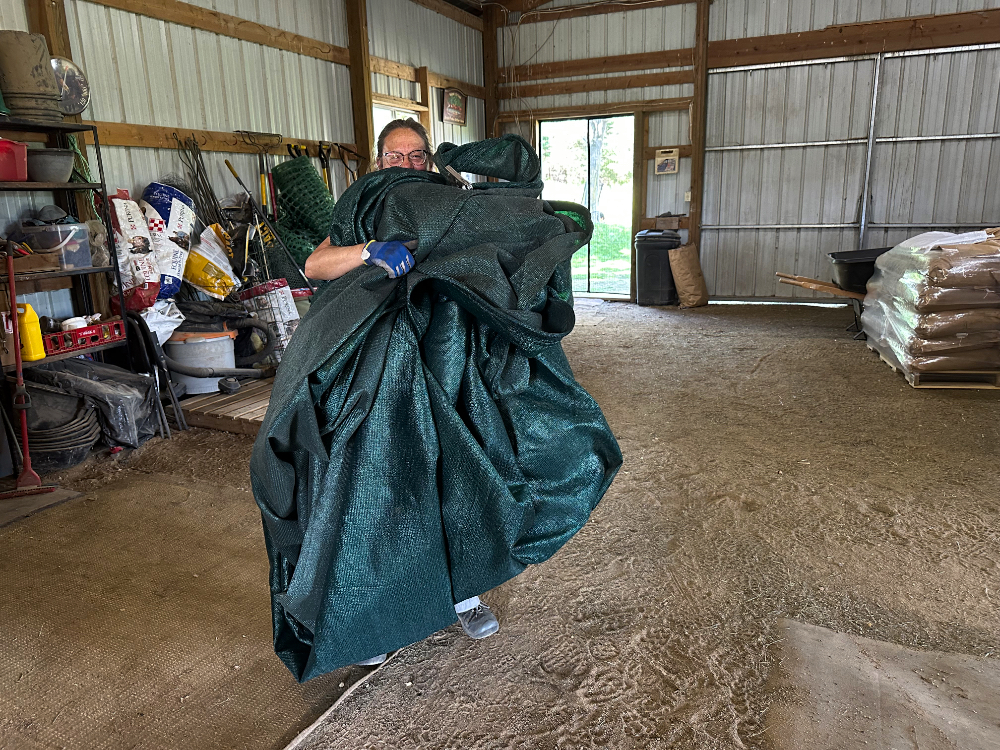
I just unhooked one corner at a time and said, “Cyndie, hold this,” for each one. Soon, she had the entire sail in her arms.
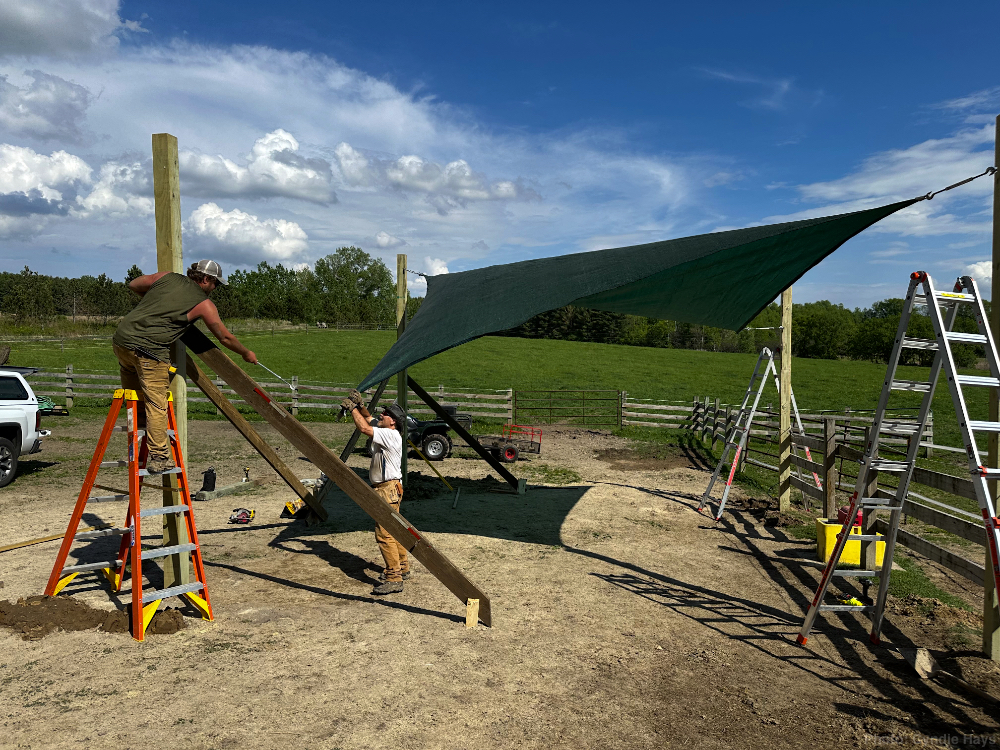
Even though there was a slight wind to contend with, the outdoor connections weren’t troublesome to make at all.
A shout-out to the heroes who contributed greatly to my attempt to bring this vision in my head into reality:
- My son, Julian, for his technical expertise in creating a virtual sail for me to play with and see how the shadow would move as the sun crosses the sky.
- Architect (mostly retired), Mike Wilkus, for his willingness to listen to me describe my thinking and offer counsel on possibilities.
- New online connection and friend, Emily Pratt Slatin, for her engineering insights from her career in the Fire Department, dealing with equipment tolerances and code enforcement.
- Contractor, Justin Schneider of HomeWorks Consulting, LLC, for the hands-on skills, tools, knowledge, and experience I lack in this otherwise DIY project.
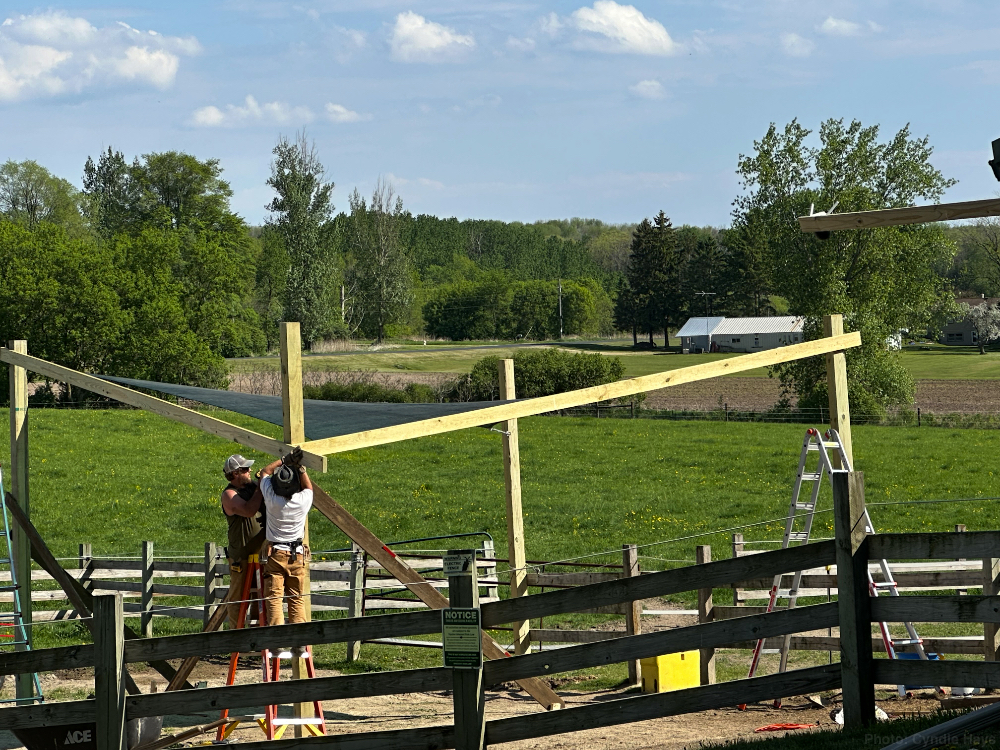
We are relying on the header boards to counter the pull that the tightening of the sail will apply to the posts. It will clutter the super cool visual of the hyperbolic parabola of the sail, but I chose to angle the boards to offer support to that twisting look. If I change my mind after a few days of looking at the structure, there is still an option to square up the header boards around the top and leave a clean visual of the sail geometry below them.
It was a really long day in the hot sun, which made it all the sweeter when the sail went up, providing some very welcome, precious shade. I think the horses are going to find this to be a very nice addition to their living quarters.
.
.
Not Panicking
Just because my pet maple tree that we transplanted to the middle of the labyrinth hasn’t sprouted leaves yet, while almost every other tree around has, we’ve chosen not to panic. New buds are visible, but they just haven’t made as much progress as we expect at this point. There are a small number of other trees of a variety of species that are similarly delayed compared to the majority of broadleaved trees and bushes around here, so there is that. It’s not alone.
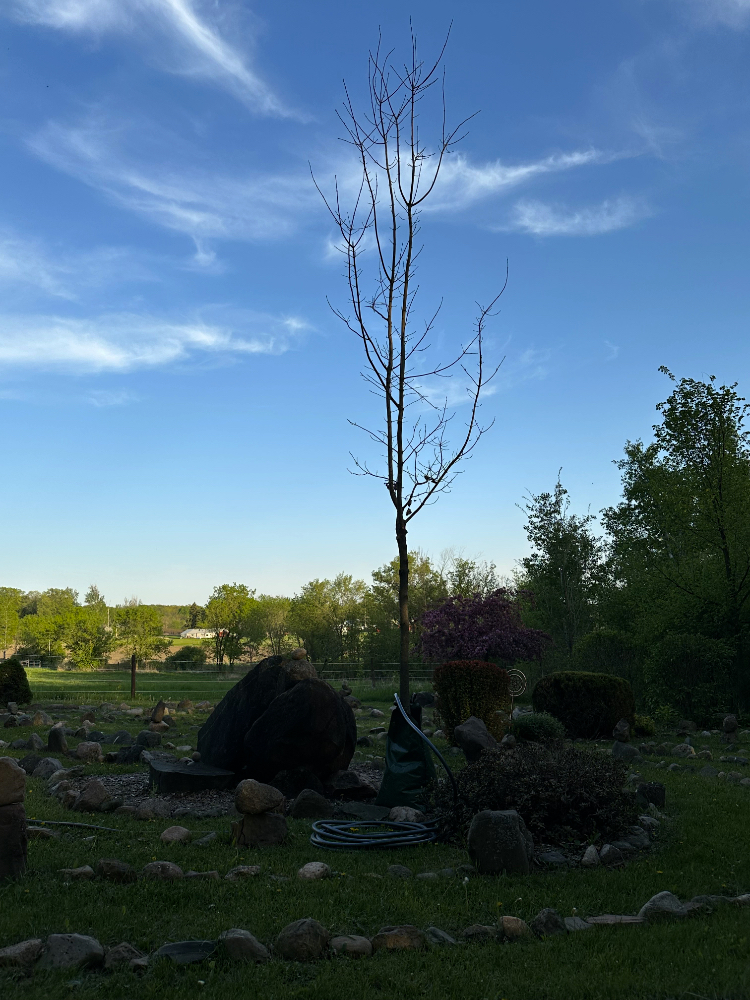
Since we have been enduring a long span of hot, dry, sunny days, our cool-headed response to the situation was to put a watering bag around the trunk to keep the little guy well-hydrated. We are hoping to see visible progress of advancing leaf buds soon.
I had another opportunity to not panic yesterday afternoon while mowing. As my confidence and control on the zero-turn riding mower have improved, I find myself pushing beyond some of my previous boundaries. I’ve started mowing a half-swath beside some of our pathways with the deck at the highest setting to control the walkway narrowing from tall grass on the sides bending over into the lane.
Cutting it back with the riding mower is a great improvement over my previous effort of walking along and swinging the hedge trimmer blades across the too-tall grasses after the fact. That is laborious, back-aching work.
While making a first pass along the edge of our path around the back pasture and hay field, the front wheels suddenly jumped, and the mower deck bottomed out on a tall mound. The mower was pointed down into a bunch of scrub brush trees along the drainage swale. With the deck stuck on the mound, the drive wheels had no grip on the ground. I couldn’t move forward or reverse.
I do believe my years of experience were revealed in a complete lack of cursing and tantruming. I simply walked all the way back to the shop and got the ATV and a come-along. After a couple of futile tries, I realized I needed Cyndie’s help. I pulled out my phone to call her and found she had texted me.
“We’re walking off leash & see you on ATV- need help?”
Since she has never operated the zero-turn, I offered her the ATV, and I spun the wheels on the mower. Nope. No progress, but I had a hunch.
I asked her to try the mower, and I got on the ATV. The throttle just needed to be goosed with a little more oomph, and we pulled it right off that mound.
When success comes without having put myself through the angst of getting overly upset at the outset, the reward of solving the dilemma is that much sweeter.
It pays not to panic.
.
.
Last Steps
 We are down to the last preparation steps before erecting four new shade sail posts. I have been holding off from doing this work because we wanted to minimize the disruption to the horses’ normal routine. Since they appear to be coping just fine with the changes I’ve made prior to yesterday, Cyndie agreed we could temporarily relocate where we hang their feed buckets. That meant I would no longer need the hoakie fence I put up a few days ago, and instead close off the small paddock entirely.
I quickly went to work installing a different temporary barrier that finally allowed me to remove boards from posts, pull up a second post, and relevel two leaning posts on either side of the waterer.
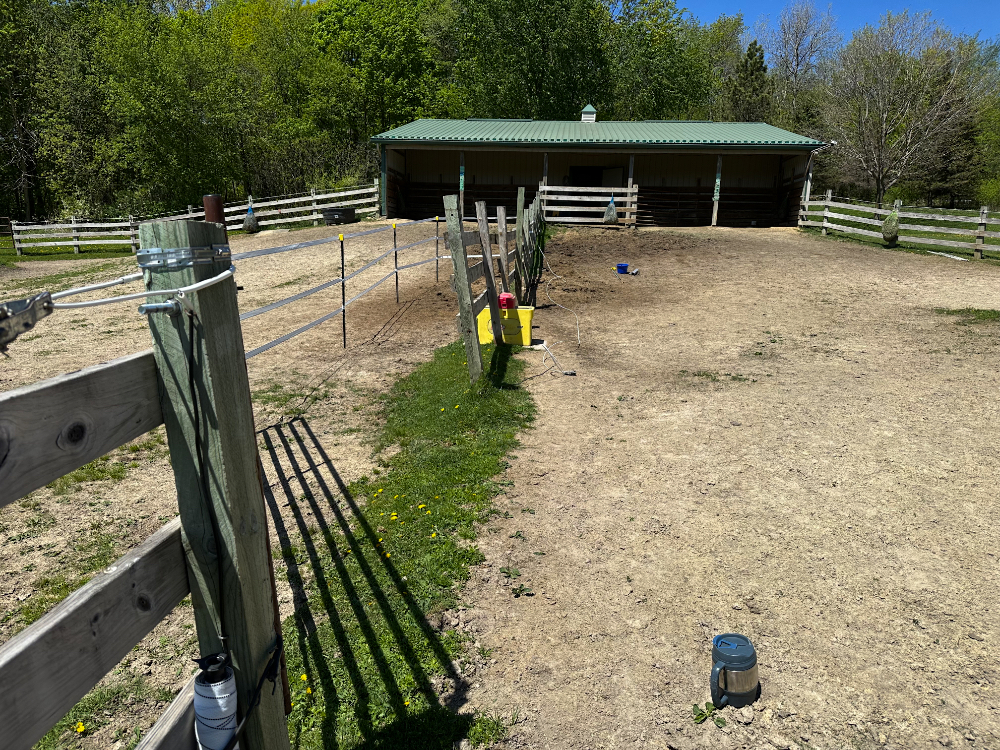
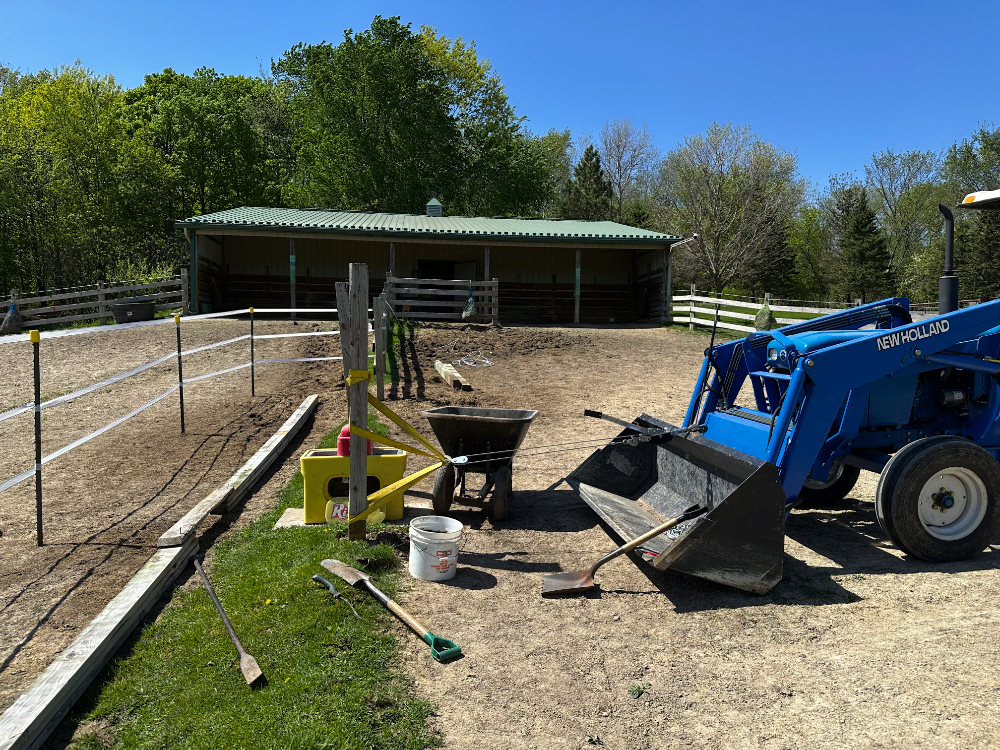
Using all that I learned from pulling the first post, trying to straighten a leaning post, and installing the first temporary fence, everything I worked on yesterday went incredibly smoothly for me.
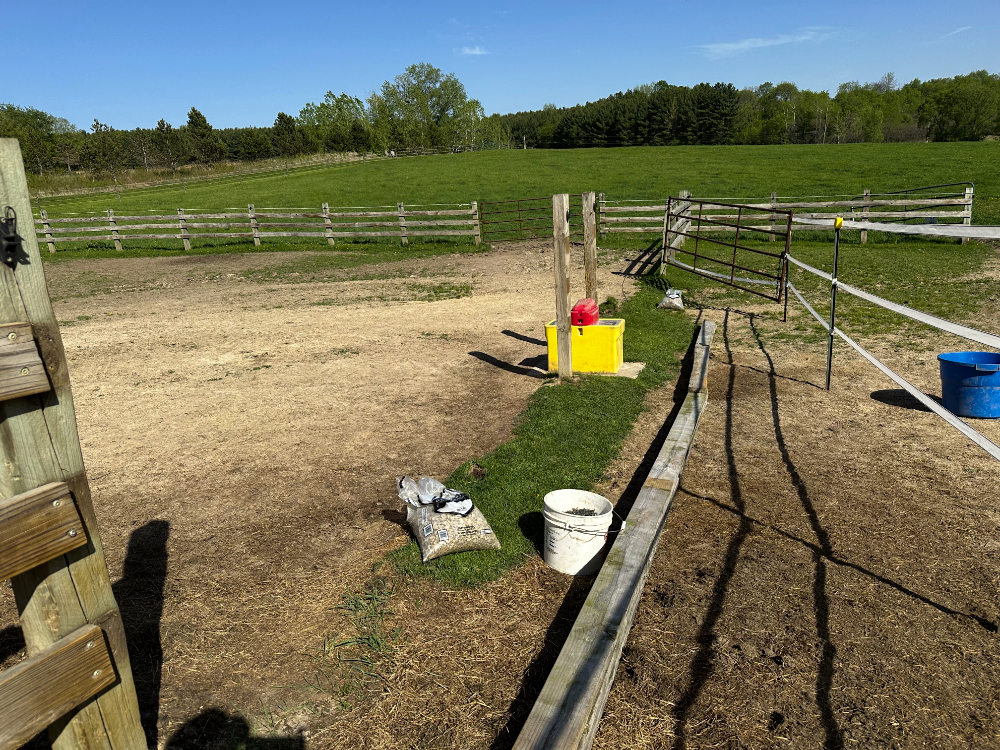
Posts are standing straight up, and the two spots along that line are open, ready, and waiting for the new tall posts to go in.
Is it obvious that I am chomping at the bit to get this done? Just have to wait one more day for my professional help.
What will I do with myself until then?
.
.


 Relative Something