Counting Leaves
It is not impossible to function at -14°F (-25°C), but it can be a bit of a hassle to tie up hay nets and distribute buckets of grain –one of which now gets watered down— in such extreme conditions. I am very happy that Asher showed a keen sense of efficiency and adapted perfectly to my plan to shortcut our morning walk and get his business out of the way as swiftly as possible.
The horses were equally focused on their tasks and offered no resistance to assuming their positions and chomping grain with their frozen whiskers getting messier by the minute.
The feelings of accomplishment when returning to the house and getting the feeling back in our fingers and toes don’t entirely dispel the intense urge to have remained under the warm covers of our bed instead.
We tell ourselves these extreme cold snaps that are difficult to survive help to control the populations of pest animals and insects, as well as the number of added people who might consider moving into our region when their homes prove to be inhabitable.
I looked up at the leaves in the big oak tree over our driveway and had two thoughts.
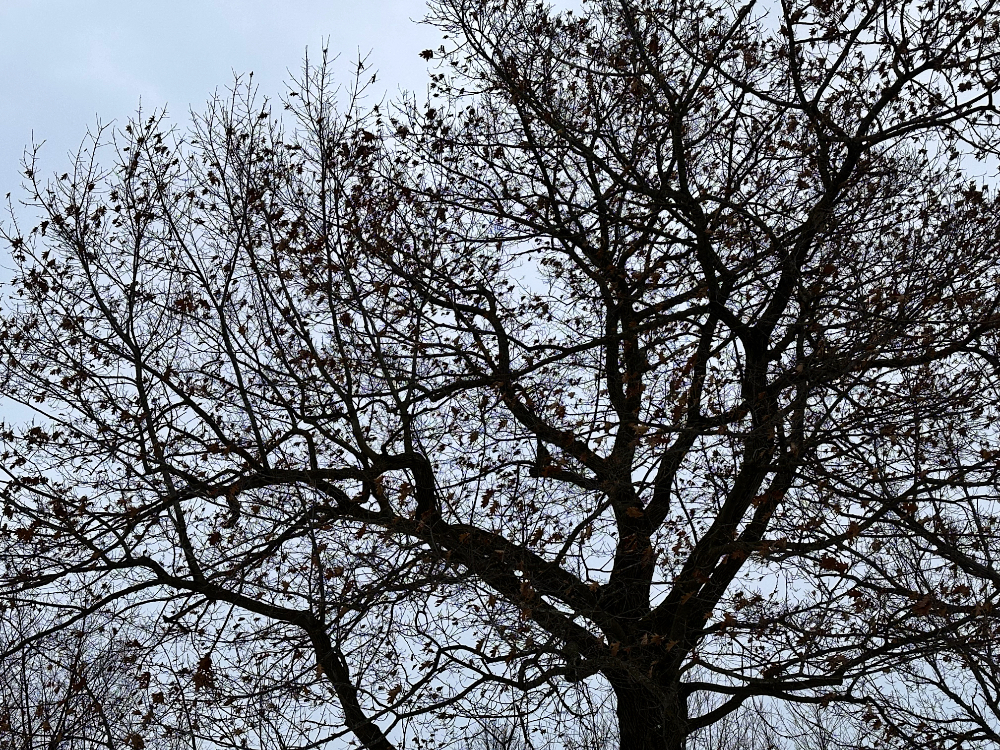
There aren’t many leaves left clinging to all those branches. On the other hand, there are still more leaves up in that tree than I could count.
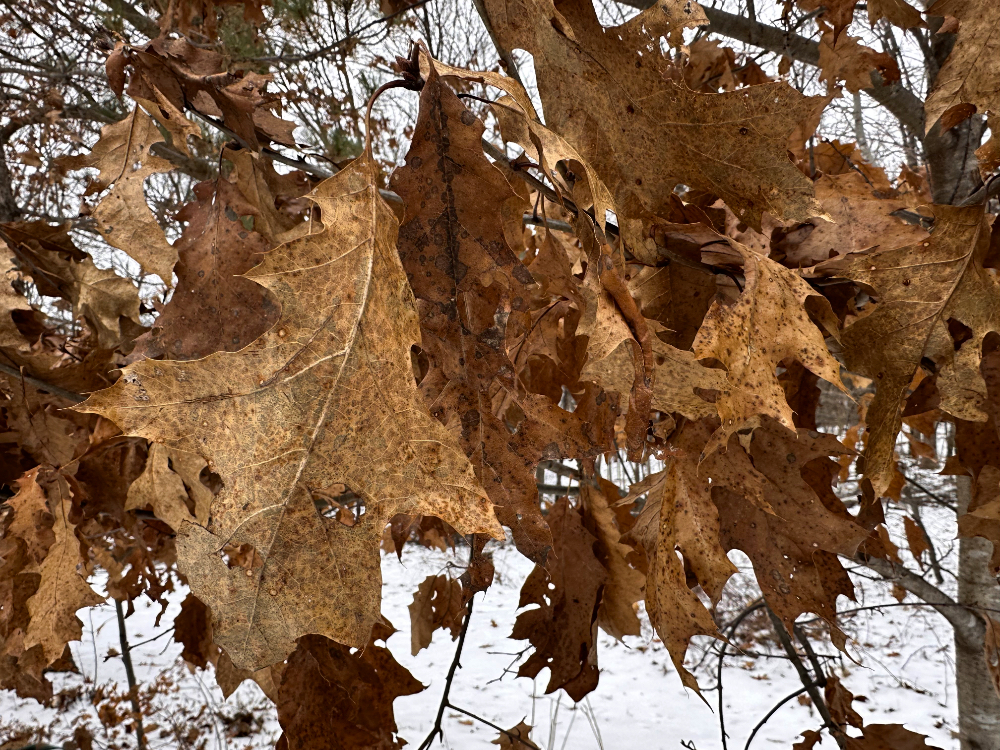
In contrast, there is a young oak nearby that looks as though it still is holding all its leaves after they dried up and turned brown.
There is also a birdhouse with a birch bark roof that features an opening that wasn’t there when initially built.
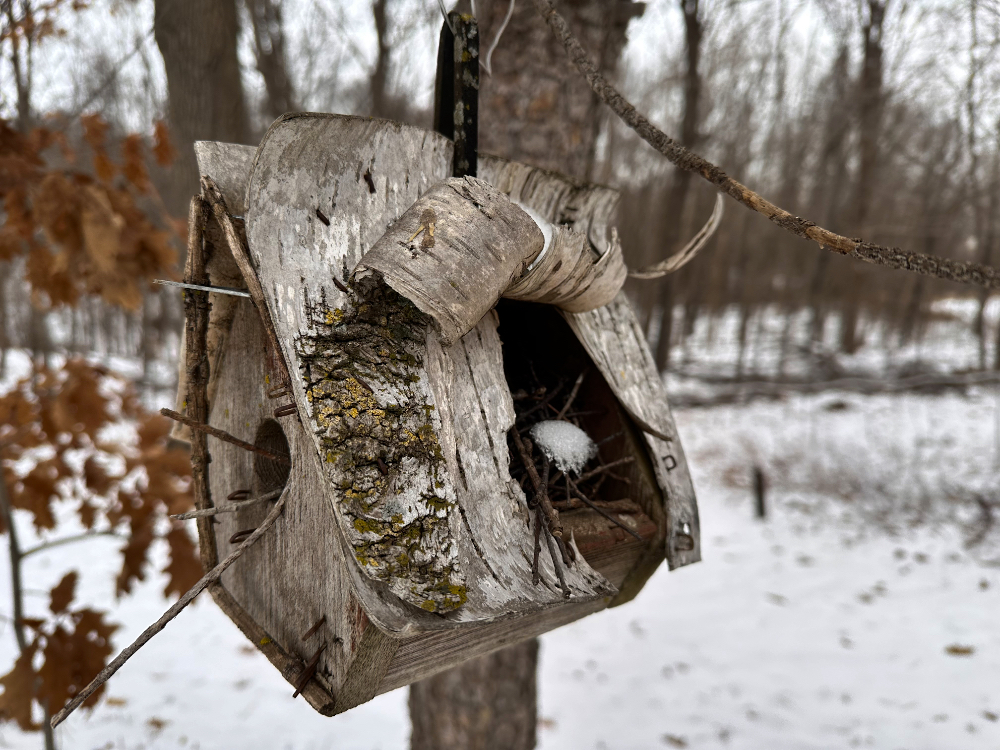
I think the residents left for a warmer climate a long time ago.
As harsh as this weather is, the forecast indicates the bite will be even more intense tomorrow. The critters that survive this will have something to brag about.
I have no conclusion that wraps these contemplations this morning into a logical theme. That would involve more thought than I have to muster. With what little energy I have, I intend to curl into a ball like Asher is doing right now on the couch beside me and save what I can for the next foray into the Arctic elements outside later this afternoon.
.
.


 Relative Something
The retention of dead leaves on trees is called leaf marcescence. From the book The Nature of Oaks: The Rich Ecology of Our Most Essential Native Trees by Douglas W. Tallamy:
The whole “December” chapter of that book has an interesting discussion about the theories for why this occurs, including protection of new growth from browsing critters. Here’s some more:
andezwyskrs
January 26, 2025 at 12:14 pm
Fascinating! And wonderful info. Thanks, for this, Ande!
johnwhays
January 26, 2025 at 12:24 pm
I really appreciate the photograph of the oak leaves, which is a reminder of Autumn, my favorite season where we watch the withering of tired leaves.
Thomas Slatin (She/Her) 🏳️🌈
January 19, 2025 at 6:40 pm
Oaks interest me for the way they keep their leaves after they’ve dried, yet also release plenty of them. I tend to miss Autumn more than I long for Spring.
johnwhays
January 19, 2025 at 9:36 pm
The sound of leaves crunching underfoot reminds me that even endings can be beautiful.
Thomas Slatin (She/Her) 🏳️🌈
January 20, 2025 at 12:49 pm
Love this!
johnwhays
January 20, 2025 at 2:14 pm