Archive for October 29th, 2024
Lethal Precision
My goal of policing our land for signs of the invasive scourge, common buckthorn, is in full swing this time of year. Yesterday, I headed back to an area by the road where I had already made a first pass through a few days ago. I was aware of several spots well into the thicket where sprouts of buckthorn remained.
Soon, I found myself on my hands and knees, doing battle against a tangle of branches to reach the swaths of still-green leaves. Some are very short and get gobbled up into fistfuls as I pull them from the dirt.
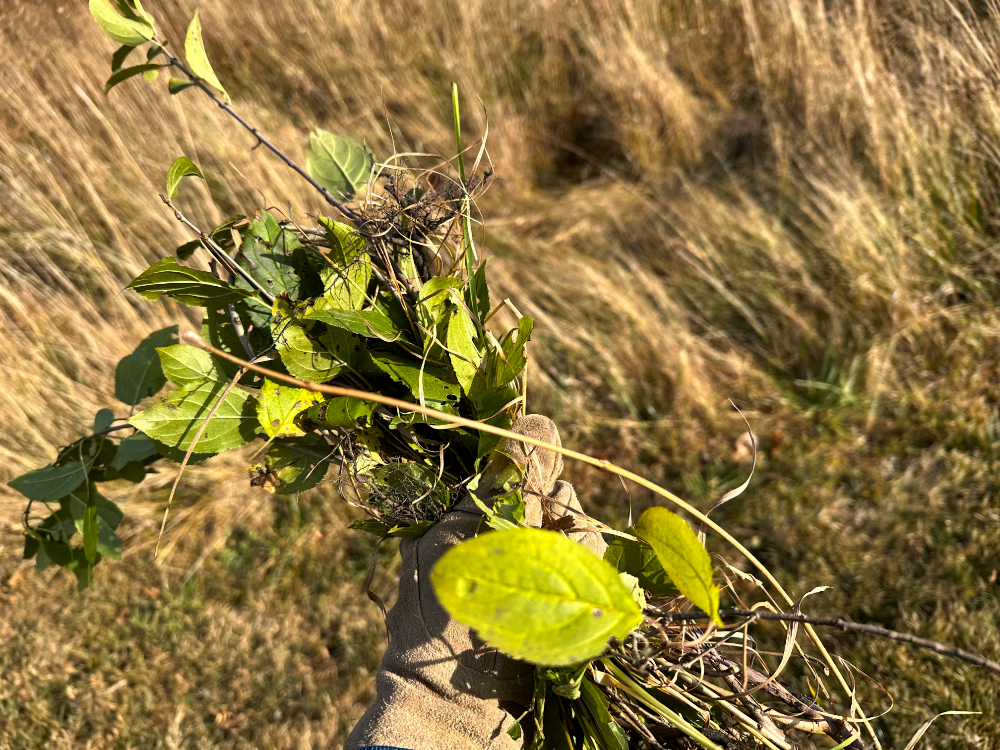
Taller shoots that I’m able to yank up by the roots get treated like trophies and as such, I hang them upside down in the branches of other trees to display the awesome dominance we have over the invader.
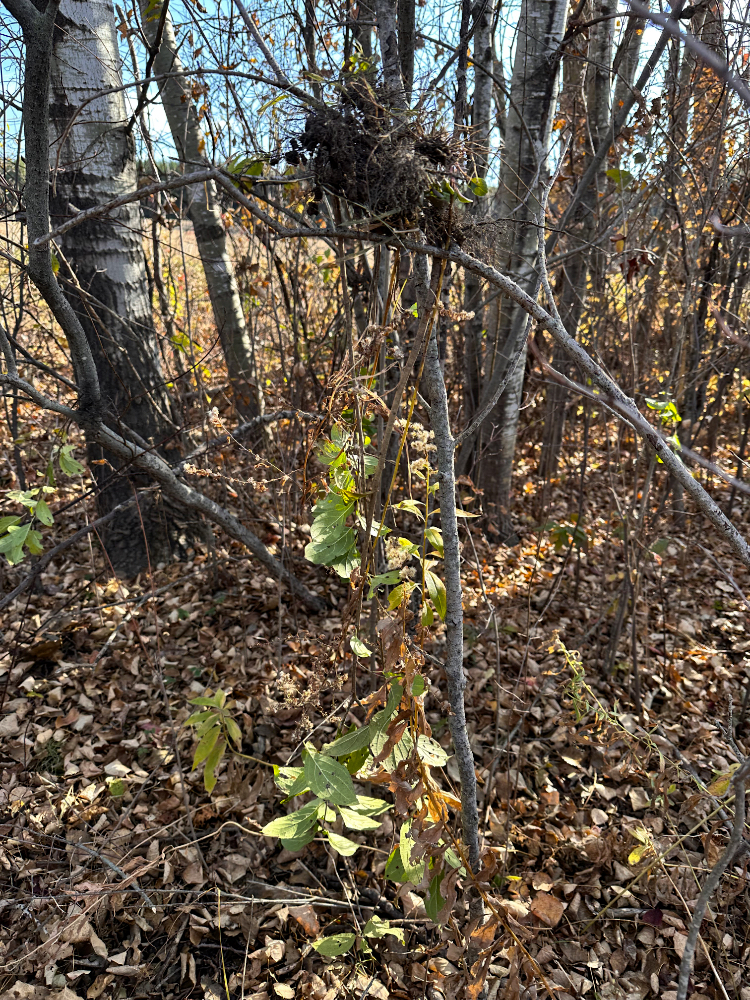
Actually, hanging them like that started as a way to ensure that the roots dried out and make it easy to see the unwelcome leaves had already been dealt with. If I just drop them on the ground, the green of the leaves continues to catch my eyes for a few days, making me think more attention is needed when it’s not.
I thought this effort would become easier every year, but I’m finding that hasn’t been the case. I don’t have to deal with large trees anymore, but the new little sprouts show up in new and different places every year, many of them deep in brambles and hard-to-reach places.
Basically, anywhere that birds like to perch since they are spreading seeds after eating the berries. They definitely like sitting in the protective confines of thick tangles of branches.
Keeping our land from being overtaken by this invasive nuisance is worth the effort based on the way our property looks compared to properties around us where we’ve never seen any effort made to address it. The buckthorn on surrounding land only gets thicker each year, while our property will become progressively more impressive in comparison.
I say more impressive because, in addition to removing buckthorn, we are also nursing along every volunteer oak, maple, poplar, cedar, elm, butternut, hickory, and several versions of pines that we find with equal precision.
.
.


 Relative Something