Fields Cut
Finally. When it rains so frequently that you have to wait until the second week of July to cut hay, it makes for some tall growth. We have been anxious to have our fields cut because we don’t want the weeds to mature enough to go to seed.
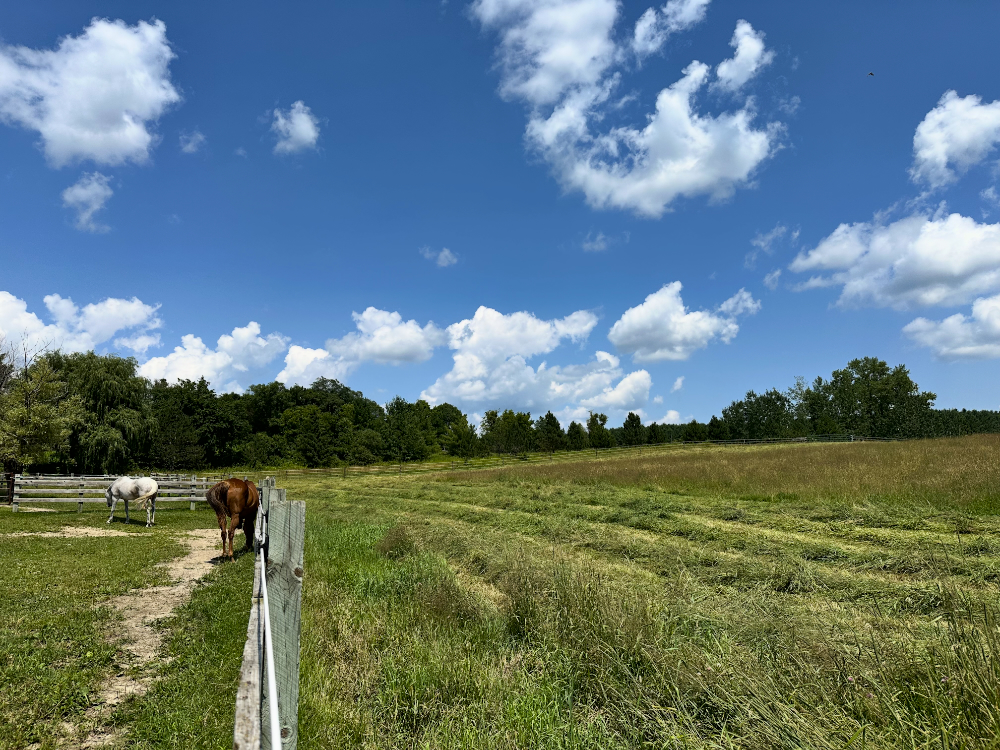
When I came out to see how the cutting was going, I found the horses milling about along the paddock fence. They appeared to be taking an interest in the goings on.

I spotted the red Jolly Ball that was missing from the paddocks. The mower rolled over it and left a little of the orb visible. We’ve rarely seen the horses play with it so it was a surprise to imagine they had carried it out into the field. Either they did or some other animal suddenly took an interest in it.
We left the double gates open to the back pasture in hopes the farmer might cut and bale that field too, but he didn’t take the bait. Last year they told me that area was too small for his rig to be efficient. When he finished cutting the hay field yesterday and drove away without hesitation, I knew I would need to cut that back pasture myself.
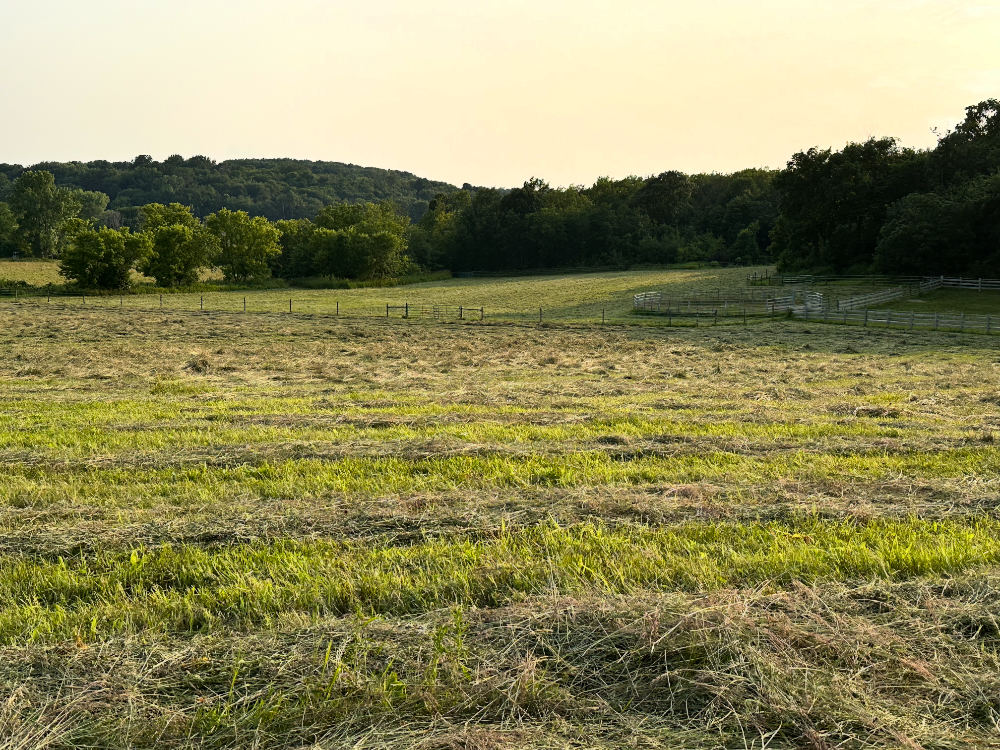
So, I did. As soon as he left I hooked the brush cutter mower to the Ford New Holland diesel tractor and knocked down everything the other guy skipped. Rolling through the tall grass for a few hours produced a lot of grass seed on the tractor and me.

I sure hope more grass seeds than weed seeds will take root out there next year.
It feels pretty good to have both fields cut on the same day. I hadn’t really planned on immediately cutting the back pasture after confirming my suspicion it wouldn’t be included in the hay baling project. Somehow, I just acted in the moment. How unlike me.
Having it all done now is very rewarding. In a couple of days, we will be able to allow the horses to graze the back pasture again.
That will make all of us happy.
.
.


 Relative Something
Will the horses eat the cut grass if you let them into that pasture? Or do they prefer to graze in upright grass?
wtbell
July 13, 2024 at 1:03 am
Good question. We don’t let the horses have immediate access after mowing because they could eat too much cut grass, too quickly and there is a risk of choking or colic.
We will be letting them on the pasture today now that the cut grass has dried. They generally prefer the fresh growing blades because they contain more sugar.
johnwhays
July 13, 2024 at 8:50 am
Do bale the hay you cut? I remember the huge rolls the farmer makes; do you do something more like the rectangular bales you get supplied?
wtbell
July 12, 2024 at 4:10 pm
Thanks for asking, Ward. We have almost a barter deal with the wonderful guy who pastures cattle on the farm next door. He wants hay for his cattle, we want our field mowed. He pays a guy to cut and bale large round bales for him to feed his cattle over the winter. We have him pay us a small amount for the bales he gets off our field.
All that is separate from the hay we feed the horses. You are correct that we receive what are referred to as “small squares” (the standard retangular bales).
When I mow the back pasture with my brush cutter mower, it thrashes and mulches the grass which isn’t conducive to baling. I just leave the cuttings on the field.
When they mow for hay, the cutter is often a scissor-type that makes one cut at the bottom and lays the “hay” down to be raked and baled after a day or two of drying.
johnwhays
July 12, 2024 at 5:40 pm