Archive for March 2020
Few Views
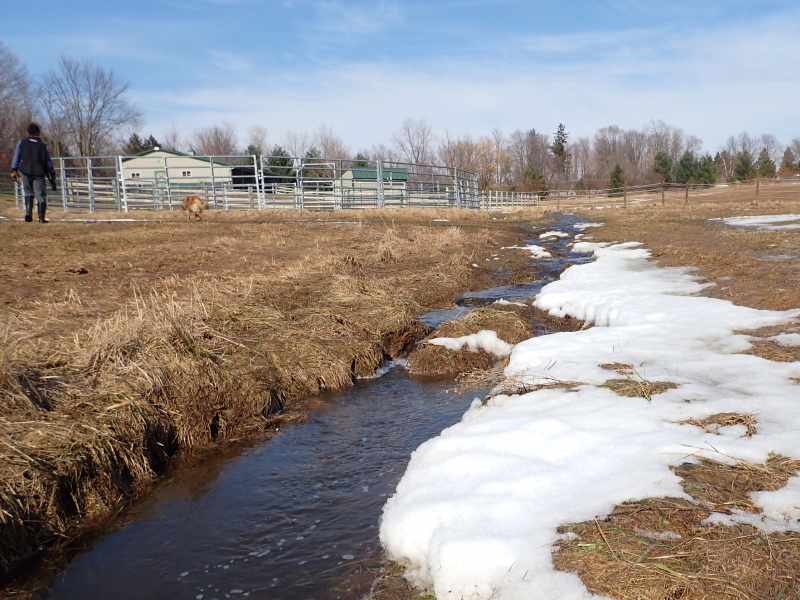
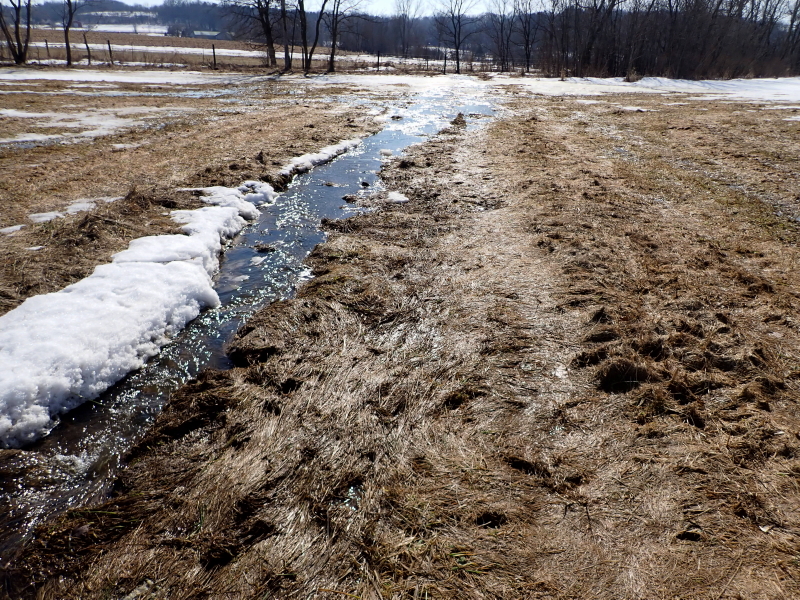
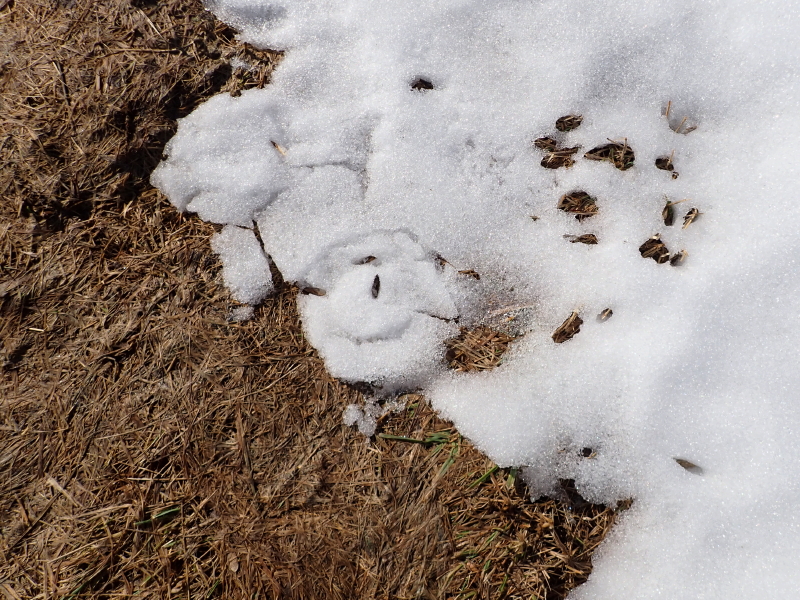
Here are some more views captured during our walk last weekend in the bright sunshine while the snow was melting fast and the water was flowing freely…
 .
.
.
.
.
.
.
.
.
.
.
Living History
With the onset of this current global COVID-19 pandemic and the resulting financial repercussions underway, it is becoming obvious the incidents and impacts of these days will be noted in historical records for future reference. What is it like to live through national or global newsmaking events as they are happening?
I don’t really know.
And I’ve lived through plenty of them.
Life just seems to go on. People who don’t lose their lives or family members and friends find ways to adjust to temporary impacts on normal routines and employ a wide range of coping mechanisms to get on with doing whatever needs to be done. In the moments, it often doesn’t seem quite so historic on the personal level. It’s the collective impact of large segments of a population and the subsequent mass media accounting of details that tend to provide a bigger significance to things.
Even with that, being alive during historic circumstances never seems to feel as significant in the moment for me as I expect it should.
In my life, the impacts of newsworthy events haven’t been particularly acute. They are often shocking, such as the 1986 Space Shuttle Challenger disaster or the terrorist attacks against the United States in September of 2001, but none completely life-altering. Even for Cyndie, who was flying frequently in 2001, the change to her routine was short-lived with respect to the immediate grounding of flights for a time and then only minorly impacted after flights resumed.
I remember the 1973 siege of Wounded Knee by followers of the American Indian Movement and feeling like it was a significant event at the time, but it was really just a story on the news from where I lived.
As the 444 days of the Iran hostage crisis played out between 1979-1981, it felt awful to carry on with my activities as if nothing was amiss, but there really was no noticeable impact on my life beyond seeing a lot of yellow ribbons tied around trees in symbolic support of the hostages.
In 2008, there was what is now referred to as “the Great Recession” which just might end up comparing to the current financial “correction” in the markets. It’s possible we are about to experience the recession of 2020. Maybe it won’t be as “great.” I somehow plodded through the years surrounding the Great Recession with minor suffering. My net worth wasn’t so large that I had all that much value to lose and we were lucky enough to be in a position that our homeownership wasn’t threatened.
Somewhere in my collection of family history, I have the original “Quarantine” sign that was attached to my father’s home when he was [I believe] 12-years-old and contracted polio. That seems like a significant event for my father and his family, yet I don’t recall him ever mentioning it. The amount of subsequent paralysis he experienced from that was virtually imperceptible. Without my mother having mentioned it and giving me the sign the family had saved from his door, I wouldn’t have known.
I don’t really know what it’s like to live through historic events, even though that’s what I’m doing right now.
Maybe it’s simply like living the life that I’m living.
.
.
Ground Moves
The snow melting continued with full momentum yesterday, exposing a lot more ground than the day before. We walked the property to survey the progress up close and witnessed more evidence of how much the ground moves this time of year.
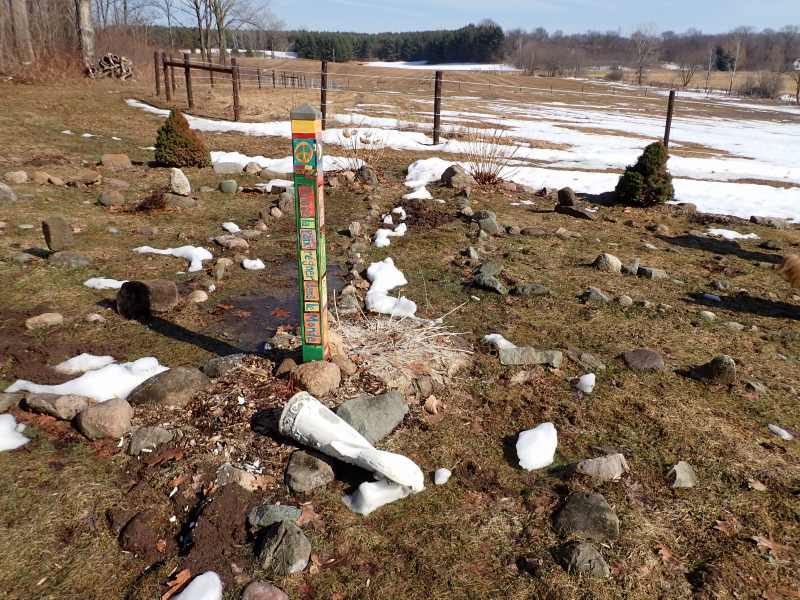
The free-standing angel statue is once again a “lying-prone” angel. Poor thing takes a lot of abuse left on its own to deal with the elements. It’s not really alone in that predicament, though, as the peace pole beside it that is only anchored by an 8-inch stake will also tip over as soon as the frozen dirt around it melts enough to let the slightest breeze put pressure on any side.
Happens every year.
One thing that hasn’t happened until now is the arrival of an aggressive digging gopher within the confines of the labyrinth, but we can now add that to the ongoing saga of nuisances.

There were three or four additional locations of similar soil disruption messing up almost a quarter of the circuitous paths. I’m not looking forward to the struggle to redirect that beast’s attention elsewhere this summer.
When we reached the paddocks, I discovered it is very easy to see the distance two of the posts have been pushed up by the freezing and thawing of the ground. The telltale stain at the base is a clear gauge of how far they have come up in the last few days. There is an additional faded line that is a record of a previous, or possibly the original depth to which the posts were set.
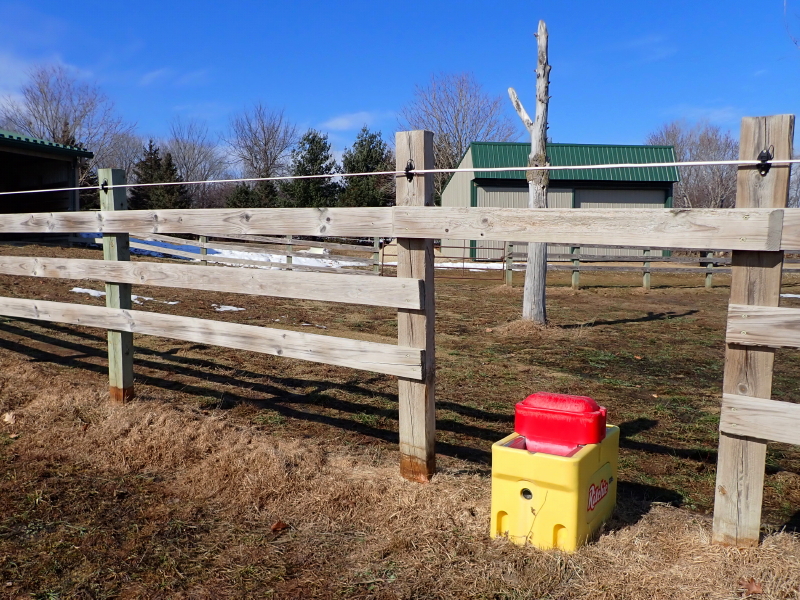
We are just a week into March, so I am readying myself for a few more rounds of freezing and thawing cycles and probably one or a few snow accumulations before this kind of havoc changes to thunderstorms and tornado threats that will be grabbing our attention. It’s always something, you know.
Luckily, between all that calamity we will enjoy some glorious weather, too.
We’ve never been denied interludes of luxuriously blissful weather days, but have you ever noticed how the nice weather never ends up being as earth-shaking and attention-getting as the troublesome days?
.
.
Runoff’s Flowin’
The impact of 50°(F) March temperatures was obvious yesterday and not unexpected. Our drainage swales were flowing with zeal in stark contrast to just 24 hours prior.
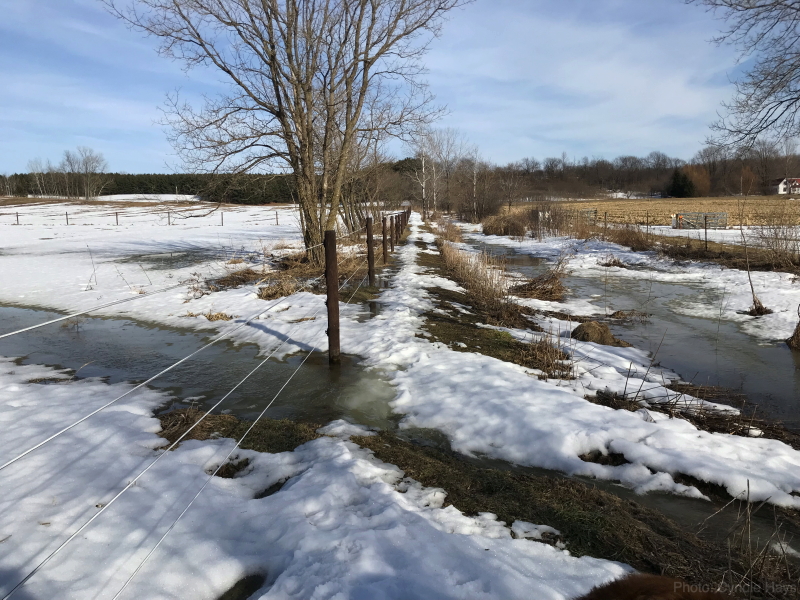
Where it doesn’t flow away, it puddles up and can even hide just below a cover of old snow.
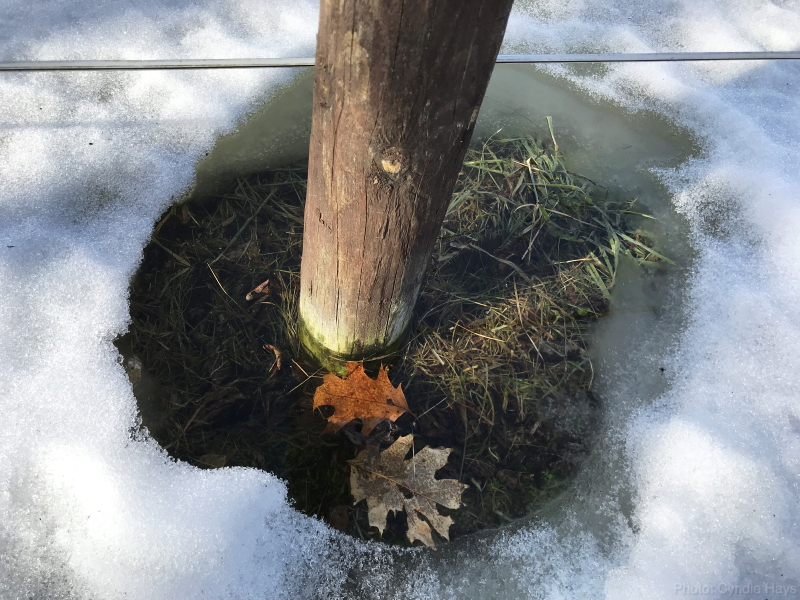
I thought stepping in deep snow-cone snow was risky, but it’s nothing compared to plopping a boot into a puddle of melted snow that rises over the top.
Green growth and leaf buds can’t be far behind!
.
.
Retreating Snowpack
Wave goodbye. The snow cover over our fields is fading fast. It is fascinating to watch it slowly progress, day by day as the hours of sunlight grow longer and the temperatures moderate. Winter is loosening its grip on our latitude of the northern hemisphere.
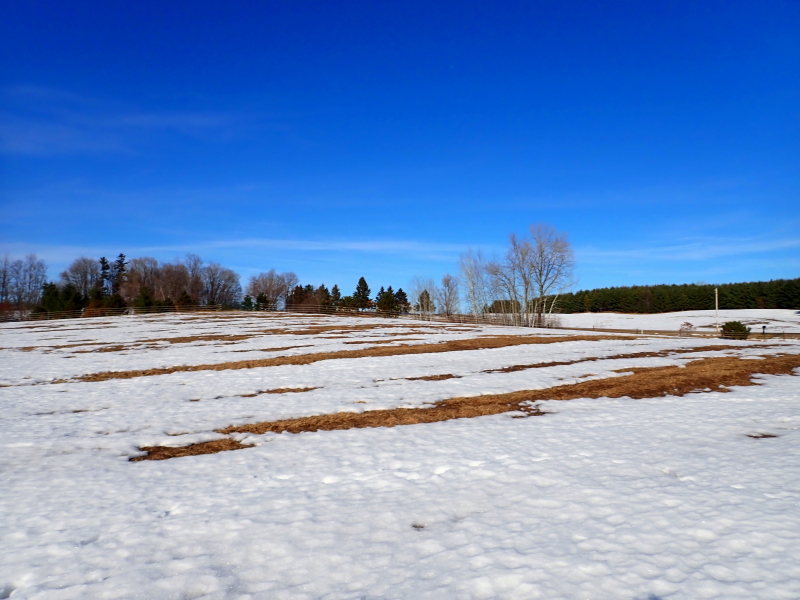
The ground is making its annual reappearance. It is also heaving dramatically where the frost was deep, pushing fence posts and chicken coops to new misalignments. Seriously, the coop has leaned another few inches since I last wrote about it. It’s the new leaning tower of Wintervale.
The trails are rising up in a bizarre center crown where our constant foot traffic packed the path solid all winter and drove the frost deeper than the surrounding earth. I don’t understand the physics of why it pushes up so much in the spring, but I’ve watched it for enough years now that I accept it as a regular routine.
One year it was so pronounced that I worried it would be a challenge to drive the 4-wheeler without bottoming out on the high ground between the wheel ruts. After a few days of thawing, the center of the trail surprisingly flattened out like nothing out of the ordinary had ever occurred. If I hadn’t watched the changes every single day when walking Delilah, I wouldn’t have had a clue about it.
On the subject of walking Delilah, if I hadn’t been so pressured by her to go out at sunset at the expense of finishing the movie I’d started during dinner, I would have missed the brilliance of Venus glowing all by itself in the western sky over the gorgeous orange glow radiating just along the horizon. The glow transitioned impeccably from that deep orange to a faint yellow that became an infinite variety of baby blues to almost black as the sky made its way toward night.
Opposite the bright spec of Venus, the waxing moon was on full brightness in the east, starting to cast tree shadows on the snow before darkness had barely started to establish its dominance.
I owe Delilah a debt of gratitude for allowing me to experience that early evening show as we waved goodbye to the day.
Frankly, the movie I had been watching didn’t hold a candle to the twilight scenes available outside.
.
.
Not Level
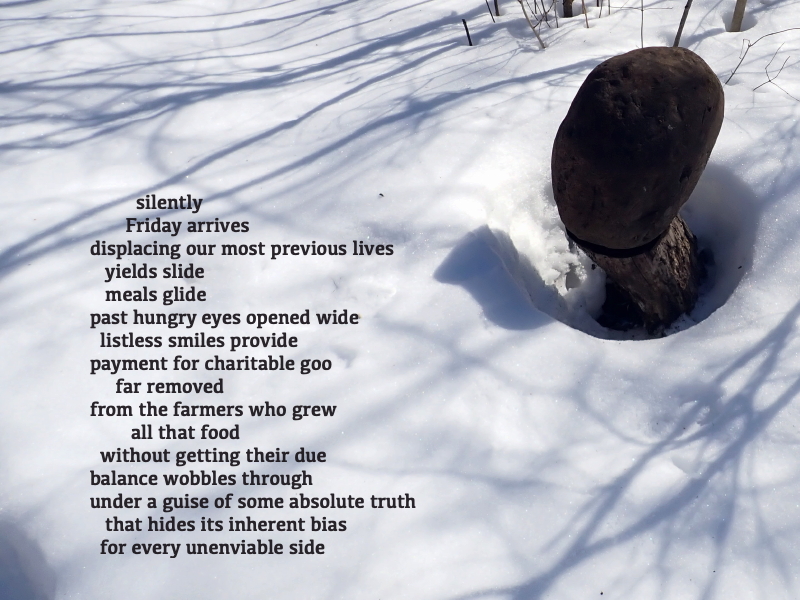
This isn’t the first year I’ve had the impression that the chicken coop is leaning away from level, but it’s now become more obvious than I am able to ignore. Every time I walk past it, I fight an urge to walk over and push it back to level, but I’m the one who buried those six posts 3-feet deep each. A little push on the side of the structure won’t do anything to press the far posts back down to where they started.

Part of me wants to think it’s just an optical illusion given the relative reference of the surrounding ground. The view from the other side doesn’t look all that bad.

If I’d bother to walk up to the shop to get the level there would be no questioning it, but the issue is an “out-of-sight, out-of-mind” level concern and has yet to warrant the intentional hike in order to verify my instinct. Wouldn’t really make any difference, anyway. There is nothing I would do about it either way.
Actually, I don’t need the level. If you didn’t already spot it, go back and look at that first image. There is an easy reference line –two actually– revealing a straight verticle in the items hanging on the outside wall. Based on those lines being straight up and down, the horizontal boards are definitely not square to that.
The frost heave that occurs in the ground is in charge of the angle of this structure. The legs of the coop were not installed like footings for structures that must meet building codes.
Luckily, our hens don’t seem to give a cluck about it.

.
.
Big Melt
If it was possible to measure, I’d claim yesterday as the day when the balance tipped from winter to spring around here. It certainly appears so in terms of the snowpack. That glacial iceberg that was covering the land has suddenly transformed into a massive snow-cone ice dessert spill.
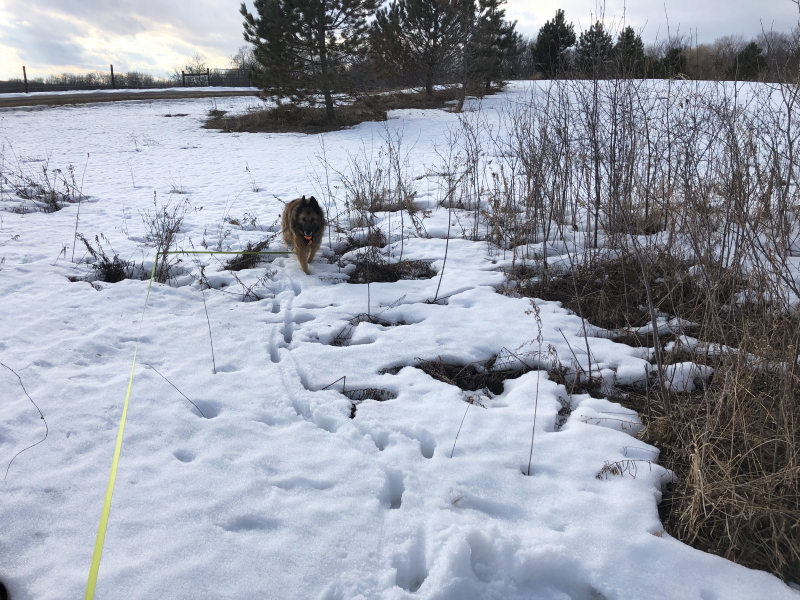
Look at that texture and try to convince yourself it doesn’t appear as though a shaved ice machine must have overflowed.
Even though there are a lot of places where the ground has become fully exposed, there still remain significant areas in the woods where the depth of snow is almost to my knees. Imagine what it’s like when you step in snow-cone shaved ice that is deeper than the top of your boot.
Yeah, like that.
Out by the road, there was a clear delineation where the edge of winter’s glacier was receding.

Our local forecast is teasing a chance for 60°(F) over the coming weekend. That will be a pleasant “welcome home” for Cyndie, who is currently in Florida with Elysa for a short visit with Fred and Marie. A warm weekend here will be like a cool night down there.
I’m back to entertaining the pooch non-stop from the moment I walk in the door after work until I put her to bed in her crate. She was insufferably persistent in begging for attention last night, only the first day without her mamma around. Lucky for Delilah, that sweet face is pretty irresistible.
She won several full-body massages and multiple exploratory expeditions around the grounds. My writing is slowed significantly when typing with one hand while the other is fending off her insistent snout pleading for interaction.
I’m clinging to the evidence supporting how much emotional benefit there is from having the companionship of a dog.
.
.
Waterton Lookout
Continuing with the story I wrote back in 2002 after getting my mother to describe her memories of her and my dad’s time in Glacier National Park in 1947…
More about life on the lookout…
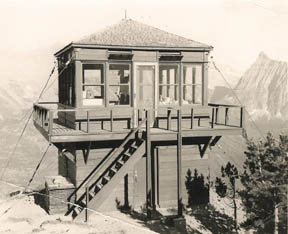
Glacier Park is actually part of the Waterton-Glacier International Peace Park. I see Porcupine Ridge showing up on current park maps, but not the Waterton tower. Waterton Lake is a long narrow lake that runs north-south, the approximate middle of which crosses the US-Canada border. The town of Waterton is in Canada. The Waterton Lookout Tower is not on the top of a mountain. It was situated on a small outcrop on the edge of the ridge with a view of three different valleys.
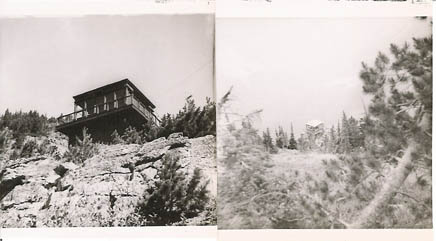
Waterton Tower Lookout on Porcupine Ridge as viewed from below and from above.
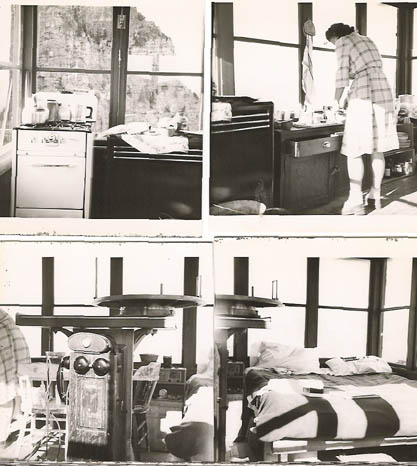
My folks both grew up in well-to-do households in Minneapolis, MN. As newlyweds, they were now living without running water. Betty said the outhouse wasn’t that big a deal because she had visited a good number of them back in those days. She said bathing was all of the sponge bath type. She only recalls washing her hair up there one time. Water was heated on the propane-powered stove.
In the photos you can see the countertop level was quite low, to stay below the windows. The springs for the bed are something Ralph had scrounged that could be rolled up and packed on a horse. He also acquired an old mattress and then built the frame out of spare lumber found on the sight.
Dad would walk daily to a spot where snowmelt flowed out of a pipe encased in concrete. He hauled the water in a pack on his back. Mom said she made the trip once, but it involved traversing a very narrow ledge and she would never try it again. Back at the lookout, he would fill a barrel located in the enclosed space beneath the floor of the tower. At the beginning of their stay up there, he made a conscious effort to keep the barrel full, because as the summer progressed there would be a point when the snow that served as the source would all melt away.
 Mom had never really cooked meals. She tells of being told by Ralph that she needed to learn how to bake bread from the woman she was staying with after returning from Miami. With only a few chances to practice before finding herself on the mountain, she ended up having to hone her skills on the fly. Luckily, the people who were on the tower before [Mom and Dad] had left a lot of flour. She said her less successful loaves were edible while still hot out of the oven. They would eat their fill and then make something of a game of taking turns tossing the rest over the edge and listening to see how long they could hear it tumbling down the ravine. They would then guess what animal was going to find it first.
One day when she was having trouble with making a pie, she said Ralph stepped in and put his hands right into it and whipped it up and made a pretty good pie. The payoff from his days as a cook on the trains.
She didn’t go back down during the span of their six-week duty at the lookout. They were resupplied once during that time. However, there was a point when Ralph absolutely had to have some milk (and ice cream, she whispered) and plotted to go down on a weekend while she was on the payroll. She said he literally slid down the side, shortcutting the back and forth of the switchback trail. He needed to catch a scheduled launch to get him across the lake to the town of Waterton. Later, back across the lake again, at the ranger station, they let him load up one of the horses with items for the trip back up. Once on the ridge again, the stirrups were tied up to keep them from catching on anything and the horse was allowed to wander back down on its own.

Ralph on the trail with water on his back, Betty on the trip up to the lookout.
Mom described witnessing lightning dance down the wires that ran to the ground when the tower would take a hit. She said there weren’t many instances of major cracks of thunder, but there were almost daily storms and plenty of lightning. They were required to record the location of lightning strikes. Those spots would get special attention the following mornings to see if any fires were born.
At dusk, they would locate and count campfires and match them with the number of registered campers. The bed my dad had built was level with the windows, so they could prop up on their elbows over their pillows and see from there. They would report to the ranger station at least once a day via telephone. There was a single wire strung from tree to tree. During the time they were on the tower, there was only one instance when a lightning strike started a fire. Dad was prepared to set out to the location to fight it, she said, but it ended up being taken care of by a crew from below.
Their idle time allowed a chance to feed chipmunks that became regular visitors and watch deer that would wander close. When asked about other daily tasks, Mom mentioned that the windows needed washing almost every day. She said Ralph did that mostly. She had no experience washing windows and he ended up re-doing ones she cleaned anyway. He had worked in a filling station, she pointed out, so he was well practiced at it.
.
.
Recalling Stories

“Betty on way to Apgar Lookout. 6-18-47” [that was in ink, then there is this in pencil] “Pictures lie. In spite of how she looks she was so exhausted she could hardly breathe”.
Even I don’t recall all the details of stories I’ve gathered over the years, despite having actually written many of them out. Yesterday, I was hunting for a picture in my personal digital archives that I wanted to include in a record for my mother’s profile on WikiTree. I located it near a chronicle I’d written from stories my mom was telling me about their days in Glacier National Park in Montana in the 1940s.
I enjoyed re-reading the details of my parents’ story so much I decided to share it here. I was writing it back in the summer of 2002 and a cursory search through Previous Somethings didn’t reveal any indication I’ve already shared it on this blog before now.
This segment is served well by a little of their backstory of that time, prior to getting married…
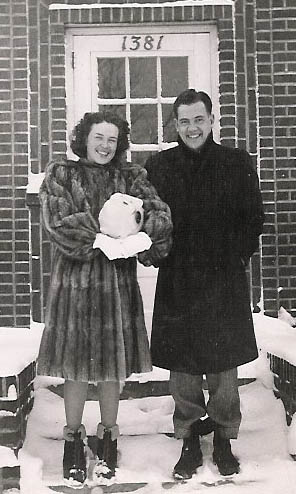
Mom & Dad, late 1940s
In the later years of WWII my father, Ralph, was working in Detroit for Minnesota Mining as their Personnel Manager. He had been denied entry into the armed forces due to a combination of hayfever, allergies, and a paralyzed soft palate from polio that made it difficult for him to swallow. The Detroit position had opened up as a result of the employee exodus to the military.
During the summers of his college years, Ralph had worked for the Great Northern railroad as a 3rd cook. Mom points out that that is primarily a dishwasher, but that he did learn to cook some things, including making pies. He told her that when the trains went through Glacier Park in Montana he used to hang out the door to look at the mountains and experience the great relief of being able to breathe, enjoying air free of his allergens.
During the war, my mother, Betty, was serving under the Navy in the WAVES as a yeoman, 3rd class petty officer doing office work. She says she started at that rating because she had gone to business school and had worked for 3 years. Before long that advanced to 1st class, but she claims it happened faster than usual because of the activity of the war. She was stationed in Miami.
In September 1945 my parents both returned to Minneapolis to attend the funeral of her father who had died during a fire in the home. Her sister was in the hospital with a broken back and a broken arm. At that time they discussed plans for marriage. They looked around for places to live. Ralph had been looking some while in Detroit. There seemed to be nothing available. They looked at what was available in the seedier parts of Minneapolis but found nothing they considered livable. They were NOT going to live with my father’s parents, and my mother’s family was now confined to a small apartment.
When Betty returned to her post in Miami, she found it had been decommissioned. Her office was gone! They struggled with what to do with her. She had just two months left before the prescribed time for her discharge. She talked them into moving it up, and they gave her the two months.
Meanwhile, with all the personnel returning from overseas, my father saw that he was not long for his present position and headed home to Minneapolis. They were both back in Minneapolis before Christmas, 1945. Ralph found a position selling insurance, but never really settled into the role.
On a day when he was suffering from his hayfever in downtown St. Paul, he went past the Great Northern building and decided, “I oughtta go in and see if I can get a job in Glacier Park.”
The hotels out there were run by the railroad and they would hire kids for the seasonal summer work. There was one job open: Purser on a tourist launch. He did that all summer in ’46, staying in the main hotel. While he was out there he met all the park service people. At the end of the season, he stayed on, using the spare beds near one of the Glacier Park ranger stations, and he worked helping stock snowshoe cabins used by the rangers when they went out into the park to check things through the winter. Eventually, he ended up living with ranger Dave Stimson and his wife Kay. By the time I was born, over a decade later, they would be known to us as “uncle” Dave and “auntie” Kay.
 During the next winter, he worked for their highway dept driving snowplow across the mountain passes. When the park department started talking about plans for the next summer, Dad learned they were thinking about hiring married couples to staff the fire watch lookout towers. This set the stage for my parents’ unique start as husband and wife.
Betty and Ralph were married in Minneapolis, Minnesota in April of 1947. They stayed overnight in St. Cloud at a family friend’s place (due to the friend’s insistence at the wedding) and then went on to Brainerd to a cottage owned by the Elliott family. Everything was done on a shoestring. After a couple of days, they came back and packed everything they owned, including wedding presents, and prepared to drive west.
Apgar Lookout Tower was the one at the headquarters of Glacier Park where the “lookouts” were taught what to do in case they spot fire. Waterton lookout, where Betty and Ralph would be stationed, was on Porcupine Ridge. Back then, the man was paid through the week, and over the weekend they paid the wife. That was how the plan devised to use married couples was able to get 2 pairs of eyes for the price of one.
Mom and Dad didn’t go up to their tower until after the 4th of July and they were only on the lookout for about 6 weeks, but this was how they kicked off life together. They lived day and night on this fire lookout tower on a mountain in Glacier National Park in Montana.
.
.


 Relative Something