Posts Tagged ‘storing hay bales’
Stinky Effort
While the flakes were falling yesterday, Cyndie and I spent some time in the hazardous environment of the moldy old bales in the hay shed, kicking up mold dust with each step of the clean-up effort. We had the help of Asher, who reveled in the chance to explore all the hidey-holes where small animals have sought shelter over the several years we’ve kept that base layer in place.
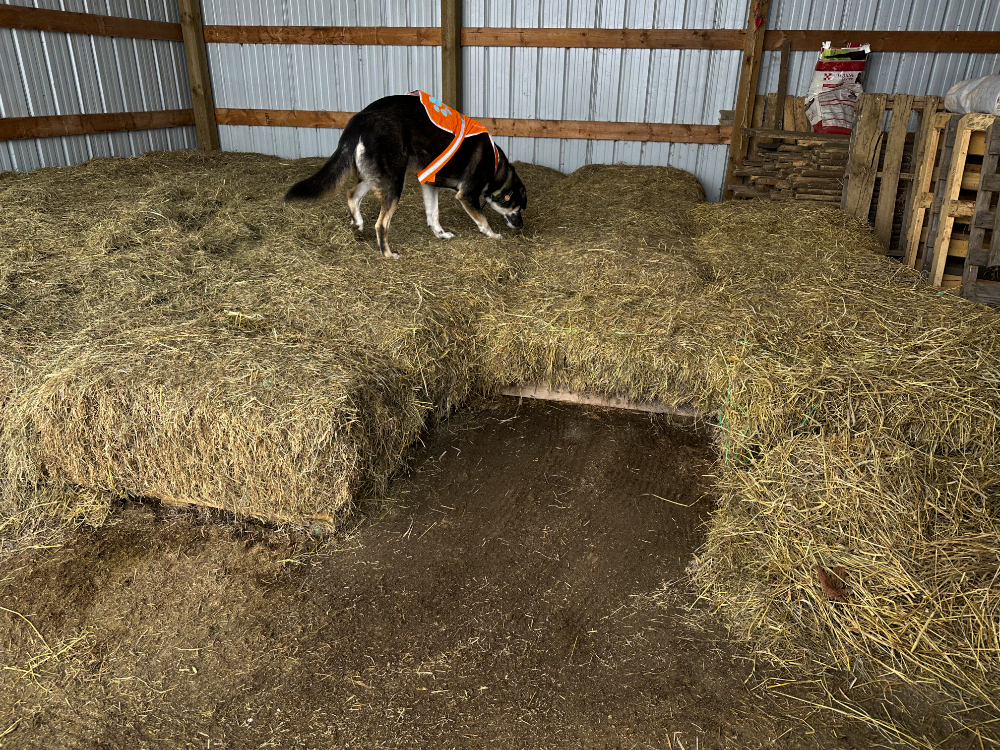
He is not usually allowed such unfettered access in there when it’s filled with bales of good hay. Of course, he knows full well that a cat was occupying the place recently, so I respect his keen interest.
We worked our way through about half of the old bales before calling it quits for the day.
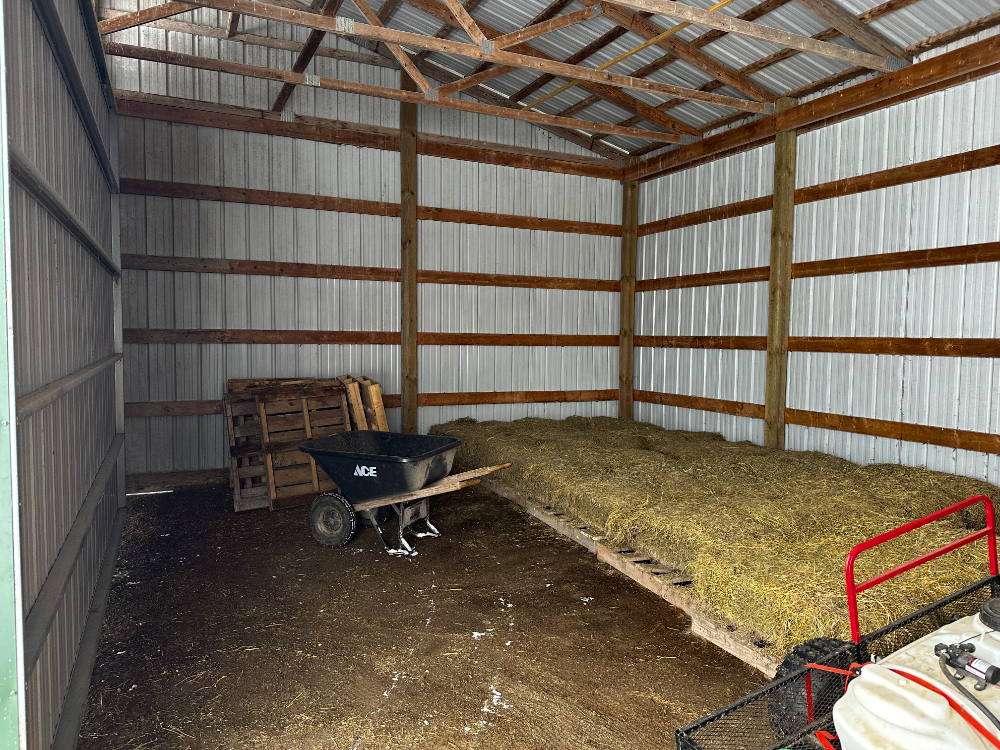
We’ve used up all the nearby locations to stash the moldy old bales, with a lot of hay left to go. Cleaning up the hay shed isn’t that difficult. Figuring out where to dispose of the old hay is the hard part.
Quitting when we did gave me a chance to enjoy watching the UofM Gophers on TV as they beat Wisconsin in the falling snow for the last game of the football regular season at Minnesota’s home stadium.
Looks like I get my chance to do some plowing and shoveling this morning. We’ve got company coming for brunch, so I can’t lollygag around. I need to get a path cleared before they arrive.
Today’s events will give me an excuse to take a break from finishing the hay shed clean-up effort for a day. I will gladly inhale the clean air that yesterday’s flakes scrubbed as they fell, hoping to flush away the miserable stench of mold that still lingers in my nose.
.
.
Snow Maybe
It’s close. We can see it on the weather radar. Our county is under a Winter Weather Advisory today as a snow system is slowly making its way across our region from west to east. It appears that the bulk of the impact will be to our south, which puts us in the “maybe” category regarding the amount of accumulated snow we will need to shovel or plow.
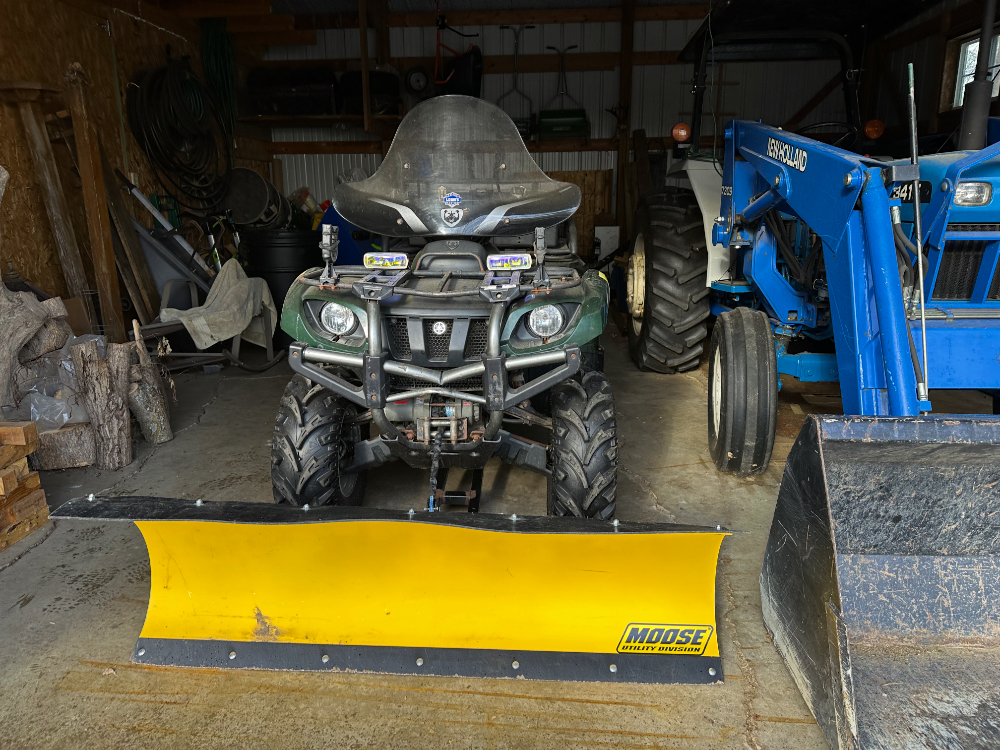 Just in case it piles up, I spent some time yesterday pulling the plow blade from the back of the garage and getting it mounted on the Grizzly.
It took ‘some time’ because the long arms of the mounting frame, combined with the weight and width of the blade, make it rather unwieldy to maneuver.
The real problem lies in the fact that I can almost move it sufficiently all on my own, so I am too often inclined to try. Yesterday’s effort bordered on ridiculous and held potential for several troublesome failures as I wrestled it around a variety of obstacles to get it to the front of the ATV. Ultimately, I accomplished it without incident.
Once there, I needed to envision a creative way to connect the hook and winch cable that lifts the blade, since the cobbled method from last winter proved to be ill-advised. I’m not confident that my latest iteration will be adequate, but it’s a start.
If history serves as a guide, I will be forced to revise the setup when it fails in the dark, when it is cold, and I am in the middle of a huge plowing effort. That’s always a great time to work on kludged solutions.
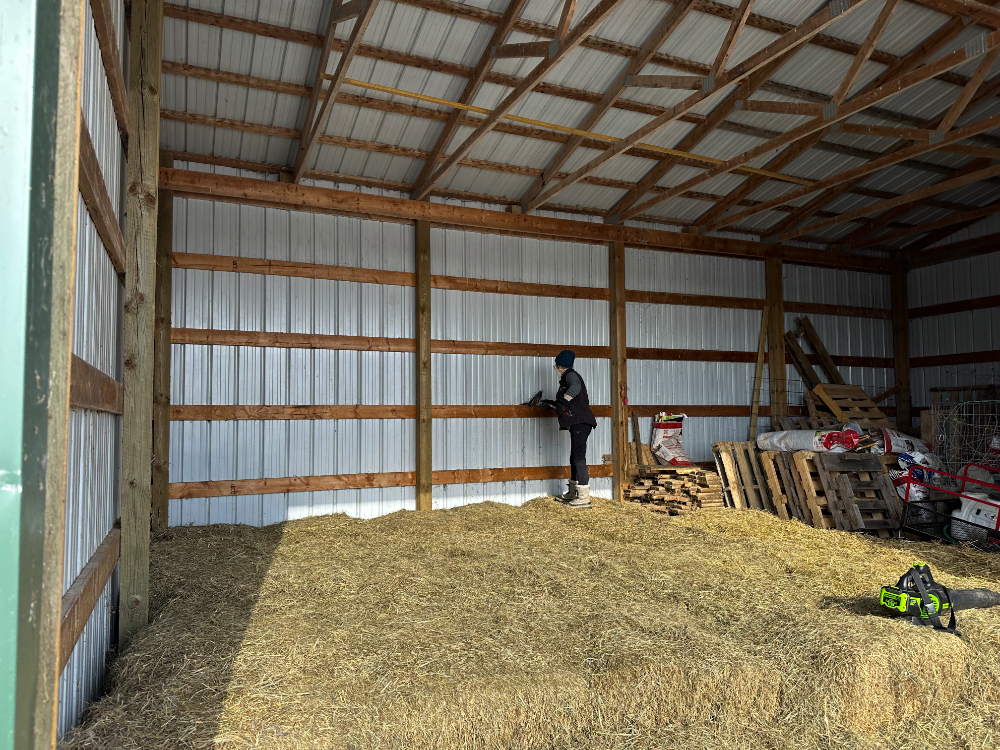 Since yesterday’s weather was a perfect calm before the storm type of day, I decided to move a fresh batch of bales from the hay shed to the barn. Upon opening the big door of the hay shed, the aroma of moldy hay was becoming too prominent to ignore.
Our several-year-old ploy of leaving old bales as a base layer on which we stack new hay needs a change. Cyndie swept down cobwebs while we contemplated the effort it will take to remove the nasty bales.
The first challenge will be that the twine will likely have degraded to a point of failure when we try to pick up the bales. The second challenge is where we will dispose of the moldy mass. I may or may not dabble in the project while beautiful flakes are floating down this afternoon.
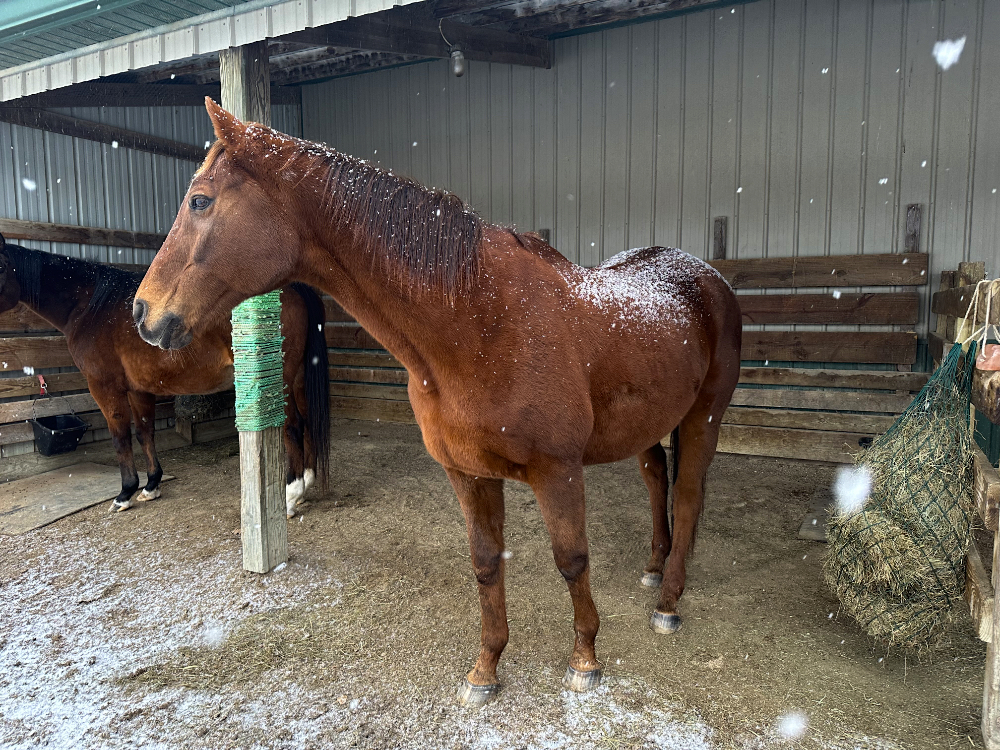
Light was keeping an eye on the distant horizon between mouthfuls of her feed this morning. The insulating property of her winter growth is visible in the snow that doesn’t melt on her back.
She looks so gorgeous, it’s hard to fathom how skinny she was when rescued as a starving momma in a kill pen in Kansas years back. The tips of her mane look like she has them colored at some fancy salon.
These horses deserve to be fed the best hay we can find, and to keep it stored in a way that keeps it fresh until the last bottom bale is reached.
Cleaning the hay shed today will be a labor of love.
.
.
Counting Bales
The way I view it, managing the inventory of hay bales to feed horses is an imprecise science. Whether guided toward serving sizes by weight or “flakes” from the bale, there is widely varying uniformity of both and an uncertain outcome of which horse will eat it and when they do, how much they will consume. Horses we’ve had all seem content to spill and waste as much as they actually eat.
 I was once told that if horses get hungry enough, they will eat whatever is served. Given that ours are recovering from a variety of levels of neglect, we’d rather not put them in that level of desperation. Not sharing the same sense of smell as a horse leaves me wondering when they are ignoring a serving because they don’t like the smell.
Cyndie is much quicker than me to declare a bale as “bad” because it is musty, moldy or smells dusty. That hay gets tossed for some other purpose, usually, landfill somewhere on our property.
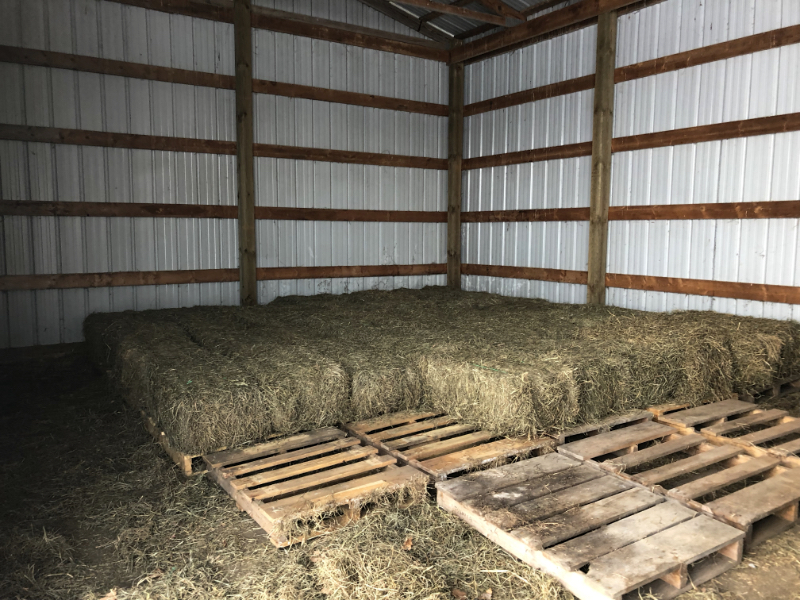
All that makes it hard for me to judge if we have enough or how urgently we need to bring more in. Today we are basing it on the space we have for storage. As the stock in our hay shed has dropped to a single layer, we have put in the call for another delivery.
 Of course, in order to reduce it to one layer, I needed to move 42 bales into the barn. I also ended up rearranging the scrap lumber stored on the right side of the hay shed to create more space for stacking new bales.
The floor of the hay shed is dirt and we put down pallets under the bottom layer of bales, hoping some air beneath them will reduce mold development. It doesn’t really work. As we ended up doing in the past, we’ve decided to leave the bottom layer of old musty bales in place this time and stack the new incoming bales on top of them.
It’s a treat that we don’t need to do the work of lifting and hauling the hundreds of new bales that will be arriving but it is not lost on me that I will be lifting and stacking them all five-high in the shed.
Yesterday was just a warmup for a much bigger upper body workout to come. Hopefully, these bales will all smell perfect to Cyndie and the horses.
.
.


 Relative Something