Posts Tagged ‘slow melt’
Gentle Melt
This week we have been blessed with weather that is melting the snowpack in gradual steps, stopping overnight when the temperature drops below freezing and then gradually starting to melt again as the solar rays increase throughout the day. It’s the best outcome for avoiding flooding extremes.
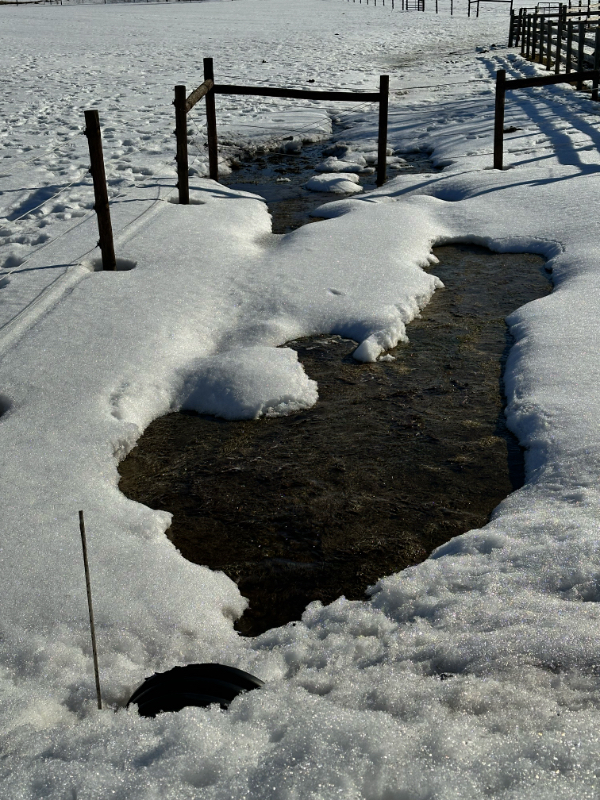
Yesterday afternoon was the first time I finally was able to see the water flowing out of our drainage culverts as the snow cover receded.

There still is evidence of the significant amount of snow we received this year. I saw in yesterday’s news that the Twin Cities snowfall amount thus far is the eighth-snowiest since records have been kept. The snow that has slid off the hay shed roof all season is going to take a long time to melt, being in the shade most hours of the day.
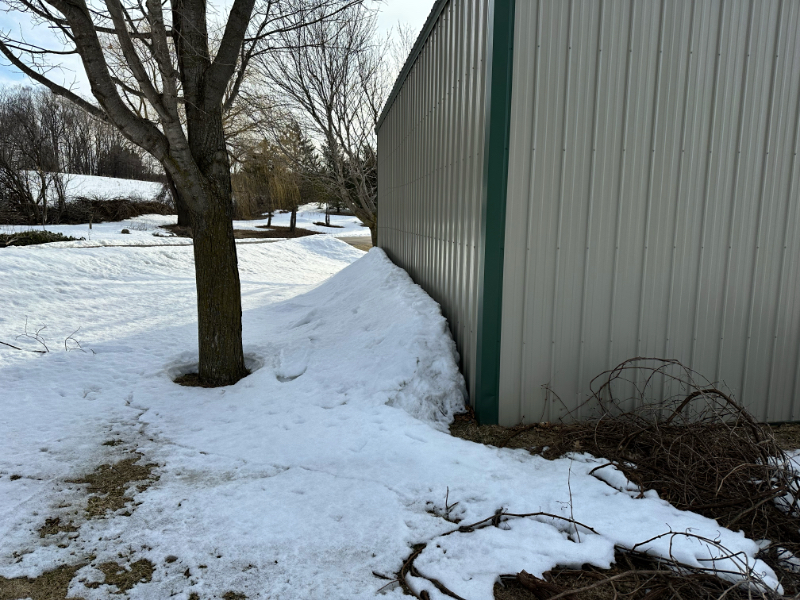
It’s hard for me to see it but I read recently that our snow cover melts from the ground up. The roots of our trees must be warmer than the surrounding areas because the snow has visibly disappeared around the trees faster than everywhere else.
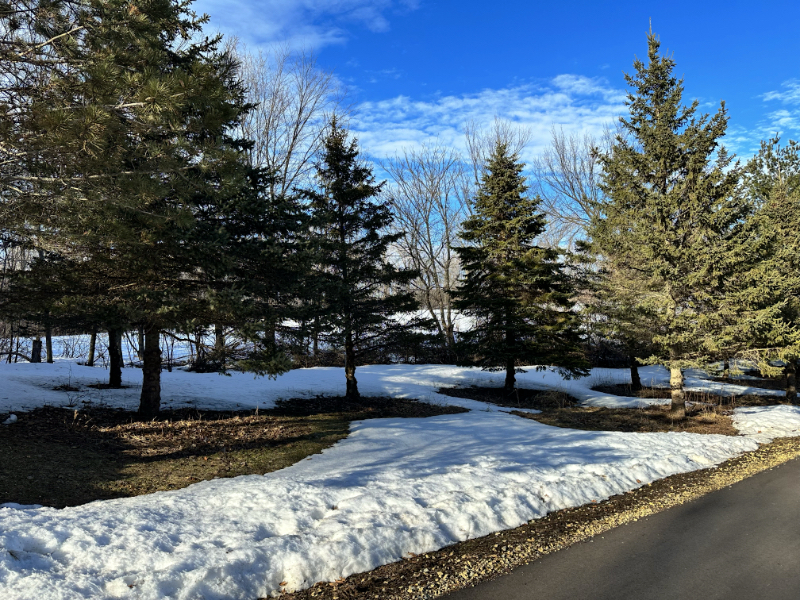
We are anxious to enjoy some 50-degree days but I’m willing to wait while days in the 40s are slowly, gently melting the snow and calmly flowing through our drainage ditches. One question lingers… how much longer should I leave the plow blade mounted to the ATV?
I will never shake the memory of our first spring here when 18 inches of heavy spring snow fell on May 3 after a dry warm spell in April. If I take off the plow blade, it won’t be stored very far away from easy access if needed.
.
.
Obvious Evidence
Based on all the mice caught in our traps throughout the winter, it should come as no surprise that they navigate the harsh elements as well as long-legged wildlife, but I am always intrigued by the obvious evidence rodents are burrowing beneath the snow.
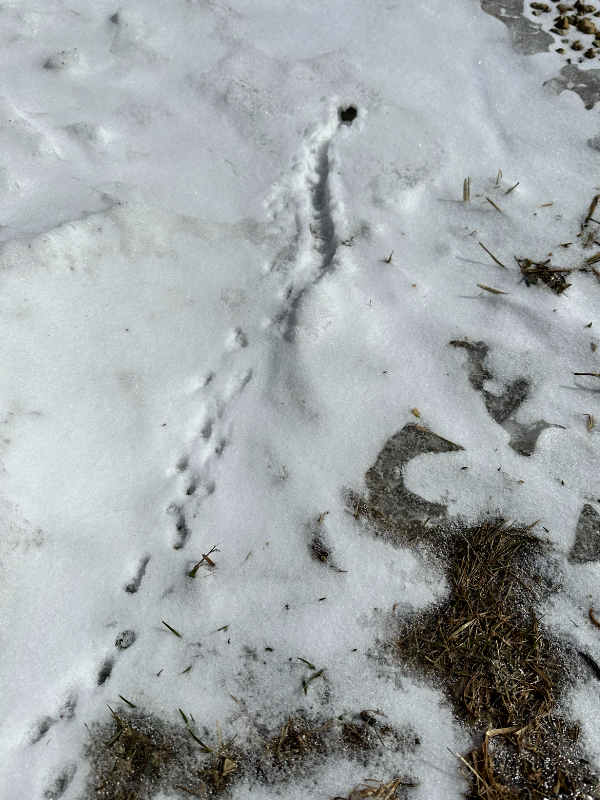
Despite the frigid overnight temperatures greeting me bitterly at each morning feeding the last few days, it appears one little critter was busy making tracks.
There is also obvious evidence of the increasing angle of sunshine and its growing influence by way of melting that is occurring despite the chilly air temperatures. That will prove to be a benefit when it comes to the threat of spring flooding. There is a deeper snowpack now than we’ve had in many years and if it were to melt all at once, flooding would likely occur.
There is an additional aspect that could dramatically influence whether we have any troublesome flooding this spring or not and that is the amount of rain that will fall in spring storms. Based on a recent video released by our county’s historical society, flooding from heavy rain can happen at any time of year. In 1942 there was a flooding rain that happened in September.
.
.
When I saw this video the first time, I realized I would quickly blame the extent of warming of our planet if this kind of flooding rain happened today. In my lifetime, I’ve never seen rain of the intensity described by Dr. James Vedder happen in the fall. But it did happen back in 1942.
Flooding rain fell in July of 1879 and washed away a mill and flooded my great-great-grandfather’s house a little over ten miles south of where we live now.
To me, this is obvious evidence that the steep ravines and many rivers of the “driftless region,” of which our county is included, are susceptible to flooding from heavy rain.
I wonder how many mice survive that kind of extreme weather.
.
.


 Relative Something