Posts Tagged ‘slow feeder’
Eating Iron
When I originally designed our slow feeding hay boxes, I wanted to make them robust enough to handle the tenacious jaws of always curious horses. I’d seen how much wood horses can chew off fence boards and didn’t want the boxes to come apart whenever hay runs out and they turn their attention to the structures themselves.
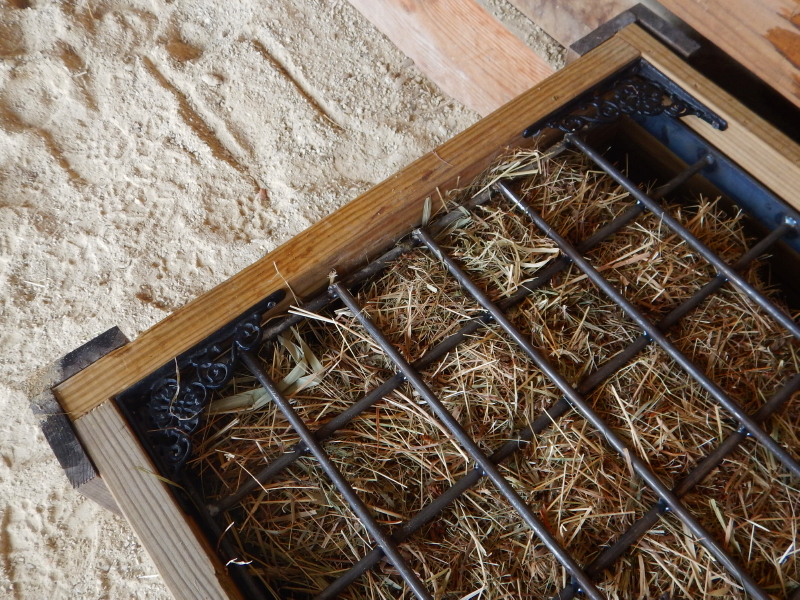
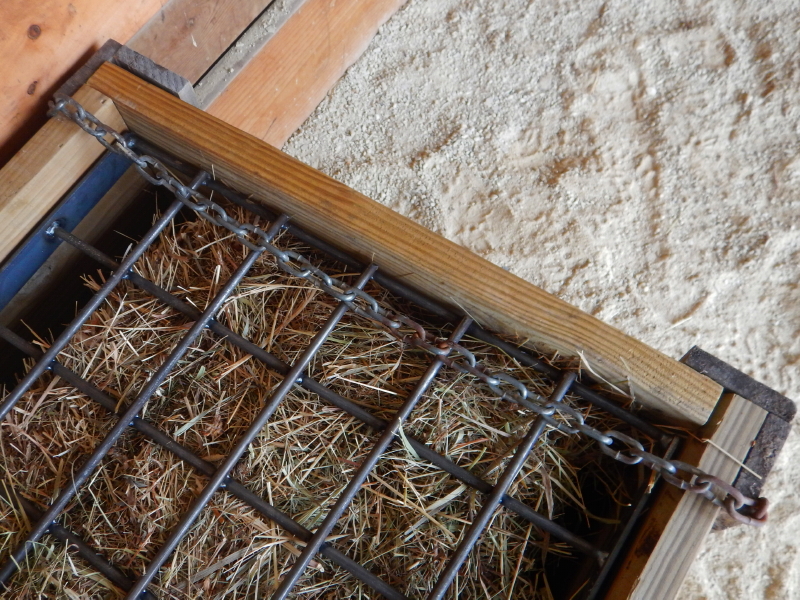
For that reason, I chose cast iron corner pieces as stops to prevent the grate from being lifted out when the horses yank up on it. On the other end, I used a metal chain like the ones that secure our fence gates. This allows quick and easy access to remove the grate, and I figured the familiarity of the chain for them would be a good thing.
I didn’t expect they would chew the iron to bits.
So far, they have only abused one of the two boxes, so I am using the other box to show how it looked with the cast iron corner pieces in place.

And this is what was left when I removed the fragments from the abused box yesterday:
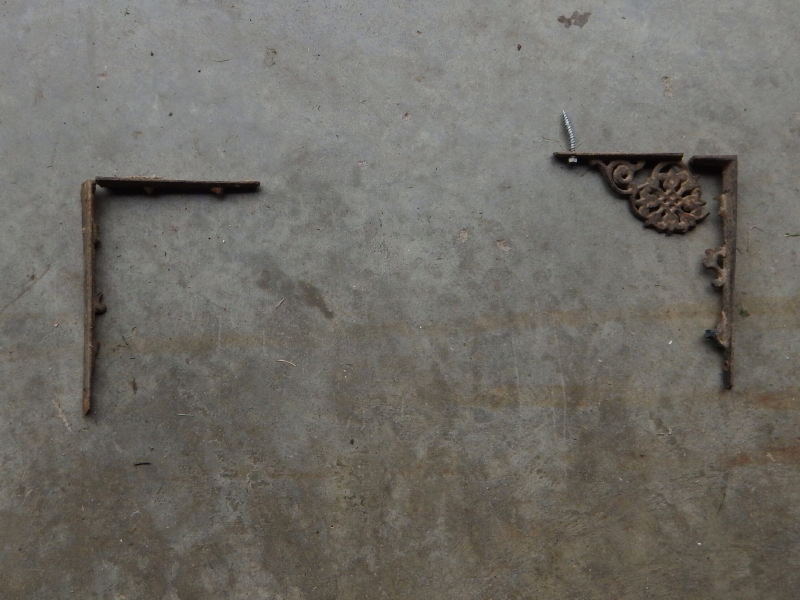
Do you think they are getting enough iron in their diet?
Meanwhile, they have hardly chewed a scratch into the wood of either box.
Based on that, and because wood is easier to replace, I’ve resorted to a much less elegant stop, using two small pieces of scrap plywood.
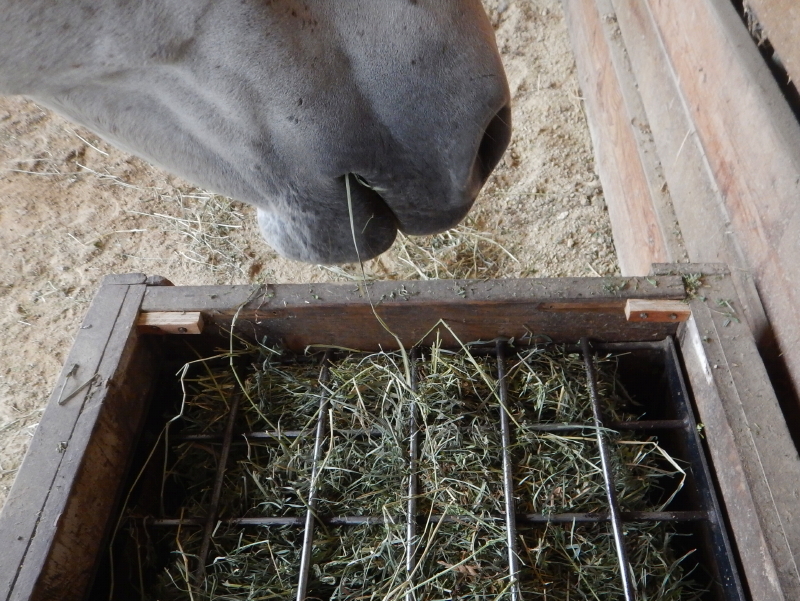
Seems to me to be easy fodder for their teeth to grab, but we’ll see how this goes. Wont’ be the first time they surprise me if they end up leaving them intact.
Just when I think I might be outsmarting them…
.
.
.
.
.
.
.
.
.
.
.
.
.
Slow Feeding
After serving up pans of feed to our four horses, I make sure their slow feeder hay boxes are topped off and ready for the long and cold winter night. They emphatically chomp down the small dose of nutrition provided in the pellets and then move directly to the hay to fuel their internal furnaces against the sub-zero chill.
Last night the evening was so serene I paused with them and recorded the scene.
The slow feeders are a great success for us. Especially when we fill them with hay the horses like.
.
.
.
.
.
.
.
.
.
.
.
Disappearing Delilah
My inability to master the art of dog training is revealed in our lovely canine’s increasing confidence in behaving any way she pleases. Just two days ago, I was lamenting our failure thus far to stop Delilah’s behavior of jumping up on people engaged in hugs during greetings or departures.
She just wants to participate in the hugs, of course, but her nails on unprepared backsides are not something we feel our guests should have to deal with when they are otherwise occupied. Both Cyndie and I recognize that we have failed to gain the upper hand on demanding compliance with our instructions. The formula of training by way of rewarding good behavior, as opposed to a focus on punishing bad behavior, evades us when it comes to the current challenges.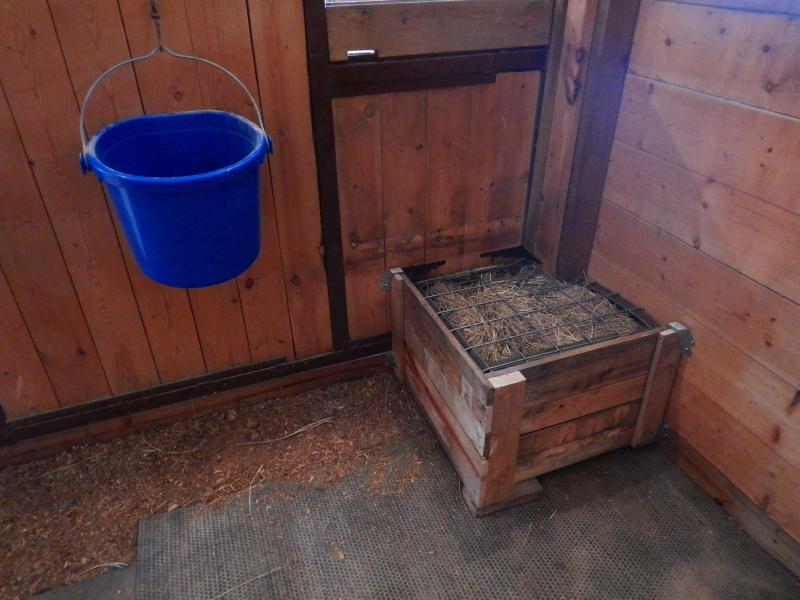
Cyndie has been doing a heroic effort of conditioning Delilah to stay close to us when we allow her the freedom of being off-leash, frequently calling her back for check-ins and rewarding her with treats when she promptly complies. It had been working well for quite some time, until I distracted Cyndie in the barn yesterday when I sought her assistance installing my first half-sized slow-feeder box in Cayenne’s stall.
That brief period of our distraction from Delilah’s whereabouts led to the hunter girl wandering off in search of irresistible prey beyond the borders of our property. Cyndie didn’t want to give up without a fight and scoured our trails, blowing her whistle and calling Delilah’s name.
She even drove the truck in a search of the roadways immediately surrounding us. The only thing that came out of that effort was a texted greeting from George, after he saw her drive past their place. Once again, Delilah was in the “dog house” with us. From past experience, I knew our dog would eventually show up at one of the doors, happy as could be, covered in burrs, and clueless to the level of transgression she had pulled off.
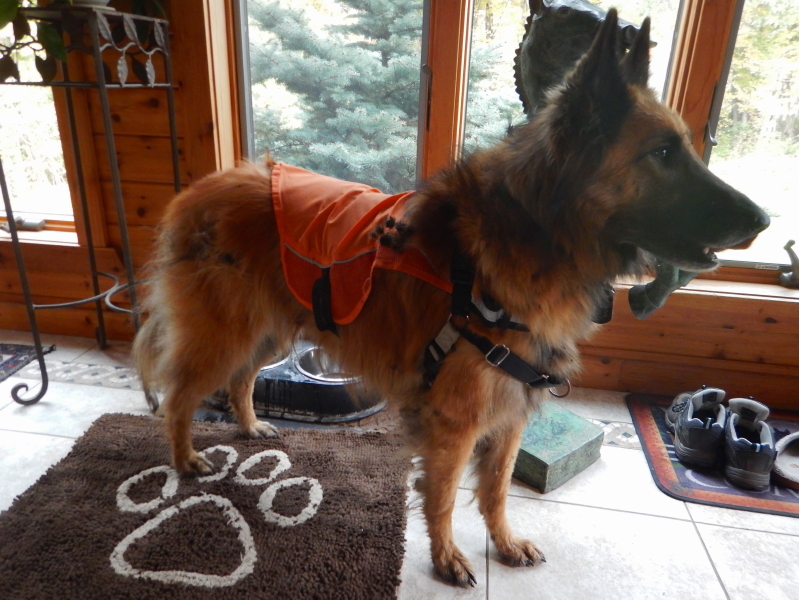
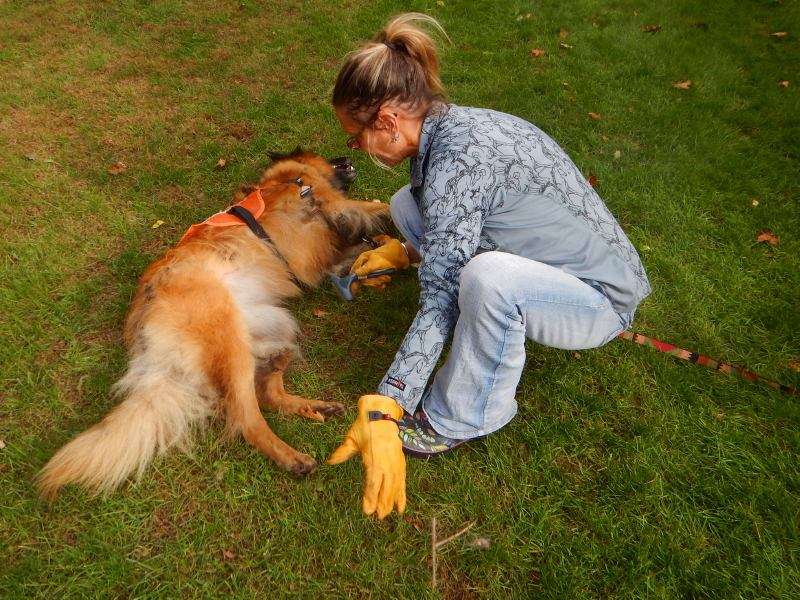
After a long spell, just as I expected, Delilah did return home. We treated her matter of factly, allowing her a long drink at her water bowl, after which, Cyndie took her outside to remove the burrs.
 .
.
.
.
.
.
.
.
.
I don’t know how, but she seemed to recognize our displeasure. Her behavior for the rest of the day and evening was akin to her having put herself on a “time-out” all on her own. She didn’t demonstrate any of her usual playful behaviors, repeatedly seeking attention by bringing a ball or other toy to us, or simply walking up and putting her head in our laps.
She demurely laid low the whole time. I can only hope she was using that time to think about what she had done wrong, and was feeling entirely remorseful. Sadly, the other possibility is that she was just so exhausted from having had such a fantastic getaway that she needed the rest and was saving up her energy for the next opportunity to do it over again.
Trust me, she is back on full-time leash protocol again, and will be for the foreseeable future, whether she understands the correlation, or not.
.
.
.
.
.
.
.
.
.
.
Making Prototypes
Despite the time squeeze of trying to be in two places at once, filling in for two different vacationing people, I found a way to occupy Delilah by taking her to the shop for a distraction while I tinkered on prototyping a design for grates that I can use for slow feeder boxes in the barn stalls.
 She seemed to appreciate the chance to be out of the house with me, despite the confines of her leash. I decided that while Cyndie is away, I will only allow Delilah off leash if I am able to give her my undivided attention, like when I am throwing discs for her to make spectacular diving leaps toward, or flinging squeaky tennis balls great distances for her to sprint after.
Before Cyndie left for the coast, she picked up some fence panels from Tractor Supply for me to make my own grates. As nice as the ones are that I had a local welder make for the two full-size boxes I built, they were a bit pricey.
The first challenge I am facing is finding a way to add some weight to the grates. The custom welded ones are made of heavier rod and also have side plates that give it a desirable heft, so it lays firmly against the bale. The horses can pretty much ignore it and concentrate on nibbling the hay between the squares. The weight helps the grate to keep dropping as the hay is consumed.
The fence panel is made of lighter gauge wire and I fear without added weight it wouldn’t tend to fall as naturally, and the horses might become inclined to mess with it when it got hung up. They have a knack for eating down on one side at a time so that the grate can end up tilted dramatically.
One thing I am considering for the stalls is that there will be no sharing. It will be one horse only that will be grazing hay, so there won’t be mixed behavior. Whatever eating tendency each horse has will define how the slow feeder works in each case.
My first shot at adding something akin to the side plates on the welded grates, was to attach a section of an old T-post that I cut to length on the band saw. By snipping off a section of fence panel so there were end wires extending beyond the area that will cover the hay, I was able to bend them over to capture the post.
In terms of weight, I think it will work adequately for what I want it to do, but I didn’t end up with the exact dimensions I had in mind. Turns out the fence panel wasn’t welded to exacting specifications. The dimension between squares varies, so I will cut another one a whole square larger and take a second stab at a method of bending the sides around a section of post.
I want it to cover an area as wide as a bale, to make it easy to fill the box with full flakes and then drop on the grate and secure it. Speaking of easy, the horses will mainly be in the barn when it is below-zero, so I’m trying to design the box so it will be possible to fill it when wearing big mittens.
That is, in case we ever again experience any below-zero days, what with the planet simmering away at a record pace now days.
.
.
.
.
.
.
.
.
.
.
.
Hay Games
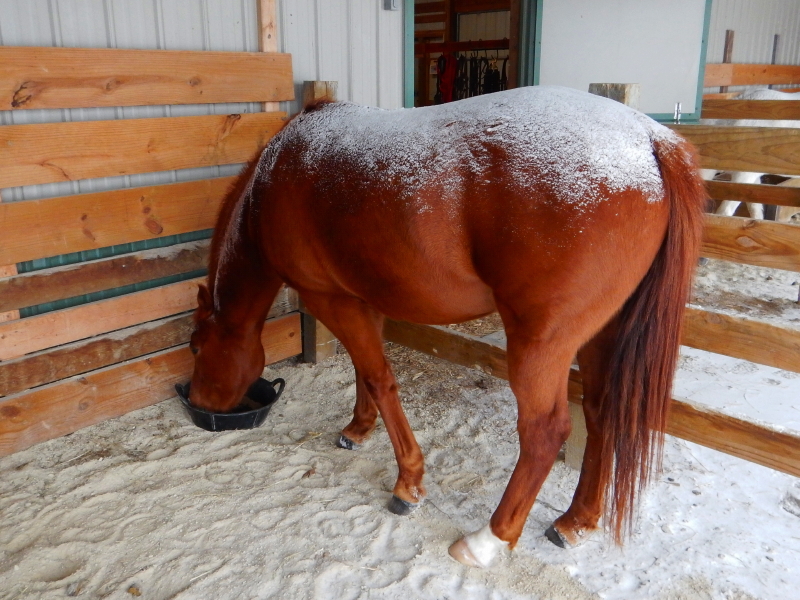 February has arrived right on schedule, showing up with a new frosting of snow for us. The horses have been doing just fine without blankets, but that meant this morning they are wearing blankets of snow that make them look like powdered sugar treats.
Makes them down right irresistible.
Until I find they have been behaving badly. I don’t know if it was intentionally malicious or just bad planning, but somebody’s butt dropped a pile of nuggets into one of the slow-feeder boxes overnight.

.
I bet they can identify who the culprit is. Wonder if they chastise the offender. What would we say to a member of our family who contaminated our food? I think that person would catch a lot of flack.
We’ve got something of a new routine going for serving up the daily hay. Even though the slow-feeders are working like a dream, there is no denying a horse’s love of eating freely out in the open.
I have placed the feeder boxes beneath the overhang to keep the hay protected from precipitation. It is pretty clear the horses would prefer being out from under that roof.
Recently, I had cleaned out the bottom of both boxes of dusty remains and decided to dump it on the ground beneath the willow tree. Since Hunter, the youngest and lowest in the herd hierarchy, usually has to wait for a turn at the slow-feeder boxes, he came right down and started nosing around in the scraps I had dumped.
That got the attention of one of the other chestnuts and they left the box to come down and make sure he wasn’t getting a better deal. Soon the three chestnuts were doing a comical slow dance of rotation as they moved from the ground below and the box above.
The next time I was filling the boxes, I decided to throw Hunter a bone and dropped a whole flake under the tree for him. Oddly, it is right next to the old feeder, but they like the hay down low so much better, and I was still of a mind to move their focus away from the old feeders to the new slow boxes, so I am completely ignoring them.
Our hopes with the old feeder was to keep hay off the ground where it gets trampled, peed and pooped on, so as to reduce waste. That didn’t really work as imagined, because they still spilled a whole bunch anyway. 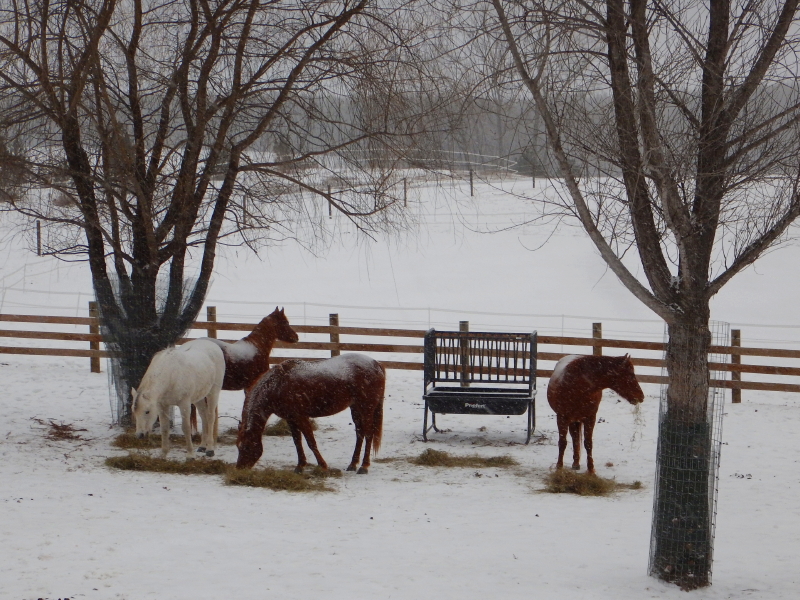 Now with the new boxes, waste has been greatly minimized, and it is starting to feel like we enough hay that such a loss factor is hardly a concern.
Since one of the boxes had been soiled this morning, I threw out several flakes for them while I cleaned up and refilled the boxes. All four of them were quick to show me they much prefered the unobstructed ground-hay under the tree.
Sure, until one of them goes and poops on it.
.
.
.
.
.
.
.
.
.
.
.
Slow Hay
I want to chronicle my project to get slow-feeders for providing hay to our horses, especially since my initial intent was to buy feed boxes because I didn’t want to build them myself. It didn’t quite work out that way in the end. I searched online and found most images were of home-made versions. One site offered to sell a set of plans to build your own. I opted to order a plastic box that most closely matched a version that appealed to me.
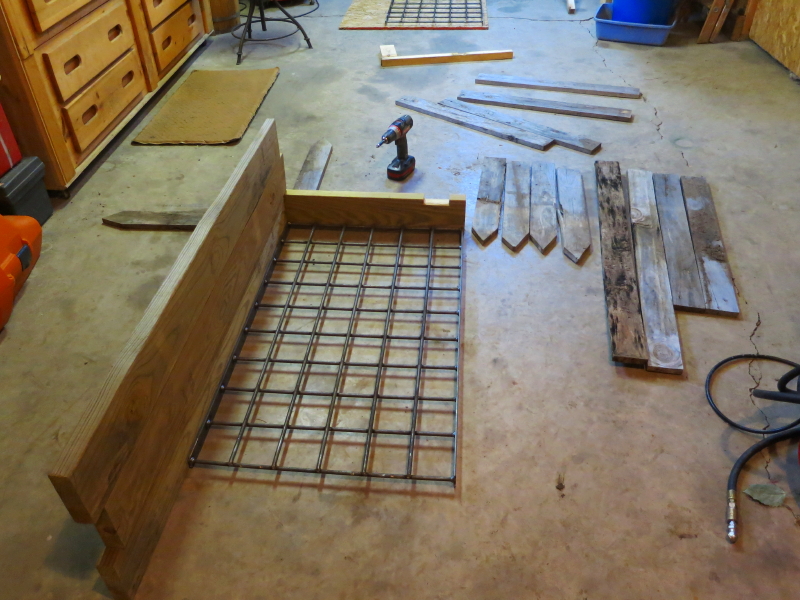
As I described in an earlier post, that online order flopped and I got my money back. I gave in and decided to try making two of them myself, based on the images of others that I liked. What primarily inspired me to follow through was an introduction to a local welder who said he could make custom grates to my specifications.

 .
.
.
.
.
.
.
.
.
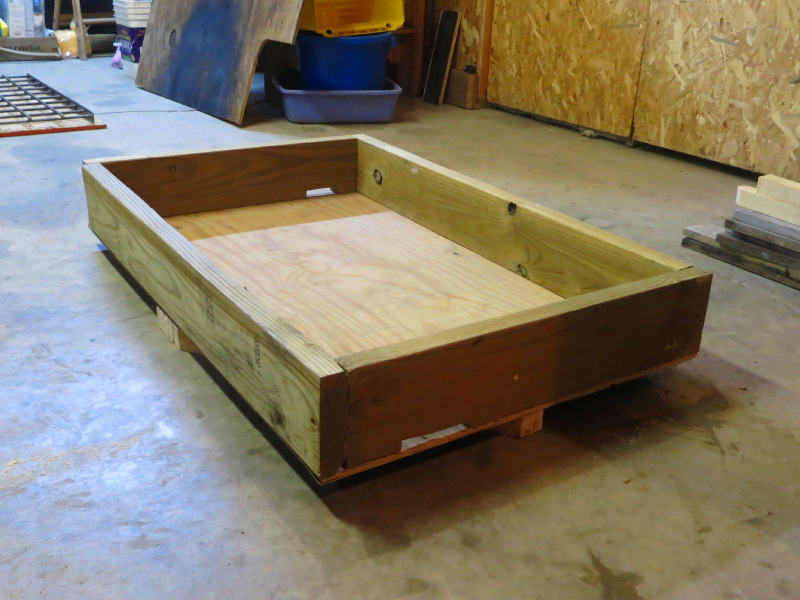
I had him make two. It wasn’t cheap, but since I planned to use materials I already had lying around to build the boxes, I would still be able to do it myself for a third of what it cost to buy them. I used plywood for a base and 2×6 boards for sides on the first box. The second box ended up being a combination of plywood and boards for the sides. I had a bunch of 1×1 lumber that I played with to brace the bottom and lift the base off the ground.
 .
.
.
.
.
.
.
.
.
To prevent the horses from lifting the grate out of the box, I added iron corner pieces on one end and a chain on the other. The horses are comfortable with the chain because it is what we use to secure all our gates. To add hay, I unhook the chain and the grate comes out easily. I added handles on each end to make it easy to pick up and turn over to remove the hay dust that accumulates in the bottom. I thought about using slots on the ends to sweep out debris, but it ended up being easier to just tip the box and dump it out.
 .
.
.
.
.
.
.
.
.
It has been working well for us to add flakes as needed, instead of trying to always fit a full bale beneath the grate. We basically just fill it so the grate is up to the top. As they eat, it drops as the level of hay goes down. Sometimes they eat all of one end first and the grate ends up at quite an angle, but mostly they eat it fast enough that I find the grate almost level and near the bottom by morning. Best of all, they are eating every bit of the hay, instead of tossing it on the ground.

 .
.
.
.
.
.
.
.
.
I am particularly thrilled with how well it works to mimic natural grazing. The horses nibble to get a bite and then pull it out between the grate squares and munch away. Their heads are down, as opposed to the other feeders we have that hold the hay up at their standing head level. Those feeders allow the horses to push their noses deep to get at some morsel of a bite they want, and then they can toss their head and flip the hay they passed up onto the ground. The slow-feeder grate only lets them get a modest mouth-full of a bite and they need to tear it out with a motion that is identical to how they naturally break off bites of grass.

 .
.
.
.
.
.
.
.
.
Our horses have proved to me that they can eat together, two at a box, but I often have found them taking turns. I think it is part of their hierarchy playing out. When all four had 360° access to the old feeders, they would do this dance of moving each other around all the time. The new set up makes it easier to force a subordinate horse to wait its turn, instead.
I am absolutely thrilled that the horses have adapted to this new method of being fed hay, and that my (begrudgingly) homemade boxes are performing as I hoped they would. It is working so well, I am contemplating how I will adapt the design to work in a corner of their stalls in the barn. It all starts with the grate, and I’m thinking about testing a cheaper option than the custom welded solution, because this time, I will need 4 of them.
.
.
.
.
.
.
.
.
.
.
Reclaiming Routine
 We are mostly back to our Wintervale routine again. The horses are grazing hay from the slow feeder boxes as if that is the way they have always done it. I’ve noticed that Dezirea and Legacy have no problem sharing a box and eating together, while Cayenne eats alone and Hunter appears the odd horse out. I don’t know whether she is forcing the situation or he is choosing this on his own. He eventually takes a turn, but waits for his opening.
For the time being, we are electing to let their herd behavior play out. Cyndie mentioned yesterday that she wants to get back out there as soon as her strength dictates to work on refining their manners. The horses have probably had a bit too much autonomy while she has been out of the game.
Yesterday we drove back to the cities (again) for her 6-week follow-up appointment with the surgeon who performed her hip replacement. I have a suspicion that he tells many of his patients this, but we are happy nonetheless that he said he wishes all his hip surgeries looked as “tight” as this one. He also seemed extremely pleased with the appearance of the healing incision.
Cyndie reported that she experienced the biggest boost from simply reading the physical therapy order written by the doctor’s assistant, which said, “Prognosis for full recovery: Excellent.“
The surgeon wants Cyndie to remain cautious for another 6 weeks to give her body every opportunity to grow around the artificial joint with a goal of avoiding any dislocations for a good 30 years on. She is cleared to drive and hopes to return to work on Monday. We spent time waiting at the Minnesota DMV to pick up the disability parking tag authorized by her doctor, only to learn we needed to get it from Wisconsin.
Then we were able to spend a bit more time waiting at the Wisconsin DMV office. They told her it was the craziest day with the most people they had ever served, and were short staff due to it being the day after a holiday. Luckily, and contrary to the all too frequently faced reality, Cyndie was greeted by an exceptionally pleasant and helpful clerk who shared these details while taking time to phone Cyndie’s doctor for information that was missing from the form.
Seriously! He didn’t send her off to fill out the form properly and come back at a later time. And at the end of a day that was their busiest ever.
Could this be the kind of benefit one experiences when they have sent love to those around them? We like to think so.
.
.
.
.
.
.
.
.
.
Design Issues
While our temperatures are above freezing, the horses are tolerating the sloppy conditions just fine. They seem to have no problem with the lime screenings we added as new ground cover in their paddock. 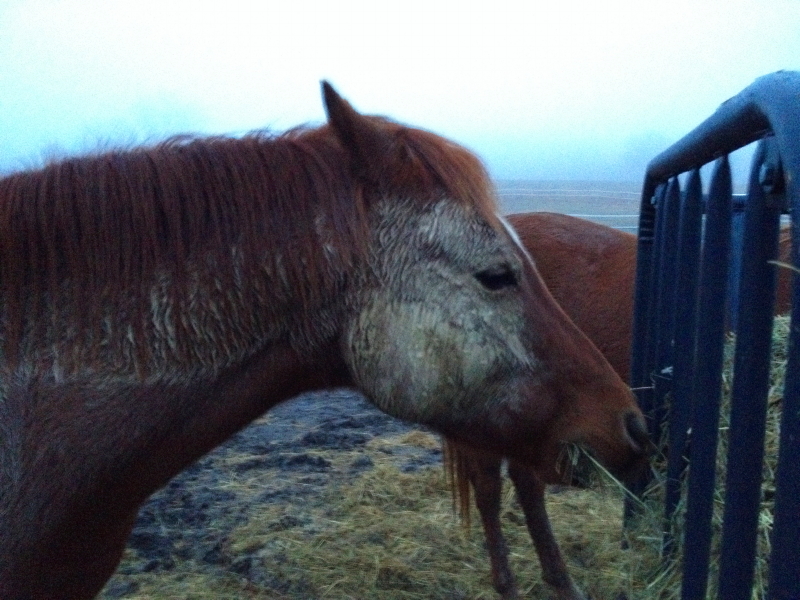 When I went down to feed them in the late afternoon yesterday, I found that Hunter had laid down in the wet screenings and painted his entire side and face with them. Looks like he is getting a spa mud bath. It’s no surprise that it’s him, out of all the horses. He has a history of putting on mud masks since he arrived here.
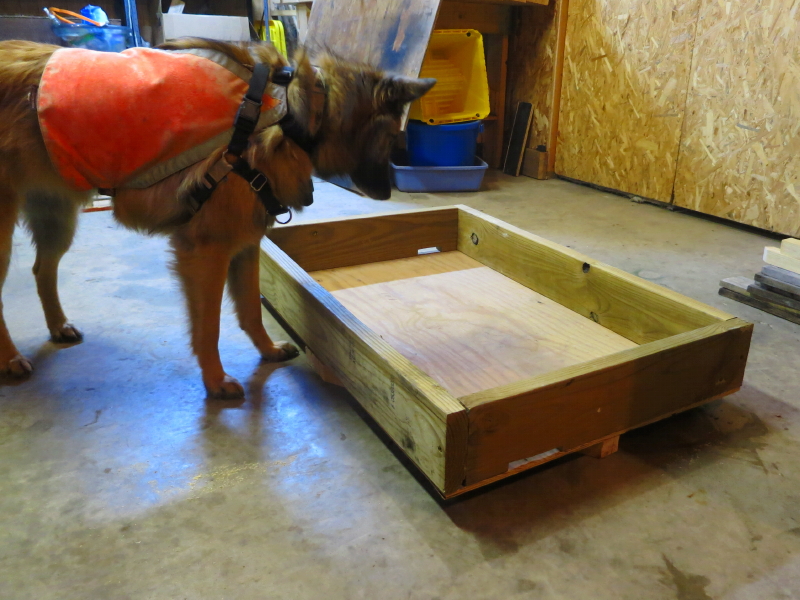
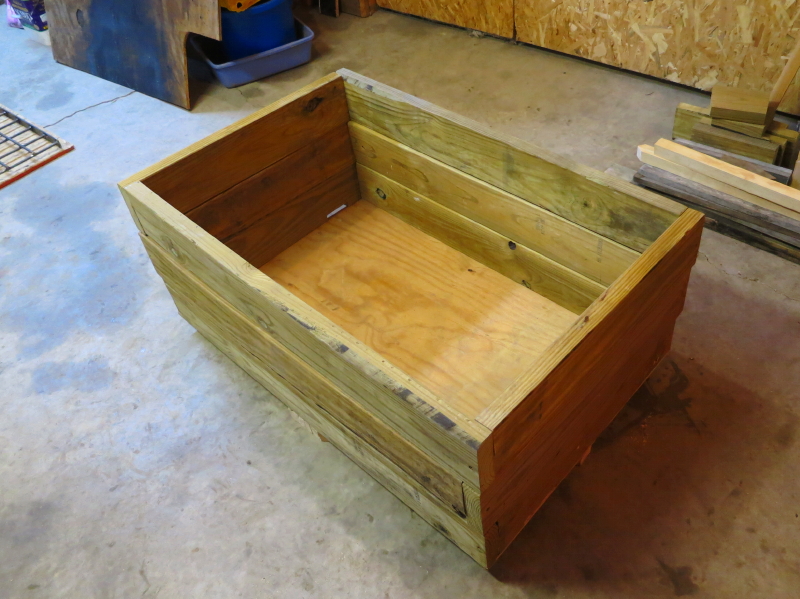
I’m happy to report that they are making good headway on the bale in my slow feeder. I’ve decided to stay with the same dimensions for the second box, yet to be built. We will just need to put a bit less than a full bale in when we restock it, and loosen up the flakes before placing the grate on top.
I really should get the second box completed as soon as possible, so all 4 horses can enjoy equal access to the new grazing system. Unfortunately, I don’t have enough wood scraps to use the same exact plan I did on the first box. If I am going to succeed in building both out of materials I already have on hand, I will need to put it together differently. I’m thinking this one might end up with plywood sides instead of the 3 rows of treated 2×6 boards I used for the first box.
 .
.
.
.
.
.
.
.
.
.
.
.
.
.
.
.
.
Slowly Learning
I finished my first slow hay feeder box for our horses yesterday. I wish they had been around when I was placing it under the barn overhang and loading it with hay. The herd was on the far side of the hay-field at the time, happily grazing in the warm winter fog. Later, when the time came for them to come up for the afternoon serving of their feed supplement, surprise sightings of the new box in their space startled the heck out of each one as it came into their view.
If they had been there while I was working on it, they would have been putting their noses all over it in curiosity about what I was up to. I didn’t have time to linger with them, because I had a date planned to get Cyndie to a movie and out grocery shopping for the first time since her surgery. We even ate out at a burger joint to make it feel like a real event. It was a grand success, and she surprised me with her endurance traipsing the food aisles on her feet for the long duration.
I figured the horses might completely avoid the foreign object, but this morning discovered one or more of the brave souls figured out there was hay in there. Overnight there was enough activity to leave scraps on the ground around the box and create divots in the bale beneath the metal grate. Looked to me like one or more of the horses had spent enough time there to get comfortable with it.
We don’t want the horses to become frustrated by this obstructed source of hay, so I will continue to provide it in the existing feeders for now to allow them options. The hope is that this new system will be easy enough for the horses to accept as a pleasing source of grazing that is always available to them.
In that regard, I felt there was something wrong with my method after inspecting the results of their progress after one night. It appeared they were only able to make limited headway into the bale, leaving the grate resting high on spots they hadn’t pulled apart. My initial intuition was that I had designed the whole thing wrong, based on the bale positioned with the cut edge to the side.
If I turn the bale 90° so that cut edge is up, it resembles the appearance of growing grass. The ends all point up. It will be easier for them to pull a bite from between the squares, and the grate will be more inclined to drop down as they consume the bale. It seemed to me that would be less frustrating for them. So I tried it.
 I immediately discovered a problem in that the bales aren’t symmetrical. When dropped in there on its side, the bale is too tall for the box! Back to the drawing board. That is why I only built one to start. I laid the grate on top and stood there for a while as Legacy took to the sideways bale right away. Eventually Cayenne joined him and they seemed to be having a fine time with it, until the loose grate laying on top suddenly shifted as she pulled aggressively at a bite. It banged the wall and they bolted away in a panic.
The thing is, I may be jumping the gun. I have a couple of thoughts about it now, after giving it some time. I don’t know for sure that the first way wouldn’t work, given enough time. Also, I put an entire bale in there, and maybe it was too tight that way. If there was just a portion of a bale, maybe they could make better headway.
I’m not sure how I will proceed. Maybe if I give them more time, they will teach me what to do. I am slowly learning.
.
.
.
.
.
.
.
.
.
.
.
Coming Home
Cyndie will be coming home from the hospital today! All the small rugs have been removed from the floors and I’ve cleaned away unnecessary clutter in preparation for her return. I’m heading to the hospital early and hope to have her home by noon. She’ll need to negotiate three steps to get into the house, but then she should have minimal hazards for life on our main floor. I haven’t been able to eliminate all hazards. For instance, Delilah will be so excited to see Cyndie that she will want to jump all over her.
I will be happy to have her home, but not quite as excited as Delilah. I had a couple of days of free sailing with Cyndie receiving full-time care at the hospital. With her home, I become the person responsible for her care, in addition to my other duties maintaining our property and tending to the animals. Luckily, I will have some occasional support from Cyndie’s mom and maybe even a home-healthcare nurse who can check on how the incision is healing.
Any amount of time I can safely be out of the house will now be spent constructing a couple of slow feeder boxes. Yesterday, I picked up the grates from “my welder.” They look just like what I was hoping to get. They should, since they were custom-built to my specifications.
At the rate the horses have been dumping hay all over the ground around the present feeders, I feel a strong urge to get these boxes built as quickly as possible. I sure hope my plan to scrounge enough wood for two boxes will work out.
For all those times I have saved leftover lumber at the end of a project, it would be nice to finally experience some justification for the practice, and actually find a productive use for it.
.
.
.
.
.
.
.
.
.
.
.
.
.


 Relative Something