Posts Tagged ‘pruning’
Vines Again
While walking through the woods yesterday with Cyndie and Asher, we decided to knock down as many of the broken and tipped trees and branches as we could reach and deal with using my pruning saw. Inadvertently, that ended up including freeing up some trees from the grip of vines as we came upon them. For as much energy we have put toward de-vining our trees over the years, it continues to surprise me to find how many we must have overlooked. In addition to that, there are plenty where vines were cut out previously but have resprouted, requiring another round of attempted eradication.
One common vine we have seen many times in the middle of the fully shaded woods grabs a firm hold on the bark and has a very impressive web of roots tangling great lengths across the forest floor.
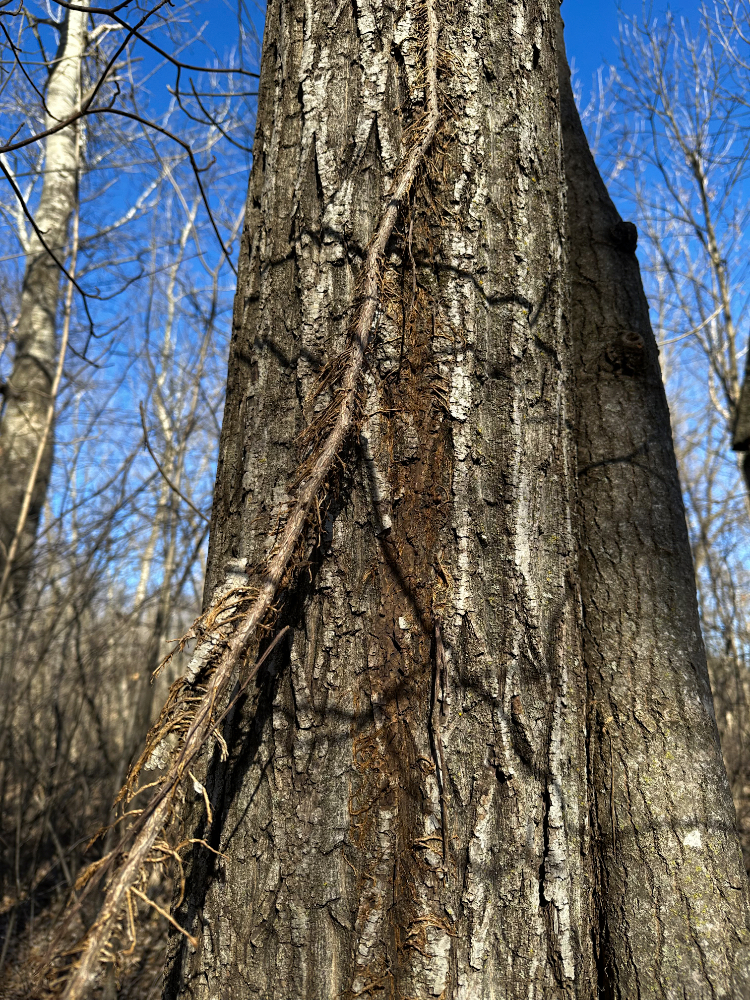
Out of curiosity, I did some image searches for similar-looking vines on tree trunks, and to my surprise, the most common and repeated match identified it as poison ivy. Oops. Really?
I have a pretty good handle on identifying the three leaves of poison ivy plants and have never seen any greenery on these hairy vines on the trees, so I never connected the two. Also, I have never experienced a rash outbreak after messing with the vines in the woods, which surprises me since I react pretty easily when having contact with the low-growing plants in the sunny expanses around our property.
I consider myself lucky and will be giving these vines in the woods a little more respect when coming across them in the future. I will definitely be looking more closely for signs of the telltale leaves in the woods during the growing season.
Part of the problem probably stems from the fact that we don’t see very far into the thick woods off the trail during the growing season, and there are so many green leaves that we’re less likely to spot poison ivy leaves among all the others. Out on the edges where it grows in the sun, it is very easy to see.
While standing in the middle of a section of the woods off-trail yesterday, I spotted a curious pattern of young hornbeam (also called ironwood) trees that had sprouted around the trunk of a large poplar tree.
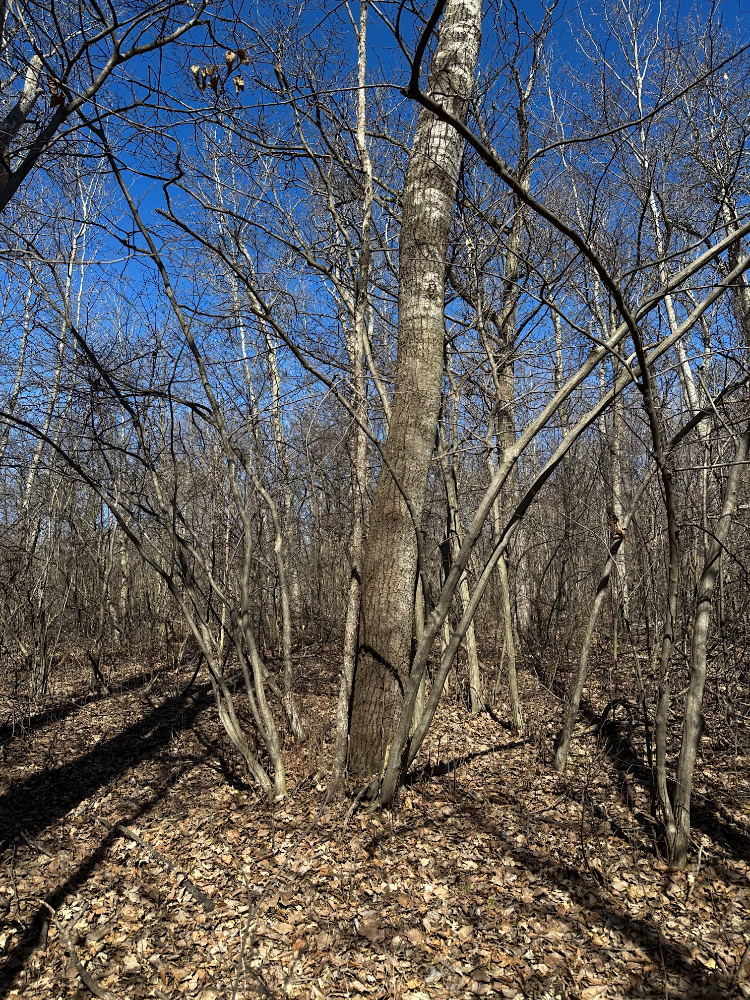
I am curious what led to this arrangement. The way the hornbeam trees are growing in something of a circle mimics the pattern of new growth after we cut down a tree, and the energy stored in the roots sends up a ring of new shoots around its circumference. Could something like that have happened here, and the poplar (a much faster-growing tree) just happened to emerge in the middle of them? I don’t really know what else to think, given my lack of education in the intricacies of tree species and their growth. Whatever, it is certainly an interesting sight.
Much more common and easy to identify are the numerous grapevines sprouting up from almost everywhere, but especially from places where we have cut them out before. That plant is VERY good at spouting new life from any fragments left in contact with the ground.
This time of year, before any leaves have sprouted open, is prime time for us to do vine hunting… again.
.
.
Overgrown Shrubs
We took the plunge yesterday and began cutting down a thicket of Nannyberry Viburnum bushes behind Cyndie’s perennial garden. Neither of us is a fan of the funky smell nannyberry bushes give off when cut, so the work is stinky but the results are rewarding.
We also decided to remove the stick fence I built as a backdrop for her garden. It had partially collapsed anyway, so removal cleans the area up nicely.
Looking east before we started:
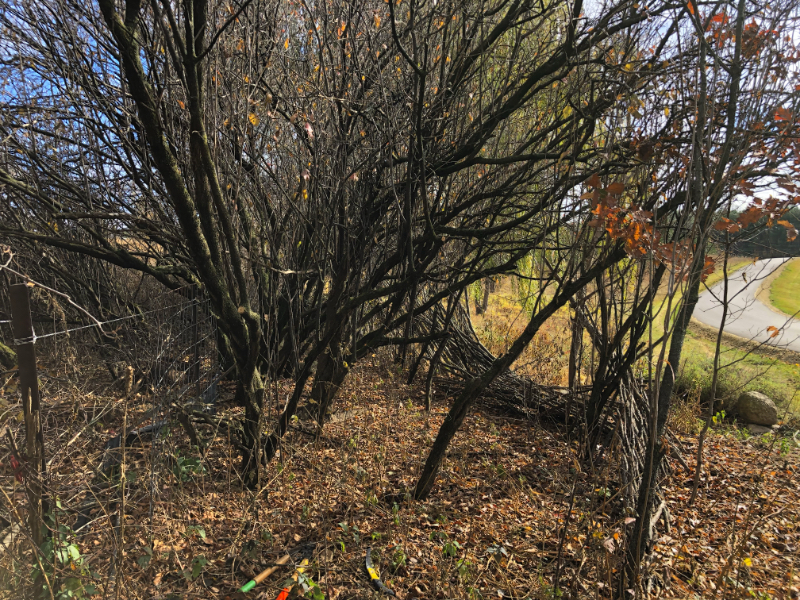
One of the triggers that started this exercise was the discovery of a nice volunteer oak tree that needed to have competition eliminated around it. Since we are currently on a mission to find and protect as many volunteer oak trees as possible that are sprouting all over our property, the obliteration of this stand of nannyberry bushes feels justified.
It’s just a side benefit that this will give me the pathway I always wanted along our property fence line behind her garden.
The view when we stopped cutting for the day:
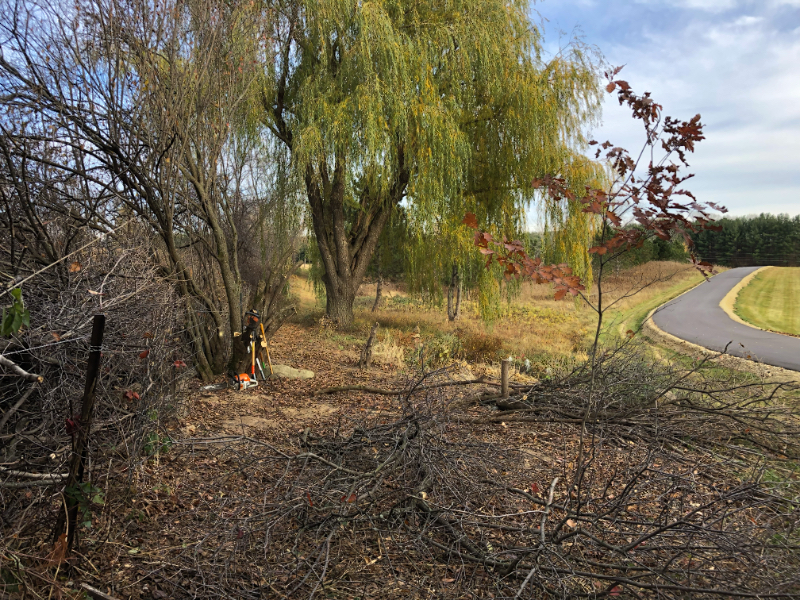
Barely visible in the distance beyond the willow tree is the path of our north loop trail that currently turns to pass in front of the garden and leads to the driveway. That option will remain because it also leads toward the barn on the other side of the driveway and we are often coming from that direction to feed the horses after walking Delilah.
Soon there will be the additional option of continuing straight and walking behind the willow tree and perennial garden on the way to the back side of the shop garage.
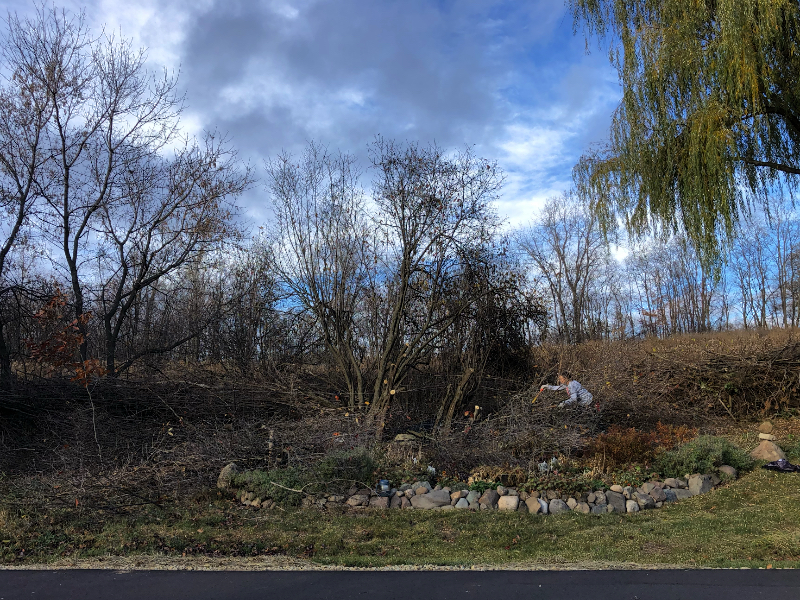
We are prepared for the area to look ridiculous for a while, like a fresh haircut that needs time before it looks and feels like what we originally had in mind. I may consider reinstalling some leaning branch ( ////// ) fencing again in the vicinity of the garden if the change ends up looking a little too over-pruned.
At least the little oak tree stands out now without all the other branches blocking its air space.
There remains a fair amount of cutting to be done to remove the last of the nannyberry behind the garden. I’m hoping nothing interrupts our plan for today to continue what we started. The sooner we complete this section, the sooner I can turn around and go the other way, cutting out the untamed growth between the garden and the shop garage.
.
.
Danger Zone
Green growth is bursting at breakneck speed everywhere we turn this time of year. As much as I dream of letting nature have its way to grow unhindered, experience reveals a number of ways intervention offers room for improvement. Pruning becomes a responsibility, really, to offset the alternative look of neglect.
After enlisting the professional help of tree trimmers to prune and fell trees on our 20 acres, I have an endless amount of clean-up to do in their wake. Historically, I have failed to keep up with the felled lumber that hired help has scattered around our forest floor so I am striving to change that this time.
My effort started with the large willow tree that was first on the list of trees needing attention this spring and which got pruned to a much greater degree than I expected.
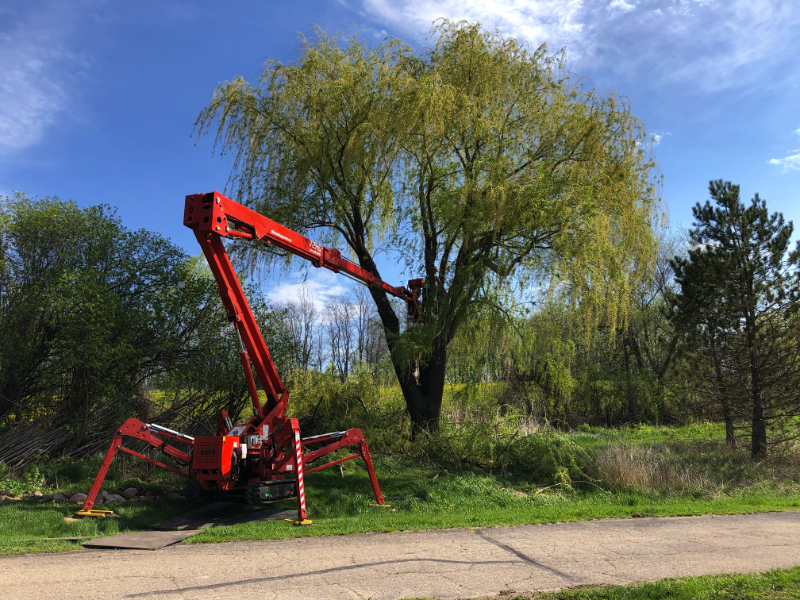
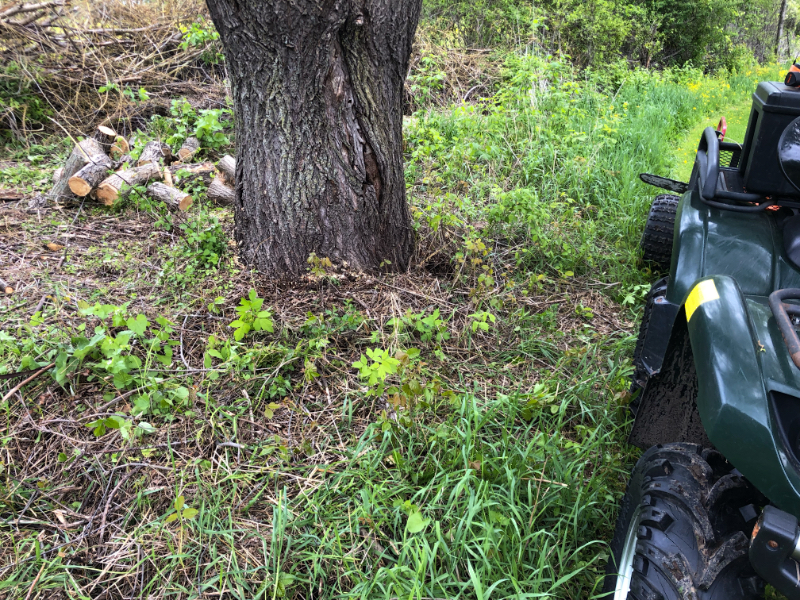
Yesterday, I worked to finish cutting up and splitting the last of the large branches scattered beneath the tree after the pruners were finished. The closer I got to completing the effort of clearing the tangle of branches and limbs laying around the trunk of the tree, the more obvious it became that I was working in a danger zone of poison ivy.
 .
.
.
.
.
.
.
.
.
The shiny leaves of three with a tinge of redness in the early period of sprouting were everywhere beneath this willow. Everything that I picked up had a high probability of having been in contact with the dreaded rash-inducing plants but I was knee-deep and hours long into the project so I decided to just keep going.
With extra consciousness to quit reaching my gloved hands up to my face, I forged ahead cutting, splitting, and stacking limbs in the woodshed for drying.
It felt a little insane to be plodding back and forth in growth that was filled with so much poison ivy but I decided it was a risk I needed to face to complete the bigger task at hand. It feels great to have the ground around the tree entirely picked up after the pruning. Now I only have twenty or thirty others left deserving similar treatment.
Thankfully, there aren’t any others surrounded by as much poison ivy as this willow.
At the end of my many outdoor projects, I carefully got out of my clothes and piled them in the basement to be laundered and then hit the shower with special oil-busting soap that I lathered and lathered in hopes of surviving the danger with minimal reaction.
I can hope that I wasn’t breathing aerosolized particles of the oil during the tree branch cutting and clearing efforts. My body doesn’t have a good history of inhaling the irritating essence of poison ivy.
.
.
Tending Growth
Without firm plans about what we would accomplish yesterday morning, I gassed up the big chainsaw and charged the battery on the hand trimmer chainsaw for a walk through the woods. We had a general goal of bringing down the most obvious trees that have tipped but then got hung up on surrounding limbs, but whatever caught our eyes was fair game.
It’s almost comical at times because Cyndie and I approach things very differently. She is given to focusing on multiple goals simultaneously while I find myself inclined to leave some things for later and head off for the next big tree as she lingers behind to take tending to the next level.
Well off the trail, we came upon two noteworthy finds. It is always surprising to find an isolated old fence post and rusty barbed wire in the middle of the woods.
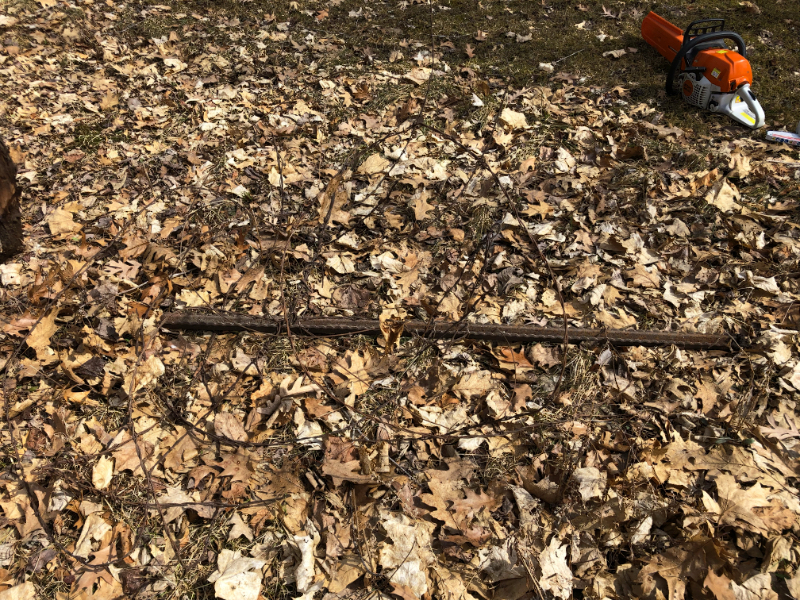
A remarkably thick and fascinatingly curling vine stem was less surprising but equally unwelcome. We pulled it out to save with visions of conjuring some artistic use for it in the future.

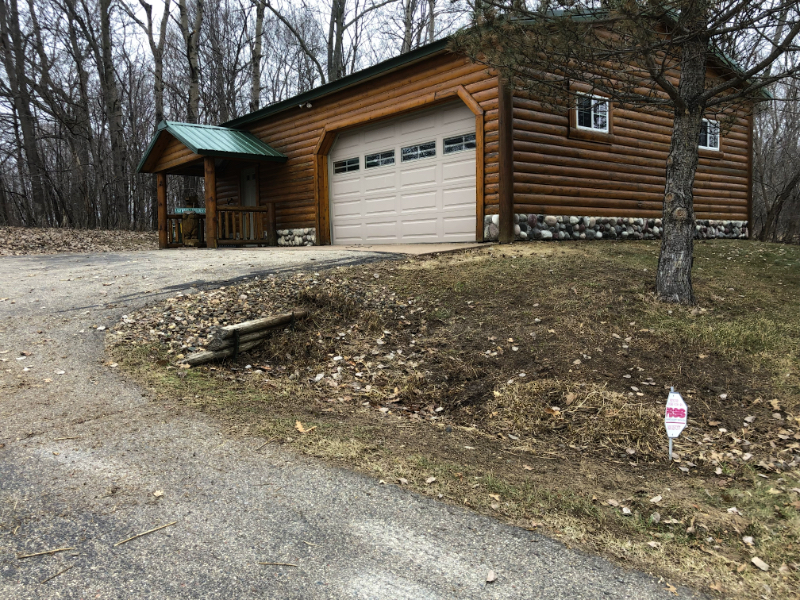
When we emerged from the trees, it was time to tend to the ornamental tall grass up by the shop garage. The old growth gets cut back in early spring. This year we went with an extreme cut in preparation for a plan to try digging into the biggest bundle and dividing it for transplant.

 .
.
.
.
.
.
.
.
.
We don’t even have a plan for where we want to transplant them to next but we’ve got enough options that it will become a challenge to decide where not to add this gorgeous grass. The first challenge will be coping with the bed of rocks the main bundle has grown through.
Good thing I am a patient man.
.
.
Feeling Summer
I like the simple designation of meteorological seasons by month, over the astrological solstice and equinox markers. My brain senses the longest day should mark the middle of summer and the shortest day, the middle of winter. By meteorological reference, summer happens in June, July, and August.
It sure felt like summer on the second day of June this year. Last night, as we tried to cool the house by opening windows to the evening air, the enticing sounds of heavy, distant rumbling thunder rolled slowly closer and closer. Eventually, we enjoyed an almost gentle thunderstorm that this morning has left barely a trace of its visit.
Except for the amazing response of growing things. Our landscape is under siege.
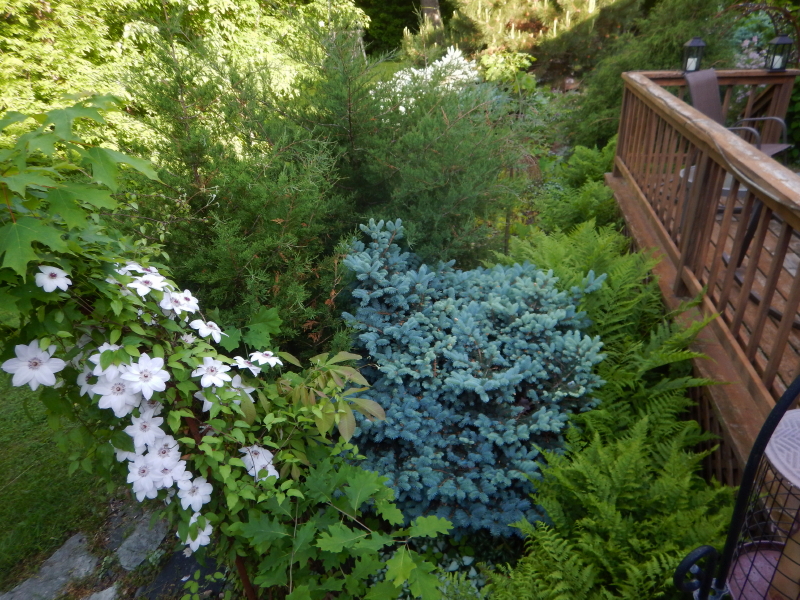
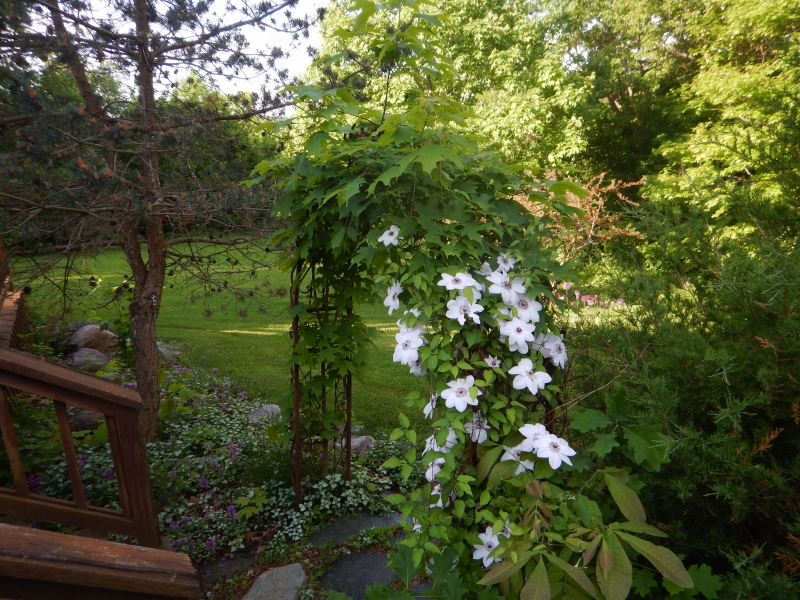
Just beyond our deck, the previous prominent low spruce is getting swallowed by ferns from behind and volunteer cedar trees from the front. The clematis on our trellis is being crowded out by a volunteer maple that decided to make itself at home there.
 .
.
.
.
.
.
.
.
.
I don’t understand why the scotch pine to the left of the trellis is so anemic. Everything around it is growing fast and furious. It is possibly being hindered by the same affliction taking down so many of our long needle pines.
 The ornamental reeds in our little garden pond are spreading themselves well beyond the edges, giving the impression they will soon fill the space if left unhampered.
Meanwhile, the climbing vines are voraciously trying to blanket all of our trees, the unwanted grasses taking over our pastures, and poison ivy is thriving like you wouldn’t believe.
What’s a gardener to do? I tend to prefer a hands-off approach to the nature-scape, but we are finding the land inundated with invasives and trouble-makers that require decisive action. Desirables like maple trees are sprouting in places where they don’t belong, and though prized, will become problems if neglected.
I must overcome my reluctance and sharpen my skills of seek and destroy, or at least aggressively prune, prune, prune.
In the same way we wish broccoli tasted like chocolate, Cyndie and I are wishing the desired plants would simply crowd out weeds to the point all we needed to do would be a little cutting of the grass and lounging in the garden.
All you folks wanting to suggest we get some goats… it is increasingly weighing on my mind. Maybe I will try renting some for a trial run.
There just aren’t enough hours in a day for us to manage the explosion of growth summer brings.
.
.
.
.
.
.
.
.
.
.
.
.
Domesticating Wild
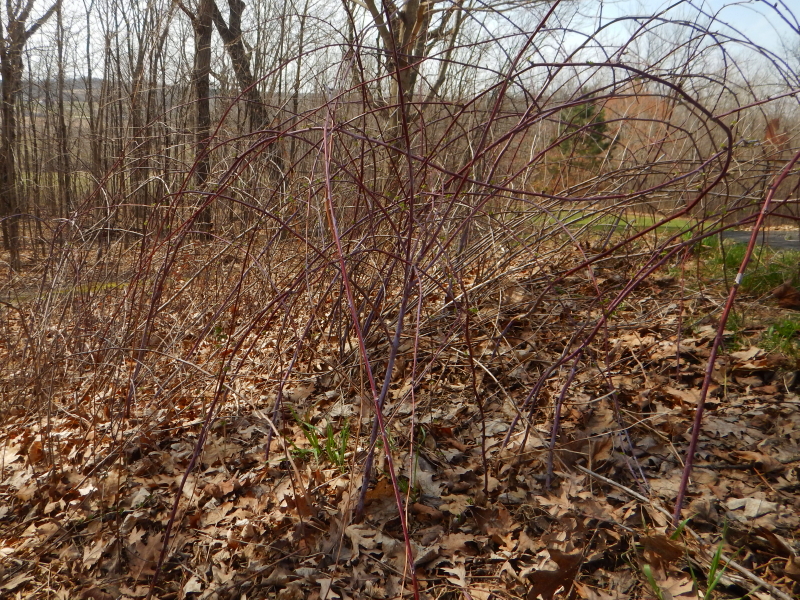
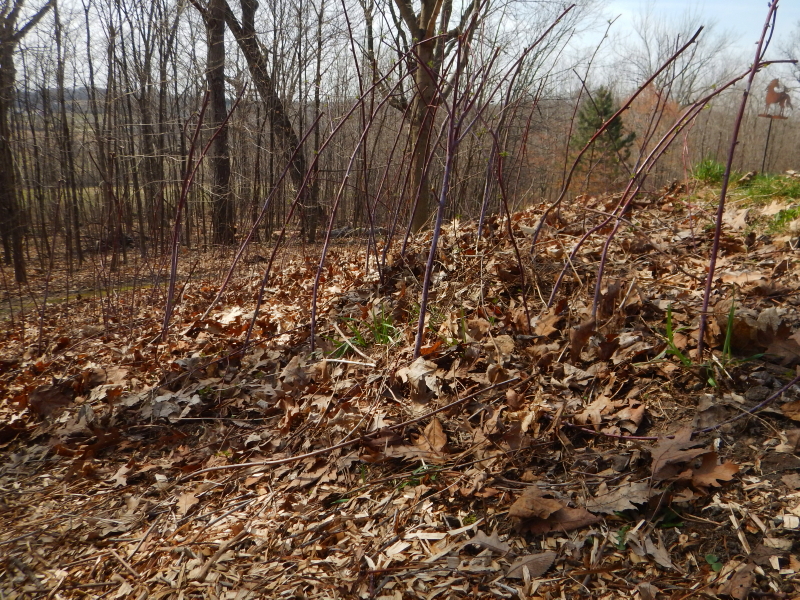
A number of our close advisors have provided insights on what we could do to tame the many wild raspberry patches that thrive on our land. Last weekend we finally made a first pass through the bramble that exists across the driveway from the house.
 .
.
.
.
.
.
.
.
.
In the four previous years since we moved here, we have simply harvested berries from wherever they appear. Some years the bounty was greater than we could keep up with and other years it has seemed a bit off. The hot spots tended to travel from one zone to another in any given season.
Navigating the tangle of thorns to reach fruit in the center of the patches was often difficult and hazardous. Since we never planted any of these wild raspberry bushes to start with, it doesn’t feel like we are risking too much to take a crack at cutting them back in hopes of encouraging some more orderly growth.
There’s no reason to think new patches wouldn’t just sprout up again if we accidentally destroy a current one. That’s the way they got here in the first place, thanks to the birds and nature’s way of doing things.
It seems realistic to me to expect that the trimming we have done may interfere a bit with the potential volume of this summer’s berry crop. Long term though, we think we will be cultivating better conditions for the plants. The ultimate result we are hoping for is improved berry production and a more enjoyable process of picking them.
Raspberry jam, anyone?
.
.
.
.
.
.
.
.
.
.
.
.
Cuttin’ Wood
The weather on Friday started out just right for getting outside and doing some work in the woods. The air temperature was comfortable, and the ground was frozen, so traversing our terrain was clean and dry. I decided to cut some wood.
 There are a lot of standing dead trees awaiting my saw, and plenty of dead branches that could use pruning. I started with our apple tree. There were a couple small branches that were easy to reach with my pole saw, but one fair-sized limb up high enough that I needed to throw a line and use a rope saw.
The apple tree was a treat to cut because it smelled marvelous! It also offered a beautiful visual of enticing rings. Such an artistic depiction of the history of the tree. How can I not spend some time creating something worth keeping out of this? With any luck, hopefully something I would actually finish.
I cranked up the chainsaw and successfully dropped a standing dead butternut tree. It was a great victory for me because I needed to first get a line over a small tree in the way so I could pull it aside to make room for the felling. The butternut fell right where I wanted it.
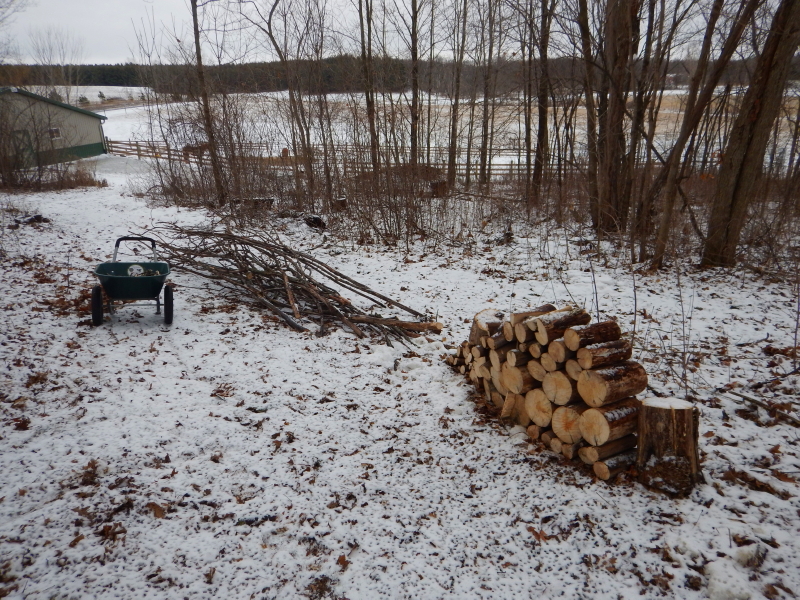 I had barely sliced the trunk into logs when the perfect day turned into a spring-like snow squall. It forced me to gather my gear and hustle indoors. When I got back out there yesterday, the temperature was hovering just above freezing and the wet new snow began to turn the trails into hazardous, muddy slip-slides.
It is time to minimize travel on our trails for a while in the afternoons.
Maybe that will give me a chance to make good progress on a few art projects in the days ahead. Sounds fun!
.
.
.
.
.
.
.
.
.
.
Oh Brother
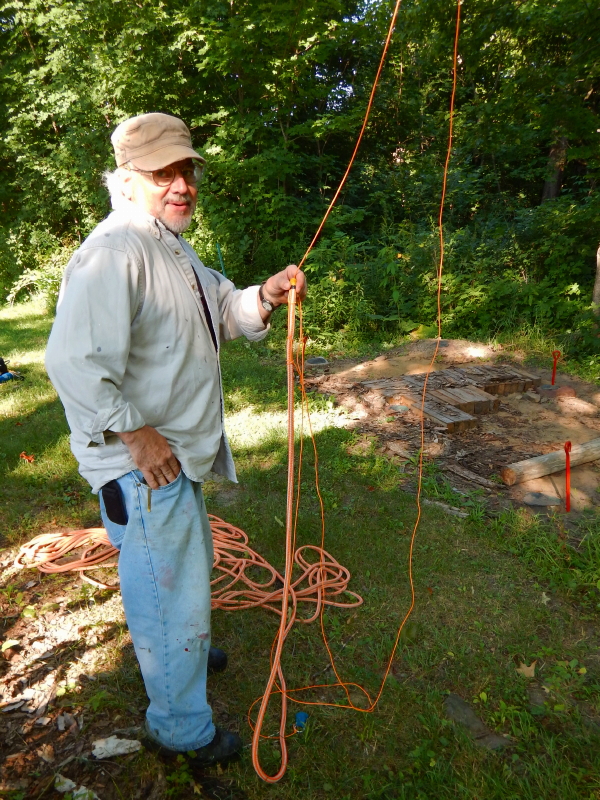
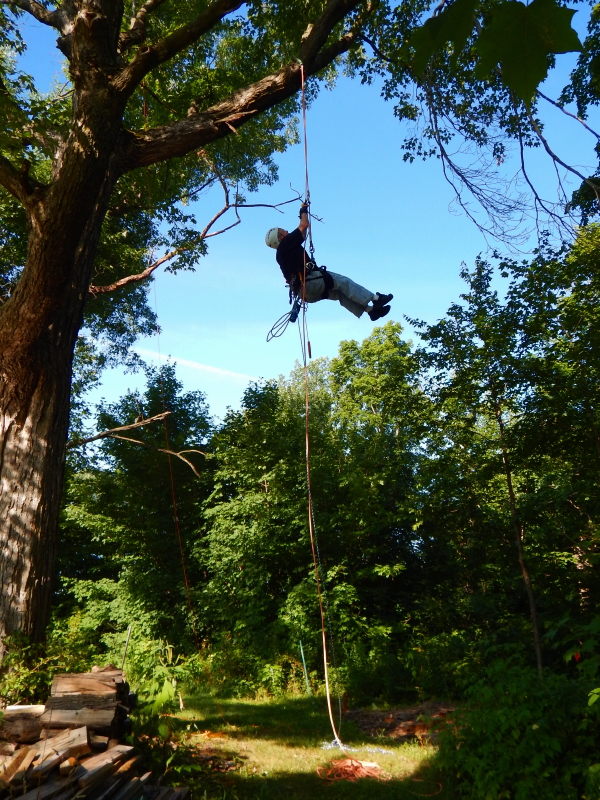
It has been six weeks that I have worked full-time at home in my new role as ranch manager. For me, that is a lot of work days with no one to talk to other than our animals. Yesterday, I got a break from the solitude when my brother, Elliott, showed up with all his tree climbing rigging gear, offering me a day of his services. Not only did I have someone to talk with, but it was family!
Not only was he offering his assistance, he was providing a priceless service of trimming tree branches that were well out of my reach. In particular, one “widow-maker” that had fractured long ago, but still clung to the base of its branch and swung near the location of the wood shed. That one has been bothering me for a long time.
I had originally tried my own crude methods to toss a line into that branch in hopes of snagging it so I could pull it down. I couldn’t get it to let go, so the branch continued to menacingly dangle there.
 .
.
.
.
.
.
.
.
.
.
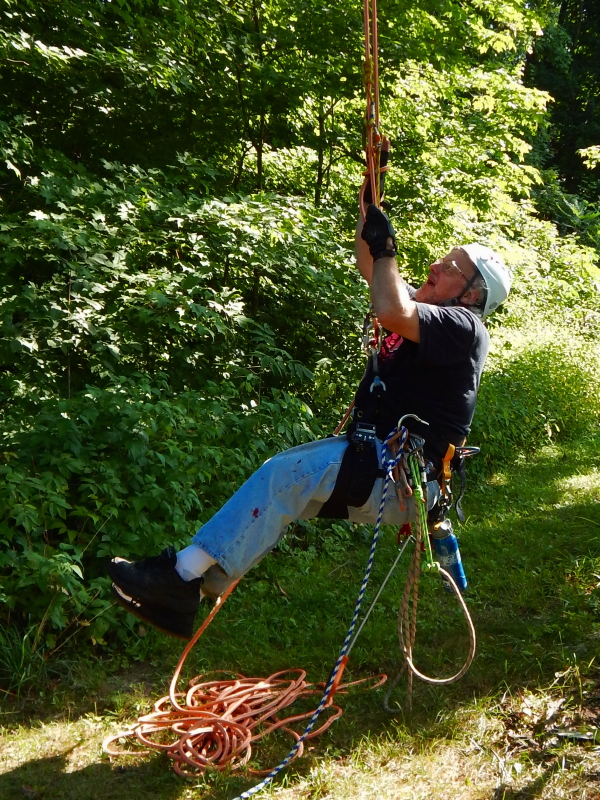
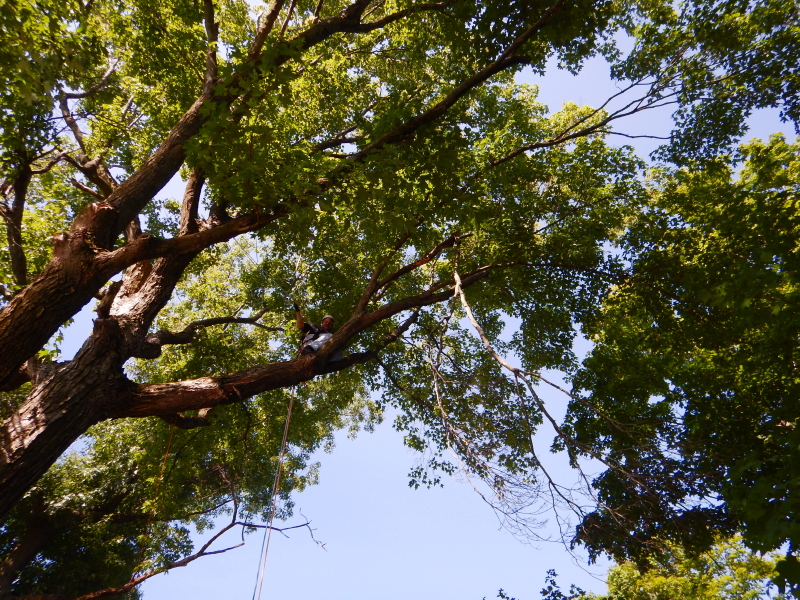
It was an incredible treat to watch my brother work. I had no idea it was possible to toss a line as high into a tree as he did, and successfully drop it down on the other side of a limb. Seeing him pull himself up made my arms tired just watching. Actually, after a while my neck muscles were complaining about how much time I spent with my head tipped back, looking straight up.
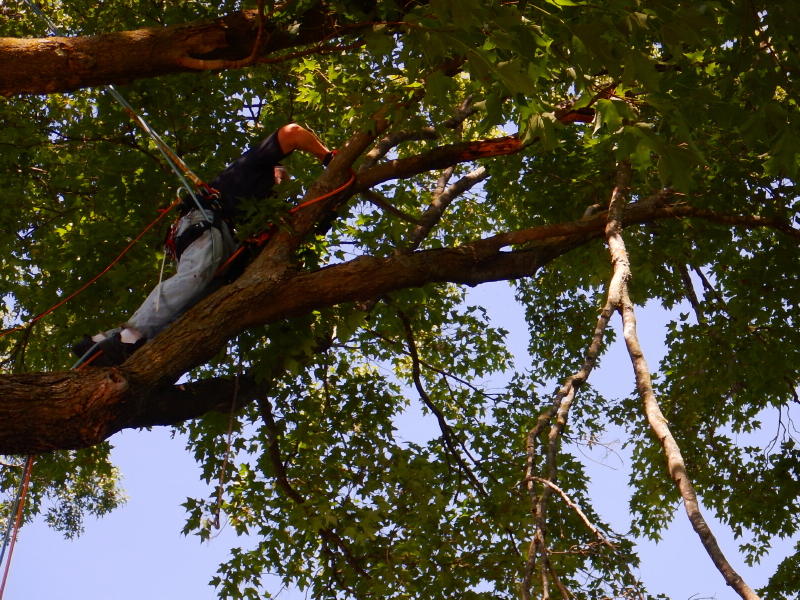
When he made it high up into the tree, he rigged two more points of security and then pulled out his saw to begin the cutting. From his new vantage point, he was able to spot dead branches to cut that I hadn’t even noticed from the ground. As he worked, we moved ever closer to the roof of the wood shed that is laying on the ground beneath this tree. To protect it, Elliott tied a rope to the branches about to be cut so they could be lowered in a controlled fashion.
 .
.
.
.
.
.
.
.
.
It is quite a process, and I was very intrigued by it, if not feeling a bit addicted. For the rest of the day after he left, I kept wanting to go back out and do more of that work. While helping to put away his gear, I asked Elliott to teach me how to “braid” the long ropes for storage the way he does. It’s slick because they easily come undone when you are ready to use them.
Being able to do these climbing and rigging skills would be a very handy thing for me, with the number of trees we have. It would require that I do a lot of learning to master tying the knots I need. I have difficulty remembering how to tie a knot soon after I learn it.
I don’t know that I would have the arm strength to do this, though. I have a permanently separated shoulder that means I have no skeletal strut supporting my collar-bone, and that leaves me significantly weaker on my left side.
I’ll just have to rely on the graciousness of my brother to make the trip out with all his gear again someday, to bring down more of the dangling dead branches that loom.
Elliott, I hope I didn’t drive you nuts with my excitement about having someone to pal around with yesterday. I can’t thank you enough for the “workout” you put in here. I am exceedingly grateful to have these branches down! Hope your arms aren’t too stiff today…
.
.
.
.
.
.
.
.
.
Quick Rescue
It is the month of May, after all, so it comes as no surprise that when the precipitation pauses, and the sun peeks out, the snow melts very quickly. The first order of business for me was to try to salvage or mend the damaged trees.
Using a pruning saw on the end of a telescoping pole, I gave my arms a workout, cutting broken branches back to the main trunk of otherwise intact trees.
This image shows how the damage varies, and can be easily overlooked, if you only scout for obviously broken limbs. The branch below is easy to spot, but the one above has an open split that remains connected on each end. It demonstrates the reason I was hearing so many cracking sounds, without seeing very many branches actually falling, when I was out for a walk after most of the snow had accumulated.
Hard as it is on tiring arms, to stand on the ground and hand-saw a branch high up in a tree, there comes the added complication of trying to get the severed branch down out of the tree, without breaking others, or causing any additional damage. It had me cursing for fear of doing more harm than good.
I succeeded in pruning multiple branches out of 4 of our prominent maples, before my arms gave out, and daylight faded.
I took one significant break from exerting myself on that project, during which, I rigged up a way to pull up a pine tree that had tipped over, using a come-along. It is the same tree that I wrote about in my post titled, Doubly Tipped, which we tried to support by tying to t-posts. That time, we just used muscle to push it back up to a partial tilt. The posts weren’t able to keep it upright, because the ground was too wet for them to stay put.
For now, we will let the tree rest against the pull of the cable, rigged to a nearby tree, with chains and straps. When the ground finally dries out, we’ll put the posts back in the ground and tie the tree off to them again.
Look at the dramatic difference of a few days in the life of this pine: (If you click on the last image, it will enlarge so that you can see the way we have it supported.)


 Relative Something