Posts Tagged ‘mares’
Moody Mares
Our retired Thoroughbred mares have not presented regular behavioral signs of estrous but there have been occasions when it has happened. This week, I noticed Mix was showing evidence she was feeling it. Yesterday, it became obvious that Light is synchronizing with Mix. The horses can become less predictable and behave aggressively so we need to pay extra attention around them when their hormones are raging.
I was observing from the barn when the two of them demonstrated some of the angst they were feeling.
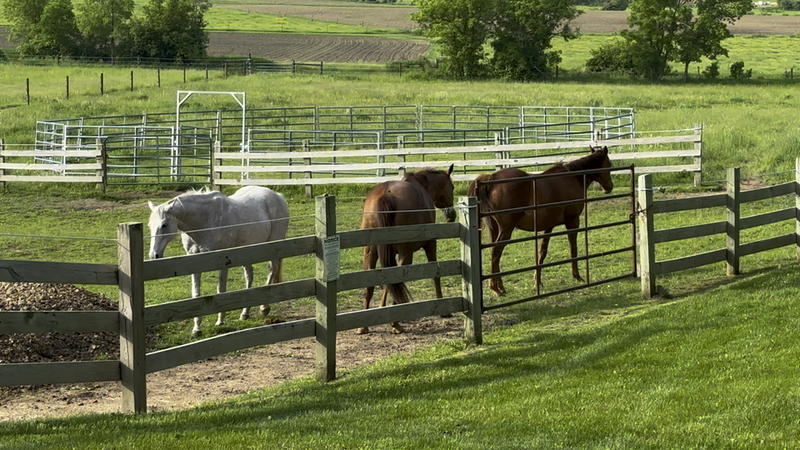
They were calm one second and then squealing and kicking the next.

Mix kicking up her heels…
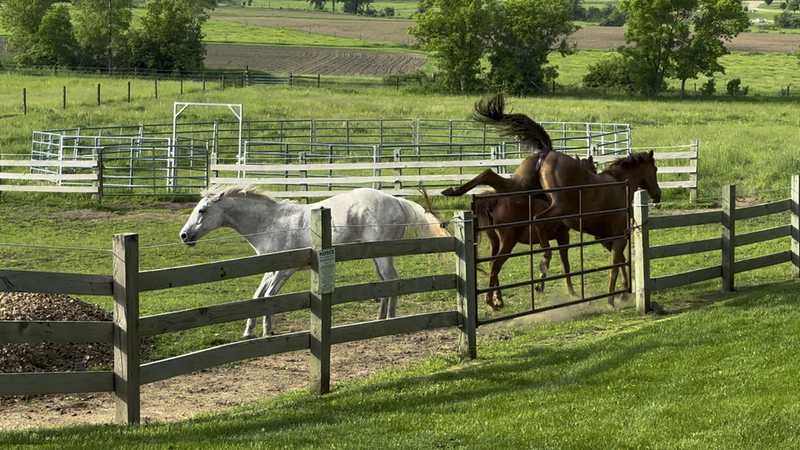
Light responding in kind.
Mia was nearby but wasn’t the least bit perturbed by the shenanigans Mix and Light were up to. After two more episodes of flailing hooves, the herd quietly and methodically made their way out into the hay field as if nothing had happened and settled into some grazing.
Me thinks I will remain on elevated levels of awareness for the next few days or more. As long as they continue to direct their aggression toward each other and not at me, I’ll be happy to continue tending to the daily housekeeping under the overhang.
I must admit, it’s kind of fun to see domesticated animals demonstrate a little of their wild side every once in a while.
.
.
Middle Two
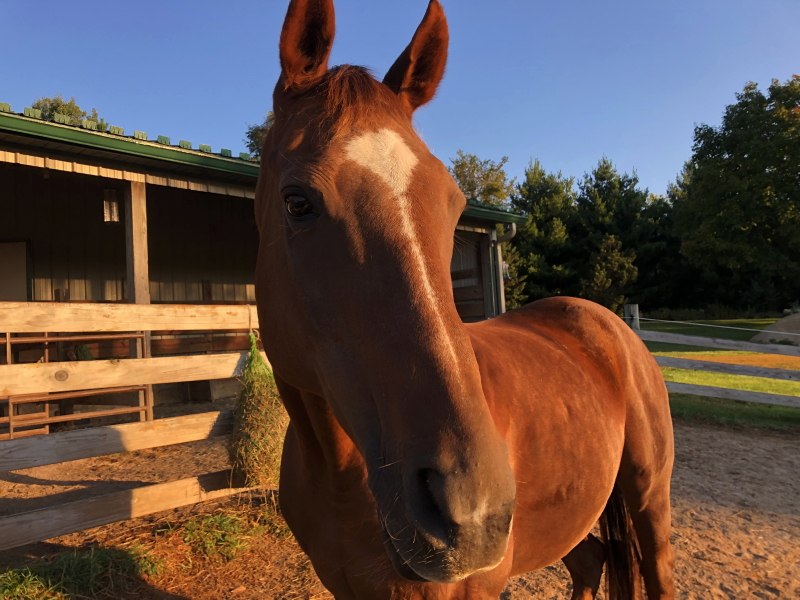
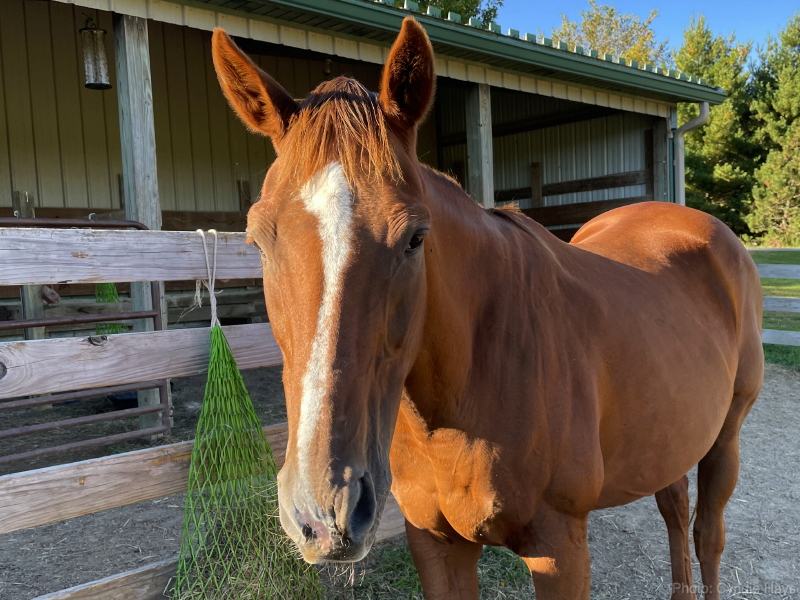
As long as I’ve set off on the topic of featuring the horses residing with us since April, I would be remiss to stop at only the youngest and oldest. In the middle are Zodiacal Light (Light) and The Yellow Sheet (Momma Mia).
 .
.
.
.
.
.
.
.
.
These two chestnuts prefer each others’ company more than hanging with the other two horses. At the same time, when we moved Swings and Mix inside the barn for their turns with the vet for teeth work, Light and Mia became very unsettled at the separation, whinnying and hurriedly moving about.
In addition to similar coloring, they share equal subserviency to Mix’s demonstrations of dominance over them, accepting the situation with little complaint.
The easiest way to tell them apart is by the markings on their faces. Light has a “round star and stripe” and Mia sports an “irregular stripe.” We usually need to wait for them to turn around to look at us before we are sure which horse is which.
Mia is a little smaller than Light and she’s the older of the two. Born in California in February of 2000, Mia is about 63 in comparative human years.
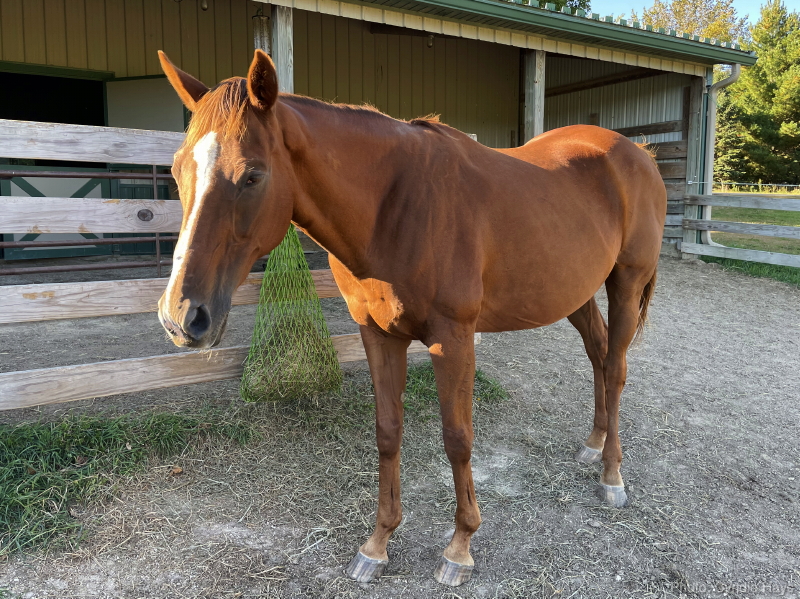
Sometimes I think she looks older than Swings. Mia reminds us of our previous horse, Dezirea for her acceptance of the lowest position in the hierarchy of the herd and for being quick to react startled by many things.
Light was born in British Columbia in the spring of 2003. She shows a bit of caregiver trait in looking after the sensitivities of the other horses. She was actually rescued twice from kill pens, one time with a foal at her side.
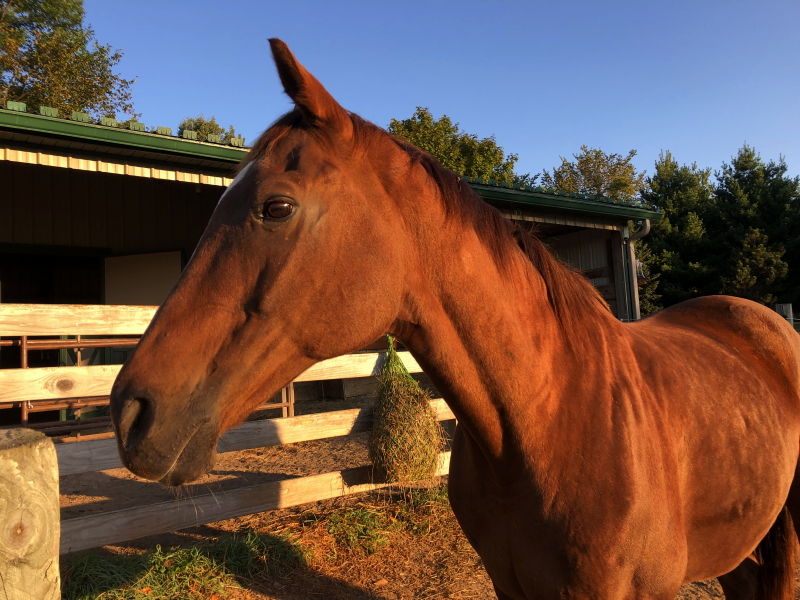
Light and Mia are the perfect middle two for the herd, creating a wonderful balance of four different horses that together project a precious equine energy.
The rescue organization, This Old Horse, did a masterful job of selecting them as good candidates for our land when we expressed interest in the possibility. It’s been only five months that these horses have lived with us and with each passing day they seem more and more comfortable with the situation.
I think it would be fair to say the same thing about us.
.
.
Teaching Manners
This weekend I was blessed to witness a brief moment of unmistakable horse-communication between three members of our herd, and Hunter had me laughing out loud. If ever there was an occasion to read human intent on animal behavior, this seemed spot-on.
We have a pile of manure in the paddock, leftover from winter, that is a few feet from the fence. Even though it creates a constricted space, the horses rarely let that interfere in their direction of travel. When I turned my attention to the horses, Hunter was intently straining to reach grass under the fence as far as his contorted neck would allow.
 Suddenly, Legacy decided to pull rank and move in on that same spot. Hunter obediently walked away on command, but as I watched, he circled around the pile of manure and paused to review the situation. It seemed as though he made a decision to press on the boundaries of herd leadership, …or maybe he just really wanted back on that grass under the fence. Hunter walked around Legacy and began grazing just uphill from him, about a foot away from the spot which moments ago had been his.
Legacy didn’t get ruffled by this apparent challenge. He simply made a clear gesture that he was claiming the whole area, and Hunter needed to go, again. The youngster’s reaction seemed pretty obvious to me. Hunter obliged and stepped away, but this time he lifted his tail and let loose with a perfectly orchestrated reverberating fart toward Legacy while leaving.
Even though I laughed at how perfectly it seemed to communicate how he probably felt about the situation, I assumed it could have been a coincidental occurrence, until I saw what Cayenne did in response.
She immediately came from the far side, stepping between that pile and Legacy so she could get on Hunter’s flank, using her energy to push him away, and not just a little bit. She stayed on him for an extended time, keeping him moving well beyond where he would have chosen to stop. I was struck by her persistence. In fact, Hunter finally had to lift his leg in a gesture of preparing to kick, in order to get her to finally back off.
It was all quite a show for me. Cyndie said it is the mares who teach foals and geldings manners and appropriate behavior. I got the impression she was saving Hunter from unknowingly picking a fight with the leader over something that wasn’t worthy. It was as if she saw the pointed flatulence as so disrespectful that she needed to convey he wouldn’t want to receive what the gesture might invite.
Each individual act I witnessed was interesting, but in concert, it was fascinating and thoroughly entertaining display of the equine educational system in action.
And who knew they could use their flatulence with such obvious intent?
.
.
.
.
.
.
.
.
.
.


 Relative Something