Posts Tagged ‘longer days’
Conflicting Evidence
One of the more frustrating situations in troubleshooting is the intermittent problem. Yesterday morning, we heated water and filled an insulated pitcher before heading to the barn to feed the horses. Since the waterer in the paddock had frozen up again the previous afternoon when the temperature was relatively mild, we were prepared for the worst after an overnight of extreme cold.
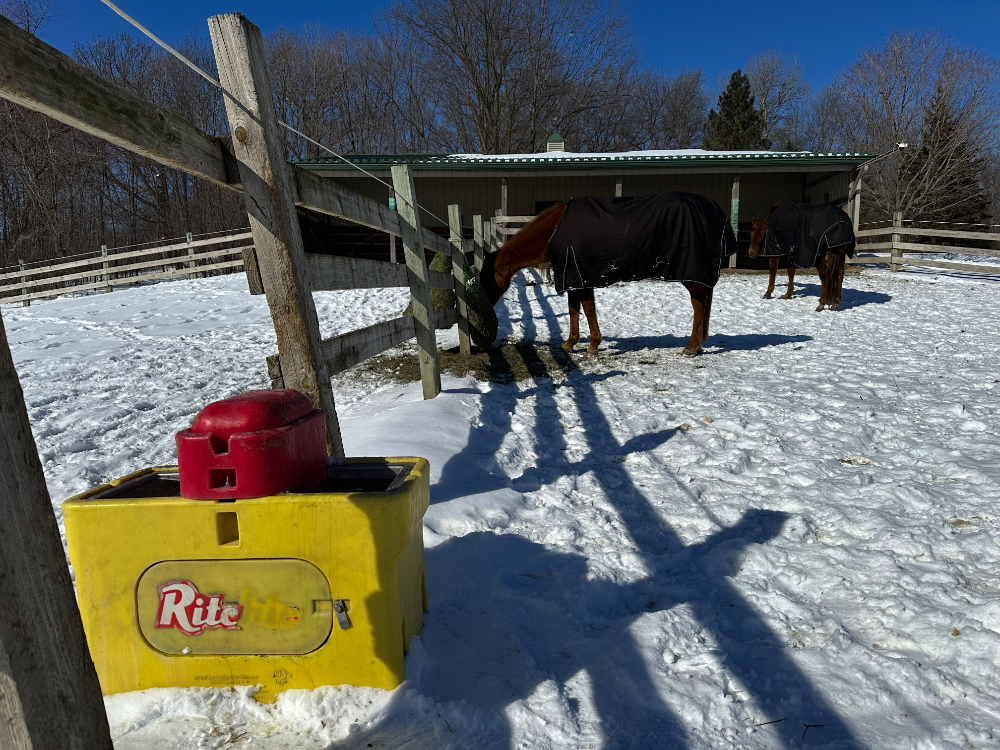 That wasn’t the case. Water was flowing just fine when we arrived to check. It doesn’t make sense to me.
If the water line is not freezing when it gets really cold overnight, the heat tape must be doing its job. That leaves me with the question of why the heat tape wouldn’t prevent freezing when the air temperature moderates into the teens (F) in the middle of the day.
At one point when we suspected the heat tape might be failing, I surmised the possibility that when the horses consistently drink from the waterer, there is enough flow through the line and the valve that it helps prevent freezing. If the waterer is untouched for a length of time, the static state of water in the lines could lead to freezing.
It’s hard to know if the horses are neglecting to drink from the waterer at regular intervals.
We have found the pans of the waterer empty when the line freezes up, so we know the horses eventually get around to drinking after the line is frozen and can’t refill.
With luck, the extreme cold snap we are experiencing for a few days now will be the last of the season. The forecast for a week from now indicates some days above freezing. At almost two months past the winter solstice, the increasing angle of sunshine in the middle of the days is noticeable. Even when the temperature stays below freezing, there are obvious signs of snowmelt around the grounds.
I’m looking forward to the return of warm days when we won’t have to worry about the waterer. If it gets warm enough that the freezing water line is no longer a problem, it will also mean I don’t have to bundle up in my space suit to go outside every morning.
Double bonus!
.
.
Solar Anticipation
Days are getting longer to the point of noticeably changing for us, as the periods of time when we feed our horses in the morning and evening are again happening in the presence of the sun’s rays. Last night we received a fresh blanket of the lightest versions of snow, a direct reflection of the low temperature at the time. As the precipitation moved past us, the clear sky that resulted dropped the temperature even more.
This morning the horses showed great patience but also eager anticipation for the sunlight to reach our location.
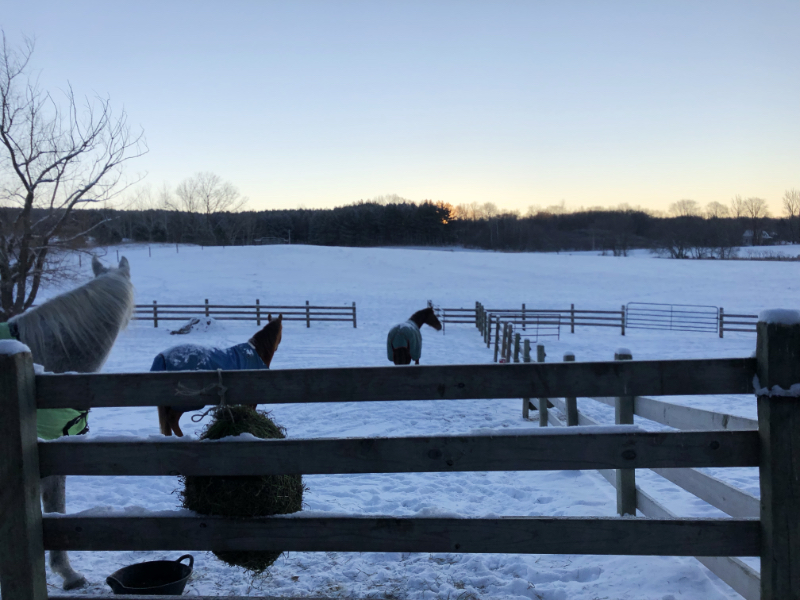
The air was ripe with hope. It was as if I could feel the rotation of the earth that was slowly bringing our vantage point in line with direct sunlight.
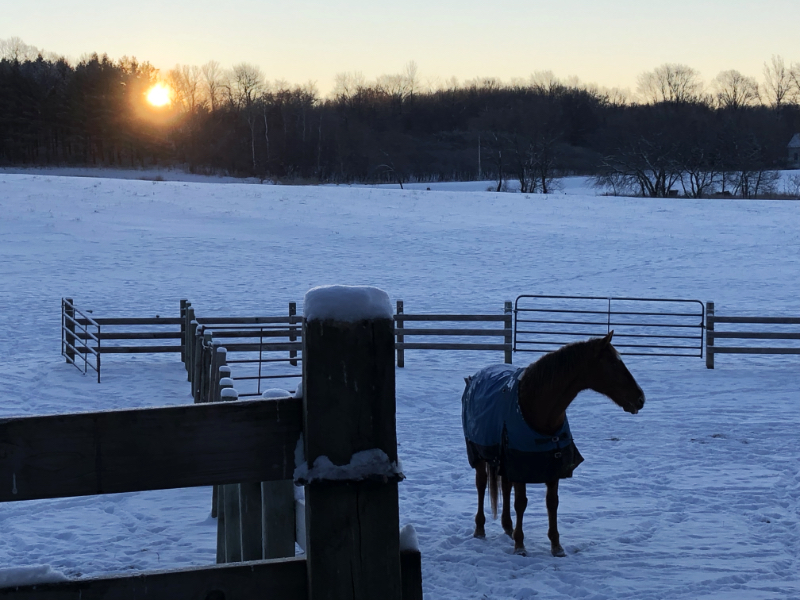
When the sun became visible, I was ready to return to the shelter of our house where I could relax my defenses against the icy bite of the air and leave the horses to luxuriate in the climbing energy of solar rays.
As we enjoyed our breakfast in the loft, increasing sunshine provided assistance for the heat radiating from inside to start sliding the overnight snow off the skylight overhead.
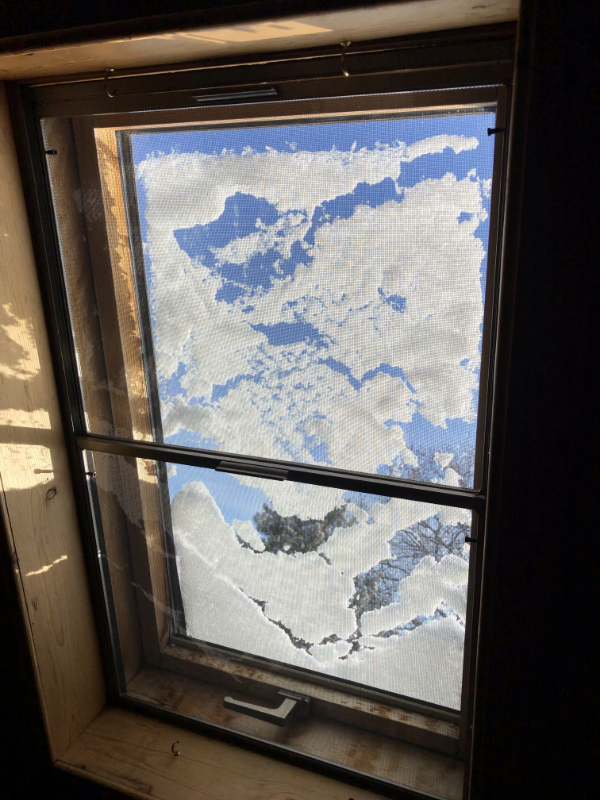
It’s going to be a beautiful, sunny winter day.
.
.
First Sign
I know it’s only February, but spring can’t be far off now. Yesterday morning at work, I received this message from Cyndie:

Maybe that egg surprised the hen. Cyndie reported it was in the sand covering the floor of their coop, not one of the nest boxes.
If the first egg of the season doesn’t offer us hope for better days ahead, then we’ve been paying too much attention to news of the world. Well then, how about two eggs! By the time Cyndie went down to close the coop for the night, there was already a second egg, this time right where we want them, in a nest box.
There may be enough increase in hours of daylight to trigger egg-laying again, but this morning the hens got a brisk slap in the beak after a drop of 40°(F) temperature overnight. Ol’ Man Winter isn’t going to let us forget what month it is, regardless what fresh eggs make us think.
.
.


 Relative Something