Posts Tagged ‘history’
Unexpected Fun
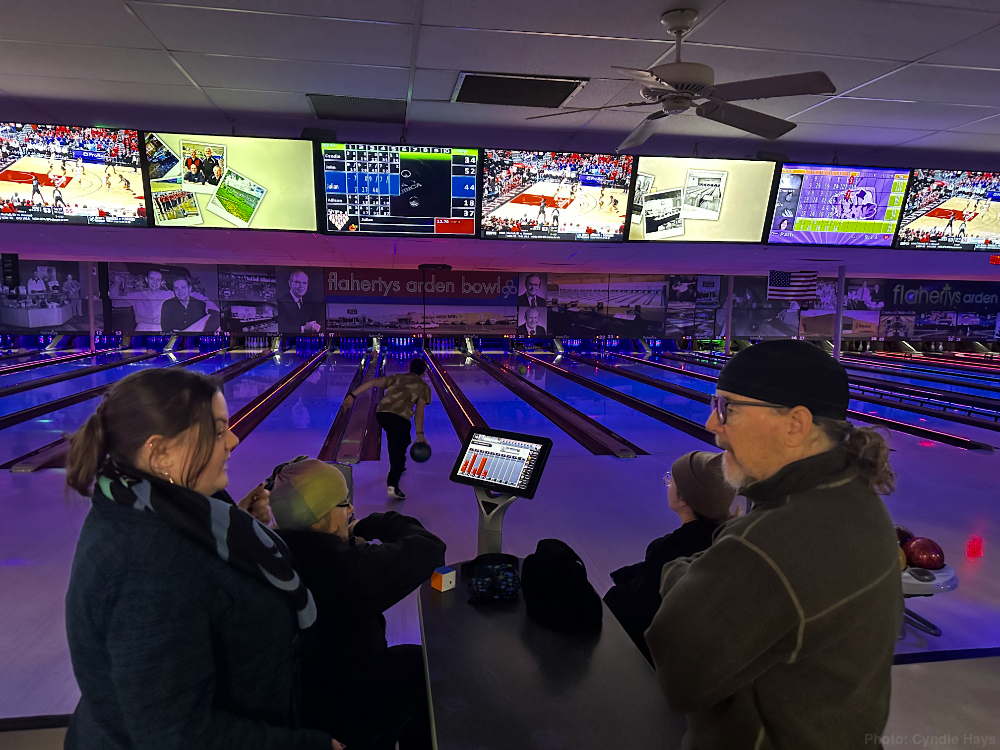
Forgetting for a moment that citizens of our country are under attack from our own government was more fun than we expected yesterday. While the bowling by the unpracticed novices of our family qualified as comical, it takes a measurable level of personal strength to laugh at one’s own foibles displayed so openly among strangers. I’m pretty sure I accomplished rolling a gutter ball following a previous frame strike. D’oh!
 After surviving the sensory overload of overly rambunctious youngsters, a pop music soundtrack, clanging and banging arcade machines, and plenty of crazy lighting effects, we made our way to the Namaste India Grill & Brewhouse for laughter around the table. With a menu of enough delectable choices to make my head spin, I don’t think there was a duplicate order among any of the six of us.
I treasured hearing an impassioned conversation from a booth nearby in a language I didn’t recognize. We arrived before the dinner rush and were able to witness the gradual increase of customers from a variety of nationalities filling the tables, which bolstered the atmosphere of fun.
Alone with Cyndie on the drive home after precious time with our kids, we discovered the best surprise of the day. Turning her attention to her phone for messages, Cyndie discovered calls from a friend from graduate school in San Diego, some 46 years ago.
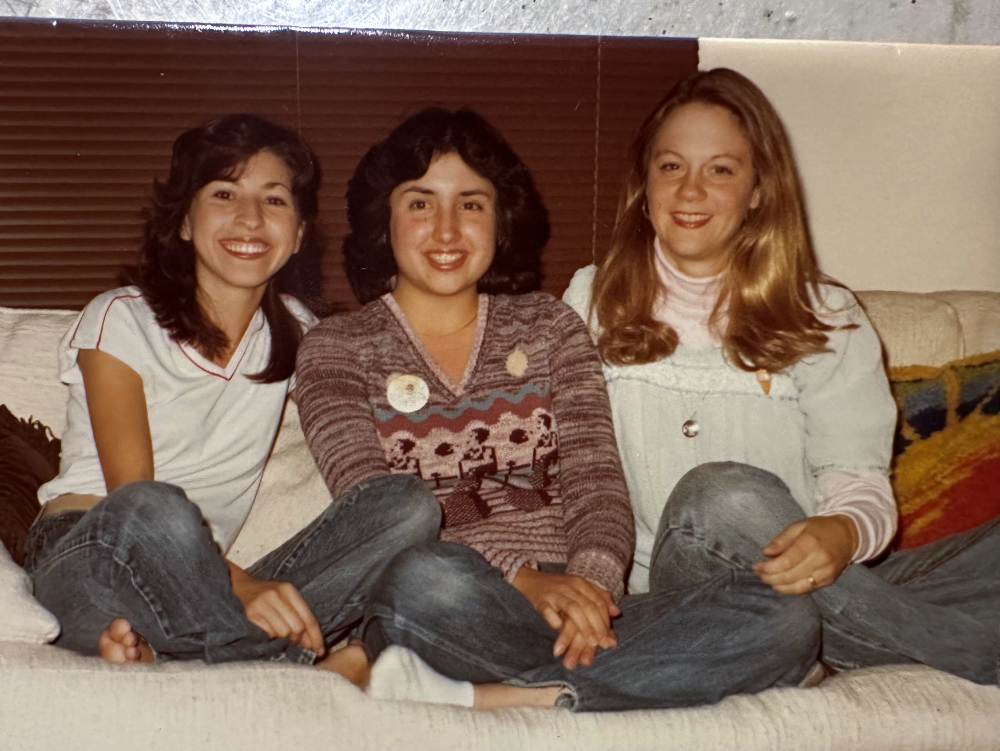 Cyndie and her two best friends from that time in graduate school had lost touch over the years and miles, but Susan and Lupe were moved to search for Cyndie’s information to offer their support for the ongoing conflict in Minneapolis.
Apparently, I have written enough times about our life adventures that this blog, along with the details of our labyrinth location that we have submitted to the Labyrinth Society, provides enough clues to reach us. For the record, that is by design.
Cyndie was moved to tears to hear Susan’s voice on the message in the car and could hardly wait to call her back when we got home. I could see years melting away from Cyndie’s aura as she flipped through old photographs from such a long time ago.
I recognize that feeling of a bond with friends who shared such a significant time of life, the challenges of higher education, and the unknown places it might lead to for all of them.
The reconnection was an unexpected bonus of fun on our day. I picked up the excitement vicariously through how vividly it reinvigorated Cyndie. Finding out that this blog helped the three of them rediscover their friendship connection again warms my heart.
Thanks for your keen sleuthing efforts to find us, Susan and Lupe! LOVE!
.
.
Era Ending
Around 59 years ago, a group purchased an old fishing lodge and cabins on a lake in northern Wisconsin to create a vacation spot for their young families. They formed an association known as the Wildwood Lodge Club. There have probably been as many changes occurring in the association as have occurred with the growing families with each passing year.
Not only have member families dropped out and new families have been welcomed in, but individual lives have passed throughout the many years. Many times, tough decisions have been considered, and today we are seeing the most recent changes get underway.
In the late 70s, early 80s, the association divided lots, so instead of all families sharing cabins on a rotating basis, each family would own a specific plot. The association continued to hold the lodge and tennis court plots until the last couple of years. Now, families on the lots adjacent to those significant amenities have purchased them.
Yesterday, demolition began on the least precious portions of the historic old lodge.
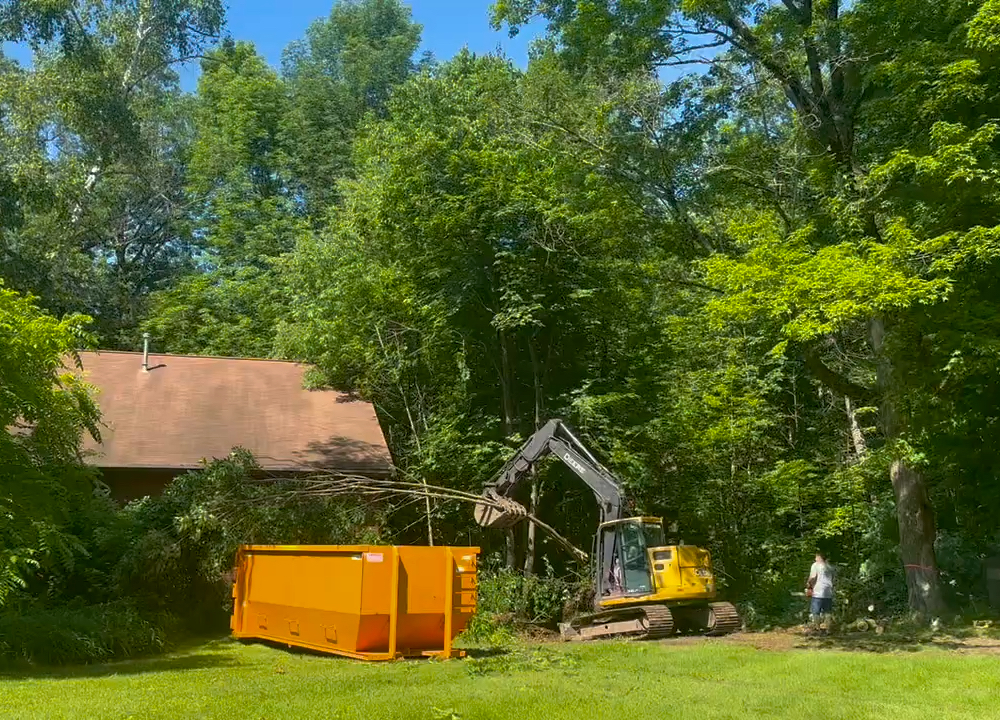
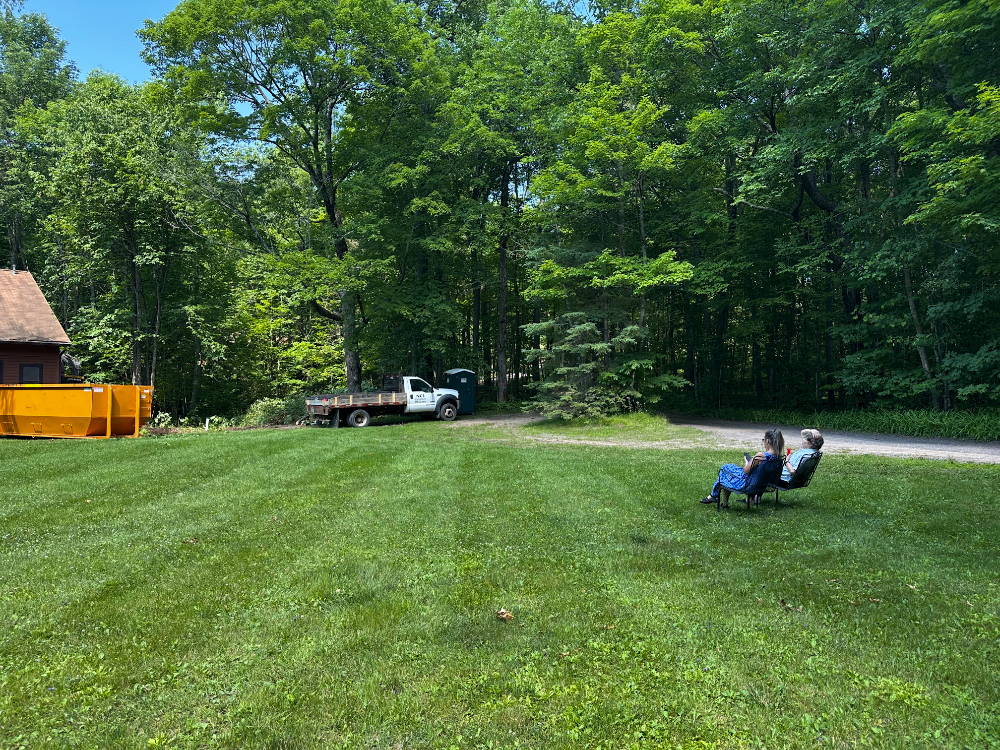
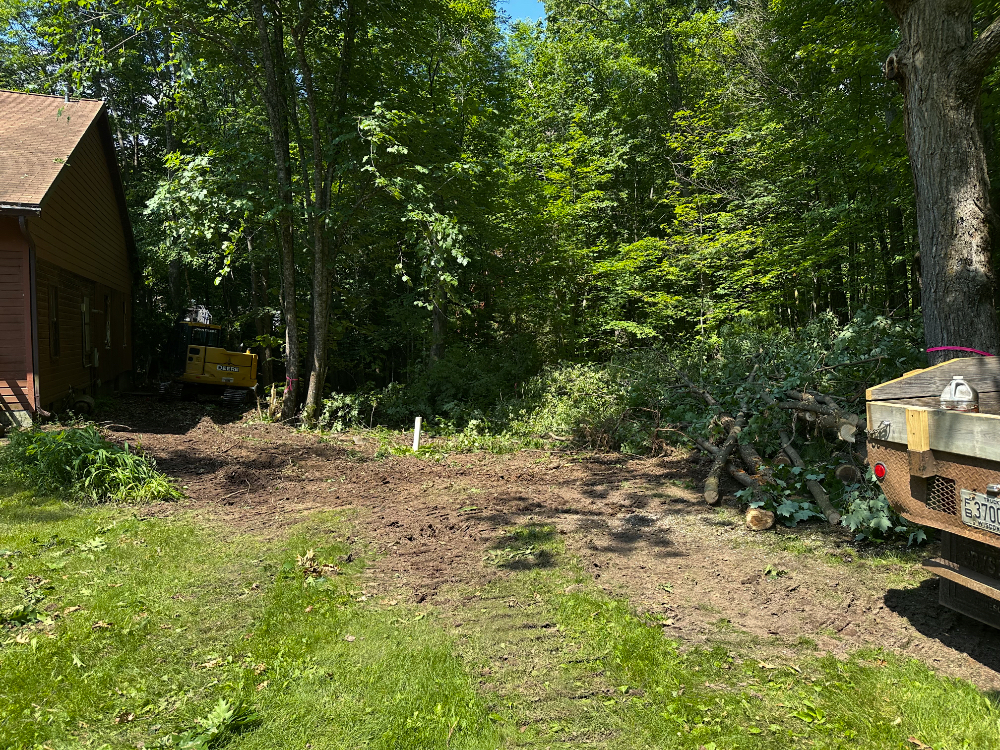
Small trees were cleared away to make room for the teardown of the back portion of the lodge. We set out chairs so Cyndie’s mom could watch some of the work as it happened.
The structure was rotting to the point that it didn’t make sense to attempt repairs. The family that took possession of the lodge lot will build a new structure that will offer opportunities for a variety of future uses.
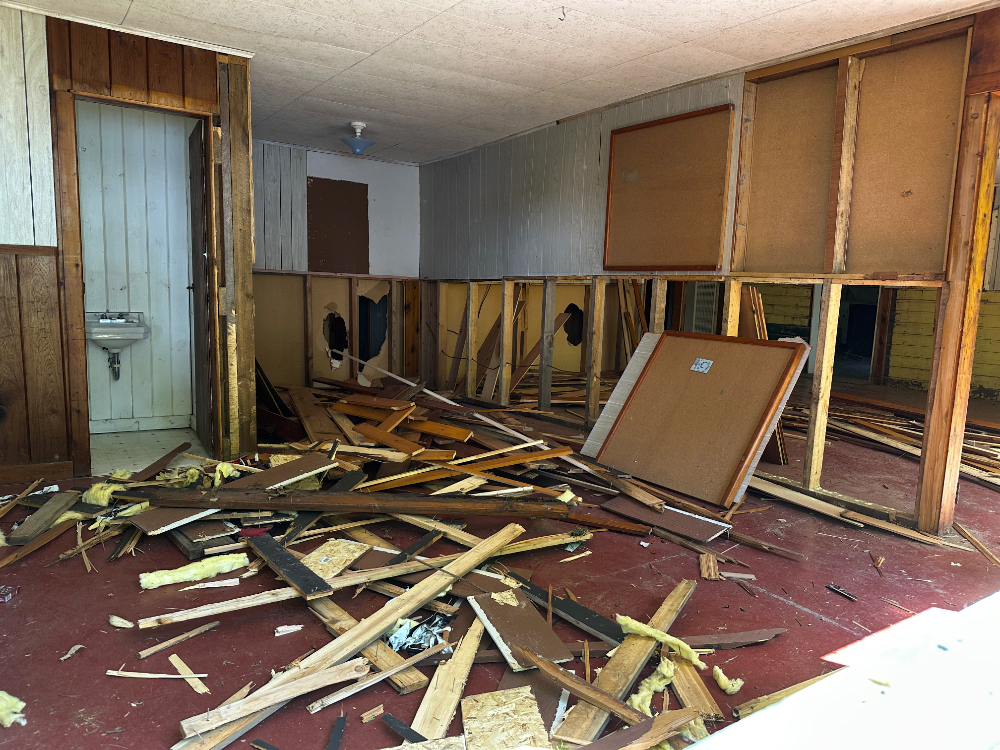
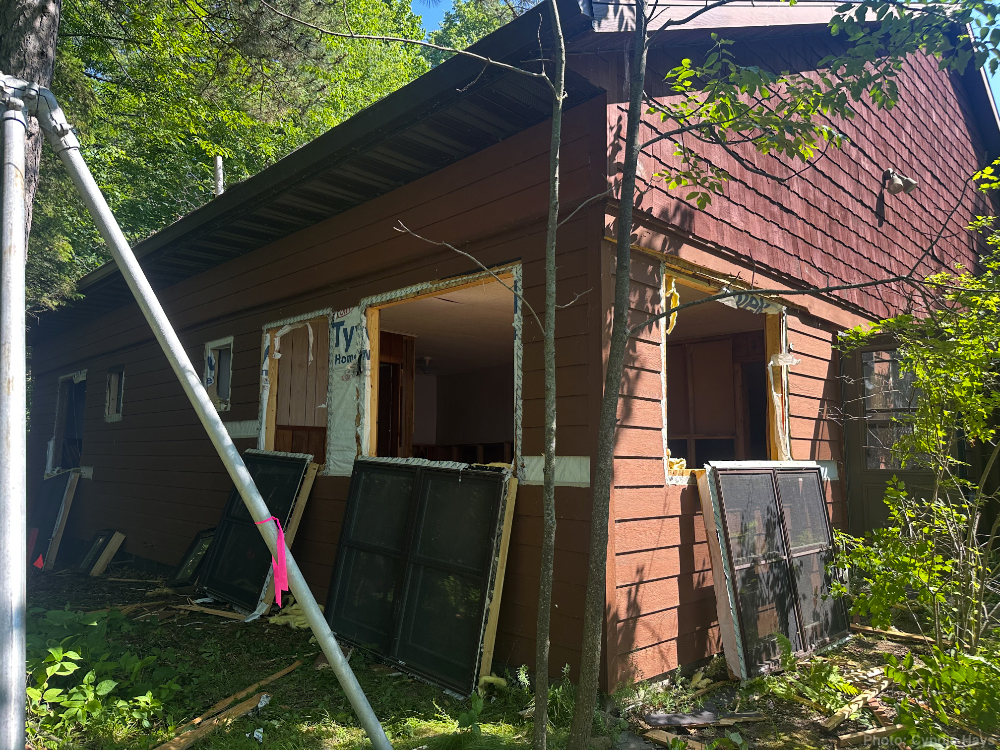
Windows and paneling were removed and saved for reuse in the new construction after the shell of the building is razed.
It definitely feels like the end of an era, but it isn’t really that final. It’s just another step in the 59 years of steps that have happened. They have moved cabins before, and even moved the main private roadway that runs to the end of our peninsula.
In the early 80s, I wrote a song about the changes that happened when families started building their own new “cabins” in place of the original vertical log shacks from the time it was a fishing resort.
It seems just like a week or two
And Fourth of July has come and gone
And I was up at my favorite place
Folks were there to have a good time
Work got done, and we had a good time
Cabins have moved, and new ones are growin’
A place to sleep’s not as easily found
I sit on the porch of what was cabin three
Almost see the beach you never used to see
Tommy and Jane, and Justin, it’s true
Are heard laughin’ and singin’ and workin’ too
It’s Wildwood, Wildwood
It’s been so long, but the change is good
Wildwoo-oo-oo-ooood
The old road don’t go the way it used to go
Nor some people’s car, the way the new one goes
But we all got together and pushed it out
Who says there weren’t games this holiday
When evening came, we gathered ‘round
for the kind of picnic you’re supposed to have
And though people not present were sadly missed
There were fireworks displayed to rival all time
Wildwood, Wildwood
It’s been so long, but the change is good
Wildwoo-oo-oo-ooood
As much as it seems as though it’s really changed
And mud has replaced the sprouts of poison ivy
The swing still swings between two big trees
From which you can still hear the Friswold’s up at cabin three
Hayward’s still a few minutes away
Round Lake’s just as clear as any day
And all the people who have made it what it really is
Are all the people who will make it what it really is
It’s Wildwood, Wildwood
It’s been so long, but the change is good
Wildwoo-oo-oo-ooood
.
.
Coincidental Convergence
It started while Cyndie was away for a week in southern California. I entertained myself watching movies that she wouldn’t want to see. As I moved into the genre of war movies, I ended up progressing from WWII conflicts to the Vietnam War. By coincidence, I noticed a documentary series on AppleTV+ narrated by Ethan Hawke called “Vietnam: The War That Changed America.”
 It is a fascinating telling by people who were there, on both sides of the conflict, with added context of what was going on at home with the citizenry and political leadership. It is much more than a Hollywood recreation of what happened, but it tends to validate plenty of the acted scenes in the movies I had been watching just days before.
As a palate cleanser, when Cyndie got home, I offered her some episodes of another AppleTV+ series: “1971: The Year That Music Changed Everything.” I hadn’t planned the synchronicity, but I quickly realized I was watching footage of the same period of history in each of the shows.
 Saturday night, my brother recommended the 2023 documentary movie, “What the Hell Happened to Blood, Sweat, & Tears?” I watched it yesterday and found myself once again immersed in events from the same 1970s era as the previous two documentaries.
It was entirely unintentional but something of a reward. Each one served to add depth to the others.
The impression these all made on me provided a helpful reference for the consternation over the current situation in this country. Being taken back to points in history when people felt the world was teetering on the brink of nuclear obliteration or when public opinion was dramatically split between supporting a war against communism and demands that we bring our soldiers home.
The norms of oppression of minorities and women were being threatened by civil rights and equal rights marches. The youth were threatening almost all of the norms of their parents’ generation. Over and over, people perceived the disruptions as potentially disastrous to society, yet somehow we’ve endured and, in a few ways, even made progress.
It won’t be without some distress and many challenges, but based on how we’ve come through the difficulties this country has faced in the past, we may survive the current absurdities underway and eventually recover some semblance of political sanity.
Think about what today’s weirdness will look like in documentaries that might get made in 2075. That is, if historical documentaries are allowed in the future Christian Communist States of America. In 50 years, how much more money will the top 1% have amassed at the expense of the rest of the world?
That’s not a serious query. Fifty years out is too far for me to imagine. My focus is more like a year and a half from now with the hope that I still get to vote on who I want to represent me in our government.
Spoiler alert: Blood, Sweat, & Tears got forced into a no-win deal by the Nixon administration. That’s what the hell happened.
.
.
For Granted
My perspectives of our surroundings have shifted back in time due to my frequent visits of late to archives of local newspapers published in the 1860s/70s. When I pedal my bike past farms, I find myself thinking about the first family to start clearing that land and how the surroundings must have looked in their eyes.
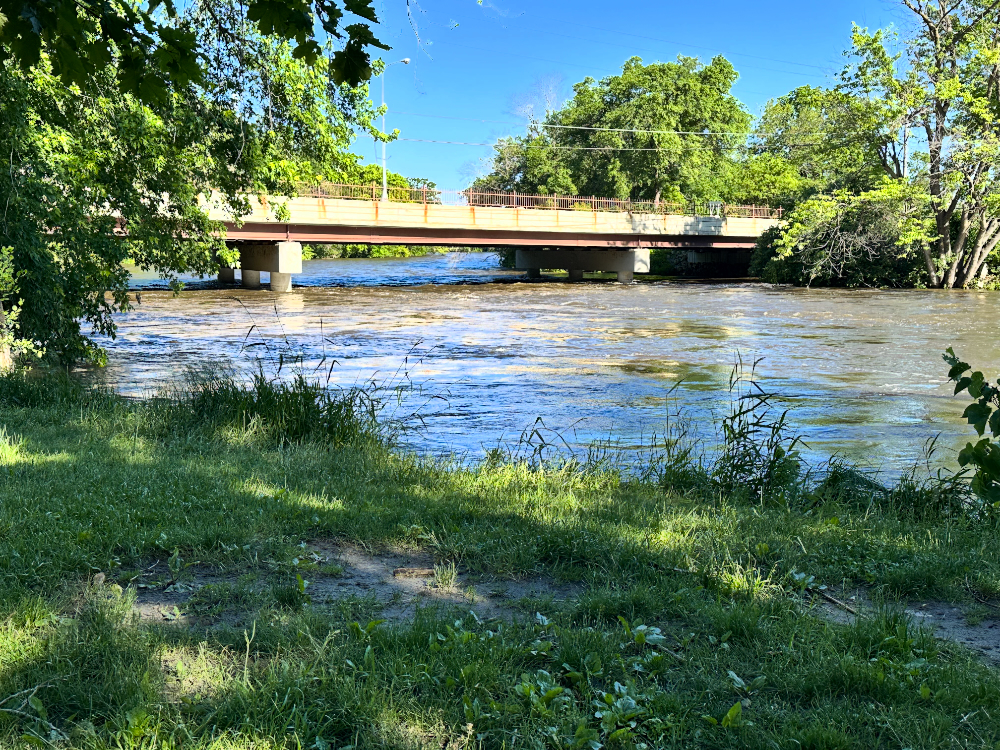 While having breakfast beside the raging Cannon River last Thursday, I tried to imagine what impression that threatening-looking torrent would have presented to people in a time when there were no bridges.
It occurred to me how much I take for granted the ease with which we traverse rivers now.
Think about immigrants who found life so difficult where they lived that they would cross an ocean with what little they could carry seeking new opportunities. Somehow, they make their way across half the North American Continent to a frontier with little infrastructure and come to a river that looks like this one.
They’d already accomplished heroic feats to make it so far, I marvel over how anyone could maintain sanity in the face of each new challenge.
 If I get hungry, I walk to our refrigerator or look in a cupboard for instant gratification. If the weather is bad, I close windows, shut doors, and adjust the comfort level on our thermostat.
For every gripe I come up with about modern life, there are innumerable conveniences I am taking for granted.
My big plans for getting in some hours on my bike and using our trimmers to reclaim our trails from overgrowth yesterday did not come to fruition. As the wind shoved my car all over the road on our way to a brunch date in Edina, I appreciated that I wasn’t trying to push my bike pedals into the gales. We returned home with plenty of time to tackle any morsel of the much-needed trimming.
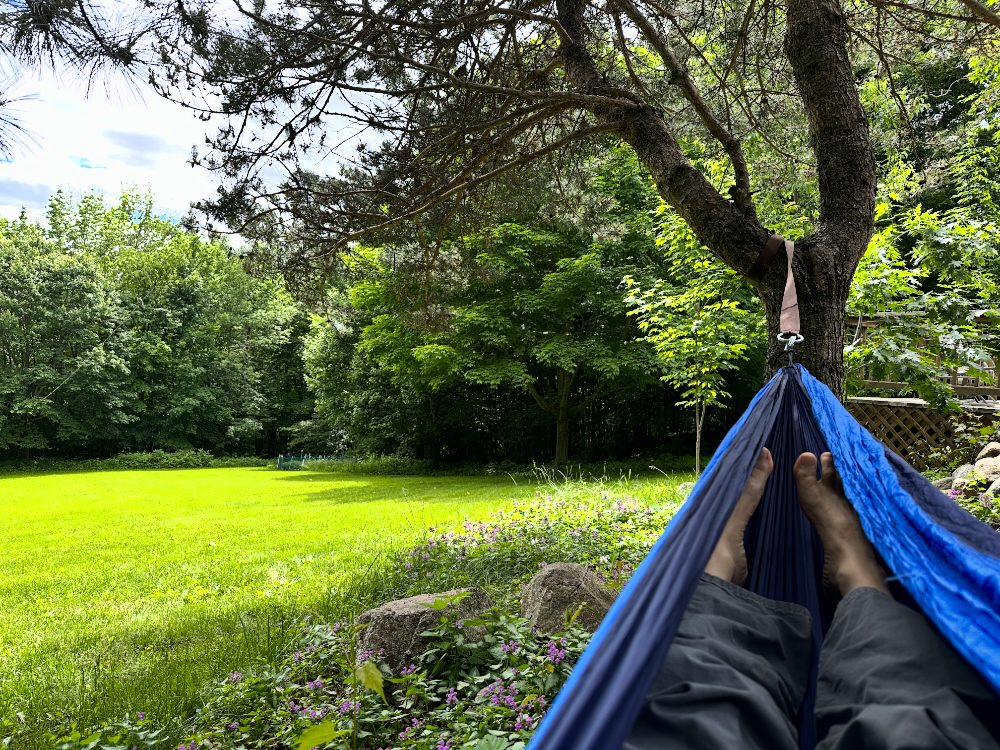
I opted for a nap in my hammock instead. I’m not convinced my body isn’t still working on clearing out the remnants of viral invaders.
One thing I don’t take for granted is the luxury I enjoy in choosing how and when to work on our never-ending “to-do” list in maintaining our property and when I’d prefer to rest instead.
.
.
Filling Gaps
Last night our internet connection was down so I did some reading in the most recent book I bought from the Pierce County Historical Association, “Log Buildings and Logging in Early Pierce County, Wisconsin.” In excerpts from journals and newspaper accounts dated in the early to mid-1800s, bits and pieces of what life was like in this specific locale materialize in my head where they mix with cinematic versions I’ve seen from movies depicting the same period.
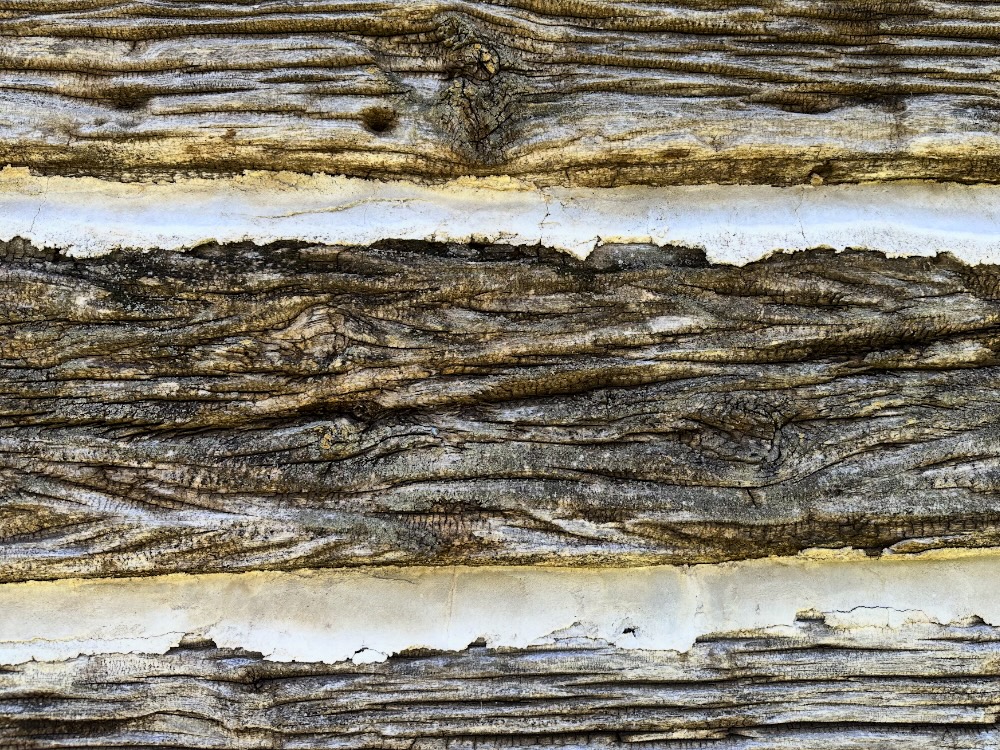 A name, a date, and basic details of clearing several acres to build a log cabin leave a lot of gaps in my perception of what life was really like. One person’s father arrived some time later. How were they communicating prior to that? Another man is described rather superficially as having “opened a road from River Falls” through the wilderness to a mill and later, one to Prescott for a mail route.
How did one send mail to a pioneer living in the wilderness? How does one man build a road? I struggle to compare my activity managing our 20 acres in the present with the activities and accomplishments of people who were just arriving at this place 200 years ago.
For reference, we rely on what people chose to write about their experiences. If my chronicles survive for a couple of centuries, will readers think that all we did was mow grass and whine about the weather?
Will they get a clue about what life was like when the internet goes down for a few hours?
I am curious about the specific indigenous people who were living here when immigrants started claiming land and building cabins. Not the general story of being forced onto reservations, but the equivalence of a “journal” account describing the experiences of one individual that would depict what it was like.
I am also curious about my specific ancestors who intermingled in these valleys, cutting trees, building wagons, going to schools, and living lives at that particular period of history. It’s easy for me to fill the gaps with versions of pioneers depicted in movies I’ve seen throughout my life.
How accurate a portrayal was “Jeremiah Johnson?”
Life today can hardly compare but when I listen to the birdsongs echoing through our trees in moments when no modern-day traffic, lawnmowers, or airplane noise is occurring, the sound may easily be the very same chorus that played two centuries ago.
I wonder who was standing right here listening to it way back when.
.
.
Hard Imaginings
Looking back on stories I’ve been told about things that happened before I was born, it occurs to me that I’ve lived through a relatively long period of stability. Thankfully, the U.S. Civil War and the two World Wars didn’t end the United States.
I was four years old when John F. Kennedy was assassinated. Too young to comprehend the full depth of such political turmoil. From my perspective, the world continued rather seamlessly.
My childhood occurred during the years my country was fighting the war in Vietnam. I was too young to be drafted into military service. I recall being occasionally aware of the risk, but my life was mostly insulated from any dramatic impact of the war. There were reports on the television news about casualties and protests, but as a kid, most of that drama went over my head.
My world involved stepping out our front door to hop on my bike and ride around the neighborhood to see who was outside forming a game of baseball, football, or kick-the-can. The first movie I saw that was rated “M” for Mature in a theater was, “Butch Cassidy and the Sundance Kid” in 1969.
Throughout my life, I developed a naive sense of normalcy about my country. I trusted the local, state, and federal governments to maintain law and order. It was easy to turn a blind eye to our interference in other countries and abuses of power at home. I felt the truth would eventually come out and miscreants would be brought to justice.
I’ve lived a comfortable life. Even when the riots in Minneapolis broke out after George Floyd was murdered by police officers, my property was not at risk. Slowly, things calm and people return to their usual routines.
Is it possible now that the democratic system of government the United States has been operating under since declaring independence from foreign nations is at risk of failure from within? It appears the citizens of this country have shifted significantly from a time when there was broad agreement over who our enemies were, foreign and domestic.
Imagine if we suddenly lost our right to freedom of speech against an authoritarian ruler. The kid in me can’t reconcile how anyone in this country would accept for one second a politician who holds anything but contempt for dictators or communist leaders.
 After watching the chilling apocalyptic thriller, “Leave the World Behind” on Netflix, it occurred to me that the majority of average people will have a very hard time on their own in influencing greater society if our government collapses. It is easy to see how things could devolve to every family (or person) for themselves.
It is my hope that the year 2024 will find a vast majority of U.S. citizens coming together to overwhelmingly dispatch any candidate who doesn’t honestly and seriously support our democracy with freedom of the press, equality for all, separation of church and state, and ultimately, liberty and justice for all.
Next November, vote to preserve democracy. Kleptocrats, grifters, and wanna-be dictators need not apply.
.
.
Rain Waves
I picked a good day to go to the movies yesterday, and not just because of the discounted tickets on a Tuesday. Overnight Monday we received such a thunderous downpour I fully expected to find washouts left and right. That didn’t turn out to be the case but then the wave after wave of sometimes frightfully heavy downbursts interspersed among periods of really rainy rain all day had local dry creeks flowing like rivers by the time I returned home.
I drove to Hudson on my own to see, “Killers of the Flower Moon.” The ticket cost me $5.50. A medium bag of popcorn costs $6.25.
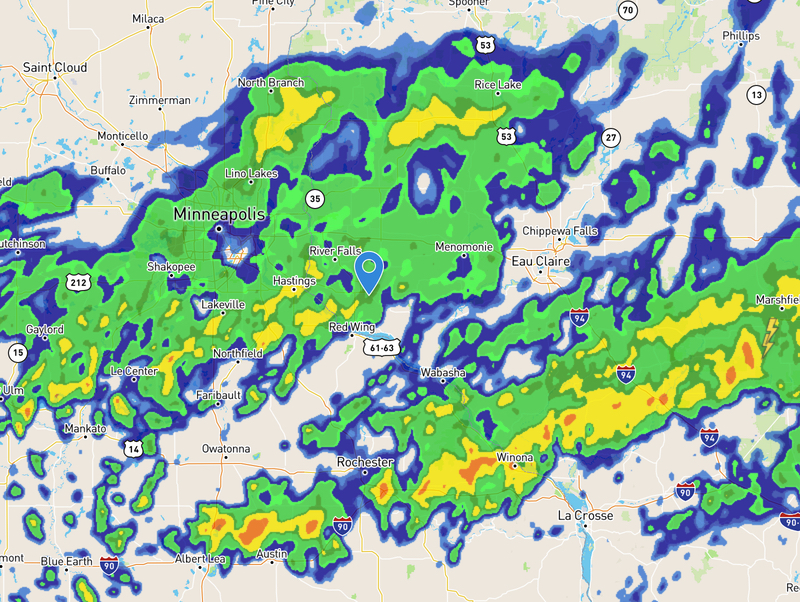 On my drive to the theater, I found myself getting closer and closer to a wall of heavy rain ahead. Making my way inside before the heaviest rain fell, I headed directly to the restroom after purchasing my ticket. This movie is 3 hours and 26 minutes long. Need I say more?
The quality of the film lives up to the skill and experience of the people who created it. It feels wrong to find myself appreciating a film about such diabolic events in U.S. history. I’m glad the true story of multiple murders to steal the wealth of an Osage family who profited from oil on their reservation at the turn of the 20th century is getting told. Hopefully, it will keep alive a historical truth that plenty of people would rather not acknowledge.
There was a point during the movie when the roar of the deluge outside pounding on the roof of the theater briefly wrenched the audience’s attention from the cinematic world and then another time a little later when dramatic thunder claps didn’t seem to fit with the action on screen. It took some thinking to separate the two events going on at the same time.
It also takes thinking to comprehend the violence occurring in the world today is tragically similar to countless human casualties perpetrated throughout time. It seems hard to believe the human race hasn’t been able to grow more enlightened than what is represented by deadly conflicts that continue to exist to this day.
Those of us beaming waves of love to the world are going to need to up our game somehow to create hope that a tide can be turned with unprecedented global results toward ending human atrocities.
Imagine beams of love that rain down in waves able to wrench our attention from killing “others” and overflow hearts with visions of peace.
Amen.
.
.
Eleven Years
In October of 2012, Cyndie and I packed everything we owned and moved from Eden Prairie, MN to the property we named “Wintervale” in Beldenville, WI. I am very lucky to have a record of the process and everything that has happened since preserved in the archived posts of Relative Something.
 We spent a little time yesterday looking back at pictures we took eleven years ago and marveled over some of the changes. We found one of me sitting on the Ford New Holland 3415 diesel tractor with the manual open to the “Instrument Panel” information.
There is also a photo of the one and only time Cyndie drove that tractor.
The bucket is filled with debris we were clearing out from the space beneath the barn overhang. The previous owners had stored gates, fence posts, and a bunch of firewood under there. It’s been the primary hangout space for horses ever since.
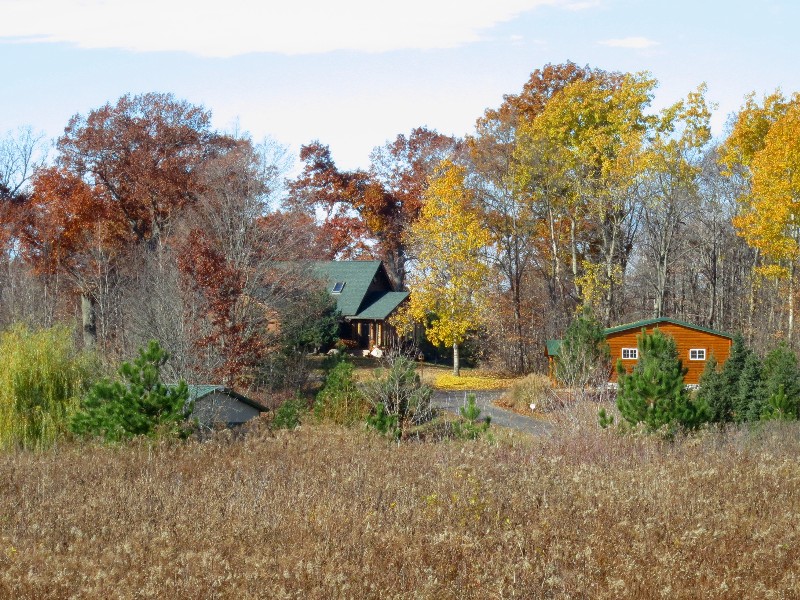
On a walk yesterday, I tried to take some pictures from a vantage point similar to ones from eleven years ago. It wasn’t easy to find the exact same spot.
October 2012

October 2023
.
.
.
.
.
.
.
.
.
I tried using the top part of the barn visible in the shots above to line up a reasonable comparison. There’s no longer any sign of the shop garage or the house roof from that hill. It’s nice to see how much the evergreen trees have grown. In the 2012 photo on the left, the willow tree that is visible became fenced inside the small paddock and is now nearly dead.
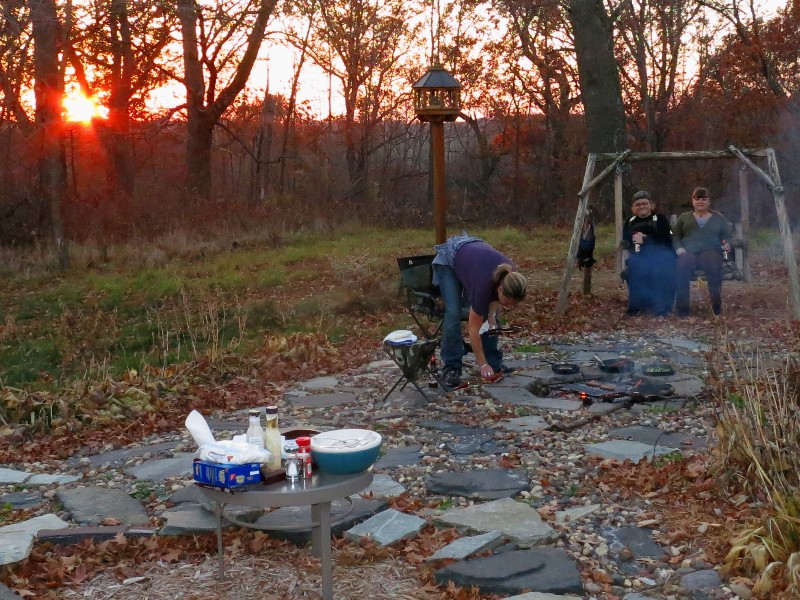
There was an incredibly warm day in 2012 that inspired us to cook dinner outside over an open fire for visitors, Elysa and Ande.
October 2012

October 2023
.
.
.
.
.
.
.
.
.
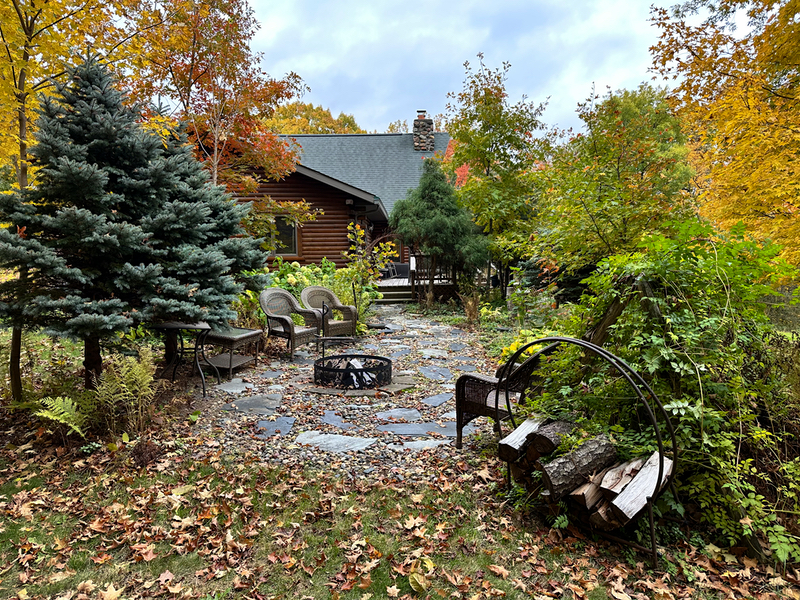
It is easy to see that there are more leaves remaining on the trees in 2023.

October 2012
October 2023
.
.
.
.
.
.
.
.
.
That spruce has gotten a little taller.
I’m curious how much growth might happen in eleven more years. While walking through the area we call the North Loop –which over the years has been cut for hay, fenced in for grazing horses, and now allowed to grow wild– I was surprised to discover several new pine and oak trees that have naturally sprouted on their own. The existing poplar grove is doing a fair job of expanding its reach and many of the existing pines are growing strong.
We look forward to shepherding this acreage toward becoming its own little forested space on the north side of our driveway for years to come. Based on clear evidence revealed on our walk, the deer are already fond of bedding down there.
Happy 11th Anniversary, Wintervale!
.
.
Aging Club
Wildwood Lodge Club started in 1966. The first generation is dwindling and of the six current families, only three are original. 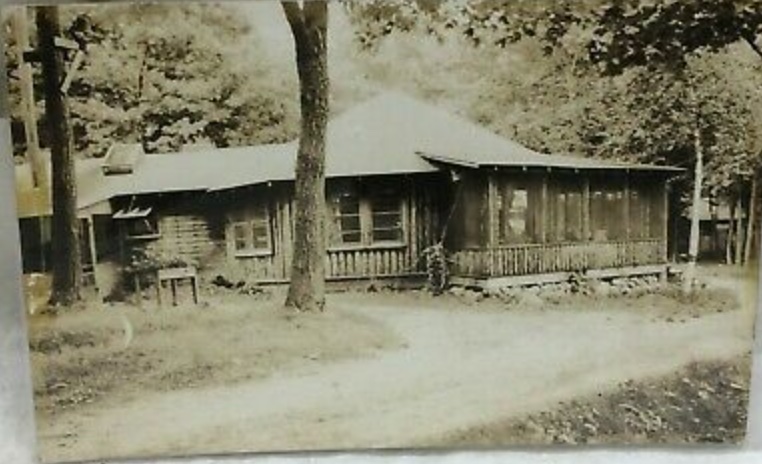 The club is in its 57th year but the buildings have been around since 1919. It was a fishing lodge when the eleven original Twin Cities families bought it and formed the club. The children of the first generation have taken over decision-making responsibilities, significantly increasing the number of minds that need to come to a consensus on management.
One of the biggest issues looming is the integrity of the main lodge building which has kitchen facilities and restaurant-style seating. The foundation is failing and the floor is rotting. The repair costs are unpredictable and hard to justify.
The ramifications tend to ripple all the way out to shaking the visions of what the future of the club might be like for the 3rd generation and beyond. With each generation, the added number of invested people complicates almost all decisions, particularly ones needing consensus for managing association business.
There are no easy answers and we can feel that. Gathering at the beach yesterday to remove the winter’s worth of leaf accumulation and arrange chairs, paddleboards, kayaks, a canoe, a small fishing boat, and several sailboats, talk informally wanders to the issues that aren’t easily resolved.
 Thank goodness the precious people who are the extended family of Wildwood are the true core of what defines this club. There is no shortage of fun and laughter despite all the tough decisions looming. Dinner at each house is a delicious mix of wonderful stories and good food. Wandering next door for a visit is a guaranteed party. The north woods surrounding the lake is a vacation paradise.
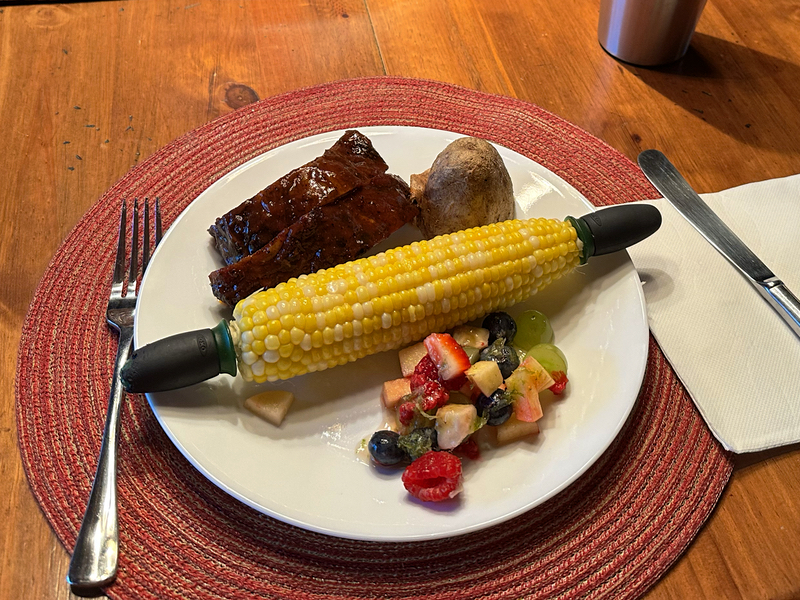
Last night’s corn on the cob tasted like August. I don’t know where it was grown or how long ago it was picked, but someone did an amazing job of providing an end product that defied my sense of time and logistics.
My luck at our multiple card games has been nothing but bad, however, the fun quotient is as present as ever.
We don’t know what the future may bring, but just because the club is aging doesn’t mean it can’t last. There are plenty of possibilities and I am confident this group will eventually figure out a way to adapt and endure.
.
.
Obvious Evidence
Based on all the mice caught in our traps throughout the winter, it should come as no surprise that they navigate the harsh elements as well as long-legged wildlife, but I am always intrigued by the obvious evidence rodents are burrowing beneath the snow.
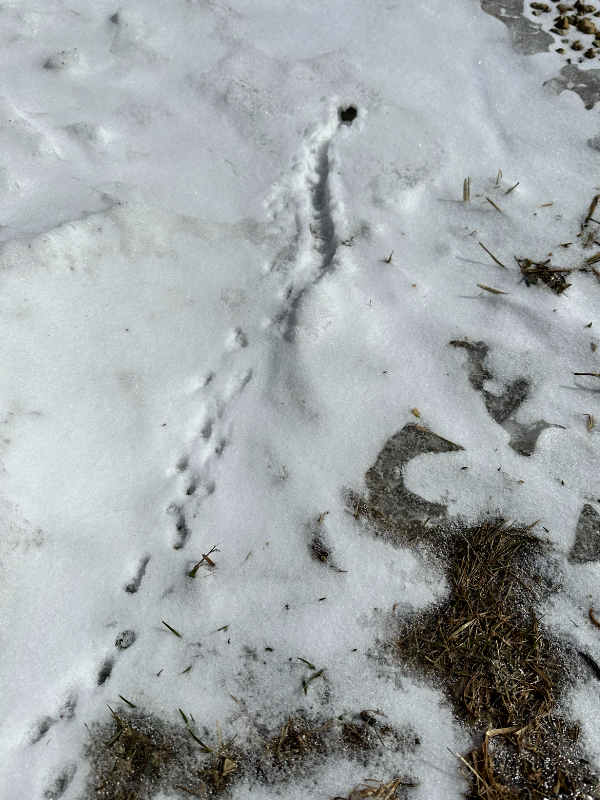
Despite the frigid overnight temperatures greeting me bitterly at each morning feeding the last few days, it appears one little critter was busy making tracks.
There is also obvious evidence of the increasing angle of sunshine and its growing influence by way of melting that is occurring despite the chilly air temperatures. That will prove to be a benefit when it comes to the threat of spring flooding. There is a deeper snowpack now than we’ve had in many years and if it were to melt all at once, flooding would likely occur.
There is an additional aspect that could dramatically influence whether we have any troublesome flooding this spring or not and that is the amount of rain that will fall in spring storms. Based on a recent video released by our county’s historical society, flooding from heavy rain can happen at any time of year. In 1942 there was a flooding rain that happened in September.
.
.
When I saw this video the first time, I realized I would quickly blame the extent of warming of our planet if this kind of flooding rain happened today. In my lifetime, I’ve never seen rain of the intensity described by Dr. James Vedder happen in the fall. But it did happen back in 1942.
Flooding rain fell in July of 1879 and washed away a mill and flooded my great-great-grandfather’s house a little over ten miles south of where we live now.
To me, this is obvious evidence that the steep ravines and many rivers of the “driftless region,” of which our county is included, are susceptible to flooding from heavy rain.
I wonder how many mice survive that kind of extreme weather.
.
.


 Relative Something