Posts Tagged ‘design’
Internal Detailing
 When choosing to make it up as you go along, assembly projects can gobble up a lot of time. I had visions of putting up the walls on the new chicken coop yesterday, but never quite got that far. We did make good progress on visualizing the steps we would take to get the internal details finished, despite not actually making the final cuts and screwing the last few things into place.
We started the day by completing the all-important “poop board” assembly that is located underneath the roost branches. We have designed it for a plan of daily sliding the board out for a quick cleaning, scraping off the droppings so they can be composted for fertilizer.
While I was sawing and nailing the bits and pieces associated with that feature, Cyndie worked on making an entrance ramp for the chickens, using branches for the outer frame and then weaving grape vines around them.
 Slowly but surely, I devised a plan for how we will secure the edges of hardware cloth with trim boards that I have scrounged from a store of lumber in the garage that has probably been around since the day the house was built.
That means it has been here through two owners before us.
We cut pieces of hardware cloth to cover the window openings on three walls and got those stapled in place. Then I did some work on enclosing the ceiling below the roof structure.
Cyndie cut openings in the plastic bins we are using for the nest boxes and I measured and marked the dividers for those.
It was about that point in the day where things stalled a bit, because I had forgotten twice earlier to take my spare battery to the shop to get it charging.

 .
.
.
.
.
.
.
.
.
Note to self: When working on the last internal details, don’t neglect the other important details of taking care of the equipment that allows you to finish the task at hand.
 Eventually, the second battery ran out of power and I was forced to take them both up to be charged. That left me unable to cut anything on which I had marked dimensions.
With luck, that will allow me to make some good progress this morning, quickly cutting the prepared pieces to finish the nesting boxes and securing the last of the hardware cloth beneath the roof.
Then it’ll be time to close the walls, baby.
Oh oh. That means I’ll next need to figure out how I’m going to do the doors. One more thing I’ve never done before in my life.
I’m pretty sure we’re gonna need some hinges…
.
.
.
.
.
.
.
.
.
.
Decisions Aplenty
By the end of the weekend last night I was mentally exhausted. The chicken coop project was an exercise in repeating waves of cascading decisions. It was giving me a headache. Or maybe that was coming from the muscle fatigue in my neck and shoulders from all the power tool use overhead and at odd angles.
Over and over again I found myself trying to determine precise dimensions, proper positions, ultimate functionality, potential environmental stresses, and likely physical pressures the structure will face.
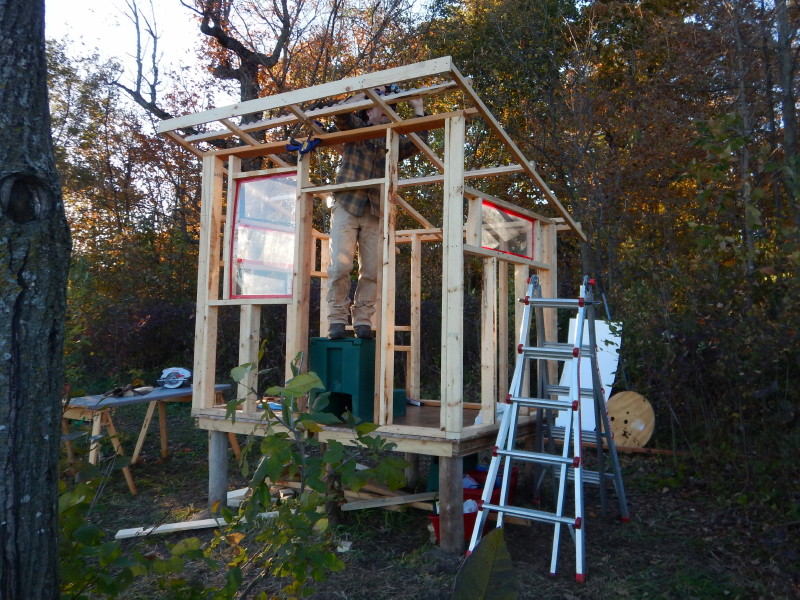 How high should this be? What support should this have? Will this withstand stormy weather? How will I attach the next board? How will we enclose all the odd openings of our panel roof design?
If all that weren’t complicated enough, by the end of the day yesterday, when I couldn’t get the roof framework equally centered on all the walls, it occurred to me why all my calculations had me constantly confused. Building with scraps of salvaged lumber means working with a lot of warped, bowed, and twisted boards.
It was a great exercise for tempering perfectionistic tendencies.
“Close enough” became a common refrain that grew increasingly easy to accept.
There were so many little steps involved in finalizing the framing of openings in each wall and securely fastening the 4 walls to each other that I ran out of time for the ultimate reward of screwing the panels onto the roof. We got close, but finished just short of that milestone.
Guess what I can’t wait to work on when I get home from work today.
.
.
.
.
.
.
.
.
.
.
Coop Framing
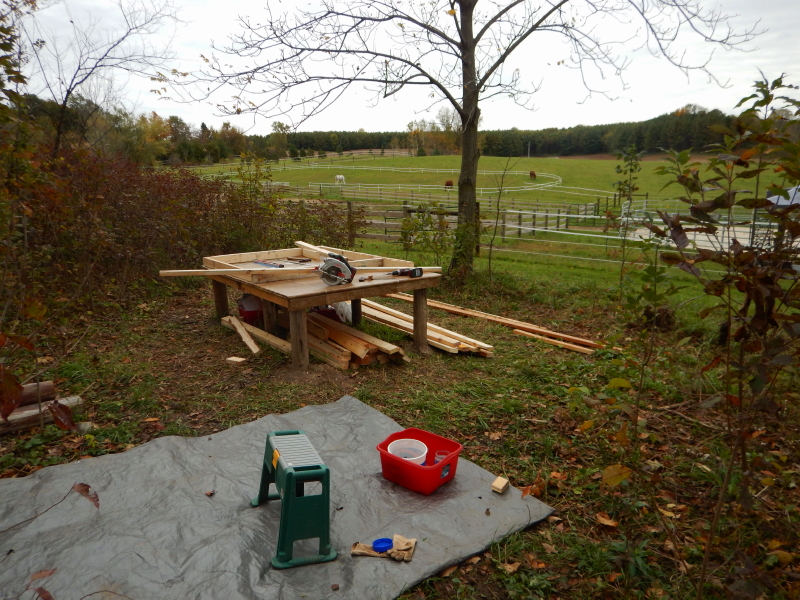
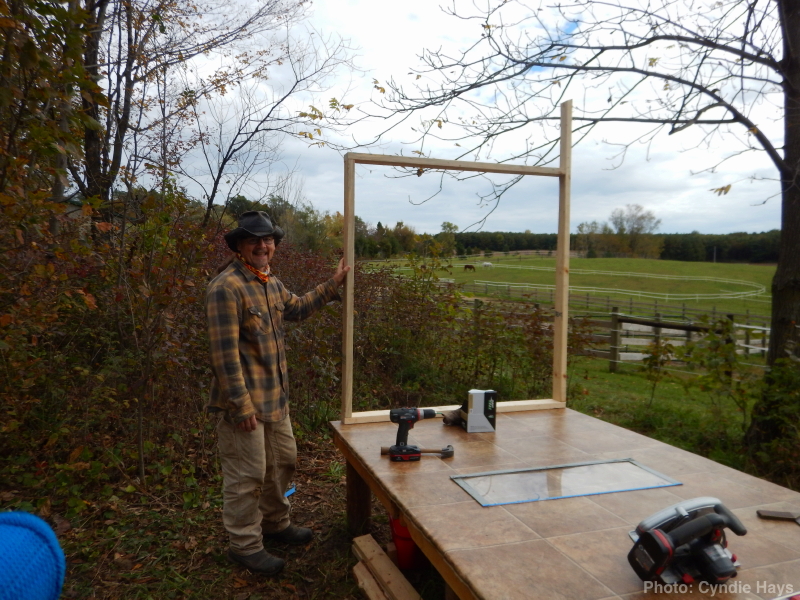
We worked on framing the walls of our chicken coop yesterday under October conditions that changed from cold to warm and alternated between sunny and gray. Twice we received sprinkles of very light rain, yet at a time when there weren’t any clouds in sight that looked like they could possibly be the source.
The weather didn’t slow us down from the task at hand, though, as we designed on the fly to figure out a way to use on-hand 2x4s from a variety of salvaged day-job pallets to frame up the four walls.
 .
.
.
.
.
.
.
.
.
With the addition of a couple long boards I found stored in the rafters over the shop, we were able to come up with everything we needed.
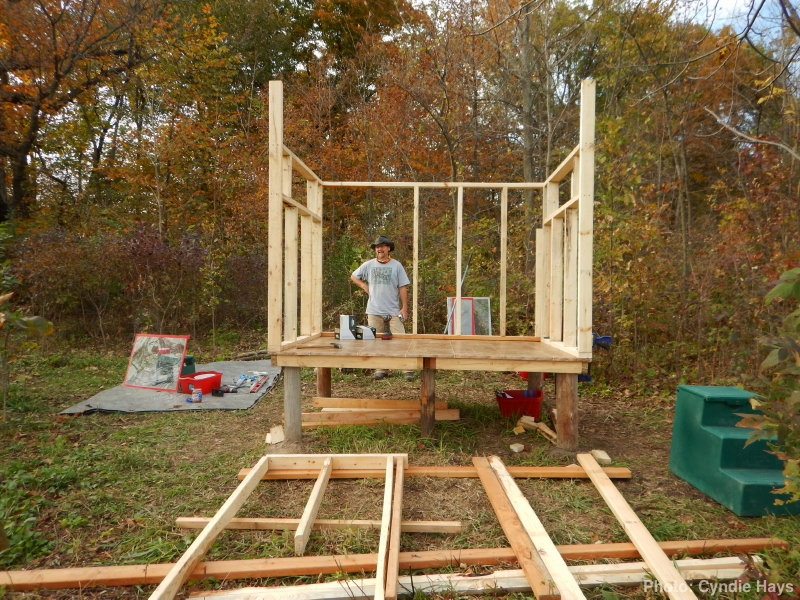
We are hoping to get away with using some plexiglass that has been lying around since we moved here, for windows to provide plenty of light. That will be augmented by translucent polycarbonate panels we purchased for the slanted roof.
The roof is today’s project. Then we need to figure out the ventilation openings that will be covered with hardware cloth to keep out unwanted critters. Siding will follow that. Somewhere in there will be the creation of 4 different hinged openings for access: to collect eggs, to pull out a poop board from under the roost for cleaning, and for chickens and humans to get in and out.
No problem. It only took me a few years to get this far. I’m sure I can have it ready for occupation by…
Never mind that. I’m living in this moment.
The future doesn’t need me trying to tell it what will be.
.
.
.
.
.
.
.
.
.
.
Coop Foundation
Just in case we someday get chickens, I have continued to chip away at a snails pace to design and construct a homemade coop out of mostly found materials. As of this weekend, I have now completed the foundation posts and laid the first floor.

 .
.
.
.
.
.
.
.
.
I’ve reached the point where I should probably commit to the floor plan and figure out how I’m going to build the walls, including the desired doors and windows. The roof is already figured out, as I intend to make it very similar to the one I constructed for the wood shed. The roofing panels are one of the few things we chose to buy for the project.
Most of the lumber for this coop is coming from pallets and shipping crates I have salvaged from the day-job. It’s a benefit for both parties, since the material needs to be removed from our warehouse due to limited storage space.
The foundation posts are from old fencing that was removed shortly after we moved here. Having the coop up on stilts will keep me from needing to sandbag it in protection against the unrelenting downpours that have been turning our soil to soup this year in this new climate we seem to be facing.
The progress of getting the floor in place is a nice milestone, but based on past behaviors, it’s going to be a while before I achieve the next step. There is a lot of uncertainty about construction detail that I need to resolve before I go throwing up walls willy nilly.
That, and the fact that I have yet to settle on an actual design for where doors and windows will be, and how I will construct them.
Details, details.
.
.
.
.
.
.
.
.
.
.
.
How Many?
 If you know me at all, it may not come as a surprise that I am having trouble deciding how many icicle prisms to hang on our cherished family heirloom lamp over the island in our kitchen. Cyndie surprised me on Thursday with the gift in honor our upcoming 35th anniversary.
When I first got the lamp hung in that spot a couple of years ago, we felt the addition of the dangling crystals might improve the way the light distributes, as well as create a better finished look for the variety of viewing angles available.
At that time, I did some shopping for the prisms, but they weren’t readily available in person and there were so many different shapes and sizes to pick from online that I was overwhelmed by the exercise of choosing.
I went with my usual solution to this dilemma and ended up doing nothing about it.
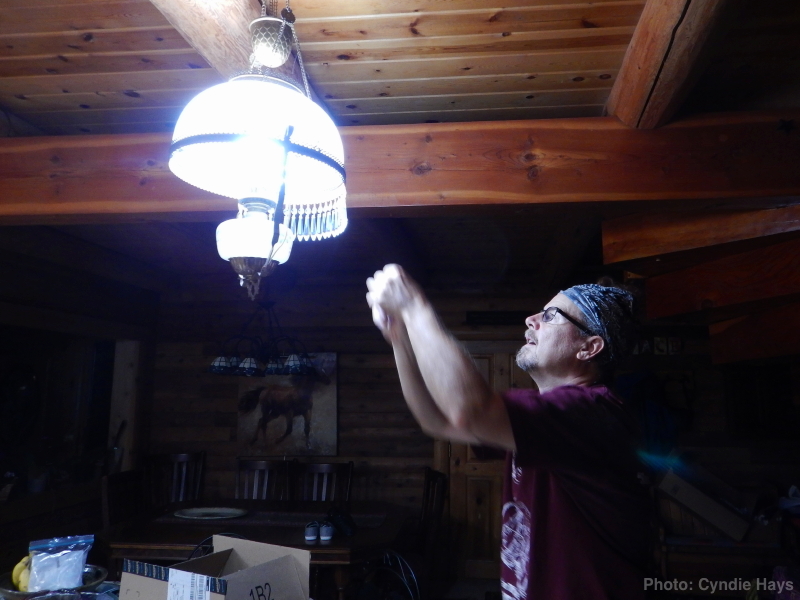 Like so many times before, Cyndie has come to the rescue. I think she made an excellent decision about what size to get. Regarding how many to buy, let’s just say there will be some spares left over. The question of how many spares is still in limbo.
As I started hanging them, it felt right to go for the max. The picture at the top of this post shows what that looked like. We loved it.
It creates a flare out that is taking me some time to get used to, making the bottom look wider.
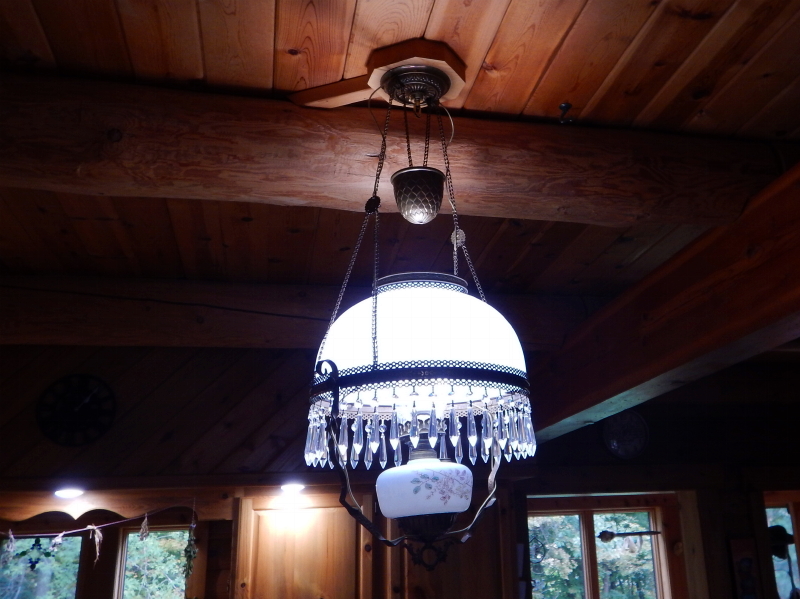
I wondered if that might be related to the high number of icicles we used. My intuition told me, less could be more. Adding a little space between each prism was easy to do.
Deciding which I like better is proving to be not so easy. I like them both.
.
.
.
.
.
.
.
.
.
.
.
Different Ropes
 Ours weren’t the only ropes hanging in the trees over the weekend. The woods were thick with spider webs that were made all the more impressive by the drops of 100% humidity clinging to them. It was impossible to move around in pursuit of our goals without repeatedly disrupting some very impressive architecture.
Cyndie let out an audible startle when she suddenly came upon a chest-high web with the spider perched right in the center. It was probably just finishing a meal.
I tried to capture some of the wonder of this beauty from several different angles. I wanted to get that big leaf out of the frame and finally just reached out to nudge it aside, but it was firmly attached as a primary support. I had to leave it right where it was.
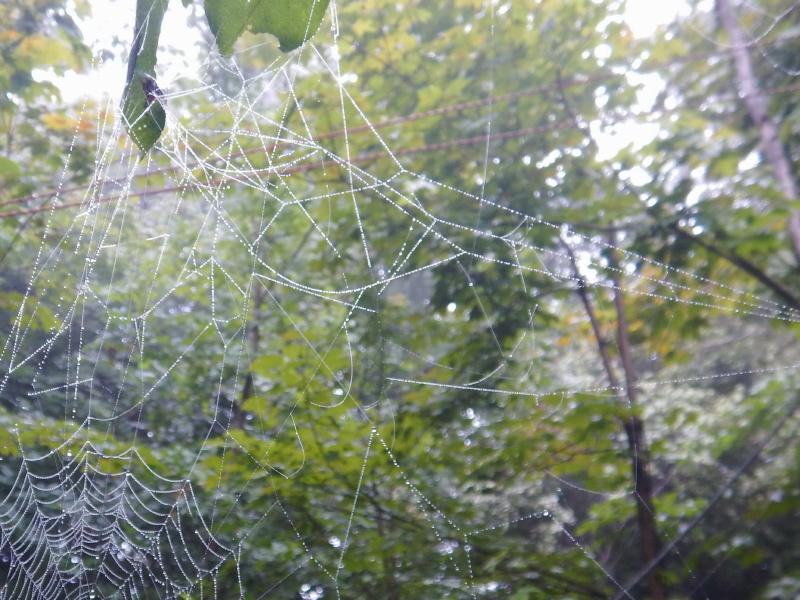 It really was the quintessential web design for the most part, but then the web maker seemed to veer off into a dramatic free form array of supports, angles, and lines.
It looked abstract enough to imply the spider may have been tipping back some fermented fruit or something. At the same time, it’s quite possible it was sheer brilliance to establish a framework on which the rest of the traditional web could rely.
You be the judge.
.
.
.
.
.
.
.
.
.
.
.
.
Multiple Designs
My poor little brain is getting a workout lately with a mixture of simultaneous design projects outside of my realm of experience. I want to build a bridge over a ravine, buy and install a signal booster for voice and data, and make a chicken coop out of found material.
At the same time, we still need to purchase and transport more hay for the winter, clear downed trees, cut and split firewood, keep the lawn and labyrinth mowed, and turn the composting manure piles.
All these latter tasks are the reason the design projects tend to get put off until later. I already know what to do to accomplish them, so I’m more comfortable filling time making progress on familiar work that needs to be done.
It is a source of some conflict between Cyndie and me. I struggle to figure out in my mind how each step will proceed, hoping to establish an order of assembly and final functionality. It tends to delay visible progress for a long time. Cyndie fearlessly dives into projects, solving problems as they arise and devising creative solutions in order to get things done.
I’ve heard that opposites attract.
Meanwhile, I’m chipping away at progress on the designs. We have had a long run of very poor connectivity and dreary news reports on possible plans for service upgrades. After the recent addition of a new cell tower nearby provided no noticeable improvements, a signal booster has become our next big hope.
Last week, I timidly scrambled around the portions of our rooftop that weren’t too steep, in search of a decibel reading on my phone. I am supposed to find the spot for the directional antenna that will keep it from pointing back across the house. Then I need to figure out how to get a cable from out there into the attic. Finally, I need to determine a location for the inside antenna and get it installed to beam the amplified signal to our devices.
I wish that was as easy to actually do as it was to write out.
This weekend we cleared the last of two stumps that were in the way of our perimeter path around the back pasture. That brought us to the next obstacle, the ravine. It has bumped up our interest in having the bridge installed to facilitate foot and mower traffic around the entire circumference.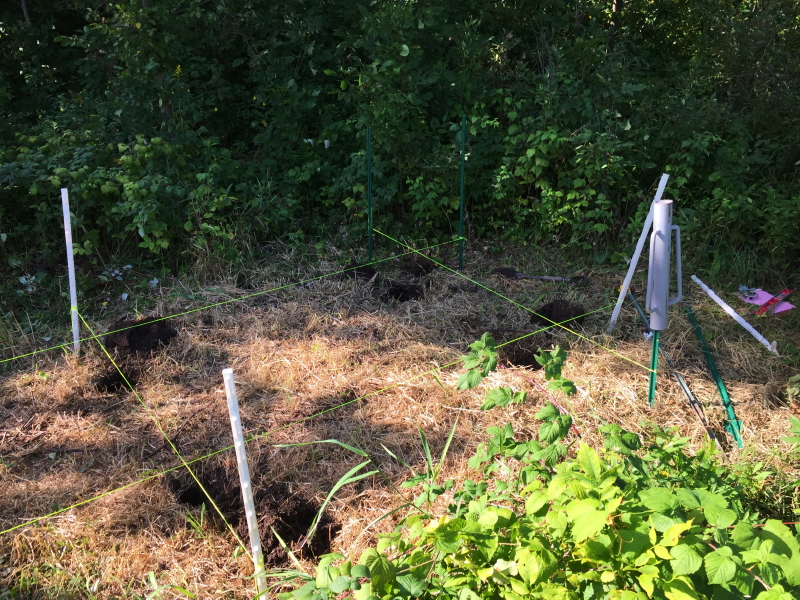
Also during the week, I drove the truck to work so I could bring home a couple large panels from a crate we had received that I felt would make a good floor for a chicken coop. That has helped us lock in a plan on size and enabled progress on burying support posts.
Three design projects that I am uncomfortably unsure about how I will ultimately complete to my satisfaction, but which have some momentum in play. With Cyndie’s help, we’ll keep making progress despite my inclination to wait and think on them a little bit more everyday.
.
.
.
.
.
.
.
.
.
.
Creating Results
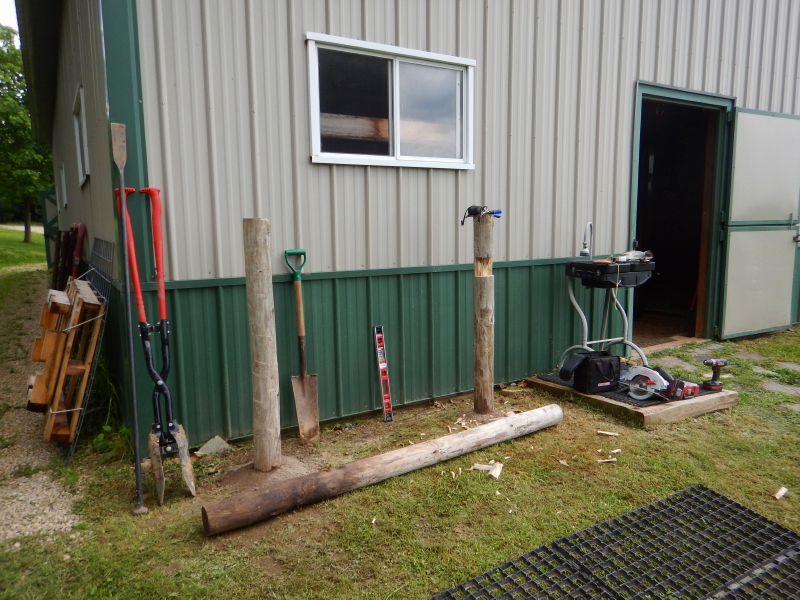
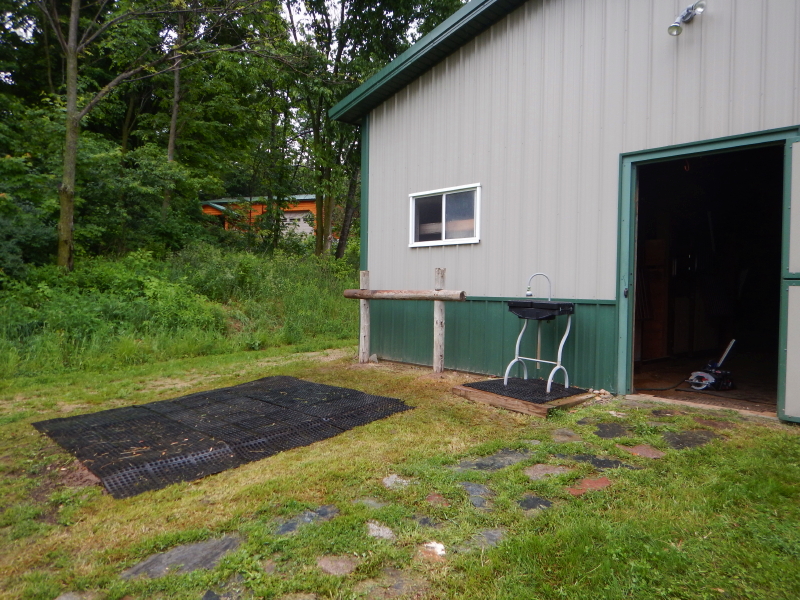
I have envisioned a possible design for a wash station for years. Yesterday, with the kids here to help, we finally just did it. Regardless the way I pictured it, we ended up choosing to exclusively use material we had on hand. It meant we could take immediate action and not wait to buy supplies.
For example, instead of buying gravel to fill the grids we used, Julian and I scraped the driveway behind the barn. Time will tell if that will work as hoped. I can always replace material in the future if we find it doesn’t drain well enough. One benefit we have over whether this design serves the purpose or not is our complete control over its use.
We do not board horses for other people. There are just 4 horses here and they don’t need frequent washing. We have the ability to match our use with the limitations of the design. Likewise, we can upgrade the design as necessary if shortcomings become evident after use.
It looks good to see the space decked out now like the way I have been imagining it, but time needs to pass for the surface to “weather,” becoming stable enough to support the weight of our horses. Cyndie and the horses have waited this long, they can hold off a little longer before putting it through the ultimate testing.
 .
.
.
.
.
.
.
.
.
I’ve talked with Cyndie about trying it out in phases. Soon we will invite one horse at a time to pay a visit and maybe park themselves there, tethered to the hitching post, to receive some dry grooming for a spell.
In the long run, it’s the horses who will create the real final results.
.
.
.
.
.
.
.
.
.
Making Changes
On Sunday, in our 4th spring on this property, I took on the annual re-installation of the pump and filter in our landscape pond. For the first time in all those years, I went so far as to re-engineer the tubing that had been left by the previous owners, which is what I had used all the other times. Even though I knew little about it, I always felt there was room for improvement.
Initially, the pond was just one more thing on top of a multitude of issues with which I had little experience. Slowly, year by year, I began to gain confidence as I grew more familiar with the minutia of tending to our animals, acres, machines, and nature.
For the past 3 years, I simply connected a pump to the existing hose and filter and turned it on. The year we moved in, I left the filter sit, with water still in it, all winter long, not even knowing what it really was. The second year, I opened it up and figured out the charcoal media deserved to be replaced.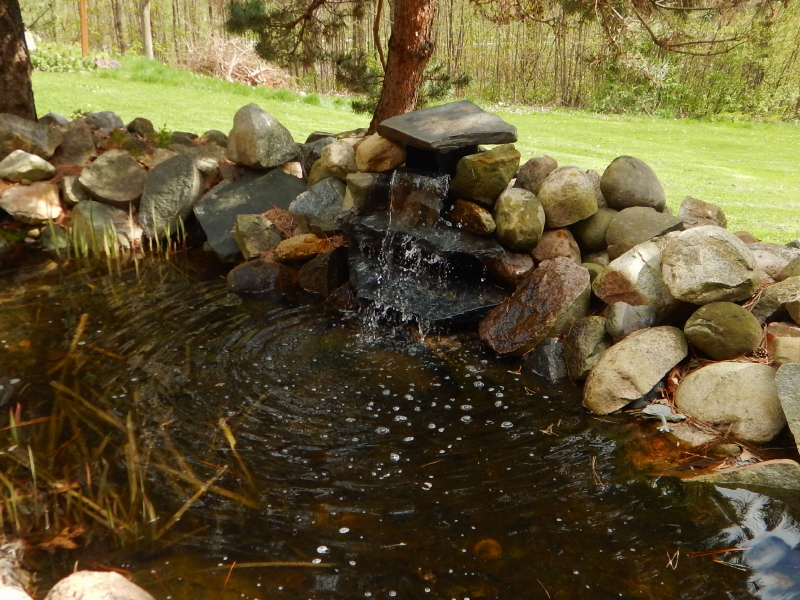
Sunday, I was smart enough to pull the filter out of the garage where it had been stored all winter —clean and dry— and assembled it on level ground, before connecting to the hoses below the pond and filling it with water. Got it sealed on the first try, which never happened any of the other years of putting it together inline.
Setting Stones
With the extra tubing removed, I wanted to rearrange the rocks on the back side of the pond to accommodate a shorter route from pump to waterfall, and then cover it from view. There is an aspect of this creating that goes against my natural inclination to leave things the way they are.
To build up the rocks enough to cover my latest setup, I needed to go find them from other locations, and something about doing that feels to me like breaking eggs to make an omelet. I initially found myself hesitant about removing rocks from existing locations and leaving holes in the stony landscape bordering our house.
However, after 4 years, I am getting better at seeing how quickly the landscape scenery adapts to our alterations. It will only seem like a hole for a short while. I might know it, but others walking past probably won’t notice the difference.
I’m about halfway done toward achieving what I hope to create. The plumbing appears to be all in working order, so that just leaves a few more stones to turn before I’ll be ready to cross this off the project list.
Not that the list will notice the difference of having one less thing on it.
.
.
.
.
.
.
.
.
.
Making Prototypes
Despite the time squeeze of trying to be in two places at once, filling in for two different vacationing people, I found a way to occupy Delilah by taking her to the shop for a distraction while I tinkered on prototyping a design for grates that I can use for slow feeder boxes in the barn stalls.
 She seemed to appreciate the chance to be out of the house with me, despite the confines of her leash. I decided that while Cyndie is away, I will only allow Delilah off leash if I am able to give her my undivided attention, like when I am throwing discs for her to make spectacular diving leaps toward, or flinging squeaky tennis balls great distances for her to sprint after.
Before Cyndie left for the coast, she picked up some fence panels from Tractor Supply for me to make my own grates. As nice as the ones are that I had a local welder make for the two full-size boxes I built, they were a bit pricey.
The first challenge I am facing is finding a way to add some weight to the grates. The custom welded ones are made of heavier rod and also have side plates that give it a desirable heft, so it lays firmly against the bale. The horses can pretty much ignore it and concentrate on nibbling the hay between the squares. The weight helps the grate to keep dropping as the hay is consumed.
The fence panel is made of lighter gauge wire and I fear without added weight it wouldn’t tend to fall as naturally, and the horses might become inclined to mess with it when it got hung up. They have a knack for eating down on one side at a time so that the grate can end up tilted dramatically.
One thing I am considering for the stalls is that there will be no sharing. It will be one horse only that will be grazing hay, so there won’t be mixed behavior. Whatever eating tendency each horse has will define how the slow feeder works in each case.
My first shot at adding something akin to the side plates on the welded grates, was to attach a section of an old T-post that I cut to length on the band saw. By snipping off a section of fence panel so there were end wires extending beyond the area that will cover the hay, I was able to bend them over to capture the post.
In terms of weight, I think it will work adequately for what I want it to do, but I didn’t end up with the exact dimensions I had in mind. Turns out the fence panel wasn’t welded to exacting specifications. The dimension between squares varies, so I will cut another one a whole square larger and take a second stab at a method of bending the sides around a section of post.
I want it to cover an area as wide as a bale, to make it easy to fill the box with full flakes and then drop on the grate and secure it. Speaking of easy, the horses will mainly be in the barn when it is below-zero, so I’m trying to design the box so it will be possible to fill it when wearing big mittens.
That is, in case we ever again experience any below-zero days, what with the planet simmering away at a record pace now days.
.
.
.
.
.
.
.
.
.
.
.


 Relative Something