Posts Tagged ‘dealing with change’
Aging Club
Wildwood Lodge Club started in 1966. The first generation is dwindling and of the six current families, only three are original. 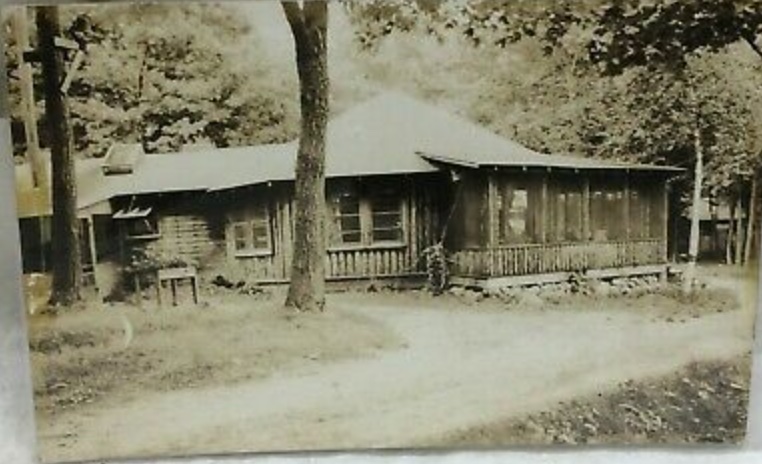 The club is in its 57th year but the buildings have been around since 1919. It was a fishing lodge when the eleven original Twin Cities families bought it and formed the club. The children of the first generation have taken over decision-making responsibilities, significantly increasing the number of minds that need to come to a consensus on management.
One of the biggest issues looming is the integrity of the main lodge building which has kitchen facilities and restaurant-style seating. The foundation is failing and the floor is rotting. The repair costs are unpredictable and hard to justify.
The ramifications tend to ripple all the way out to shaking the visions of what the future of the club might be like for the 3rd generation and beyond. With each generation, the added number of invested people complicates almost all decisions, particularly ones needing consensus for managing association business.
There are no easy answers and we can feel that. Gathering at the beach yesterday to remove the winter’s worth of leaf accumulation and arrange chairs, paddleboards, kayaks, a canoe, a small fishing boat, and several sailboats, talk informally wanders to the issues that aren’t easily resolved.
 Thank goodness the precious people who are the extended family of Wildwood are the true core of what defines this club. There is no shortage of fun and laughter despite all the tough decisions looming. Dinner at each house is a delicious mix of wonderful stories and good food. Wandering next door for a visit is a guaranteed party. The north woods surrounding the lake is a vacation paradise.
Last night’s corn on the cob tasted like August. I don’t know where it was grown or how long ago it was picked, but someone did an amazing job of providing an end product that defied my sense of time and logistics.
My luck at our multiple card games has been nothing but bad, however, the fun quotient is as present as ever.
We don’t know what the future may bring, but just because the club is aging doesn’t mean it can’t last. There are plenty of possibilities and I am confident this group will eventually figure out a way to adapt and endure.
.
.
Yard Birds
********** (Yesterday, an otherwise wonderful Sunday morning, I failed in my battle with learning the new “block” system of editing a WordPress post. I lost my temper, threw my computer, and went outside without publishing a post, where I would be able to work on projects I could control.
Try as I might to format the text and images to achieve my intention, the results consistently foiled me. After repeated unintended results which looked ridiculously wrong, from which I could not find the “undo” option that would at least return to the previous look, I boiled over.
Without going back and striving to accomplish my goal, I am, for now, resigning myself to living with whatever result this new editor mode produces, whether I like it, or not.
The following is the text and images I wanted to post yesterday morning, not as I intended it to look, but as the WordPress software allows me to present.)
**********
The pullets and Rocky are still confined to a fenced courtyard attached to the coop, but the big girls –a buff orpington, an australorpe, and a wyandotte– wander the property freely.
Saturday, while Cyndie was cleaning up the pine needle aftermath left from our removal of another dead pine tree, the three hens showed up to get in on the action.
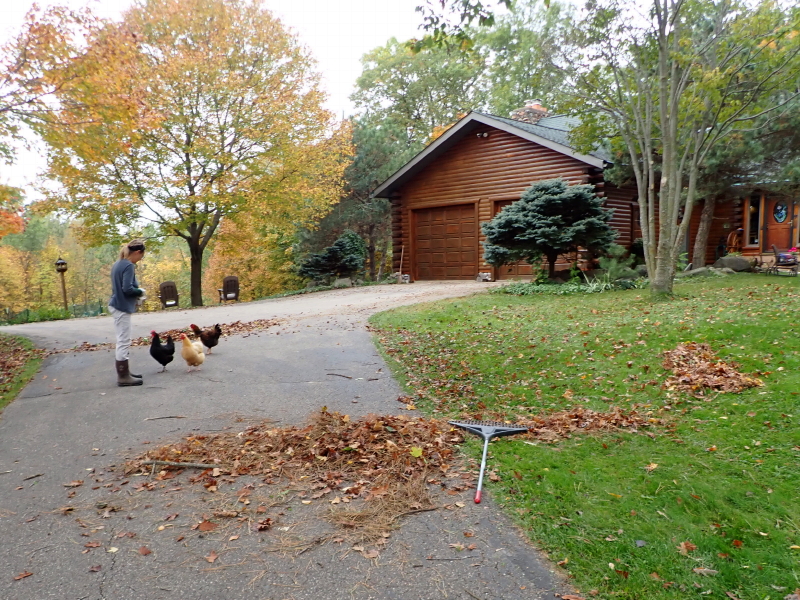
Never one to pass up an opportunity to offer food to her loved ones, Cyndie had a treat ready to serve.
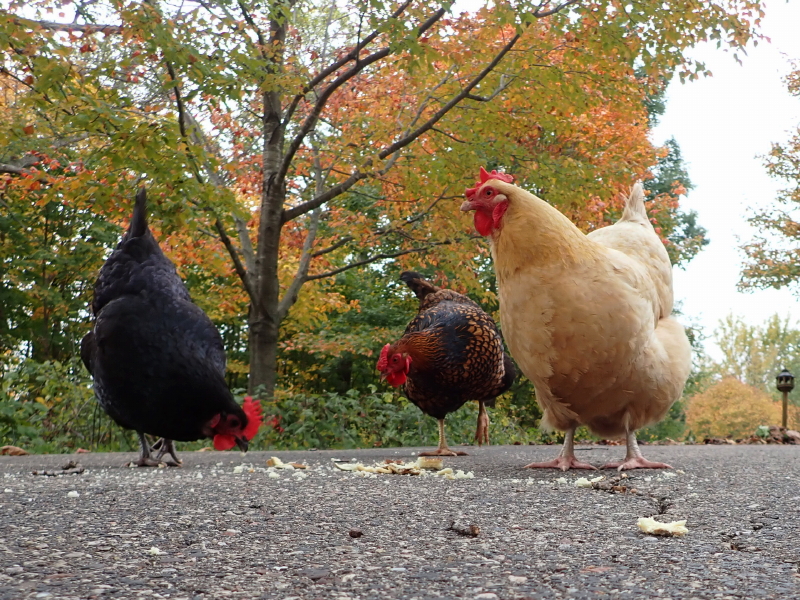
The girls rarely pass up the offerings of anything edible.
I think it shows in their not-so-svelte silhouettes.
.
.
Hippocampal Neurogenesis
Secret weapons. I have two of them. One is love. Okay, that one’s not so secret. The other one is my new favorite phrase: hippocampal neurogenesis. Isn’t that just the best? It’s fun to say and it describes the mental health benefits available from exercising.
You can read about the details in this March 2018 Psychology Today article, “How Your Mental Health Reaps the Benefits of Exercise,” by Sarah Gingell, Ph.D.
I just discovered a link to the article earlier this week, and the marvel of new growth of neurons in the hippocampus has me giddy over this hidden benefit of exercising. In particular, the insights of these three paragraphs:
Evidence is accumulating that many mental health conditions are associated with reduced neurogenesis in the hippocampus. The evidence is particularly strong for depression. Interestingly, many anti-depressants — that were once thought to work through their effects on the serotonin system — are now known to increase neurogenesis in the hippocampus.
What does this all mean? Theories suggest that newborn hippocampal neurons are likely to be particularly important for storing new memories and keeping old and new memories separate and distinct. Thus, neurogenesis allows a healthy level of flexibility in the use of existing memories, and in the flexible processing of new information.
Much mental ill health is characterized by a cognitive inflexibility that keeps us repeating unhelpful behaviors, restricts our ability to process or even acknowledge new information, and reduces our ability to use what we already know to see new solutions or to change. It is therefore plausible that exercise leads to better mental health in general, through its effects on systems that increase the capacity for mental flexibility.
Exercise increases blood flow to our brains, bringing oxygen and nutrients to create new neurons in the hippocampus. As a result, we are rewarded with increased ability to process new information, and deal with change because of increased mental flexibility.
That means a lot to me because I can look back at some of the struggles I dealt with under the weight of depression and vividly recognize a particular inflexibility of my thinking, as well as an aversion to the stresses of change.
Today, I am all about hippocampal neurogenesis. You might say, it’s my healthy drug of choice.
.
.


 Relative Something