Posts Tagged ‘culling trees’
Maple Weeds
They are everywhere. Young sprouts of maple trees grow like weeds on our property. Our perspective on that fact has evolved over the years we’ve lived here. We used to feel every tree was sacred and would struggle to cope with trees popping up in places that would become problematic ten or more years later. It led to plenty of attempts to transplant new sprouts to more suitable locations.
Our percentage of successful relocations was not very high. It gets a little depressing to put effort into trying to keep newly planted trees alive only to watch them wither and die within a year or two.
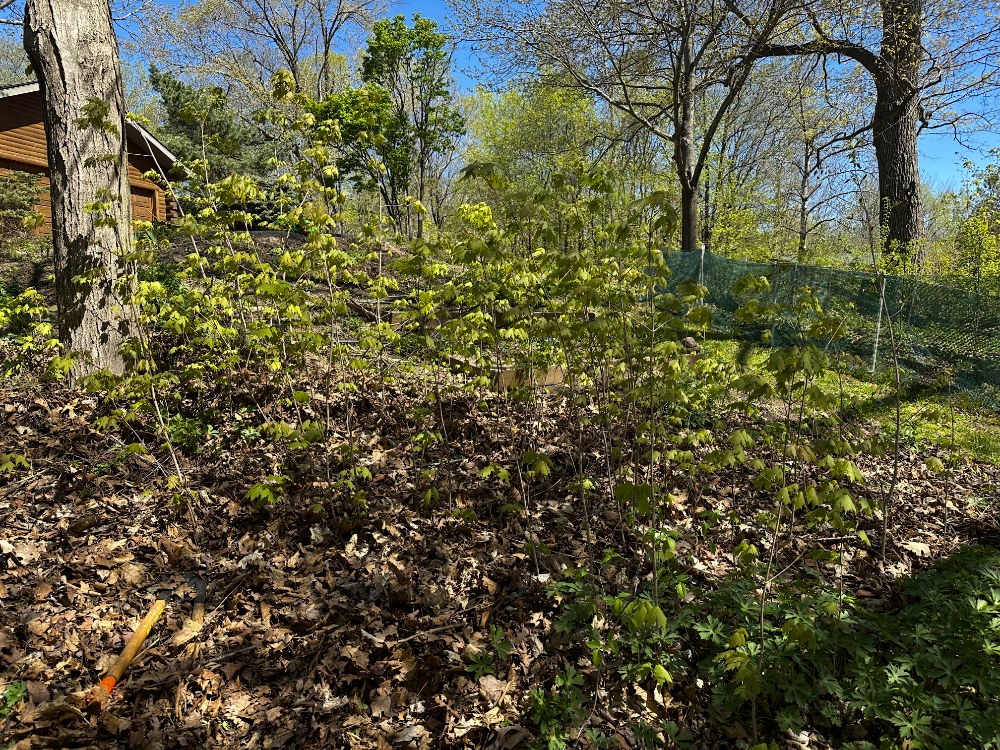
After enough years of witnessing the incredible number of new maple trees sprouting annually, we’ve developed a new confidence in taking lethal action against ones that show up where they are not wanted. Yesterday, I terminated a grove of new maple trees with extreme prejudice.
Now you see them…
Now you don’t.
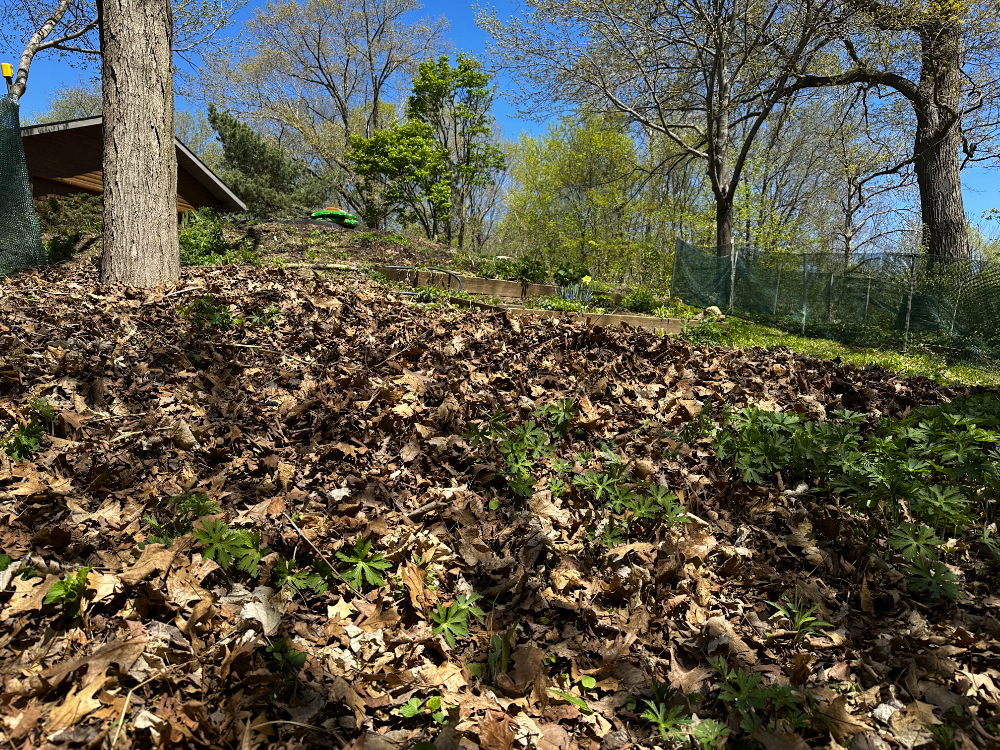
This was an area near Cyndie’s gardens that we are trying to keep open to allow more sunlight to reach her plants.
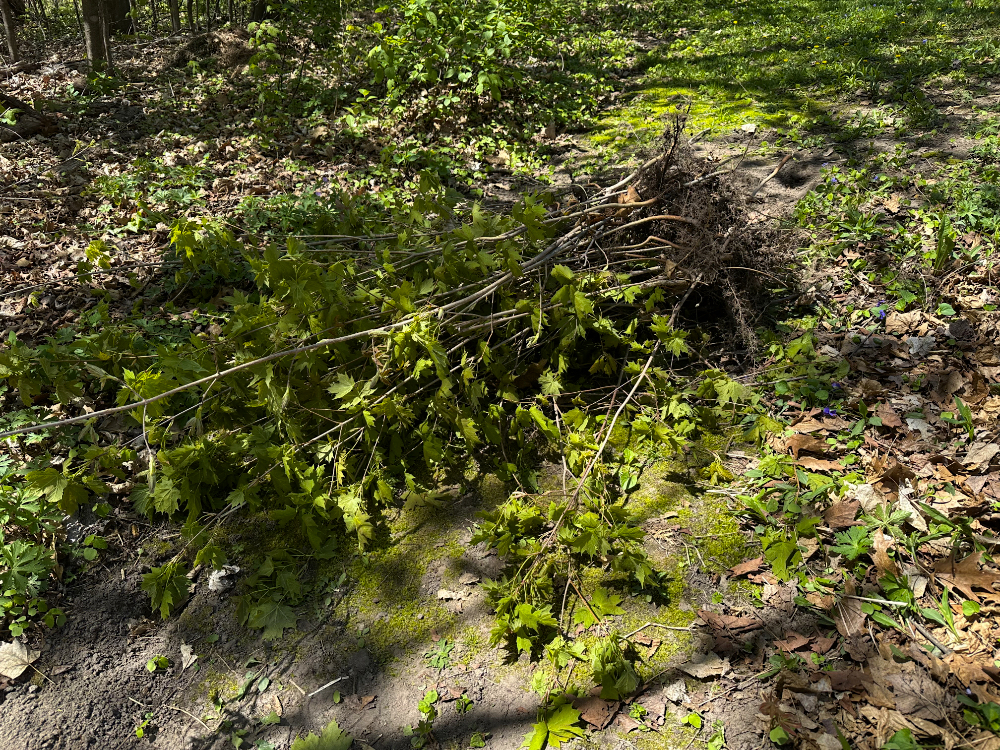
The pile of little maple trees I had harvested shows that I was able to pull quite a few of them up by the roots. I much prefer doing it that way whenever possible, but it takes a toll on my hands, wrestling with stems that almost come free but eventually require a tool. When we have to cut the stem at the ground level, it usually leads to needing to come back later and cut again after new shoots appear from the same root system.
The ubiquitous presence of new maple trees sprouting everywhere they shouldn’t has me starting to refer to them as maple weeds.
.
.
Showing Preference
It’s been almost two years since a DNR forester walked our woods marking trees to be cut down to improve the overall health of the forest. Certain trees tend to have higher value for their qualities, oaks and maples chief among them, but also trees of a certain maturity. The biggest trees definitely stand out as our most impressive.
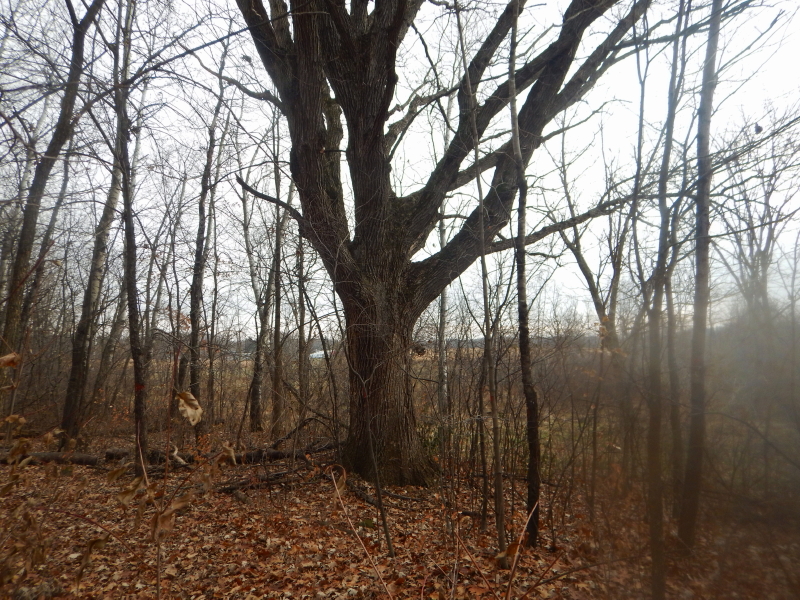
To show our big, old oaks the respect they deserve, the forester painted the smaller trees beneath them, marking which ones to cut down. It seems counterintuitive to cut down trees to save trees but considering the bigger picture, it is understandable.
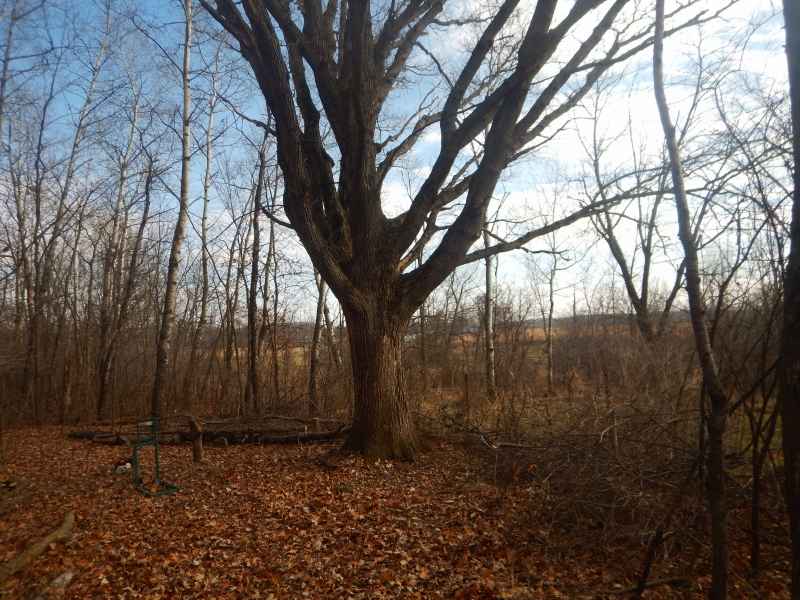
Yesterday, Cyndie and I set out to make overdue progress on culling more of the red-dotted clutter beneath some of our preferred oaks. It was invigorating, exhausting, rewarding work.
 .
.
.
.
.
.
.
.
.
It’s not real obvious, but if you click on those images you can see more detail of the before and after of our effort around one particular majestic oak on the edge of our property.
Cutting down a relatively small tree is a simple act, but there is a surprising amount of follow-up work necessary to deal with all the branches suddenly on the ground. We’ve only just begun to cope with all the wood and branches the hours of work brought down yesterday. There is now a wealth of raw material awaiting our chipper and splitter.
There are also plenty more small trees with red dots yet to be cut. So much opportunity on just 10 acres of wooded land.
We laughed yesterday over the time we spent years ago clearing one section of all the downed branches and grinding them through the chipper. At the time, we thought maybe we could clean up all our land. When the following season revealed as many or more new branches filling the area we had previously cleared, we realized the folly of our intentions.
After cutting trees yesterday, we were dragging some of the trimmed branches into the middle of our woods to deal with them.
When you can’t beat ’em, join ’em.
.
.
Red Marks
For months now we have been walking past trees in our woods that are marked for removal with a red spot. It was more subtle when the forest was lush and green. Now that there aren’t any leaves on the trees, those red marks are impossible to miss.

When our local DNR agent responded to our invitation to walk our woods, we learned our most valuable trees are the oaks, and that they will be kept healthiest if we remove competition growing directly beneath their canopy. I mentioned it would be a challenge for me to identify what is good and what is bad.
You know how much of an aversion I have to cutting down live trees.
He was quick to volunteer to return later and mark trees for removal. Most of them are relatively small diameter and will be easy to bring down. Cyndie and I decided yesterday was a good time to start on the project.
Heck, I can’t drive the tractor anywhere yet, so we may as well create piles of branches to be chipped at a later date.
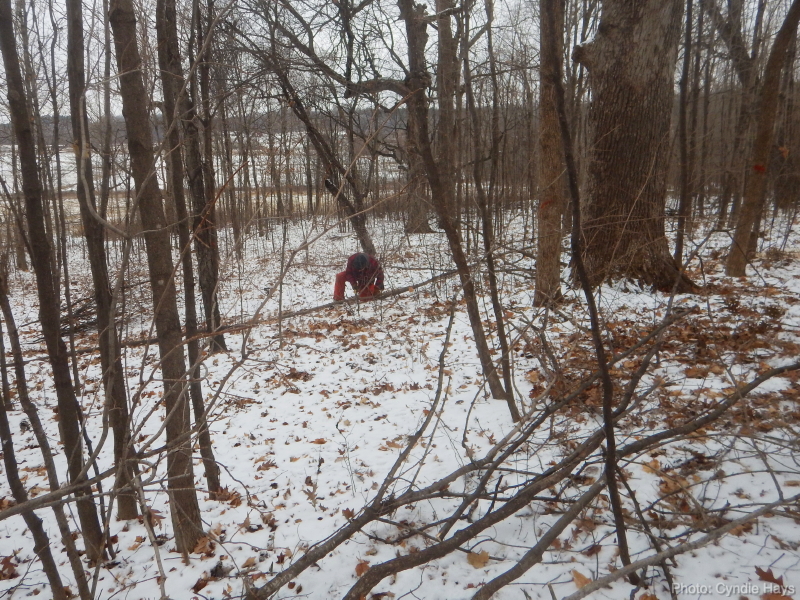 About those red marks… When you get a chainsaw in your hands, suddenly trees with red dots show up at every turn. Maybe that is because I just chose to start with the trees right below the driveway. Some of our biggest oaks are right there (hence the thick carpet of leaves that land on the yard) and that meant a lot of trees to be culled all the way around each of the large oak trunks.
I took some solace in being able to see visible evidence of just the problem our DNR forester described. Oak trees stop feeding lower limbs when other growth begins to encroach from below. That can lead to a lopsided or top-heavy oak.
When we pulled down the smaller trees, it was easy to see the number of bottom oak branches that had already been left for dead.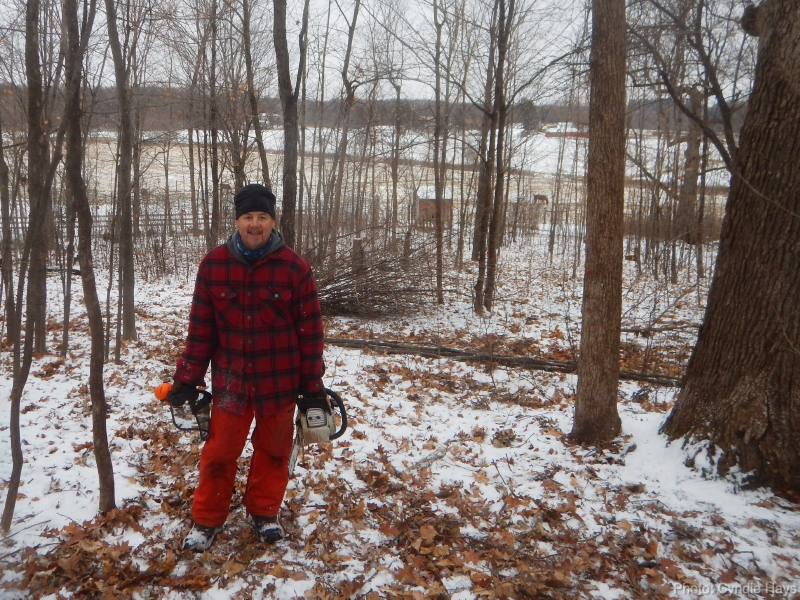
Unfortunately, we grew weary after just a couple of hours of cutting up and piling branches of the easiest trees felled. Several substantial sized red-marked trees remain. That will be a project for another day.
I may just move on further into the woods where I know there are a lot of small (easy) red-marked trees, before returning to take down the larger diameter encroachers by the driveway.
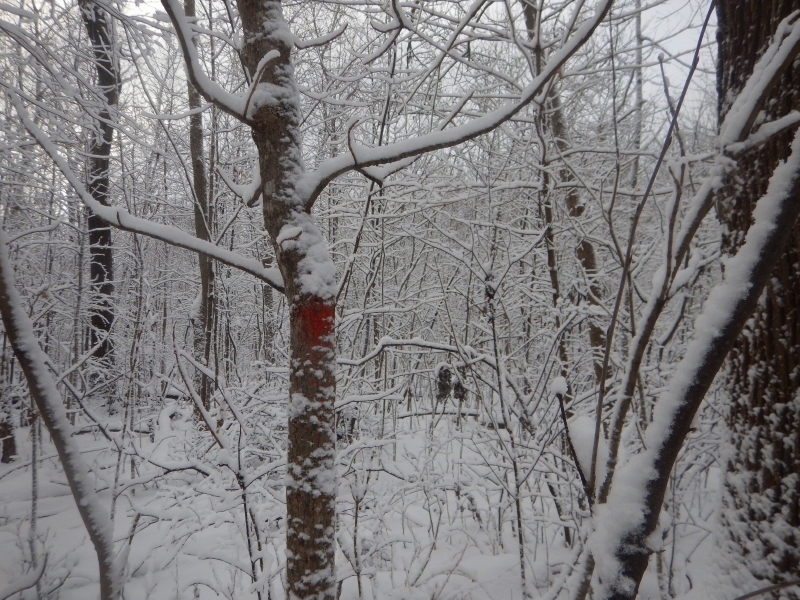
That project will be delayed a little bit now, though, as the more immediate pressing need is for plowing and shoveling snow. We received a decent amount of sticky flakes yesterday afternoon and overnight.
So much for easily spotting those red marked trees…
.
.


 Relative Something