Posts Tagged ‘carbon sink’
Beautiful Views
Despite human industrial activity dumping carbon into the earth’s atmosphere for generations, grass and trees continue to jam carbon back into the soil. Imagine if we had enough forests and fields to reverse the changes our burning of fossil fuels has done to the atmosphere.
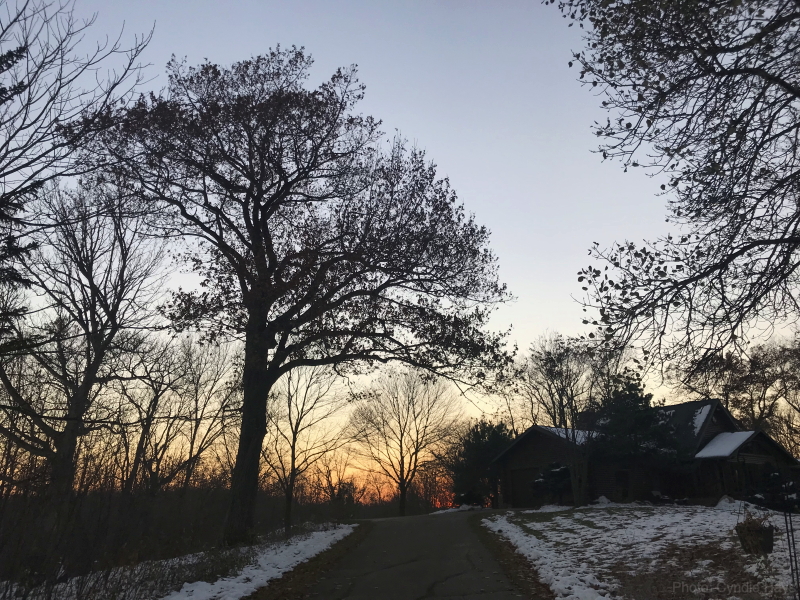
Thinking like that is more fun when gazing upon the beautiful views we enjoy than trying to wrap my head around the continuing damage that is being done every day, like driving my car for two hours a day during my 4-day workweek. Working from home on Fridays is a small token toward driving less.
We watched the NOVA episode, “Can We Cool the Planet?” on PBS last night. Seems reasonable to believe that we can cool the planet. The difficulty is whether or not humans will actually undertake the needed steps.

It certainly doesn’t hurt for individuals to strive to do their part, but the solution will require a collective global commitment. Based on the history of the human race, it is hard to picture how such a thing would even be possible.
Maybe an existential threat will be the difference that one day drives a coordinated response.
In the meantime, I’ll continue to plant trees and enjoy our lovely views.
.
.
Better Sink
I am always learning, and thanks to George’s comment on yesterday’s post, where he reminded me about something he shared on a recent visit, I have a renewed appreciation for the value of our grassy fields. Improving our planet is not all about planting more trees.
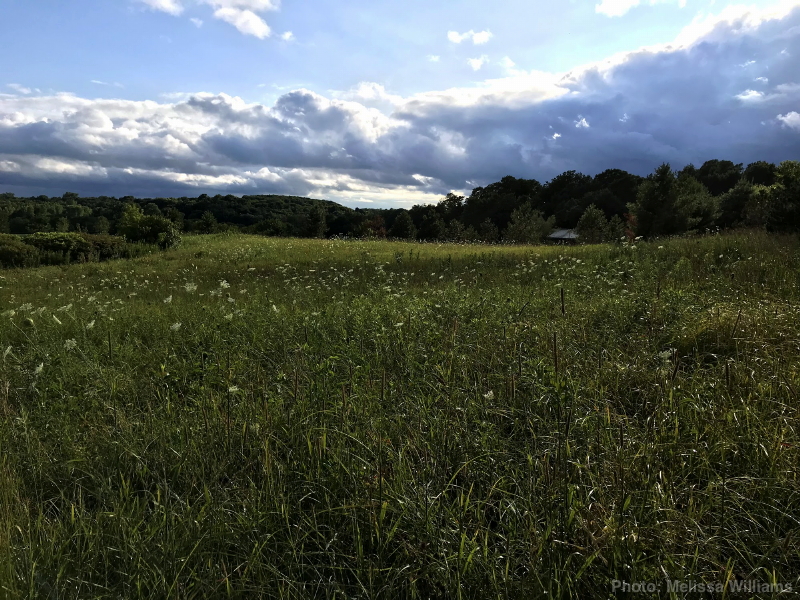 Grasslands are actually a more reliable carbon sink than tree forests, because they store much of the carbon underground in the root systems.
George pointed me to a podcast where I was able to learn about the Santa Maria Cattle Company in the Chihuahuan desert ecosystem where they are successfully reversing the desertification and building grassland using cattle as the primary tool.
Seems like inverse logic, doesn’t it?
Mismanaged, cows can overgraze and destroy the grassland. Luckily, better thinking is leading to a more enlightened perspective. It is possible to learn from our mistakes and choose a better way. Fernando Falomir and his family are showing what is possible and sharing what they have learned so others can do the same.
Inspiring!
George also turned us on to Gabe Brown and the work he is doing to champion regenerative agriculture. Turning dirt into soil! Seems so simple.
Instead of the convention of tilling the earth to plant one crop and ply herbicides, pesticides, fungicides, while also needing to add irrigation to achieve results, Gabe reveals how farmers can succeed by mimicking the diversity of nature instead.
The compacted and deadened dirt can be exchanged for a thick aerated biomass soil that seems so obviously logical as to not require harsh and harmful chemicals to be viable. It can be done, because that is the natural way things worked before we started slamming our short-sighted mass production methods across the land.
In fact, we have a wonderful example right in the heart of Minnesota, where George has returned to his family land to put these precious principles into practice with Walker Farms.
It’s not all about trees.
I’ve definitely learned that.
Thanks, George Walker!
.
.


 Relative Something