Watchin’ Football
During halftime of the Orange Bowl college football semifinal playoff game last night, I switched to the weather channel and watched snow images in Little Rock, Arkansas. They were doing a feature listing all the ways people tend to get injured trying to clear snow.
 They were telling kids in Memphis to be ready to make snowmen and have snowball fights in the morning. In a blink, they switched to a commercial warning about some moderate to severe affliction for which pharmacology wanted to sell solutions. That was my trigger to switch back to the football channel. There was a concert going on in the Hard Rock Stadium in Miami Gardens, Florida.
One fascinating feature of live team sports competitions is the aspect of momentum. It can be so easy to discern sometimes, especially when it really starts to roll. Oftentimes, it is the sudden shift in momentum from one team to another that causes it to stand out. The team that is on the wrong side of momentum appears helpless to stop the landslide of energy flowing against them.
As a fan, I feel frustrated when momentum goes against my team, and coaches, players, and fans all seem incapable of doing anything to interrupt it.
In last night’s football game between Notre Dame and Penn State, momentum swung around a couple of times. As one who watches games that don’t involve a team I support, I am inclined to multitask and rely heavily on instant replays to catch interesting action when announcers get riled up. That wasn’t working so well for me last night because the teams were running offensive plays so quickly that there was no time between downs for slow-motion replay.
I needed to start actually paying attention. I’m glad I did. That was one heck of a playoff game. Notre Dame fans enjoyed the ecstasy of victory in the end.
Cyndie received a quote on replacing the spoiler stolen from her car. They couldn’t find one from any of their scrap parts sources (which might explain why spoilers are a target), so they told her it would require painting, take a full day, and cost us almost $1000. It’s just so sad. The clips that held the spoiler in place broke when the thief pulled it off and will need to be replaced as well.
With the significance of the losses occurring for so many people in the California wildfires right now, the criminal damage we suffered is not something I should be whining about.
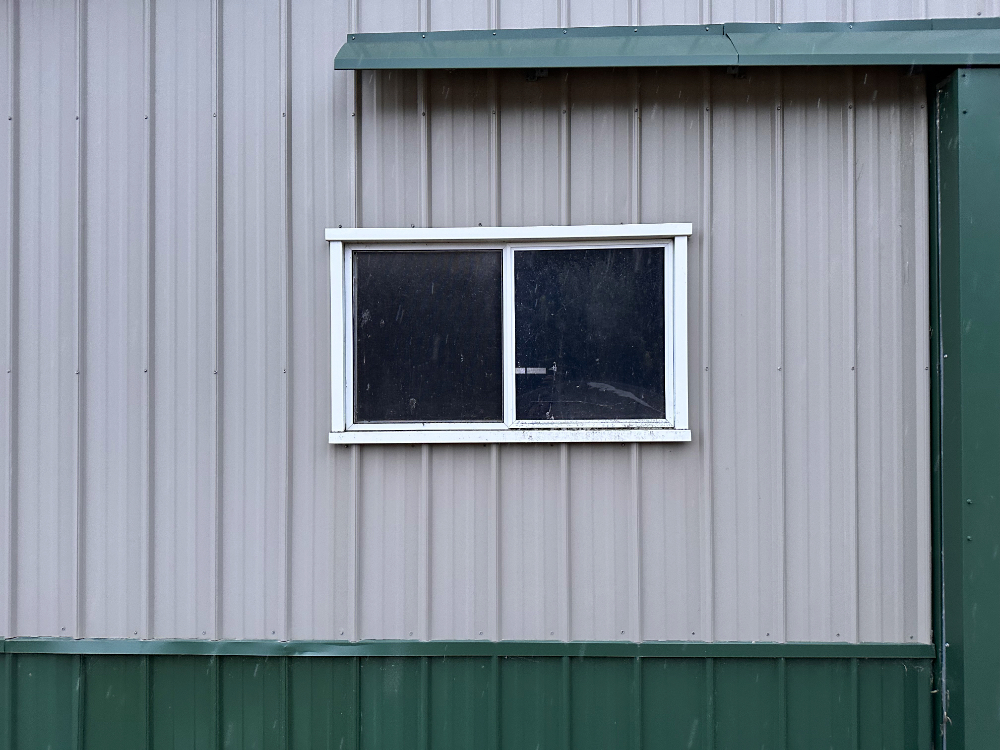
(In case you wondered, I threw in the picture of a window on the barn that I took yesterday for artistic effect. It doesn’t have anything to do with the football game, momentum, or the stolen CRV spoiler. The framing was just something that caught my eye.)
.
.


 Relative Something
Having spent my early adult life cutting cars apart to rescue people, I can personally attest to the fact that most vehicles made overseas are assembled with plastic clips. American made vehicles, for whatever reason, still rely primarily on bolts and fasteners, and only use clips for interior finishing.
In the fire service, we talk about two types of cars; uni-body, where the vehicle is made from stamped sheet-metal, and frame, where a vehicle is purposely built on a welded box frame. Foreign cars in recent years have adapted the uni-body concept where the vehicle is heavily dependent on plastic clips. These cars often leave a long debris trail when involved in an accident. Frame vehicles, on the other hand, tend to be more durable, and unless there is a severe collision, most of the parts of the vehicle tend to either stay attached to the vehicle, or only separate at the locations where impacts occurred.
I personally prefer frame vehicles for their longevity, durability, and better crash ratings. Uni-body cars, while more refined and comfortable, often fair poorly in crashes. The majority of my trauma cases involved uni-body vehicles, whereas those who were in frame vehicles usually walked away with only minor injuries. While I understand and accept that crash test data speaks of the contrary to what I have seen, remember that crash tests are done in controlled environments that intentionally favor the force-absorbing crumple zones of passenger vehicles.
Just my thoughts on the matter; I know little to nothing about sports. 😉
Thomas Slatin 🏳️🌈
January 10, 2025 at 7:33 am
Thanks for these details, Thomas. I bet you know a lot about momentum! Not necessarily related to team sports, but how different is the careening of vehicles from athletic competition? (Not a serious question.) 😜
johnwhays
January 11, 2025 at 11:44 am